Tokushima
Tokushima pairs the whirlpools and coast of eastern Shikoku with deep mountain valleys, indigo crafts and the rhythm of the Awa Odori dance.
Map outlines: Natural Earth
-
1
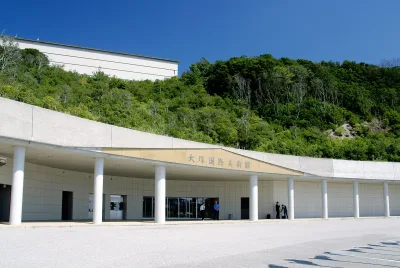 Otsuka Museum of Art
A Naruto museum of 1,000+ Western masterpieces from 26 countries, recreated full-size on ceramic. Tour the world's galleries, Sistine Chapel included, in a day.
Otsuka Museum of Art
A Naruto museum of 1,000+ Western masterpieces from 26 countries, recreated full-size on ceramic. Tour the world's galleries, Sistine Chapel included, in a day.
-
2
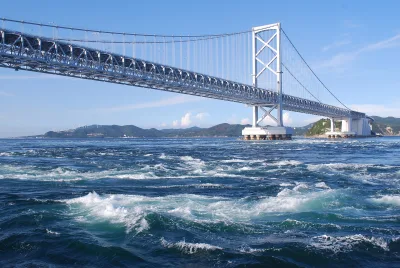 Uzu no Michi (Onaruto Bridge Walkway)
Walk 450 m inside the Onaruto Bridge and look straight down through glass floors 45 m above the Naruto whirlpools. Time it with the tides to see them swirl.
Uzu no Michi (Onaruto Bridge Walkway)
Walk 450 m inside the Onaruto Bridge and look straight down through glass floors 45 m above the Naruto whirlpools. Time it with the tides to see them swirl.
-
3
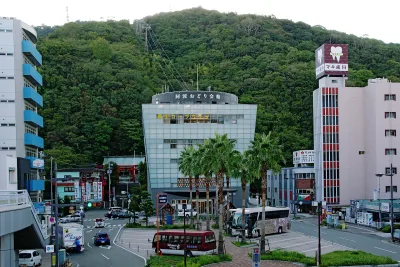 Awa Odori Kaikan
Watch Tokushima's Awa Odori dance, said to be over 400 years old, every day of the year, not just at festival time. At the end, the audience joins in.
Awa Odori Kaikan
Watch Tokushima's Awa Odori dance, said to be over 400 years old, every day of the year, not just at festival time. At the end, the audience joins in.
From the Naruto Strait to the Iya Valley
Tokushima occupies the eastern side of Shikoku, but it rarely feels like one continuous landscape. At Naruto, as the tides move between the Seto Inland Sea and the Kii Channel, water rushes through the narrow strait between Tokushima and Awaji Island and forms whirlpools. You can watch them from a boat, or through the glass floor of the walkway beneath the Onaruto Bridge. The whirlpools depend on the tides, so you may end up looking at a calm sea.
Inland, the Yoshino River carves through the rocky gorges of Oboke and Koboke before widening into the Tokushima Plain. Deeper in the mountains, the Iya Valley has steep slopes, small settlements and kazurabashi, suspension bridges traditionally woven from vines. Before they became tourist destinations, the vine bridges were practical crossings for mountain communities. On Tokushima's southern coast the scenery changes again: beyond Anan, the mountains press against a rocky shoreline, quite unlike the sandier northeast.
The age of Awa indigo
Awa is the old provincial name you will meet again and again in Tokushima. In the Edo period, indigo was a major local industry: plants grown on the fertile plains of the Yoshino River basin became the raw material for dye sold all over Japan, and the Tokushima domain also drew wealth from salt. The Hachisuka family ruled from Tokushima Castle, making the town a centre of politics and commerce.
The colour has outlived the trading era. Craftspeople still make Awa indigo using sukumo, a dye made from dried and fermented indigo leaves. Looking at indigo-dyed cloth here means looking at the landscape and climate that made it possible.
Dancing streets and puppet stages
Awa Odori means "the dance of Awa", and its biggest moment comes in Tokushima City in August. Groups of dancers called ren parade through the streets to a brisk two-beat rhythm. There are several theories about its origins, but the dance developed alongside Tokushima's indigo trade and later became a symbol of recovery after the Second World War. It is not a show brought in for tourists but a local tradition carried on by the groups themselves.
For quieter storytelling, look to Awa ningyo joruri, Tokushima's puppet theatre. A narrator tells the story, a shamisen (a three-stringed instrument) accompanies it, and three puppeteers work each puppet. Made for outdoor village stages, the puppets developed especially large heads so that audiences gathered in shrine and temple grounds could see them. Performances still continue at the Awa Jurobe Yashiki in Tokushima City and on rural stages around the prefecture.
What is on Tokushima's table
A squeeze of sudachi (a small local citrus with a sharp aroma) is an easy way into Tokushima's food. It adds a crisp sourness to dishes and is used in drinks too. Naruto kintoki, a sweet potato grown in sandy soil, turns up in savoury dishes and sweets alike. Naruto wakame, seaweed grown in the fast tidal currents near the strait, is prized for its firm bite.
Tokushima ramen heads in a richer direction. A common version pairs a pork-bone and soy sauce broth with sweet-savoury simmered pork belly and a raw egg, and locals often eat it with white rice. The broth varies from shop to shop, so no single bowl has to stand for them all. In the west, Iya soba, the buckwheat noodles associated with the Iya Valley, belongs to a different food landscape. Put these dishes together and you can taste the journey from coast to mountains.
A year that shifts across the mountains
Spring marks the start of the rafting season on the Yoshino River. It is also one of the seasons when the tides in the Naruto Strait tend to produce strong whirlpools. In summer, surfers head for the coast and Tokushima City fills with Awa Odori dancers, while the mountains offer coolness in contrast to the heat by the sea.
In autumn, attention turns west as the Iya Valley and the Oboke Gorge take on autumn colours, and the tides at Naruto can grow strong again. Winter is not the same everywhere: the southern coast is relatively warm and rainy, while the highlands around Mount Tsurugi can get enough snow for skiing. Tokushima is not a long prefecture from north to south, but its coast and mountains give each season more than one face.
Getting there, and taking it slowly
Tokushima is linked with the rest of Japan by air, rail, highway bus and a ferry from Wakayama. From the Kansai region, many travellers cross to Shikoku by highway bus via Awaji Island. Rail travellers can also come via Takamatsu in neighbouring Kagawa. Tokushima City is a convenient base for the east of the prefecture, and local buses run from Tokushima and Naruto stations to the Naruto Strait area.
The western mountains call for a different pace. Awa-Ikeda is the gateway for local buses to the Iya Valley, and a rental car gives you more flexibility for scattered mountain stops. Mountain roads are narrow, so rather than treating the coast, the city and Iya as one short loop, build in time to travel slowly.
Sources
- Overview|ようこそ徳島県へ
- Naruto Strait | Travel Japan - Japan National Tourism Organization (Official Site)
- Iya Valley | Tokushima | Shikoku | Destinations | Travel Japan - Japan National Tourism Organization (Official Site)
- History|ようこそ徳島県へ
- Awa Indigo|ようこそ徳島県へ
- Awa Odori (Awa Dance)|ようこそ徳島県へ
- Awa Ningyo Joruri (Puppet Theater)|ようこそ徳島県へ
- Cuisines | Tokushima Tourism | Discover Tokushima, Japan
- The soul food of Tokushima people – what makes it so special!? | Column | Tokushima Tourism | Discover Tokushima, Japan
- Tokushima | Shikoku | Destinations | Travel Japan - Japan National Tourism Organization (Official Site)