Japan is Nippon
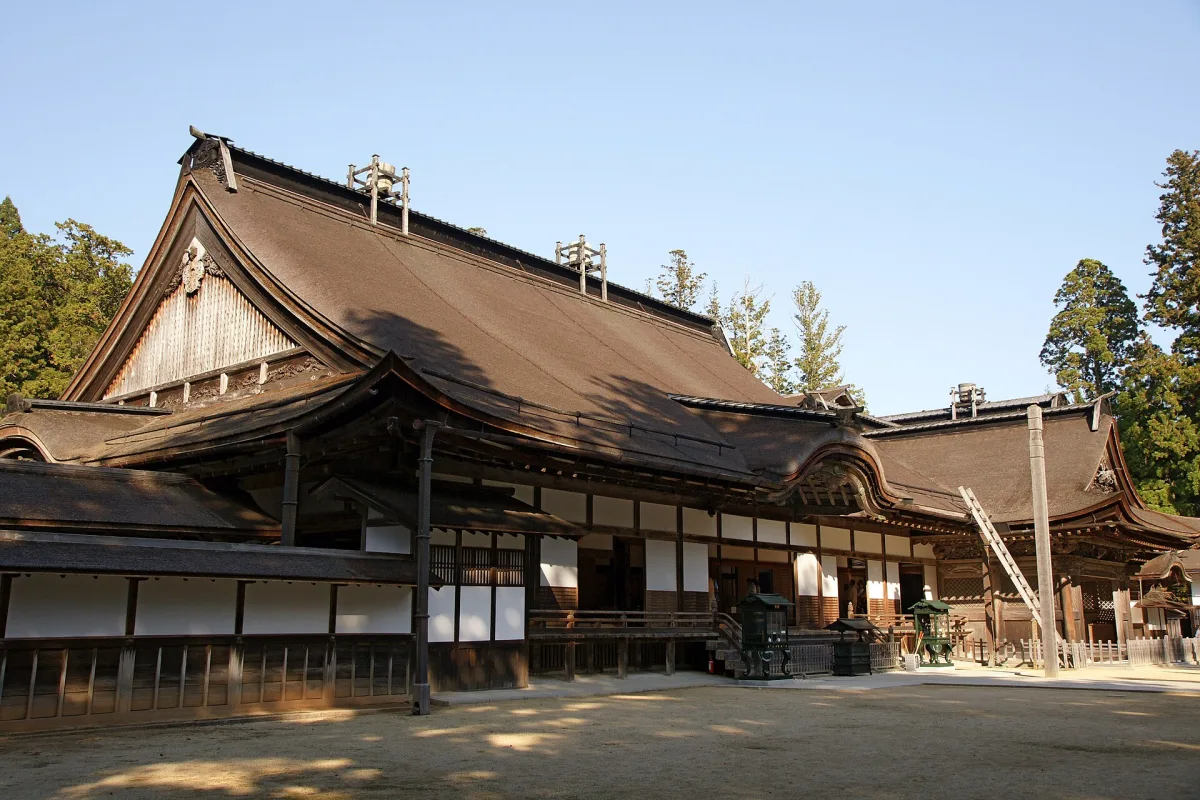
Kongobu-ji Temple
金剛峯寺
Head temple of Koyasan Shingon Buddhism at the heart of the mountaintop temple town, with lavish sliding-door paintings and one of Japan's largest rock gardens.
A name for the whole of Koyasan
Kongobu-ji is the head temple of the Koyasan Shingon school of Buddhism, on Koyasan (Mount Koya), a plateau high in the mountains of northern Wakayama Prefecture. It was founded in 816 by Kobo Daishi Kukai, after Emperor Saga granted him the land.
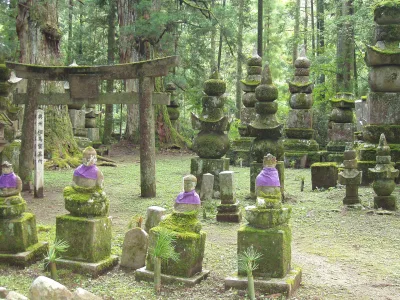
In fact the name "Sohonzan Kongobu-ji" (head temple Kongobu-ji) refers not to a single building but to the whole of Koyasan. There are 117 temples on the mountain, and 51 of them are shukubo, temples where pilgrims can stay the night. In 2004 it was registered as a World Heritage Site as part of the "Sacred Sites and Pilgrimage Routes in the Kii Mountain Range".
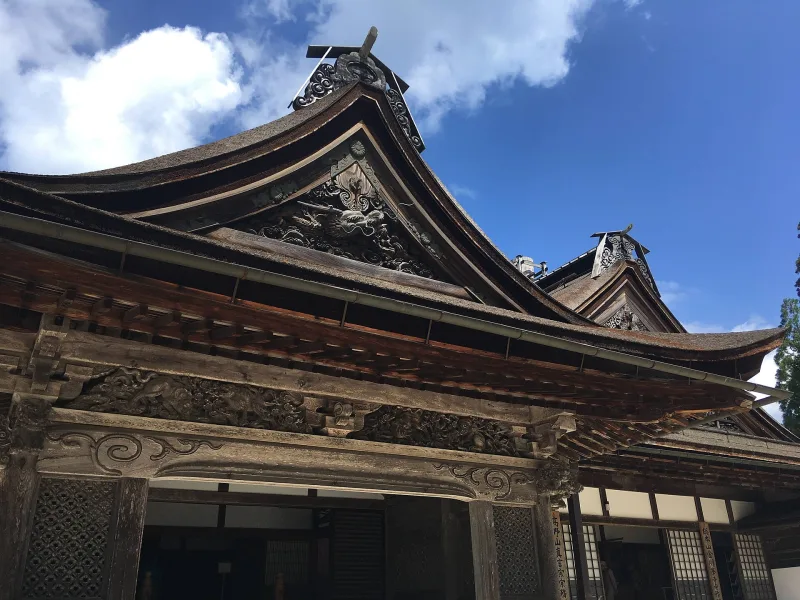
The building most people visit as "Kongobu-ji" today was originally Seigan-ji, built in 1593 by Toyotomi Hideyoshi to pray for the soul of his late mother. In 1869, in the Meiji era, it was merged with the neighbouring Kozan-ji and took the name Kongobu-ji.
Painted sliding doors and a huge kitchen
The Main Hall (Shuden) was rebuilt in 1863. Inside are rooms such as the Ohiroma (Great Hall), with fusuma (sliding door) paintings of pines and cranes, and the Willow Room (Yanagi no Ma), painted with willows and herons. The Willow Room is said to be where Toyotomi Hidetsugu took his own life in 1595, and it is also known as the "Room of Hidetsugu's Suicide".
In the kitchen stand three great cauldrons, said to have been able to cook rice for about 2,000 people at once. It gives you a feel for the size of a temple that has been home to so many monks.
Banryutei, one of Japan's largest rock gardens
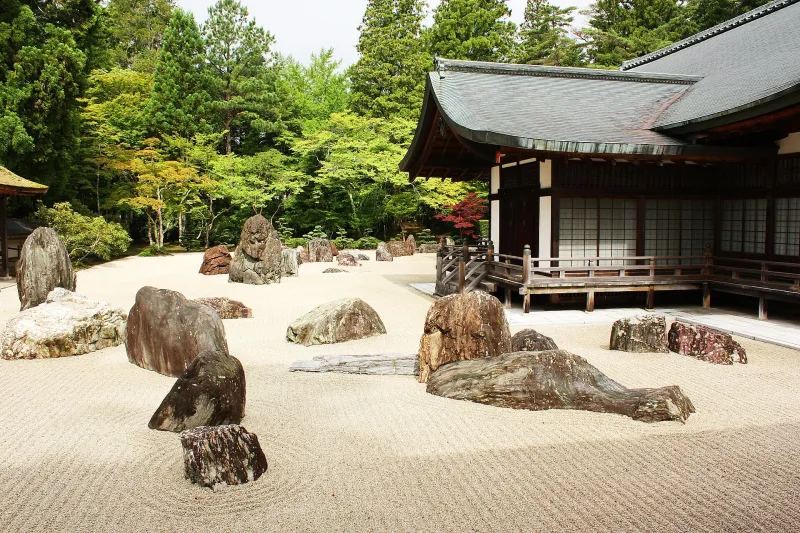
Further in lies Banryutei, a rock garden of about 2,340 square metres that is said to be one of the largest in Japan. It was created in 1984 to mark 1,150 years since Kukai entered nyujo, eternal meditation.
The white sand represents a sea of clouds, and the 140 stones a pair of dragons, male and female, guarding the inner hall. The stones are granite from Shikoku, and the white sand comes from Kyoto.
Getting there
From Koyasan Station it is about 11 minutes by bus; get off at the Kongobuji-mae stop and the temple is right there.
There is an admission fee. Opening hours and prices can change, so check the official website of Koyasan Shingon head temple Kongobu-ji.
Tips
- Koyasan has 51 shukubo, temples that offer lodgings to pilgrims. You can visit on a day trip, but staying the night at a temple lets you soak up the atmosphere of this religious town on the mountain far more deeply.
- The main gate survives from the time when Toyotomi Hideyoshi built Seigan-ji. Look out for the Toyotomi family's paulownia crest on the large lanterns.
- Besides Kongobu-ji, Koyasan has many other sights, such as the Danjo Garan temple complex and Okunoin. Planning your route by bus will help you get round efficiently.
Sources
- 金剛峯寺について | 高野山真言宗 総本山金剛峯寺 (opens in a new tab)
- 金剛峯寺 | 和歌山県公式観光サイト (opens in a new tab)
- 金剛峯寺 | 観光庁 地域観光資源の多言語解説文データベース (opens in a new tab)
- 金剛峯寺 - Wikipedia (opens in a new tab)
Updated 30 September 2026. Opening hours and prices change, so check the official site before you go.