Wakayama
Wakayama pairs the pilgrim mountains of Koyasan and Kumano with a long coast, mikan orchards, hot springs and food shaped by preserving.
Map outlines: Natural Earth
-
1
 Adventure World
A zoo, aquarium and funfair in one in Shirahama, Wakayama. Get close to savannah animals on safari, watch dolphin shows and meet lots of penguins.
Adventure World
A zoo, aquarium and funfair in one in Shirahama, Wakayama. Get close to savannah animals on safari, watch dolphin shows and meet lots of penguins.
-
2
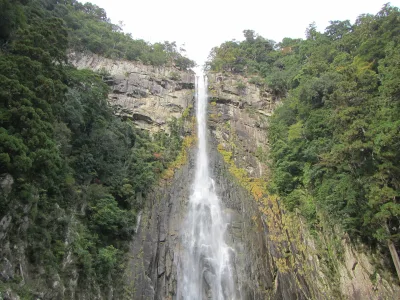 Nachi Falls
A 133 m waterfall in Kumano, one of Japan's tallest single-drop falls. Worshipped as a god itself, it forms Kumano's classic view beside a vermilion pagoda.
Nachi Falls
A 133 m waterfall in Kumano, one of Japan's tallest single-drop falls. Worshipped as a god itself, it forms Kumano's classic view beside a vermilion pagoda.
-
3
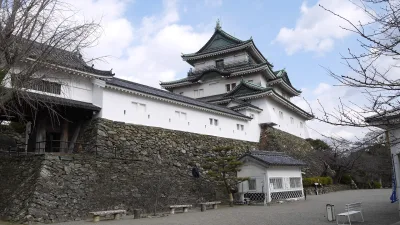 Wakayama Castle
Castle of the Kishu Tokugawa, who gave Japan two shoguns: a white keep on a city-centre hill, a garden famed for autumn leaves and a rare sloping corridor bridge.
Wakayama Castle
Castle of the Kishu Tokugawa, who gave Japan two shoguns: a white keep on a city-centre hill, a garden famed for autumn leaves and a rare sloping corridor bridge.

Mountains, beaches and a coast of strange rocks
Wakayama covers most of the Kii Peninsula, south of Osaka. Its two most famous landscapes feel completely different: forested mountains crossed by pilgrimage routes, and a coastline of beaches, fishing towns and hot springs. Shirarahama is a wide beach of white sand, while further round the peninsula at Kushimoto the shoreline has been shaped by rock and waves. This is a prefecture where a walk under cedar trees and a walk by the sea fit into the same trip.
At Kushimoto, a line of rock towers called Hashigui-iwa stretches out into the sea like the piers of an unfinished bridge. Harder rock was left standing as the sea wore away what was around it. Local legend offers a different explanation: the monk Kukai and a mischievous amanojaku (a contrary demon) competed to see whether a bridge could be built by morning. You do not have to choose between geology and folklore; both show how closely people here have watched this coast.
Two sacred landscapes, two ways to travel
Koyasan, a mountaintop temple town in northern Wakayama, has been the centre of Shingon esoteric Buddhism for more than 1,200 years. Its temples include Kongobu-ji, the head temple of the Shingon school, and Okunoin, where the approach to Kukai's mausoleum passes between cedars, gravestones and memorial towers. Some temples offer shukubo (temple lodgings). Staying at one lets you experience the town in a way that goes beyond visiting the main buildings.
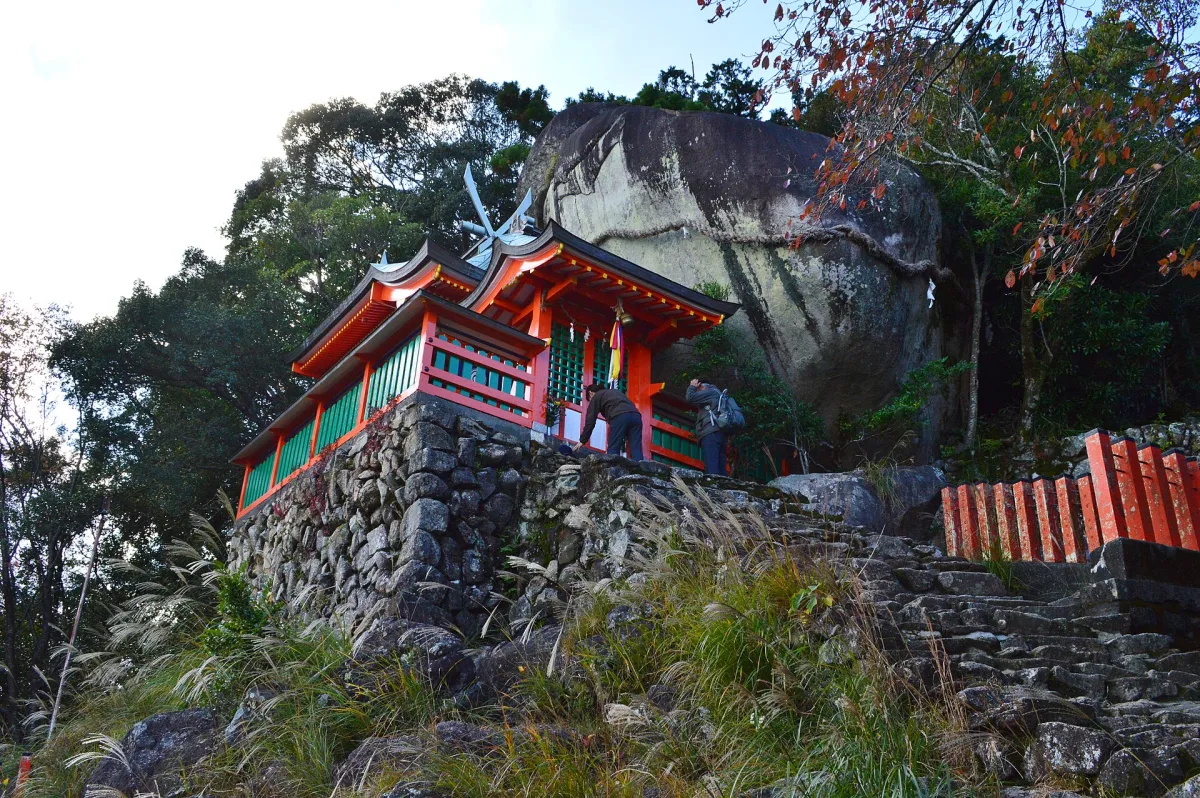
In the south, the Kumano Kodo is a network of old pilgrimage routes across the Kii Peninsula, not a single continuous hiking trail. Pilgrims, including former emperors (retired emperors and cloistered emperors), travelled to the three shrines known together as the Kumano Sanzan: Hongu, Hayatama and Nachi. These sacred sites and the routes linking them form part of a World Heritage Site spanning the Kii Mountains. At Nachi, the shrine and the neighbouring Seiganto-ji temple are a reminder of the long history in which Shinto and Buddhist practice have intertwined. The routes give you choices too: you can walk for several days, or take a bus to a short section and walk from there.
What Wakayama preserves, and what it grows
Start with umeboshi: ume (Japanese apricots) salted, dried and pickled, with a sharp sourness, often eaten with rice. Ume growing in Wakayama dates back to the Edo period, and the fruit is also used in drinks and other local products. Next, look for mikan, the small, sweet citrus fruit grown here for centuries. In the colder months, fresh mikan offer a different taste of the prefecture from umeboshi, a preserved food available all year round.
Preserving takes other forms too. In Yuasa, the story of shoyu (soy sauce) is linked to a fermented soybean seasoning made by Buddhist monks about 800 years ago. The savoury liquid that came from it is said to have developed into soy sauce, and old brewery buildings are still part of the townscape. Around Kumano, mehari-zushi wraps rice in leaves of pickled takana (a mustard green). It began as a portable meal for people working outdoors, and it makes good sense after a walk. At Koyasan, shojin ryori is Buddhist vegetarian cooking centred on vegetables and plants, and Wakayama City has its own style of ramen made with pork bone and soy sauce.
Seasons marked by paths and rituals
In spring the cherry blossoms bloom and the weather is pleasant for walking in Kumano. The season is also part of local religious life. At the annual grand festival of Kumano Hongu Taisha, children who have purified themselves at Yunomine Onsen ride on their fathers' shoulders along part of the old pilgrimage route. In early summer, rice planting changes the look of the terraced fields along the paths. Rain has a charm of its own here, darkening the old stone paving and trailing mist across the mountains.
Summer puts the focus on the beaches and on the Nachi Fire Festival, the Nachi no Ogi Matsuri. People carrying torches purify twelve ogi-mikoshi, fan-decorated portable shrines associated with the waterfall. The ritual makes it clear that Nachi is a place of prayer, not just a scenic spot. Autumn adds colour to mountain walks, and in winter a light layer of snow may settle on parts of Kumano. On the coast and in the mountains alike, hot springs make a welcome break in the colder months. Wakayama's seasons are easiest to understand as changes in the way people walk, farm, gather and pray.
Choosing your way into Wakayama
Many travellers come by train from Osaka via Wakayama City, and Kansai International Airport also has convenient links to the area. If Koyasan is your first stop, a different route makes more sense: take the Nankai line from Osaka's Namba area to Gokurakubashi, then ride the cable car up to the temple town. Once there, local buses help you get around.
For the southern coast and Kumano, trains run to towns such as Kii-Tanabe, Kii-Katsuura and Shingu, and buses go on from there to the inland shrines and trailheads. Nachi is reached by bus from Kii-Katsuura, and Hongu by bus from Kii-Tanabe. The mountain paths, the temple town and the coastal stops are scattered across a fairly large peninsula, so decide which area you want to explore before choosing your arrival station. Giving Koyasan and Kumano separate time leaves room to enjoy the journey between them rather than rushing through both.
Sources
- Wakayama | Kansai | Destinations | Travel Japan - Japan National Tourism Organization (Official Site)
- Koyasan | Wakayama | Kansai | Destinations | Travel Japan - Japan National Tourism Organization (Official Site)
- Kumano Kodo Pilgrimage Route | Travel Japan - Japan National Tourism Organization (Official Site)
- 橋杭岩|スポット|和歌山県公式観光サイト
- Wakayama’s Local Flavours | Discover 2 Must-Try Dishes | JNTO
- Japan’s Essential Seasoning | Travel Japan (Japan National Tourism Organization)
- 熊野の春の風物詩|特集|和歌山県公式観光サイト
- 地域の人がすすめる熊野古道の新たな魅力|特集|和歌山県公式観光サイト
- Nachi Fire Festival | Travel Japan - Japan National Tourism Organization (Official Site)