Okunoin (Mount Koya)
高野山奥之院
Mount Koya's holiest place, where Kobo Daishi Kukai is believed to still pray. Walk about 2 km through giant cedars past over 200,000 graves to his mausoleum.
Where Kukai does not rest but prays on
Mount Koya (Koyasan) is a sacred mountain of the Shingon school of Buddhism, on a mountaintop in northern Wakayama Prefecture. It was founded by the Heian-period monk Kobo Daishi Kukai, who is still fondly called O-Daishi-sama.
Okunoin is where Kukai's gobyo (mausoleum, a sacred place that serves as his tomb) stands, and together with the Danjo Garan temple complex it is the centre of faith on Mount Koya. In 835, at the age of 62, Kukai entered nyujo (a state of deep meditation), and even now, nearly 1,200 years later, he is believed to be continuing his meditation here.
An approach lined with over 200,000 graves
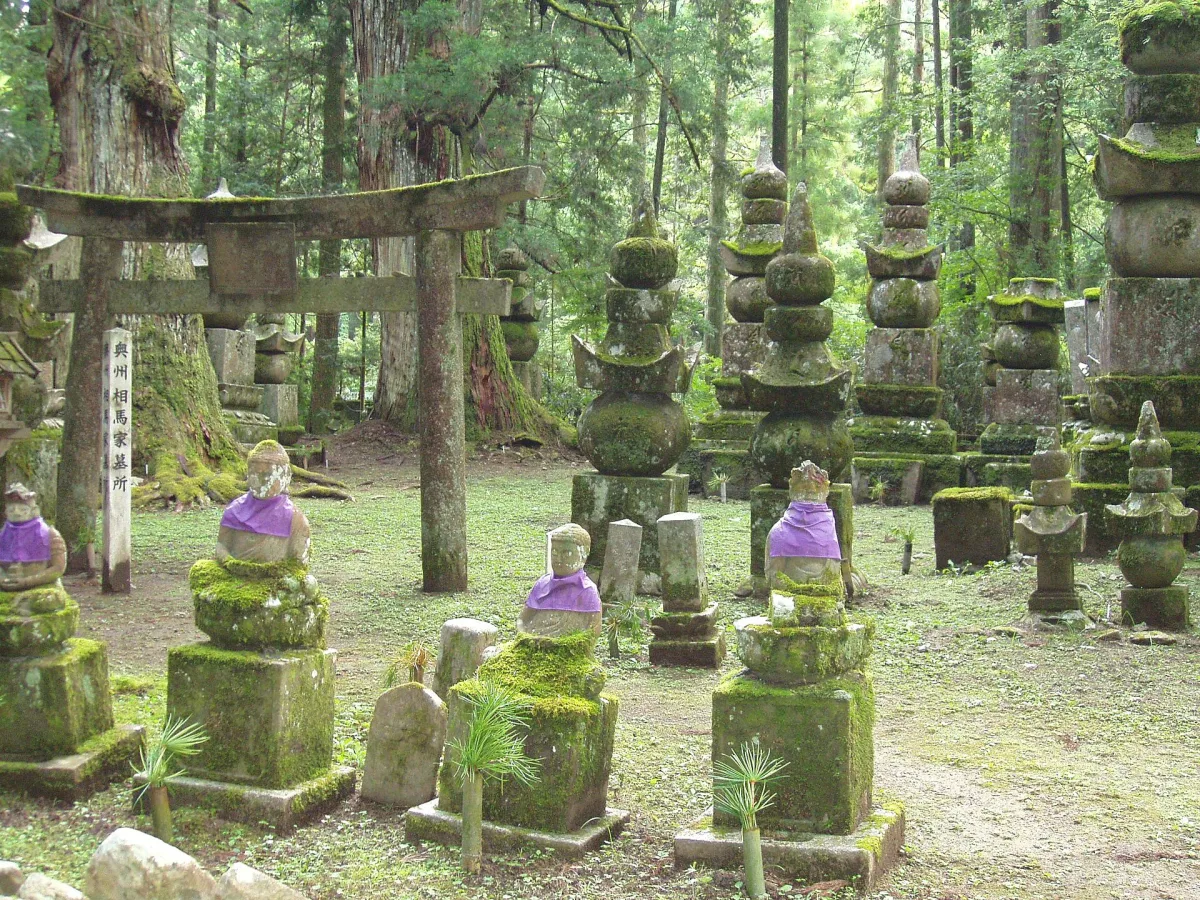
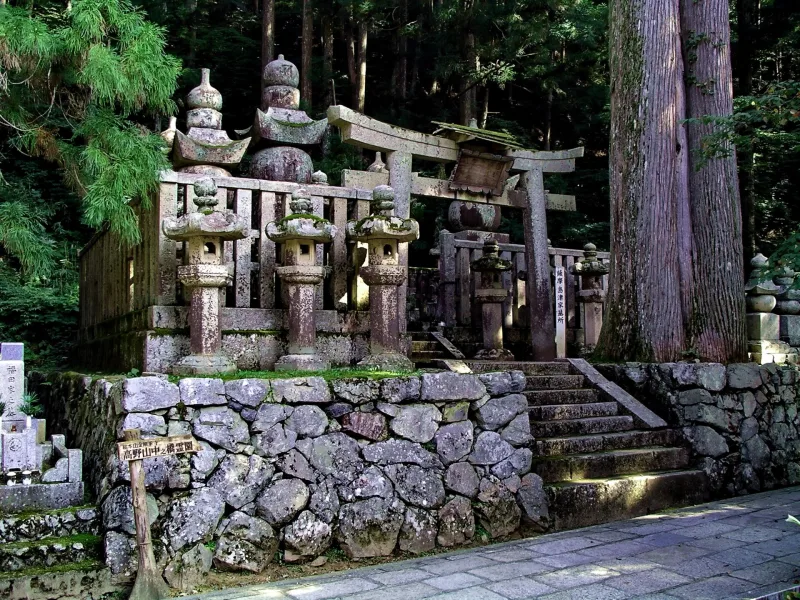
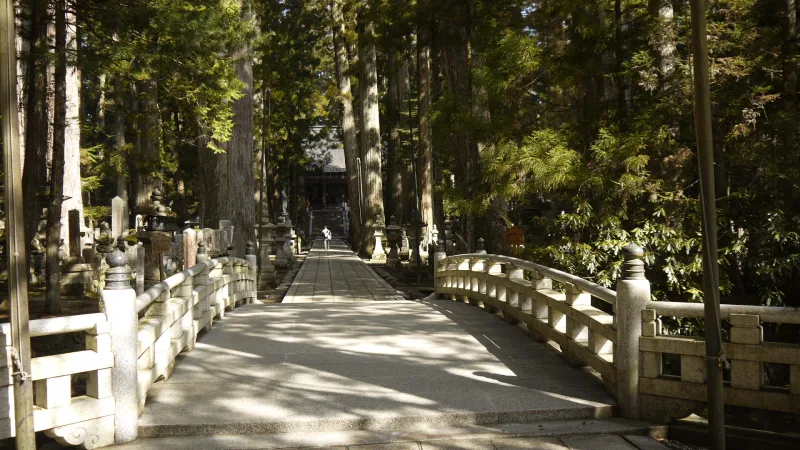
A formal visit begins at Ichi-no-hashi, the bridge at the entrance. Along the approach of about 2 km to the mausoleum, huge cedars more than 700 years old tower overhead, and among them stand more than 200,000 graves, memorial towers and monuments. According to Wakayama Prefecture's official tourism website, many people of every rank are buried here, from members of the imperial family and feudal lords to ordinary people, including warlords of the Sengoku (Warring States) period such as Oda Nobunaga, Takeda Shingen, Uesugi Kenshin and Date Masamune, as well as the Toyotomi family.
Along the way you will pass Naka-no-hashi, the bridge exactly halfway between Ichi-no-hashi and Gobyo-bashi, and the Asekaki Jizo (Sweating Jizo), a statue said to be always sweating because it takes on people's suffering in their place. Beside the path you can also see memorial towers put up by Japanese companies, including a coffee company.
The sacred area beyond Gobyo-bashi, and the Torodo
Once you cross Gobyo-bashi, the bridge at the end of the approach, you enter an especially sacred area. Straight ahead stands the Torodo (Lantern Hall), which serves as the hall of worship for the mausoleum. It is said to have been built by Shinzen, the second head monk of Mount Koya, and enlarged to roughly its present size by Fujiwara no Michinaga in 1023.
Inside, countless lanterns offered by worshippers are lit. Among them are lights said to have burned without going out for a very long time, such as the Hinnyo no Itto (the Poor Woman's Lamp), offered by a poor woman who cut off her treasured black hair to pay for it. Kukai's mausoleum lies further back, beyond the Torodo.
Getting there and walking it
From Namba Station in Osaka, take the Nankai Koya Line to Gokurakubashi Station, change to the cable car up to Koyasan Station, and from there take a bus bound for Okunoin-mae. To walk from Ichi-no-hashi, get off at Okunoin-guchi or Ichinohashi-guchi; to start near the mausoleum, stay on to the last stop, Okunoin-mae.
It is about 2 km one way from Ichi-no-hashi to the mausoleum. Travel guides' suggested routes allow about two hours for the whole of Okunoin. Check the official website for the hours when the Torodo is open.
Tips
- Photography is prohibited beyond Gobyo-bashi. Put away your camera and smartphone before you cross the bridge.
- To really soak up the atmosphere of Okunoin, get off the bus near Ichi-no-hashi and walk the whole approach.
- On the days of the Mando Kuyoe (Ten-Thousand Lantern Memorial Service) on 13 August and the Mantoe on 1 to 3 October each year, the Torodo also opens at night.
Sources
Updated 29 September 2026. Opening hours and prices change, so check the official site before you go.



_-_panoramio.jpg)