Tanize Suspension Bridge
谷瀬の吊り橋
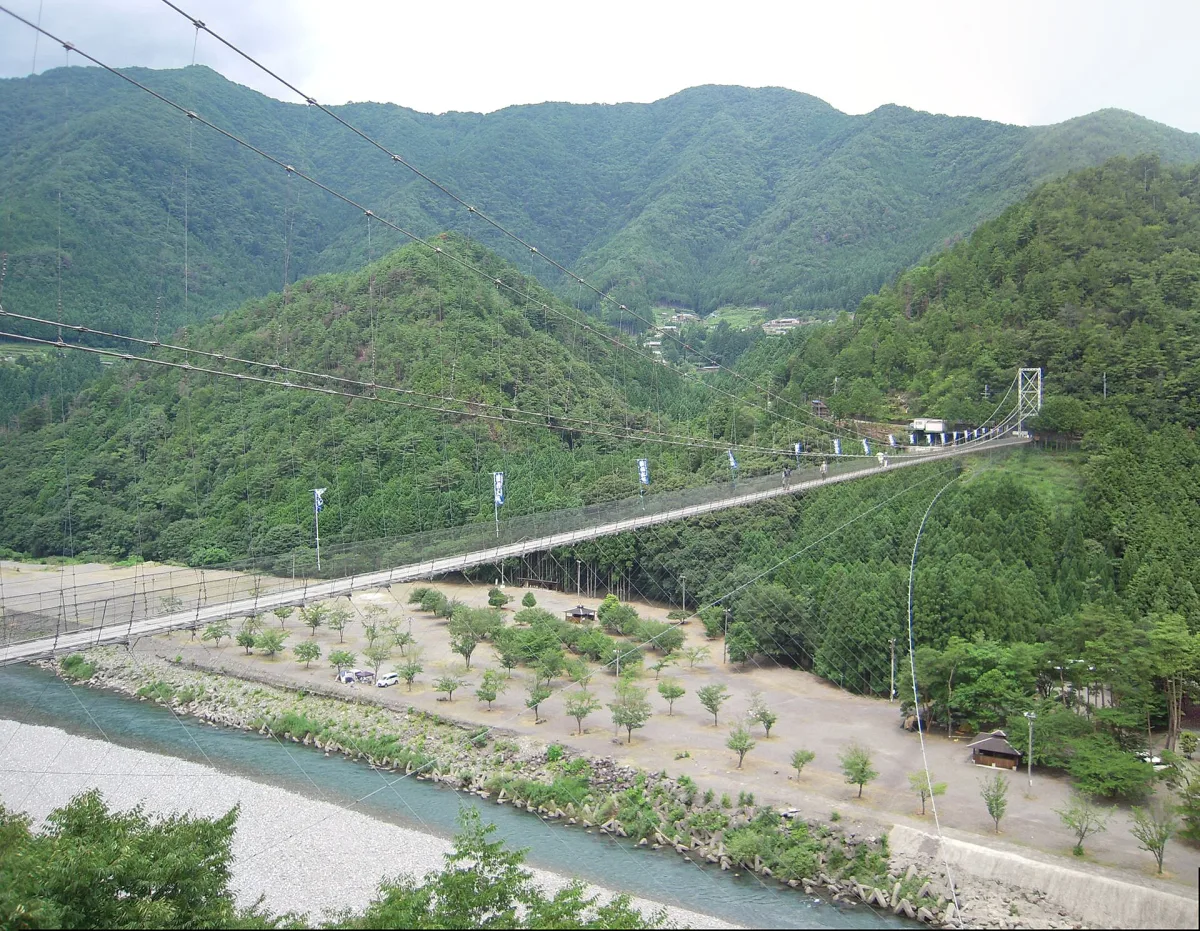
A 297 m suspension bridge 54 m above the Totsukawa River in southern Nara's mountains. Villagers paid for it themselves, and locals still use it daily.
A bridge the villagers paid for together
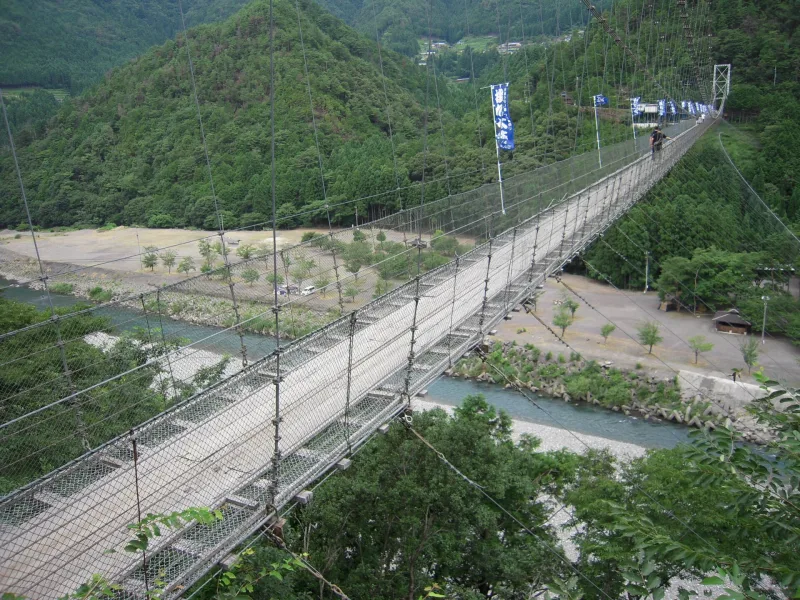
The Tanize Suspension Bridge is in Totsukawa Village, deep in the mountains of the Kii Peninsula in southern Nara Prefecture. It spans the Totsukawa River (also called the Kumano River) to link two hamlets, Uenoji and Tanize. It is 297 m long and 54 m above the water, and Nara Prefecture's official tourism website describes it as the longest suspension bridge in Japan built for everyday use.
The bridge was built in 1954 (Showa 29), during the country's post-war recovery. Until then the people of Tanize crossed the river on log bridges, which were washed away with every flood. So each household in the hamlet put in a large sum of 200,000 to 300,000 yen and, with help from the village, they completed a suspension bridge costing 8 million yen in total. According to the village tourism association, this was at a time when a new teacher's starting salary was about 7,800 yen. Nara Prefecture has registered the bridge as a Nara Prefecture Landscape Asset.
The Totsukawa valley from a swaying bridge
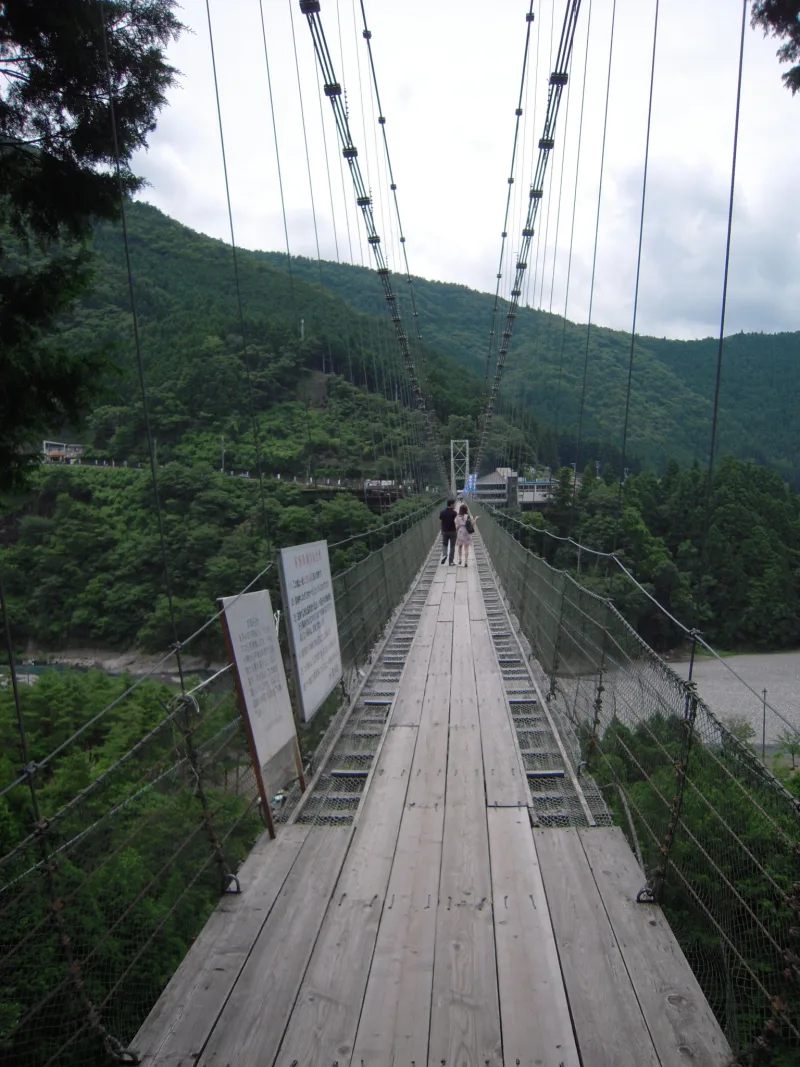
The bridge sways gently with every step. Deep mountains rise on both sides, and the clear Totsukawa River flows right below you. All the way across, it feels as if you are walking through the air.
Today it is Totsukawa Village's best-known sight, but it was built for local residents, and anyone can still cross it free of charge. Every year on 4 August, an event called Yure Daiko (Swaying Drums) is held, with wadaiko (Japanese drums) played on the bridge.
Getting there: on Japan's longest bus route
By public transport, the handiest option is Nara Kotsu's Yagi-Shingu Line. It is Japan's longest regular bus route, taking about six and a half hours to run from Kintetsu Yamato-Yagi Station (in Kashihara, Nara Prefecture) to JR Shingu Station (in Wakayama Prefecture). The nearest stop is Uenoji (Tanize no Tsuribashi). The bus takes a break of about 20 minutes here, and some passengers use it to go and see the bridge (the length of the break differs by service, so check with the driver).
If you come by car, there is parking nearby. There are souvenir shops at the foot of the bridge and a campsite on the riverbank below it. Bus times can change, so check Nara Kotsu's official website.
Tips
- For safety, no more than 20 people may be on the bridge at once. When it is busy you may have to wait a little before crossing.
- The bridge is 54 m high and sways with every step. If you are uncomfortable with heights, do not push yourself.
- If you visit the bridge during the Yagi-Shingu Line's 20-minute break, leave yourself enough time to turn back partway so that you are not late for the bus's departure.
- In the past the bridge has been completely closed at times for inspections or construction work. Check Totsukawa Village's tourist information before you go.
Sources
- 谷瀬の吊り橋|奈良県観光[公式サイト] あをによし なら旅ネット
- 【十津川村観光協会】 谷瀬の吊り橋
- 奈良県景観資産-十津川(熊野川)の深い渓谷を渡る谷瀬の吊り橋- / 奈良県
- 日本一長い路線バスの旅「乗」|十津川村観光サイト
- 八木新宮特急バス|奈良交通公式ホームページ
- 「谷瀬の吊り橋」全面通行止めのお知らせ(十津川村観光協会ブログ)
Updated 29 September 2026. Opening hours and prices change, so check the official site before you go.

.jpg)
