Japan is Nippon
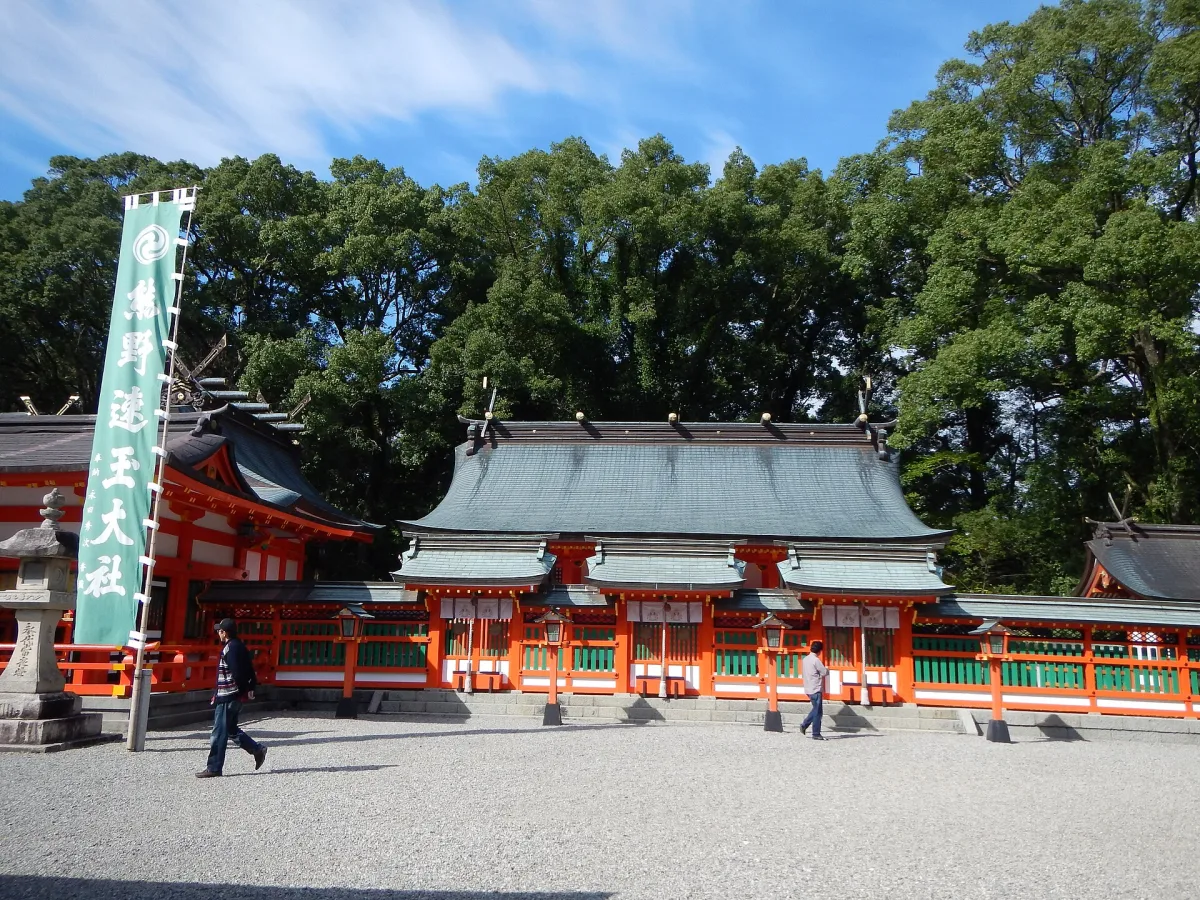
Kumano Hayatama Taisha
熊野速玉大社
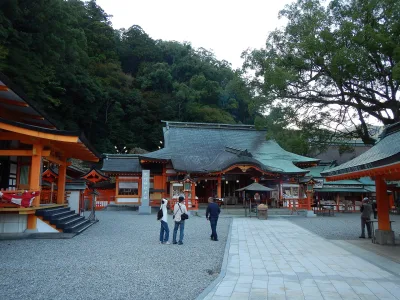
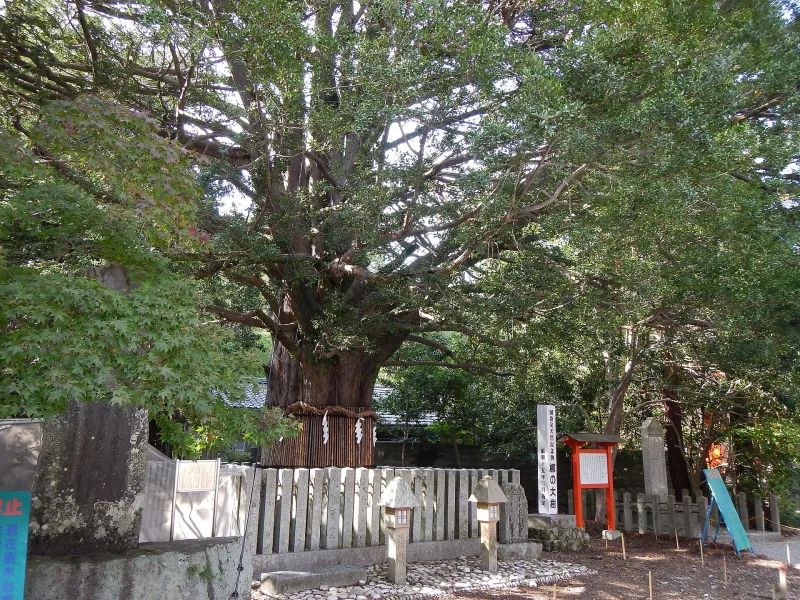
One of the three Kumano shrines, a vermilion shrine in central Shingu, with a sacred nagi tree said to be 1,000 years old and a museum of National Treasures.
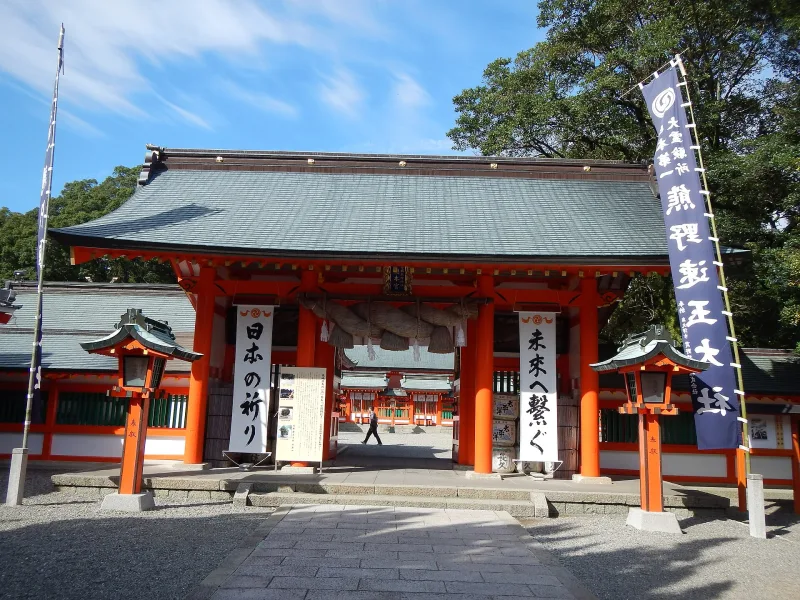
The shrine that gave Shingu its name
Kumano Hayatama Taisha is a Shinto shrine in Shingu, Wakayama Prefecture. Together with Kumano Hongu Taisha and Kumano Nachi Taisha it is one of the Kumano Sanzan (the three Kumano shrines), and in 2004 it was registered as a World Heritage Site as part of the "Sacred Sites and Pilgrimage Routes in the Kii Mountain Range".
According to the shrine, the Kumano gods first came down to earth at Gotobiki-iwa, a great rock on nearby Mount Kamikura. The gods were later moved to the present site and enshrined here, so it came to be called Shingu, the "new shrine", as opposed to the original place.
The main deities are a married couple of gods, Kumano Hayatama no Okami and Kumano Fusumi no Okami.
The sacred nagi tree and the National Treasures
In the grounds stands the shrine's goshinboku (sacred tree), a large nagi tree (梛). It is said to have been planted by Taira no Shigemori, a samurai commander of the Heian period, and to be nearly 1,000 years old. It is a national Natural Monument. Because nagi leaves are symmetrical from side to side, they have long been a symbol of a happy marriage.
The Kumano Shinpokan museum in the grounds holds ancient sacred treasures designated as National Treasures, such as hand boxes decorated in Muromachi-period makie (a craft in which designs are drawn in lacquer with gold powder and the like) and hiogi (folding fans made of cypress slats).
The vermilion shrine buildings were rebuilt after they burned down in 1883 in a fire caused by fireworks, and they went through another major rebuilding in 1967.
Kamikura Shrine and the Oto Matsuri
About 1km south of the shrine, some 20 minutes on foot, is Kamikura Shrine, a sessha (a closely linked subsidiary shrine). Climb its 538 steep stone steps, said to have been donated by Minamoto no Yoritomo, and at the top you come face to face with the sacred Gotobiki-iwa rock. Gotobiki is the local word for a toad.
Every year on the night of 6 February, about 2,000 people dressed in white carry flaming torches down Mount Kamikura in the Oto Matsuri fire festival. In autumn, on 15 and 16 October, Kumano Hayatama Taisha holds its annual grand festival.
Getting there
It is about a 15-minute walk from JR Shingu Station.
A ramp lets you reach the main hall without using stairs, so you can visit in a wheelchair. Check the official website for the Kumano Shinpokan's opening hours.
Tips
- The sacred nagi tree's symmetrical leaves are regarded as a symbol of a happy marriage. Take a close look at the shape of the leaves when you stand in front of it.
- The stone steps at Kamikura Shrine are very steep and made of natural stones piled up. The shrine recommends comfortable shoes, and suggests that anyone unsure on their feet use the gentler Onnazaka slope or pray from the torii (shrine gate) at the bottom.
- Visitors are asked not to take photos while climbing the steps at Kamikura Shrine. Save your pictures for when you reach the top.
Sources
- 熊野速玉大社【公式】 (opens in a new tab)
- 御由緒 | 熊野速玉大社公式サイト (opens in a new tab)
- 摂社神倉神社 | 熊野速玉大社公式サイト (opens in a new tab)
- 熊野速玉大社 | 新宮市観光協会 (opens in a new tab)
- 熊野速玉大社 - Wikipedia (opens in a new tab)
Updated 30 September 2026. Opening hours and prices change, so check the official site before you go.