Japan is Nippon
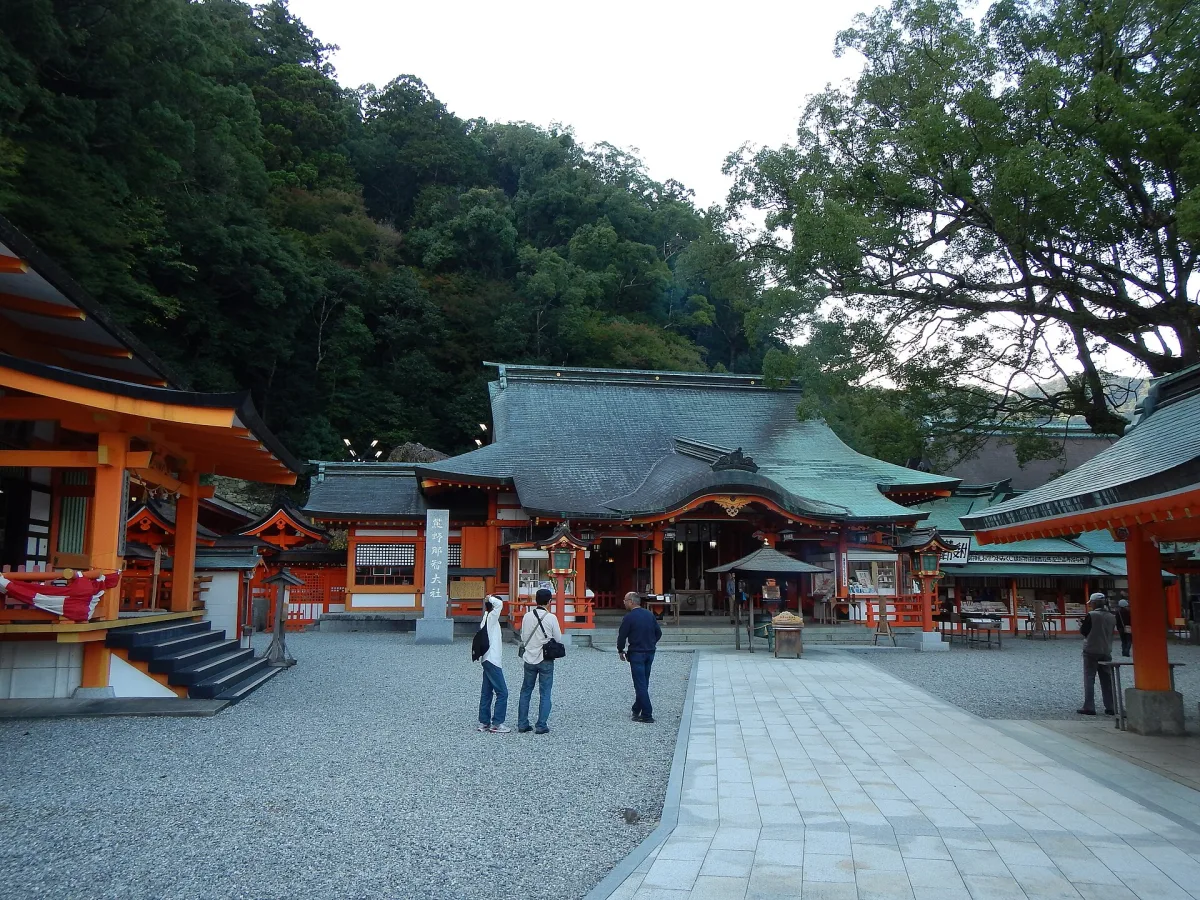
Kumano Nachi Taisha
熊野那智大社
One of the three Kumano shrines, born from worship of Nachi Falls: vermilion halls up long stone steps, and an 850-year-old camphor tree you can walk through.
A shrine born from prayers to a waterfall
Kumano Nachi Taisha is a Shinto shrine on Mount Nachi in Nachikatsuura, Wakayama Prefecture. Together with Kumano Hongu Taisha and Kumano Hayatama Taisha it forms the Kumano Sanzan (the three Kumano shrines), one of the centres of the more than 5,000 Kumano shrines across Japan.
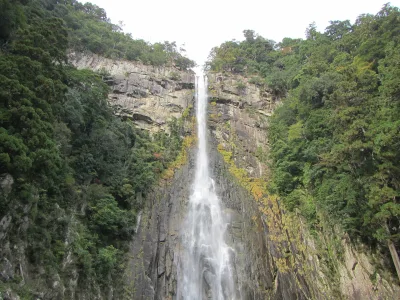
According to the shrine, its faith began with worship of Nachi Falls as a god. The shrine buildings were later moved from beside the falls to their spot halfway up the mountain, which is said to be the origin of today's Kumano Nachi Taisha. The falls themselves are still worshipped as Hiro Jinja, a separate branch shrine.
The main deity is Kumano Fusumi no Okami. As a god who ties together bonds between people and all kinds of wishes, the shrine has long been called Musubi no Miya, the "shrine of tying".
Vermilion halls and the great camphor tree
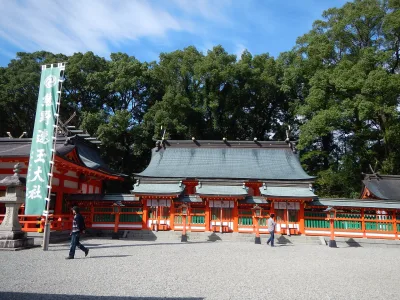
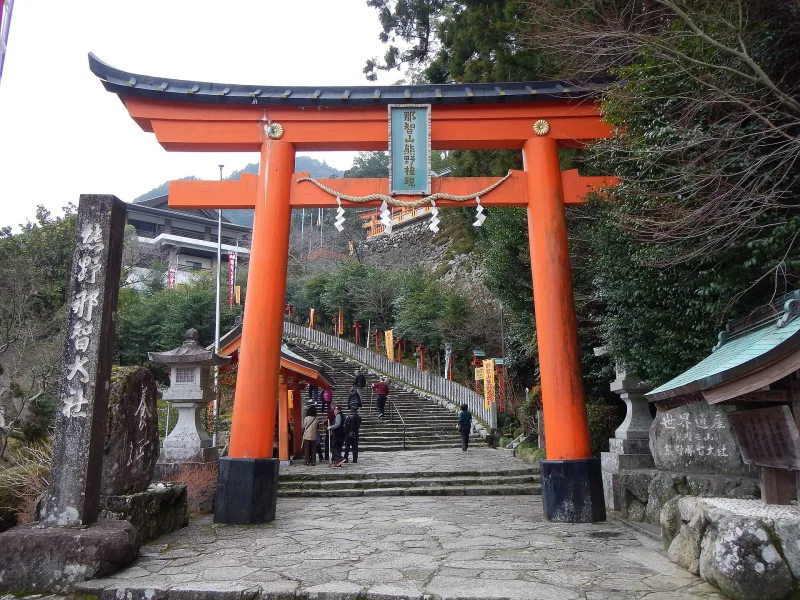
At the top of the long stone steps you reach grounds lined with vermilion shrine buildings. The main sanctuary consists of six halls, five in front plus one to the left, and is a national Important Cultural Property. In 2004 it was registered as a World Heritage Site as part of the "Sacred Sites and Pilgrimage Routes in the Kii Mountain Range".
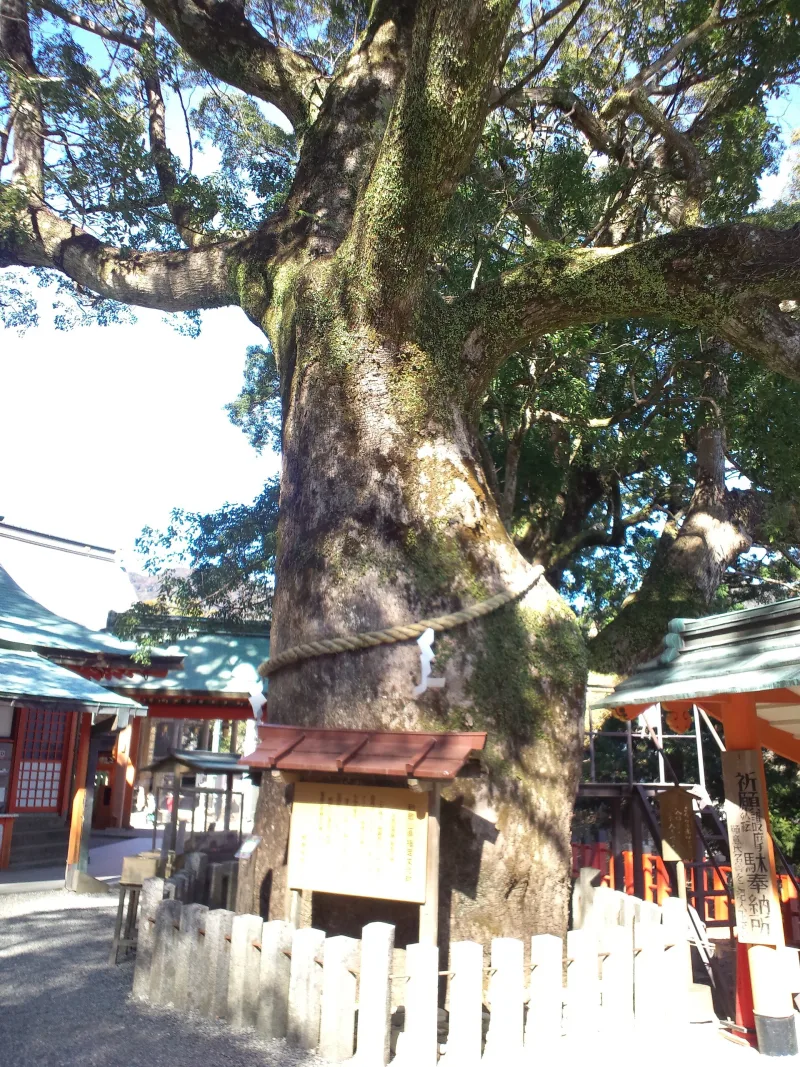
The great camphor tree (okusu) in the grounds is estimated to be about 850 years old, 27m tall and about 8.5m round the trunk. Its trunk is hollow, and you can do tainai-kuguri, passing through the inside of the tree while holding a gomagi (a wooden slip you write a wish on).
The grounds also hold Karasu-ishi, the Crow Stone, linked to Yatagarasu, a three-legged crow regarded as the messenger of the Kumano gods. In myth, after guiding Emperor Jinmu from Kumano to Yamato, Yatagarasu turned into this stone and rests here.
The Nachi Fan Festival (Ogi Matsuri)
Every year on 14 July, during the day, the shrine holds its annual grand festival, the Nachi no Ogi Matsuri (Fan Festival). The spirits of the gods are moved from the main shrine on the mountain into 12 ogi mikoshi (tall portable shrines decorated with fans) and carried down to Nachi Falls. At the foot of the falls, 12 giant torches about 6m tall greet the mikoshi and purify the way. It is a ritual that keeps the old worship of the falls alive today.
Getting there
From JR Kii-Katsuura Station it is about 30 minutes by bus; get off at the Nachisan stop and climb the stone steps. Wakayama Prefecture's tourism website suggests a walking route from Daimonzaka at the foot of the mountain up to Kumano Nachi Taisha, the neighbouring Nachisan Seiganto-ji Temple and Nachi Falls.
If the steps are difficult for you, you can also drive up close to the shrine buildings (via a toll road, with paid parking).
Tips
- Kumano Nachi Taisha, Seiganto-ji and Nachi Falls are all within walking distance of one another. There are a lot of stone steps, so wear comfortable shoes.
- Since 2023 it has not been possible to visit Nachi Falls (Hiro Jinja) in a wheelchair. If you are visiting in a wheelchair, check the shrine's notices.
- Cherry blossom season is around the end of March to early April, when you can see the vermilion buildings and the blossoms together.
Sources
- 熊野那智大社 公式サイト (opens in a new tab)
- ご由緒 | 熊野那智大社 (opens in a new tab)
- 社殿案内 | 熊野那智大社 (opens in a new tab)
- 例大祭「那智の扇祭り」| 熊野那智大社 (opens in a new tab)
- 熊野那智大社 | 和歌山県公式観光サイト (opens in a new tab)
Updated 30 September 2026. Opening hours and prices change, so check the official site before you go.