Japan is Nippon
Inatori Onsen Hina Tsurushi Kazari Festival (Hanging Doll Decorations)
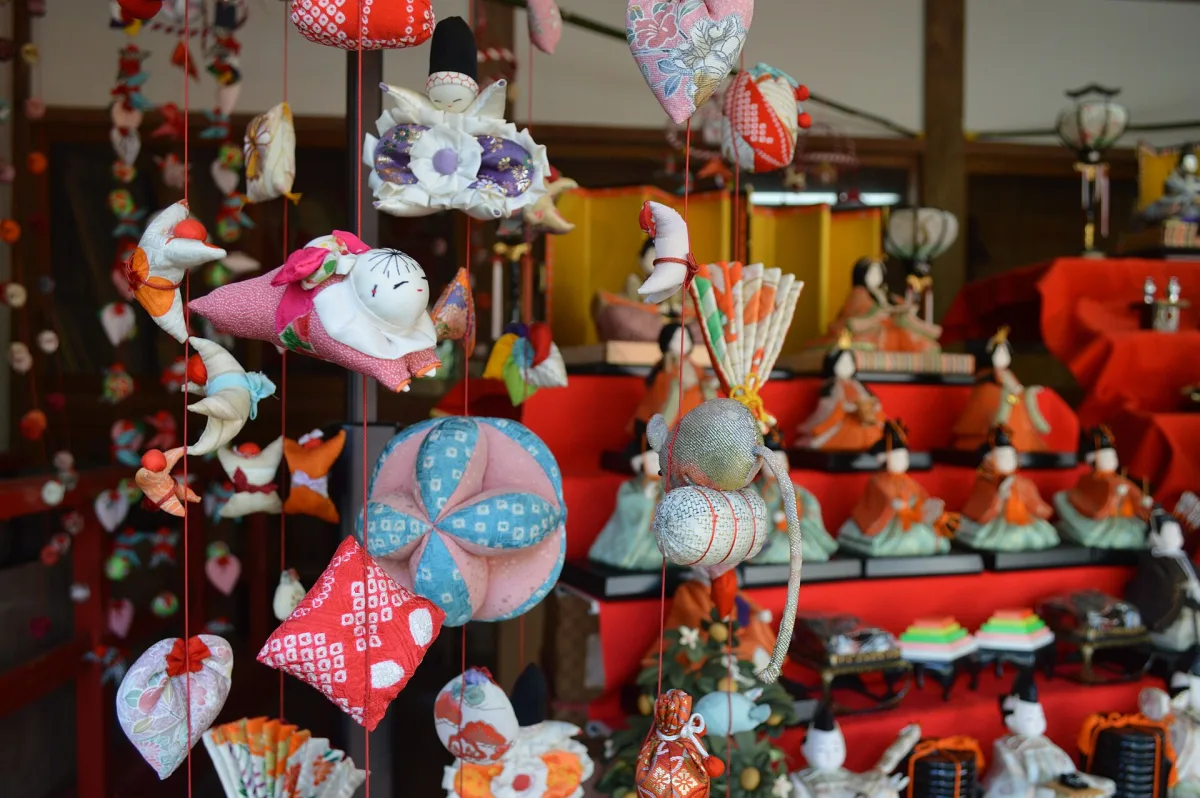
Mothers and grandmothers who couldn't afford costly hina dolls sewed tiny ones from kimono scraps. Born in Inatori, Izu, the hangings fill the town in early spring.
Shizuoka
- ShizuokaInatori Onsen, Higashi-Izu (Bunka Koen Hina no Yakata, Susanoo Shrine, Hachiman Shrine and other venues)
Recent years
| Year | Dates | Visitors | Notes |
|---|---|---|---|
| 2026 | 20 January – 31 March | — | The 29th festival. Displays at four venues, including Bunka Koen Hina no Yakata. Hina display on the Susanoo Shrine steps from 14 February to 8 March. |
| 2025 | 20 January – 31 March | — | The 28th festival. |
| 2024 | 20 January – 31 March | — | The 27th festival. |
| 2023 | 20 January – 31 March | — | The 26th festival. The hina display on the Susanoo Shrine steps ran from 18 February to 12 March and was cancelled on 20 February. |
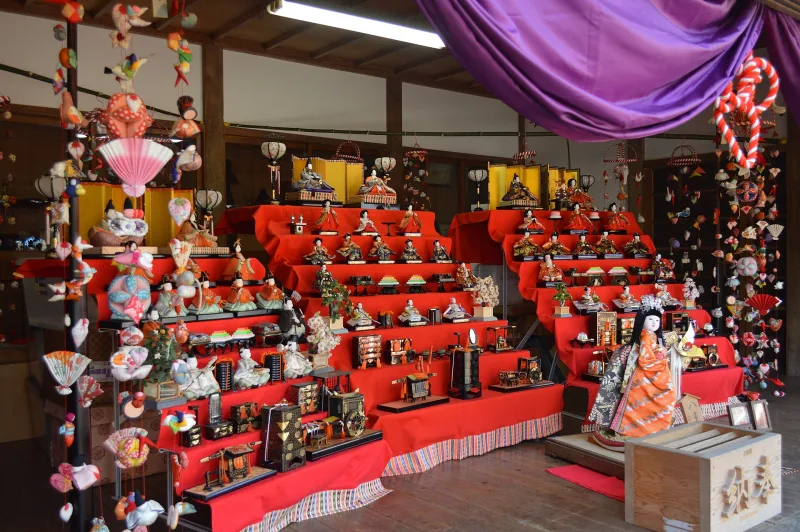
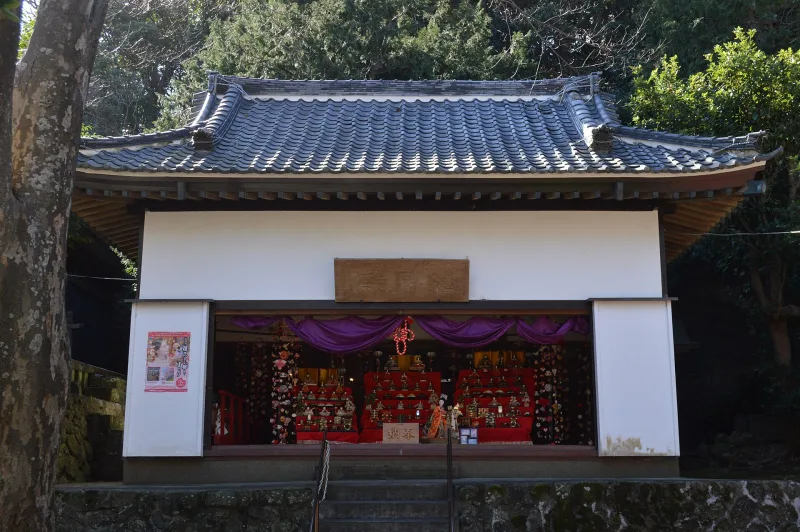
What is it, and when and where?
The Hina Tsurushi Kazari Festival is held every year from 20 January to 31 March at Inatori Onsen, a hot-spring town in Higashi-Izu on the east coast of the Izu Peninsula in Shizuoka Prefecture. It is organised by the local Inatori Onsen Ryokan Cooperative, and 2026 marked its 29th edition.
Hina no tsurushi kazari are decorations made for Hinamatsuri, the Doll Festival held on 3 March to wish for girls' healthy growth and happiness. Small fabric dolls are strung together on cords and hung on either side of the tiered stand where the hina dolls are displayed. Inatori is said to be where this custom began. During the festival, large numbers of hanging decorations and hina dolls are on show at several venues around the town.
Made from scraps, out of love for a child
Nobody knows exactly when it began, but it is said that the custom was already around when grandmothers born in the Meiji era (1868–1912) were children, so it is thought to go back to the late Edo period.
In those days hina dolls were expensive, and only a few wealthy families could own a set. So, the story goes, mothers, grandmothers, aunts and neighbours in ordinary households pooled scraps of old kimono fabric and, little by little, sewed small dolls filled with wishes for a girl's health and happiness, then strung them together.
Hanging decorations made of fabric are rare in Japan. According to the organisers, Inatori is one of only three places where the tradition has a documented historical background, alongside the sagemon of Yanagawa in Fukuoka Prefecture and the kasafuku of Sakata in Yamagata Prefecture.
The meaning behind each shape
Each doll in the hangings carries a lucky meaning. The owl (fukuro), for instance, is a play on fuku (good fortune) and on fu-kuro ("no hardship"). The daruma, a round figure that bounces back up however many times it is knocked over, is a good-luck charm that invites fortune, and its red colour is said to ward off illness.
Turtles and paper cranes stand for long life. The pillow comes from the saying "a child who sleeps well grows well", and the dove, which is said never to choke, expresses the wish that a nursing baby will feed safely. The Chinese lantern plant (hozuki) is considered a charm for women, and the hagoita (the paddle used in a traditional New Year shuttlecock game) is meant to bat away bad luck. Hunting for each shape as you walk around the venues is part of the fun.
Four exhibition venues and 118 steps of dolls
The main venue is the Bunka Koen Hina no Yakata. According to the 2026 guide, it showed about 11,000 hanging decorations, plus a giant hanging display made from 6,409 pieces and a 17-tier jumbo hinadan, and you can also see Yanagawa's sagemon and Sakata's kasafuku. The other venues are Naburatoto, which displays old hina dolls from the Edo period; the Futatsubori harvest experience farm, whose display is close to how ordinary Inatori households decorate; and Hachiman Shrine, Inatori's soja (the principal shrine of the area).
The highlight of the season is the hina display at Susanoo Shrine. Hina dolls and hanging decorations line all 118 stone steps leading up to the main hall of the shrine, which is said to have been founded in 1617. According to the organisers, it is the greatest number of tiers used to display hina dolls anywhere in Japan. It is only up for part of the festival: in 2026 it ran from 14 February to 8 March, in the daytime only, and was cancelled on rainy days.
Good to know before you go
The nearest station for Inatori Onsen is Izu-Inatori on the Izukyu Line. The venues are dotted around Inatori fishing port and the hot-spring town, so use the organisers' venue map to get around.
At the same time of year, nearby Kawazu holds the Kawazu Cherry Blossom Festival, celebrating its early-flowering cherries (7 February to 8 March in 2026). If you want to see both the Susanoo Shrine steps and the Kawazu cherries, aim for mid-February to early March.
The Hina no Yakata also opens at other times of year outside the festival (in 2026 it opened in the autumn as well). There are also places where you can try making hanging decorations yourself; you may need to book in advance.
Tips
- The hina display on the steps of Susanoo Shrine is only up for a limited part of the festival (20 January to 31 March), roughly mid-February to early March, and it is cancelled on rainy days, so check the weather forecast too.
- Susanoo Shrine has 118 stone steps. Wear comfortable shoes.
- Start at the main venue, the Bunka Koen Hina no Yakata (Hina Doll House in the Culture Park). Besides the giant hanging display, you can compare the hanging decorations of Yanagawa and Sakata.
- Between early February and early March you can pair it with the Kawazu Cherry Blossom Festival for a taste of early spring in Izu.
- Susanoo Shrine asks visitors for a contribution towards the running and upkeep of the site.
Sources
- 稲取温泉旅館協同組合「雛のつるし飾り」 (opens in a new tab)
- 稲取温泉旅館協同組合「第29回 雛のつるし飾りまつり」 (opens in a new tab)
- 稲取温泉旅館協同組合「第29回 雛のつるし飾りまつり」リーフレット(表) (opens in a new tab)
- 稲取温泉旅館協同組合「雛のつるし飾りまつり」リーフレット(裏・会場案内と地図) (opens in a new tab)
- 稲取温泉旅館協同組合「雛のつるし飾り」形と意味 (opens in a new tab)
- 稲取温泉旅館協同組合「文化公園雛の館」 (opens in a new tab)
- 稲取温泉旅館協同組合「雛のつるし飾り」2025年2月時点(Internet Archive) (opens in a new tab)
- 稲取温泉旅館協同組合「雛のつるし飾り」2024年2月時点(Internet Archive) (opens in a new tab)
- 稲取温泉旅館協同組合「雛のつるし飾り」2023年2月時点(Internet Archive) (opens in a new tab)
- Wikipedia「稲取温泉」(補助資料) (opens in a new tab)