Japan is Nippon
Omizutori (Shunie at Todaiji's Nigatsudo)
A prayer rite at Nara's Todaiji, unbroken since 752. How to experience the nightly torches on Nigatsudo's balcony as worship, not a show.
Recent years
| Year | Dates | Visitors | Notes |
|---|---|---|---|
| 2026 | 1–14 March | — | The 1,275th. Todaiji asked people to turn off flashes and lights when photographing the torches. |
| 2025 | 1–14 March | — | The 1,274th. |
| 2024 | 1–14 March | — | The 1,273rd. Todaiji live-streamed the ritual from 1 to 15 March. |
| 2023 | 1–14 March | — | The 1,272nd. Arrangements for worshippers were set in light of the COVID-19 situation, and the ritual was live-streamed on Niconico. |
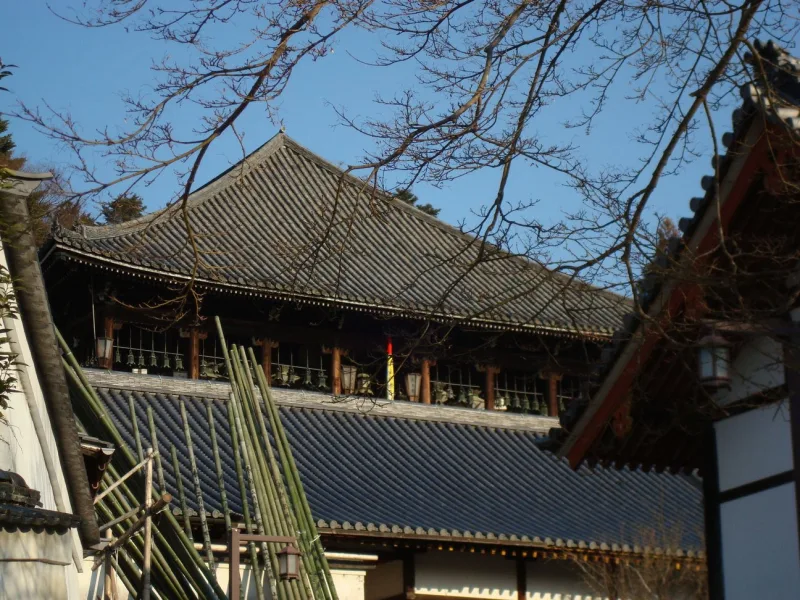
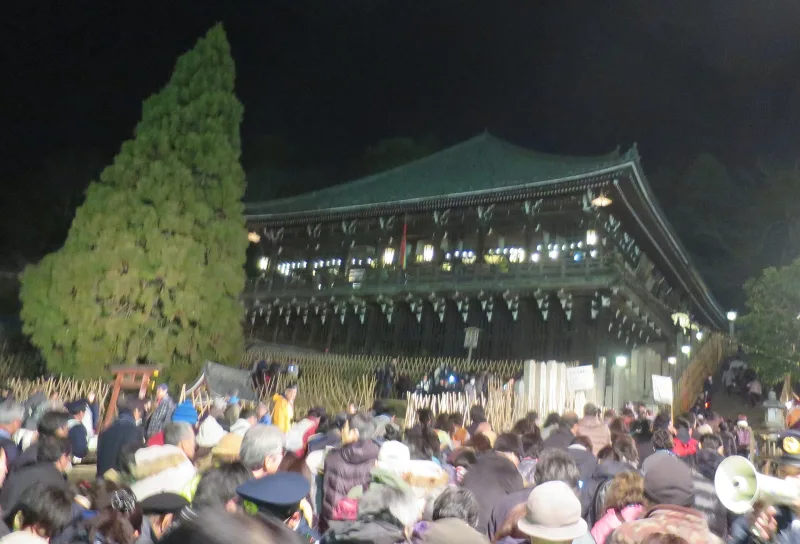
What is it, and when and where does it happen?
Shunie is a Buddhist hoe (ceremony) held for two weeks, from 1 to 14 March every year, at Nigatsudo, a hall in the grounds of Todaiji in Nara city (the temple famous for its Great Buddha). It is also widely known as Omizutori ("water drawing") and Otaimatsu ("the torches").
Its formal name is the Juichimen Keka rite. Before the eleven-headed Kannon (the Buddhist figure of compassion) that is Nigatsudo's principal image, the monks repent, confessing and asking forgiveness for the wrongs people commit day after day, and pray for peace in the world, a good harvest of the five grains and people's happiness.
The ritual is performed by eleven monks called rengyōshū. Next year's monks are announced every 16 December, and from 20 February they enter a preparation period called bekka before the main rite begins on 1 March.
Over 1,270 years without a single break
According to Todaiji, Shunie was started in 752 by Jitchu, a disciple of the priest Roben, who founded Todaiji. 2026 marks its 1,275th performance.
Twice in its history Todaiji lost most of its major buildings, yet Shunie alone has carried on without ever being interrupted, which is why it is called "the rite that never retreats". In 1667 Nigatsudo itself burned down in the middle of Shunie, but even then the ritual went on, and the hall was rebuilt two years later.
It was originally held from the 1st day of the second month of the old lunar calendar, so it came to be called Shunie, "the ceremony performed in the second month". Nigatsudo, "the Second Month Hall", takes its name from it too.
The torches that light up the night
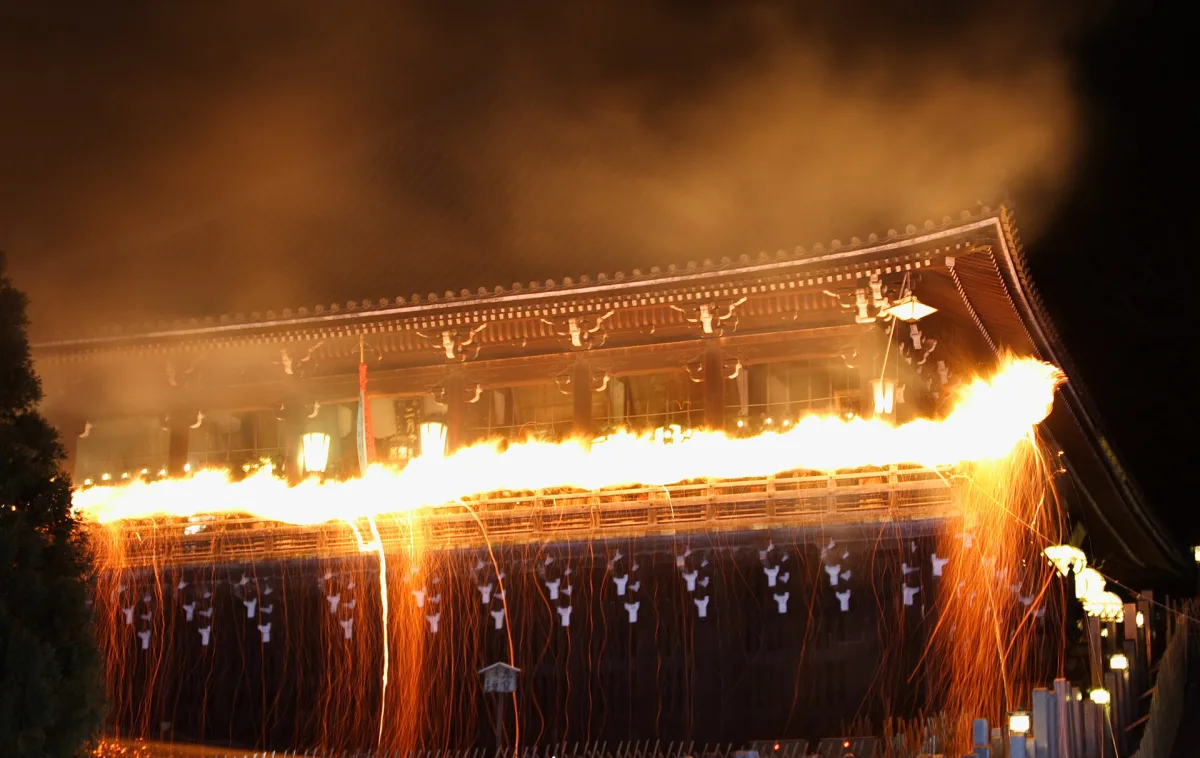
The otaimatsu torches are lit to show the rengyōshū the way as they climb up to Nigatsudo. They are really just lights for the path, but the sight of the burning torches being swung along the hall's outer railing, known as the "stage", with showers of sparks raining down, draws huge numbers of people.
The torches appear every day of the ritual. According to Todaiji, on 1–11 and 13 March there are ten torches from 7pm, lasting about 20 minutes; on 12 March there are eleven especially large kago-taimatsu ("basket torches") from 7.30pm, lasting about 45 minutes; and on the final day, the 14th, ten torches go up one after another in quick succession from 6.30pm and line up in a row along the railing in about ten minutes.
The basket torches of the 12th are huge: around 1 metre across, made by weaving cedar leaves and thin cedar strips like the mesh of a basket onto the tip of a bamboo pole about 6 metres long, with its roots still attached. The torches are made by people called doji, who support Shunie behind the scenes.
The water drawing, and the rites inside the hall
Late on the night of 12 March (around 1.30am on the 13th), a rite is held to draw okozui, sacred water offered to Kannon, from a well called Wakasai below Nigatsudo. This is the Omizutori, the "water drawing" itself.
According to legend, when the gods of the whole country gathered, Onyu Myojin of Wakasa Province (today's Fukui Prefecture) arrived late and offered water to Kannon as an apology. Because of this link, a ceremony called Omizuokuri ("water sending"), which sends water to Nara, is held on 2 March in Obama city, Fukui Prefecture.
Inside the hall, the "rites of the six hours", prayers that divide each day into six periods, continue daily, and from the 12th to the 14th there is also a rite called dattan, in which burning torches are carried around the shumidan (the altar platform on which the principal image stands). In the kakocho (register of the dead) read out on the nights of 5 and 12 March, there is a custom of still reading in a quiet voice the name of the "woman in blue robes", who is said to have appeared in the Kamakura period.
Things to know before you go
Todaiji repeatedly reminds visitors that Shunie is "a Buddhist ritual, not an event". It asks people not to come only for the torches but to learn what the ritual means before they visit, and recommends things such as the special exhibition "Omizutori" held at the Nara National Museum every year from mid-February to mid-March.
The open area below Nigatsudo where you can watch the torches holds about 3,000 people. Many people aim only for 12 March, the night that appears on the news, so entry is restricted that day; depending on the time, you may not see the torches at all, or may only catch a very short glimpse while being moved along in the crowd. On other days, weekends are especially busy. On any day except the 12th, you can also listen to the voices of the rites inside the hall from areas of Nigatsudo called tsubone.
Tripods, monopods, stepladders and strobe lights are banned around Nigatsudo. In 2026, people were asked to switch off the flash and lights on cameras and smartphones when photographing the torches. There is no car park for worshippers in the temple grounds, and taxi access is also restricted during the ritual.
Tips
- The otaimatsu torches are lit every day from 1 to 14 March. To avoid the worst crowds, pick a weekday other than 12 March.
- Rough start times (from Todaiji's guidance): 7pm on ordinary days, 7.30pm on the 12th and 6.30pm on the 14th. Check the latest information before you set off.
- If you take photos, switch off your flash and any lights. Tripods, monopods and stepladders cannot be used around Nigatsudo.
- There is no car park in the temple grounds. Take the city loop bus from JR Nara Station or Kintetsu Nara Station, or walk from Kintetsu Nara Station.
- To understand what the ritual means, also visit the special exhibition "Omizutori" held at the Nara National Museum at the same time of year.
Sources
- 東大寺「修二会」 (opens in a new tab)
- 東大寺「お松明」 (opens in a new tab)
- 東大寺「修二会 注意事項」 (opens in a new tab)
- 東大寺「修二会 用語解説 其の一」 (opens in a new tab)
- 東大寺「修二会 用語解説 其の二」 (opens in a new tab)
- 東大寺「二月堂」 (opens in a new tab)
- 東大寺「年中行事一覧」 (opens in a new tab)
- 東大寺「交通案内」 (opens in a new tab)
- 東大寺「令和8年修二会 拝観について」(Internet Archive) (opens in a new tab)
- 東大寺「令和7年 修二会 拝観について」(Internet Archive) (opens in a new tab)
- 東大寺「令和6年度 修二会 拝観について」(Internet Archive) (opens in a new tab)
- 東大寺「令和5年度 修二会 拝観について」(Internet Archive) (opens in a new tab)
- 奈良市観光協会「東大寺」 (opens in a new tab)
- Wikipedia「修二会」(補助資料:遠敷明神の伝説、お水送り、達陀) (opens in a new tab)