Japan is Nippon
Inuyama Festival
Thirteen floats with mechanical puppets roll through the town below Inuyama Castle, a National Treasure: puppetry by day, lanterns by night, for two spring days.
Aichi
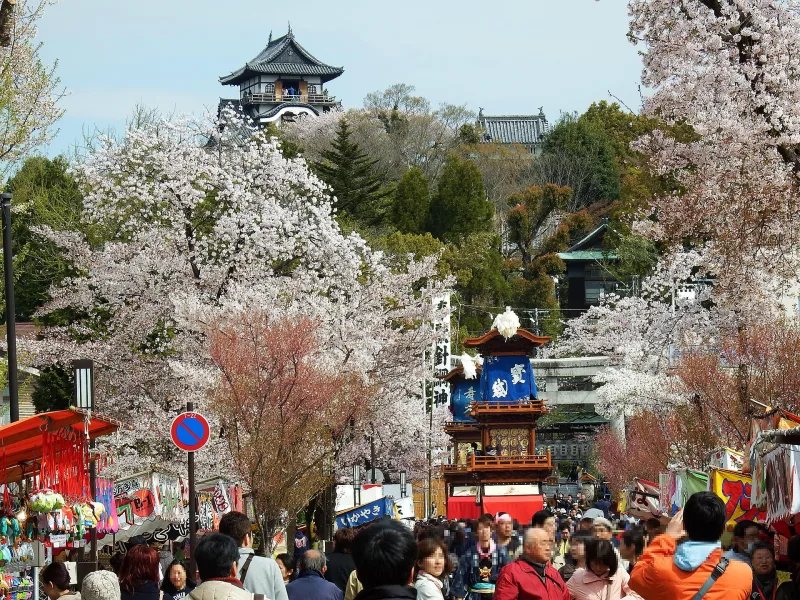
- AichiThe old castle town of Inuyama and Haritsuna Shrine, at the foot of Inuyama Castle
Recent years
| Year | Dates | Visitors | Notes |
|---|---|---|---|
| 2026 | 4–5 April | — | The 392nd festival. Because of rain on the 4th, the Shingakusai floats only toured near their storehouses in the morning, and float events from noon onwards were cancelled. The weather cleared for the Hongakusai on the 5th, which went ahead as planned. |
| 2025 | 5–6 April | — | The 391st festival. The 5th went ahead as planned. On the 6th, light rain meant the Hongakusai float procession and puppet offerings were scaled back, with changes to the schedule and to which neighbourhoods took part, and the night parade only toured around each float storehouse. |
What is it, and when and where?
The Inuyama Festival is the spring festival of Haritsuna Shrine in Inuyama, Aichi Prefecture. It is held every year over two days, the first Saturday of April and the Sunday after it. The first day is called the Shingakusai and the second the Hongakusai. The 2026 festival was the 392nd.
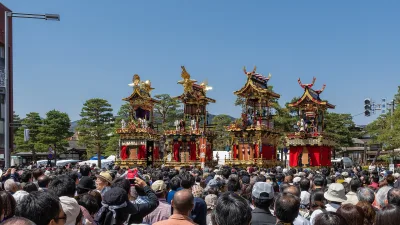
The stage is the old castle town that spreads out below Inuyama Castle, a National Treasure. Thirteen neighbourhoods each bring out a yama (a decorated festival float that is pulled through the streets), and three others put on processions known as nerimono, so 16 neighbourhoods take part in all. Every one of the 13 floats carries karakuri ningyo (mechanical puppets).
A castle-town festival going since 1635
According to the organisers, the Inuyama Festival Preservation Society, the festival began in 1635. At first two neighbourhoods, Shimohoncho and Sakanayamachi, took part with nerimono processions, but in 1641 Shimohoncho replaced its procession with a float, and it is said that it was already offering karakuri puppet performances at that time. Later, encouraged by the lord of Inuyama Castle, Naruse Masatora, one neighbourhood after another joined in, and by the middle of the Edo period (1603–1868) the festival had taken on the basic form it has today.
In the Edo period it was held in the eighth month of the old lunar calendar, but in 1898 it moved to April, and after several further changes settled on the current first Saturday and Sunday of April. The 13 floats were designated Tangible Folk Cultural Properties of Aichi Prefecture in 1964, and the Inuyama Festival's float events became a national Important Intangible Folk Cultural Property in 2006. In 2016 they were inscribed on UNESCO's Intangible Cultural Heritage list, together with festivals from all over Japan, as "Yama, Hoko, Yatai, float festivals in Japan".
Three-tiered "Inuyama-style" floats and their puppets
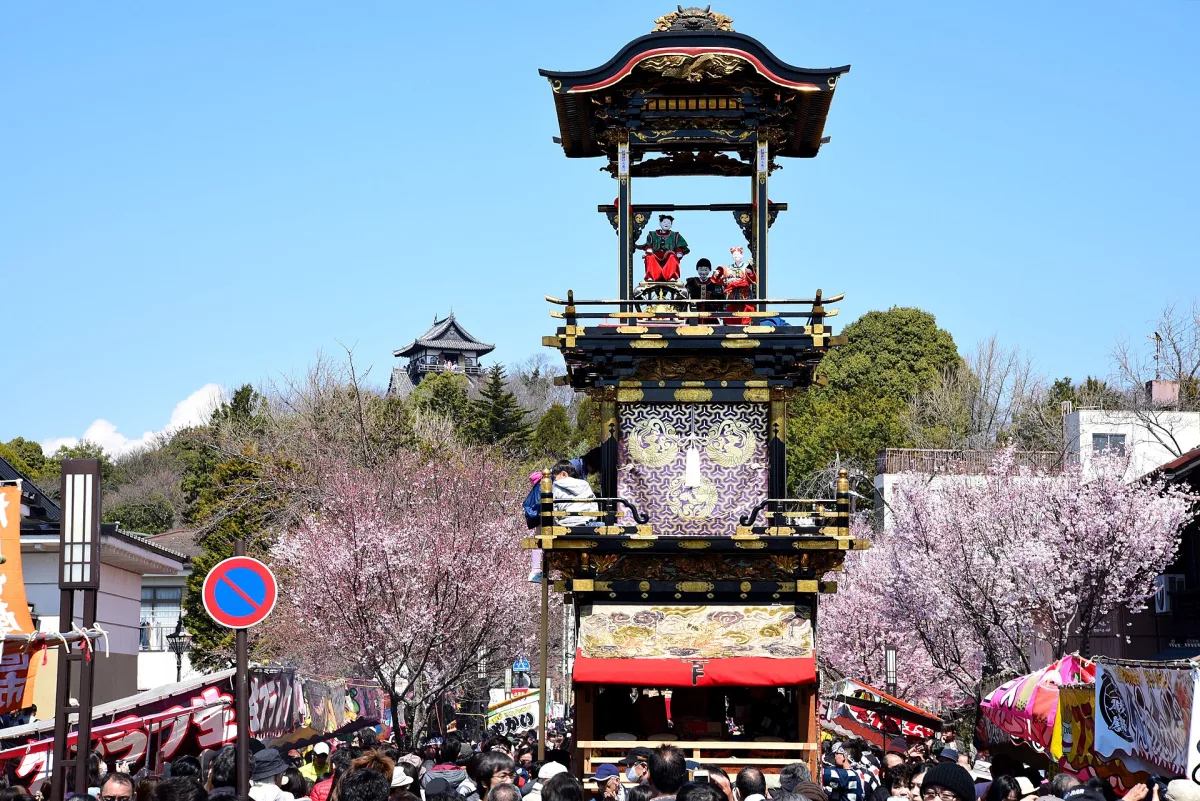
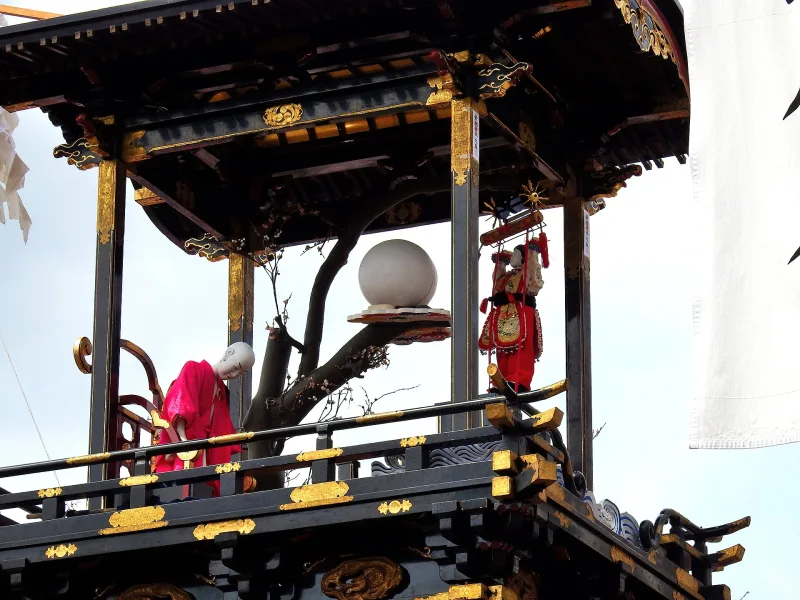
Inuyama's floats are built in three tiers, from top to bottom the uwayama, the nakayama and the shitayama, a design known as the "Inuyama style". The uwayama is the stage where the karakuri puppets perform, the nakayama is where the puppeteers sit, and the shitayama is where the ohayashi (festival music) is played. In the ohayashi, the young men play the flutes and the children play the drums.
Riding a float for the first time is called hatsuagari, and by custom it is celebrated with great fanfare. The floats are decorated with lacquer, raden (mother-of-pearl inlay) and hangings embroidered with gold thread, and each neighbourhood's decorations are different. The karakuri puppets have been handed down within each neighbourhood since the Edo period, repaired and restored again and again.
How the two days unfold, and what to look out for
On the evening before the festival comes the Yoimatsuri (eve festival), when neighbourhoods liven up the town by opening their float storehouses and practising their festival music. On the day of the Shingakusai, the floats set off from their neighbourhoods in the morning, head for Haritsuna Shrine and perform their karakuri. At dusk the floats are hung with lanterns and parade through the castle town at night.
On the day of the Hongakusai, the 13 floats and three nerimono processions gather in front of Haritsuna Shrine. The floats lined up with Inuyama Castle and the shrine behind them is the festival's most famous scene. Each neighbourhood in turn offers its karakuri performance to the shrine, and once it has finished, the float performs a donden as it backs away: the pullers hoist the front of the float and spin it round 180 degrees, a real show of strength.
Afterwards the floats split into a northern group (six floats) and a southern group (seven floats), and once the sun goes down the yoyama (night floats) begin, with their lanterns lit. Each float is said to carry 365 lanterns, one for every day of the year, and the town is bathed in orange light.
Crowds, and what happens if it rains
The castle town is extremely crowded on festival days, and pedestrian restrictions are in place, especially around the square in front of Inuyama Castle and along Honmachi-dori. Follow the stewards' directions as you walk.
The floats are precious cultural properties, and the lanterns become unusable once they get wet. So on rainy days the processions and karakuri performances are shortened or cancelled. Whether events go ahead is decided early in the morning on the day and announced by about 8am on the Inuyama Festival Preservation Society's official website and on Inuyama Kanko Navi (run by the Inuyama Tourism Association).
If you can't make it on festival days, the Donden-kan museum in the castle town lets you see, all year round, real floats about 8 metres tall that are pulled in the festival (those of four neighbourhoods).
Tips
- On the morning of the Hongakusai (the Sunday), all 13 floats line up in front of Haritsuna Shrine, the defining scene of the festival. Arrive early to get a good spot.
- If rain is forecast, check the official website or Inuyama Kanko Navi at around 8am on the day to see whether events are going ahead before you set out.
- The donden, performed when the floats back away, can also be seen during the night parade, at places such as the Shimohoncho crossroads.
- On festival days the streets of the old castle town get crowded and there are pedestrian restrictions. Walk from Meitetsu's Inuyama Station or Inuyama-yuen Station.
- On the evening before the festival there is also the Yoimatsuri (eve festival), and some neighbourhoods open their float storehouses. Staying from the night before lets you soak up more of the festival atmosphere.
Sources
- 犬山祭保存会 公式サイト (opens in a new tab)
- 犬山祭保存会「犬山祭の歴史」 (opens in a new tab)
- 犬山祭保存会「車山と練り物」 (opens in a new tab)
- 犬山祭保存会「どんでん館」 (opens in a new tab)
- 犬山祭保存会「天候などによる車山運行の中止の場合などの発表方法」(2026年4月1日) (opens in a new tab)
- 犬山祭保存会「犬山祭4月4日(試楽祭)の天候によるスケジュール変更につきまして」(2026年) (opens in a new tab)
- 犬山祭保存会「4/5犬山祭本楽祭のお知らせ」(2026年) (opens in a new tab)
- 犬山祭保存会「第392回犬山祭(令和8年4月4日・5日)は終了いたしました」 (opens in a new tab)
- 犬山祭保存会「第391回犬山祭(令和7年4月5日・6日)は終了いたしました」 (opens in a new tab)
- 犬山観光ナビ(犬山市観光協会)「犬山祭(4月6日)スケジュール変更」(2025年) (opens in a new tab)
- 犬山観光ナビ(犬山市観光協会)「犬山祭の開催情報について」(2026年) (opens in a new tab)
- 文化庁 国指定文化財等データベース「犬山祭の車山行事」 (opens in a new tab)
- Wikipedia「犬山祭」(補助資料:提灯の数) (opens in a new tab)