Aichi
Aichi pairs Nagoya's busy streets and making traditions with old castle towns, wooded hills, two bays and a food culture all its own.
Map outlines: Natural Earth
-
1
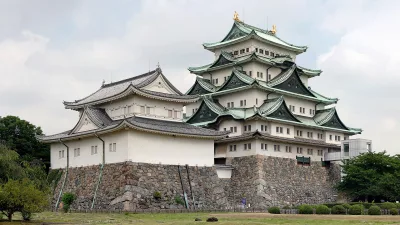 Nagoya Castle
Nagoya's symbol, built by Tokugawa Ieyasu and topped with golden shachihoko. The keep is closed for now, but you can tour the superbly restored Honmaru Palace.
Nagoya Castle
Nagoya's symbol, built by Tokugawa Ieyasu and topped with golden shachihoko. The keep is closed for now, but you can tour the superbly restored Honmaru Palace.
-
2
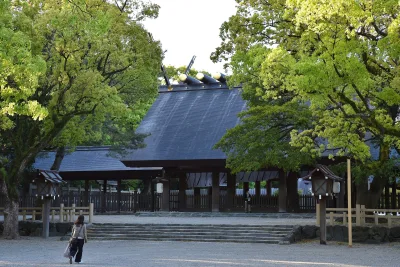 Atsuta Jingu
A Nagoya shrine housing the Kusanagi sword, one of the three sacred treasures, long ranked just below Ise. 1,900 years of history in a city-centre forest.
Atsuta Jingu
A Nagoya shrine housing the Kusanagi sword, one of the three sacred treasures, long ranked just below Ise. 1,900 years of history in a city-centre forest.
-
3
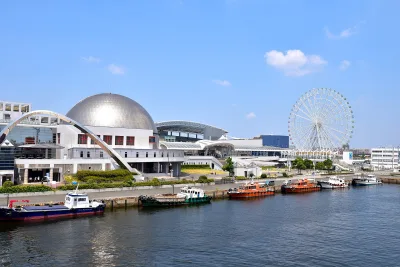 Port of Nagoya Public Aquarium
A large aquarium on Nagoya Port's Garden Pier with orcas, belugas, dolphins and penguins. The dolphin performances in its huge pool are a favourite.
Port of Nagoya Public Aquarium
A large aquarium on Nagoya Port's Garden Pier with orcas, belugas, dolphins and penguins. The dolphin performances in its huge pool are a favourite.
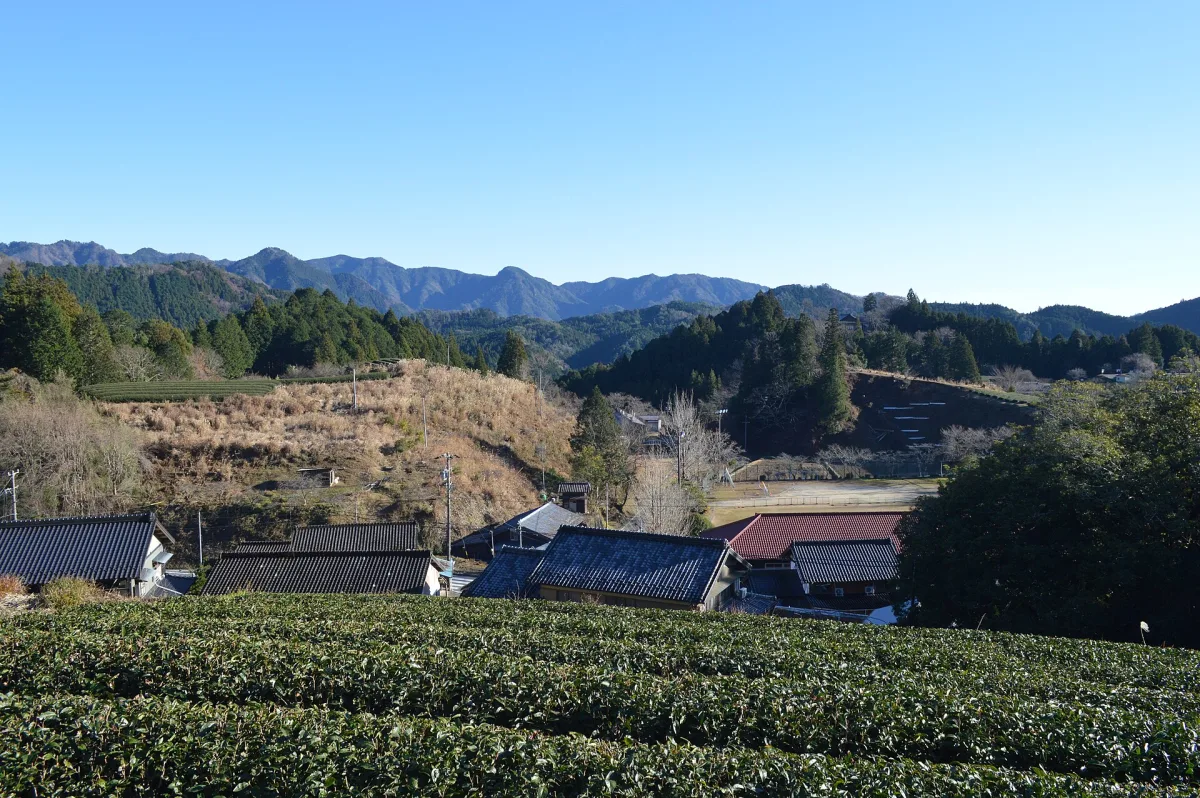



From the Nagoya plain to the Mikawa hills
Aichi lies roughly in the middle of Honshu, but its scenery is far from uniform. Nagoya occupies the western side of the Nobi Plain, shaped by the Kiso River. Further east, the Yahagi and Toyo rivers run down from the hills to plains of their own. The Chita and Atsumi peninsulas reach out into the sea, enclosing parts of Ise Bay and Mikawa Bay. So a trip around the prefecture moves from dense city streets to rivers, wooded slopes and fishing towns.
These differences make a big difference to your trip. Nagoya is naturally the urban base, the castle town of Inuyama lies to the north, and the Mikawa region opens onto both hills and sea. Aichi has a generally mild climate, but it does not feel the same everywhere: flat, built-up Nagoya is especially hot in summer, and the mountains in the east get more rain than the plains and peninsulas.
Two old provinces and a long tradition of making things
Before Aichi existed, there was Owari in the west and Mikawa in the east. They remained separate provinces for centuries and were brought together as today's prefecture in 1872. This old division still helps you picture the area: Nagoya and Inuyama are on the Owari side, and Okazaki and the eastern countryside are on the Mikawa side. The name "Aichi" itself has old roots; the prefecture traces it to Ayuchi, a place name that appears in an early Japanese poetry anthology.
Aichi's history is also a history of skilled handwork. Inuyama has an original surviving castle keep, and Nagoya's museums and castle keep the samurai age alive. In another field altogether, Seto and Tokoname have long pottery traditions, and Arimatsu is known for shibori, a technique of folding or binding cloth before dyeing it.
A table shaped by soybean miso
Aichi cooking includes dishes made with red miso and Hatcho miso. Miso nikomi udon is thick wheat noodles simmered in a piping-hot miso-based broth, and miso katsu is a breaded, deep-fried pork cutlet topped with miso sauce. Both are filling and especially welcome after a day of walking around Nagoya. For a dish you finish at the table, try hitsumabushi: grilled eel and rice that you eat first as it is, then with condiments, and finally with dashi (a savoury broth) poured over it.
Food is not the only thing made with care here. Some Seto ware is used for the tea ceremony and flower arranging, and Tokoname's potters make everything from teapots to large vessels. A bowl of noodles served in a ceramic dish can feel like a small way into that wider craft tradition. For something sweet to contrast with the miso, try ogura toast (bread topped with sweet azuki bean paste), served at Nagoya's kissaten (old-style coffee shops).
The coffee shop "morning"
There is a lovely local custom you can easily join in: the kissaten "morning", where ordering a drink gets you a breakfast set as well. Depending on the shop, you might get toast, anko toast (toast with sweet bean paste) or even onigiri (rice balls). Nagoya's coffee shop culture tends to get the attention, but the morning custom spreads beyond the city, and stories about its origins name towns within Aichi such as Ichinomiya and Toyohashi. It is a reminder that the prefecture's everyday character is not confined to its capital.
Scenery that changes through the year
In spring, cherry blossoms bloom at Inuyama Castle and in Nagoya's parks and along its rivers. Nagoya summers can be hot and humid, and fireworks displays and dance festivals bring the season real energy. If you plan to explore the city on a summer day, it is worth taking the heat seriously rather than assuming Aichi's generally mild climate means cool weather.
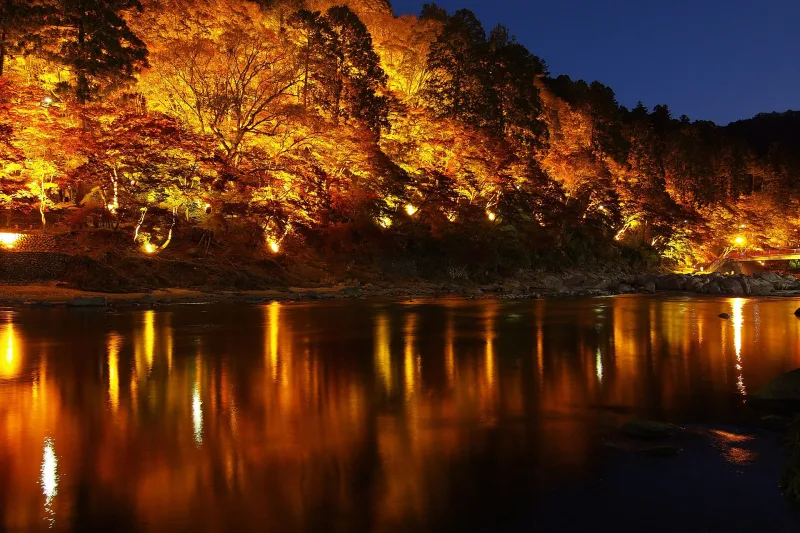
Obara in autumn has an unusual sight: shikizakura, cherry trees that can bloom again among the autumn leaves. In winter, people visit Nagoya's Osu Kannon temple for hatsumode (the first shrine or temple visit of the new year), and snow may fall in the hills. The contrast between a cold day in the mountains and a walk along the comparatively mild coast is part of the range of Aichi's seasons.
Once you reach Nagoya, look further
Nagoya is a stop on the Tokaido Shinkansen (high-speed railway) linking Tokyo with the Kyoto and Osaka area. Chubu Centrair International Airport is another gateway. From Nagoya, JR trains and the private Meitetsu railway connect much of Aichi, and local buses fill in beyond the rail lines.
It is tempting to treat Aichi as a stop between more famous destinations. A better approach is to pick one direction from Nagoya: north to Inuyama, south to the pottery town of Tokoname and the coast, or east towards Mikawa. That gives you room to notice how quickly the prefecture changes as you leave the city for old streets, rivers and bays.
Sources
- Aichi Overview | Aichi Prefectural Government Official Site
- Aichi Background | Aichi Prefectural Government Official Site
- Aichi | Tokai | Destinations | Travel Japan - Japan National Tourism Organization (Official Site)
- Gourmet Digest | Visit Nagoya-Nagoya City Guide
- A Search for Vintage: Nagoya's Retro Cafes and Mouth-watering Morning Combos | Visit Nagoya-Nagoya City Guide