Japan is Nippon
Nagasaki Lantern Festival
A small Chinatown New Year event grown into a winter festival of about 15,000 Chinese lanterns. The Emperor's Parade, dragon dances and how the dates are set.
Nagasaki
- NagasakiCentral Nagasaki: Shinchi Chinatown and Minato Park, Central Park, Nakashima River Park, the Tojin Yashiki, the Confucius Shrine, the Hamanmachi arcade and more
Recent years
| Year | Dates | Visitors | Notes |
|---|---|---|---|
| 2027 | 5–21 February (planned) | — | Planned to run for 17 days. The Emperor's Parade is planned for 13 and 20 February and the Mazu procession for 7 and 14 February. |
| 2026 | 6–23 February | about 800,000 (preliminary figure) | From this year the opening day was fixed as the first Friday of February, giving an 18-day festival. Rain on weekends and holidays cancelled dragon dances and shortened parades, and the 1.1 million target was missed, but attendance was up about 280,000 on the previous year. |
| 2025 | 29 January – 12 February | about 520,000 | The 30th festival. A severe cold snap brought bad weather on 10 of the 15 days, and for the first time both Emperor's Parades were cancelled. It was the lowest attendance of the last ten festivals, not counting the years cancelled because of COVID-19. |
| 2024 | 9–25 February | about 1,210,000 (preliminary figure) | The first full-scale festival in four years, running 17 days, two longer than usual. It included a special Emperor's Parade with Masaharu Fukuyama and Riisa Naka as the emperor and empress, and drew the largest attendance on record. |
| 2023 | 22 January – 5 February | about 530,000 | Back for the first time in three years after COVID-19 cancellations in 2021 and 2022. About 15,000 lanterns were put up, the same as before the pandemic. |
When and where is it held?
The Nagasaki Lantern Festival is a winter festival held in the centre of Nagasaki City, Nagasaki Prefecture. It was originally timed to Chinese New Year (shunsetsu), running for the 15 days from New Year to the Lantern Festival (Genshosetsu, the 15th day of the first lunar month), so its dates moved from year to year. Since 2026 the dates have been fixed so that it opens on the first Friday of February; in 2026 it ran for 18 days, from 6 to 23 February.
For the next festival, Nagasaki City's official tourism website has announced 17 days from Friday 5 to Sunday 21 February 2027. The venues centre on Nagasaki Shinchi Chinatown (the city's Chinatown) and neighbouring Minato Park, and spread across town to Central Park, Nakashima River Park with its Meganebashi (Spectacles) Bridge, the Tojin Yashiki (the old Chinese quarter), Kofukuji Temple, the Confucius Shrine and the Hamanmachi shopping arcades.
From Chinatown's Spring Festival to a citywide celebration
Nagasaki has welcomed Chinese trading ships (tosen) since the Edo period (1603–1868). The festival began in 1987. On the Chinese New Year marking the first anniversary of Shinchi Chinatown's Chinese gate (pailou), the people of Chinatown hung about 400 lanterns and held a 'Spring Festival' (Shunsetsusai).
It went down so well that in 1994 the city, the chamber of commerce and others set up an organising committee, expanded the event and renamed it the Nagasaki Lantern Festival. The aim was to get visitors to stay overnight during the quiet winter tourist season. Events such as the Emperor's Parade were added over the years, and in 2013 attendance passed one million for the first time.
The festival was cancelled in 2021 and 2022 because of COVID-19 (although the lanterns were still lit in 2022). It returned in 2023 after three years, and in 2024 a record of about 1.21 million people came.
Highlights: lantern-lit streets and processions
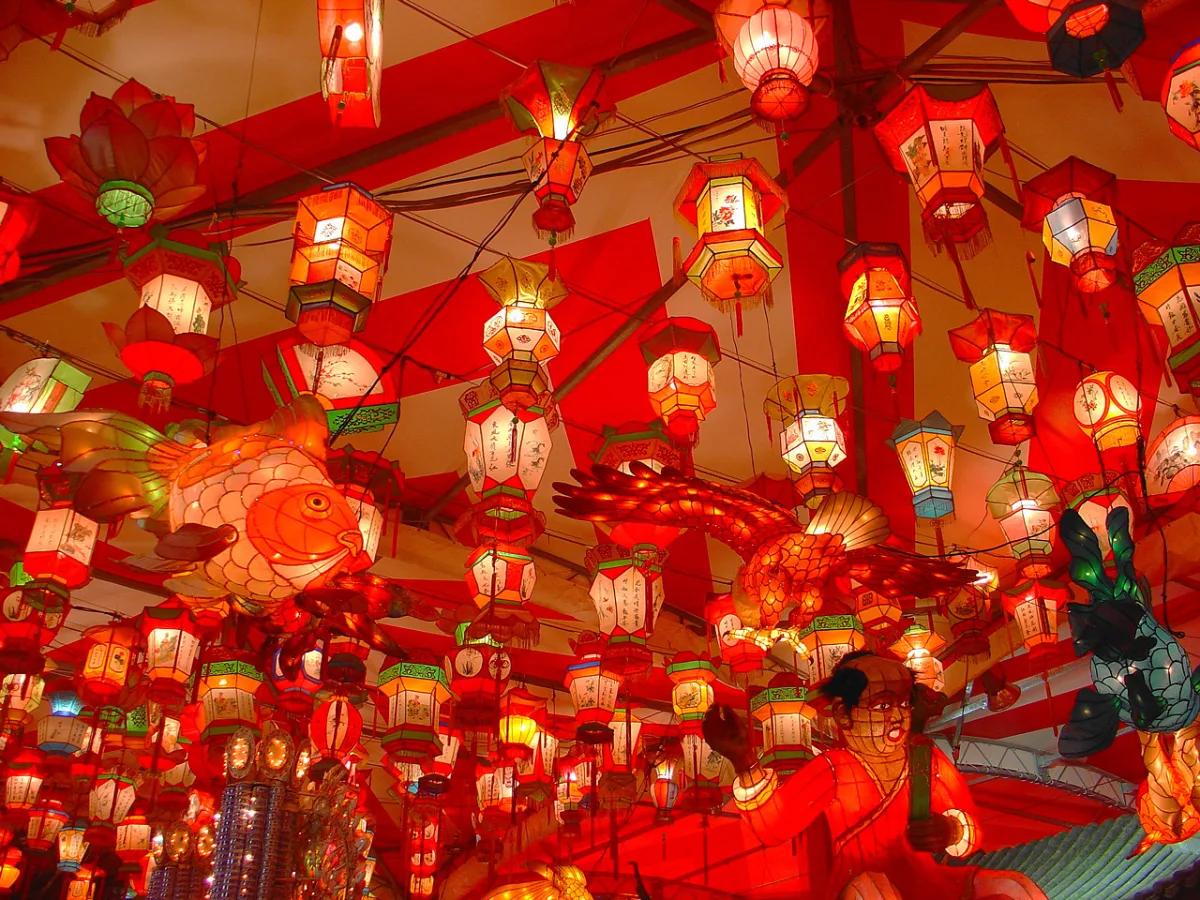
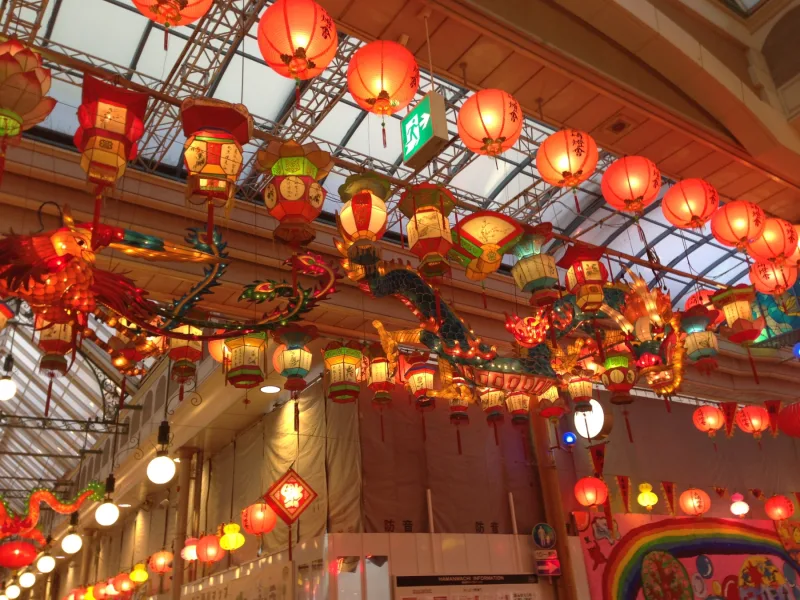
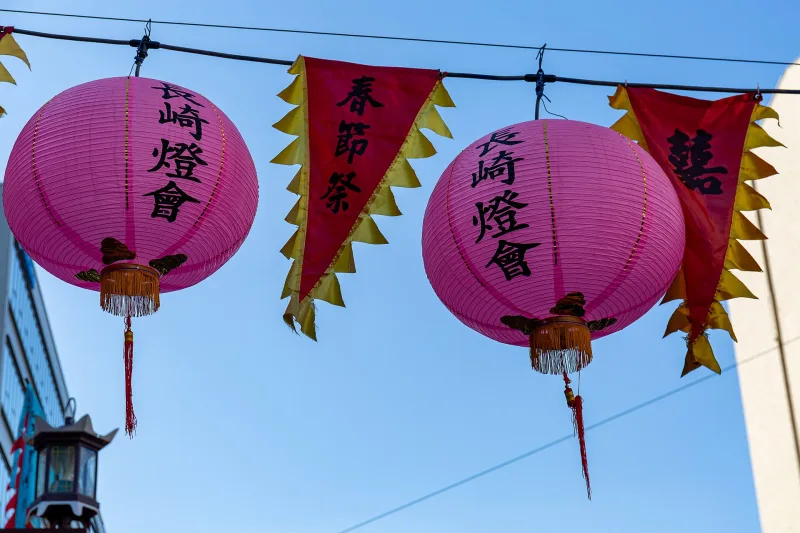
During the festival about 15,000 Chinese lanterns are hung around the city centre, in Chinatown, Hamanmachi, the Kanko-dori arcade and elsewhere. There are also lantern sculptures, the largest about 10 metres tall. Along the Doza River at the Chinatown venue the lanterns are all pink, which gives it a different feel from the other venues.
The headline event, the Emperor's Parade, is modelled on a Qing dynasty emperor and empress going out into the city at New Year to celebrate with the people. About 150 people in lavish Chinese costume walk from Central Park to Minato Park. It takes place on the festival's Saturdays, planned for 13 and 20 February in 2027. Guest stars are chosen to play the emperor and empress each year; in 2024 they were Nagasaki-born Masaharu Fukuyama and Riisa Naka.
On Sundays there is the Mazu procession. It recreates the procession in which, during the Edo period, the crews of Chinese trading ships arriving in Nagasaki carried the statue of Mazu, the goddess who protects seafarers, from the ship to the Mazu hall of a temple (planned for 7 and 14 February in 2027). The dragon dance (ja odori) is performed every day of the festival, with dancers in traditional Chinese dress working a dragon about 20 metres long.
Things to do
The Nagasaki Confucius Shrine is a Chinese-style shrine built in 1893 by the Qing government together with Chinese people living in Japan. During the festival you can walk through its decorated halls and make a Chinese New Year visit at the main hall, the Taisei-den (admission charged).
At the Tojin Yashiki venue there is the 'candle prayer tour of the four halls', where you visit the Dojin-do, Tenko-do, Kannon-do and Fukken Kaikan halls, offering a candle and making a wish at each. On Kanko-dori stands Gekka Rojin, the Chinese god of matchmaking, with a prayer spot for 'love lanterns' where you write a wish about love and leave it. For children there is a corner where they can make their own lantern.
Coping with crowds and weather
The crowds peak at weekends and on public holidays, especially on Saturdays with the Emperor's Parade. In 2024 about 185,000 people came on a single parade day, a one-day record. Chinatown, which leads to Minato Park, gets very crowded after dark, so if you want to take your time, consider a weekday visit.
Nagasaki can be cold in February. In 2025 the average temperature during the festival was a chilly 5°C, and a cold snap cancelled both Emperor's Parades. In 2026, too, there were days when rain cancelled the dragon dance or shortened the parade route. You will be walking outdoors for a long time, so bring warm clothes and rain gear, and check the day's events on the official website.
Tips
- The festival now always opens on the first Friday of February. In 2027 it is planned for Friday 5 to Sunday 21 February.
- The lanterns are at their best after dark, once they are lit. The venues are spread around central Nagasaki, including Chinatown, the Nakashima River (Meganebashi Bridge) and the Hamanmachi arcade, so try to take in a few of them.
- The Emperor's Parade is on Saturdays, the Mazu procession on Sundays and the dragon dance every day. Pick your day to match the procession you most want to see.
- Rain or a cold snap can cancel or shorten the processions. Check the announcements on the official website before you set off.
- Weekends get very crowded around Chinatown, especially on parade days. If you don't like crowds, go on a weekday.
Sources
- 長崎市公式観光サイト travel nagasaki「長崎ランタンフェスティバル」 (opens in a new tab)
- travel nagasaki「2027長崎ランタンフェスティバルの日程が決まりました!」 (opens in a new tab)
- travel nagasaki「長崎ランタンフェスティバル」2026年開催時のページ(Internet Archive) (opens in a new tab)
- travel nagasaki「長崎ランタンフェスティバル」2024年開催時のページ(Internet Archive) (opens in a new tab)
- Wikipedia「長崎ランタンフェスティバル」 (opens in a new tab)
- 長崎新聞「今年で30回目!長崎ランタンフェスティバル コロナ禍の中止も経験…持続可能な祭りを模索」(2025年1月29日) (opens in a new tab)
- NBC長崎放送(TBS NEWS DIG)「長崎ランタンフェス 2026年から開催期間を「固定」へ」(2025年12月26日) (opens in a new tab)
- NBC長崎放送(TBS NEWS DIG)「長崎ランタンフェス集客80万人「目標110万人」届かず」(2026年3月10日) (opens in a new tab)
- NBC長崎放送(TBS NEWS DIG)「長崎ランタンフェス、目標90万人→52万人に激減 過去10回で最少」(2025年2月14日) (opens in a new tab)
- NCC長崎文化放送「過去10年間で最少の集客数 長崎ランタンフェスティバル」(2025年2月14日) (opens in a new tab)
- 長崎新聞「長崎ランタンフェスが閉幕 集客数は過去最多121万人」(2024年2月26日) (opens in a new tab)
- 朝日新聞「ランタンフェス閉幕 53万人が来場「再スタートできた」」(2023年2月7日) (opens in a new tab)
- NBC長崎放送(TBS NEWS DIG)「3年ぶり開催 長崎ランタンフェスティバル 概要発表」(2023年1月10日) (opens in a new tab)