Japan is Nippon
Sapporo Snow Festival
It began with six snow statues built by high school students; now over 2 million people come. The highlights, and how to stay warm while you explore.
Hokkaido
- HokkaidoSapporo: Odori Park (Odori site), Susukino (Susukino site) and Tsudome (Tsudome site)
Recent years
| Year | Dates | Visitors | Notes |
|---|---|---|---|
| 2027 | 4–11 February (planned) | — | The 77th festival, planned for three sites (Odori, Susukino and Tsudome), with five large snow sculptures planned for the Odori site. |
| 2026 | 4–11 February | about 2,539,000 (Odori and Tsudome sites combined) | The 76th festival went ahead despite record heavy snow before it opened. Snow and ice sculptures marked the 250th anniversary of the founding of the United States, and the International Snow Sculpture Contest was held for the 50th time. Visitor numbers were up on the previous year. |
| 2025 | 4–11 February | about 2,327,000 (Odori and Tsudome sites combined) | The 75th festival. Record low snowfall and high temperatures in January made collecting snow and building the sculptures hard work. A skating rink appeared for the first time, in block 3 of the Odori site. |
| 2024 | 4–11 February | about 2,389,000 (Odori and Tsudome sites combined) | The 74th festival. The Tsudome site reopened for the first time in four years, and the food stalls at the Odori site and the International Snow Sculpture Contest also returned after four years. A heavy snow warning was issued on the last day. |
| 2023 | 4–11 February | about 1,750,000 (Odori site only) | The 73rd festival. After online-only editions in 2021 and 2022, it was held at the venues for the first time in three years. There was no Tsudome site, and the Odori site was scaled down to blocks 1 to 10. |
When and where is it held?
The Sapporo Snow Festival (Sapporo Yuki Matsuri) is a winter festival held for about a week in early February every year in Sapporo, Hokkaido. In recent years it has run for eight days, from 4 February to 11 February, the National Foundation Day public holiday. It is organised by the City of Sapporo, the Sapporo Tourism Association and others, and the Japan Ground Self-Defense Force helps build the snow sculptures.
The next festival will be the 77th. According to the official website, it is planned for eight days, from Thursday 4 February to Thursday 11 February 2027 (a public holiday), at three sites: Odori, Susukino and Tsudome. Entry is free (except for some attractions).
Three sites, three ways to enjoy it
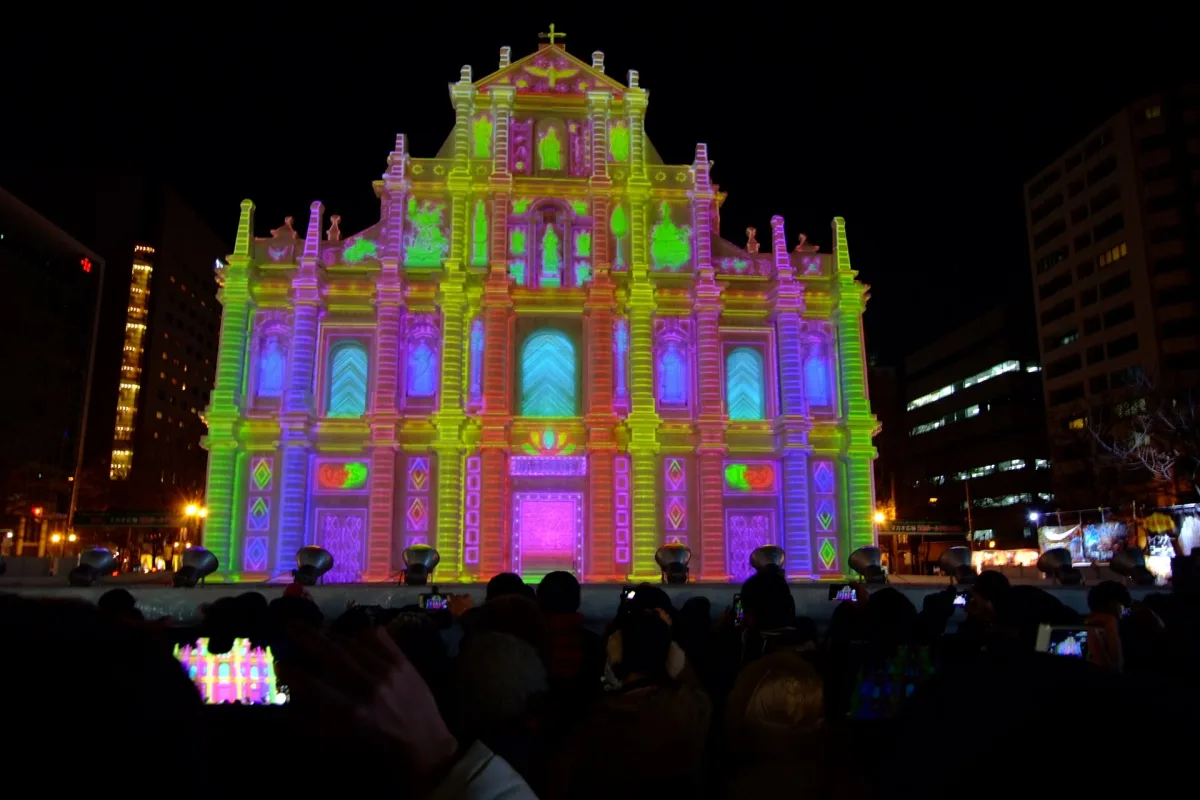
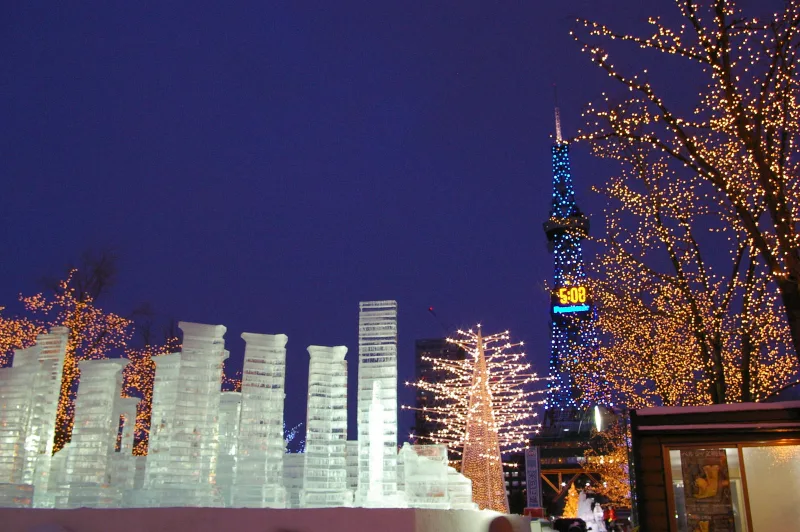
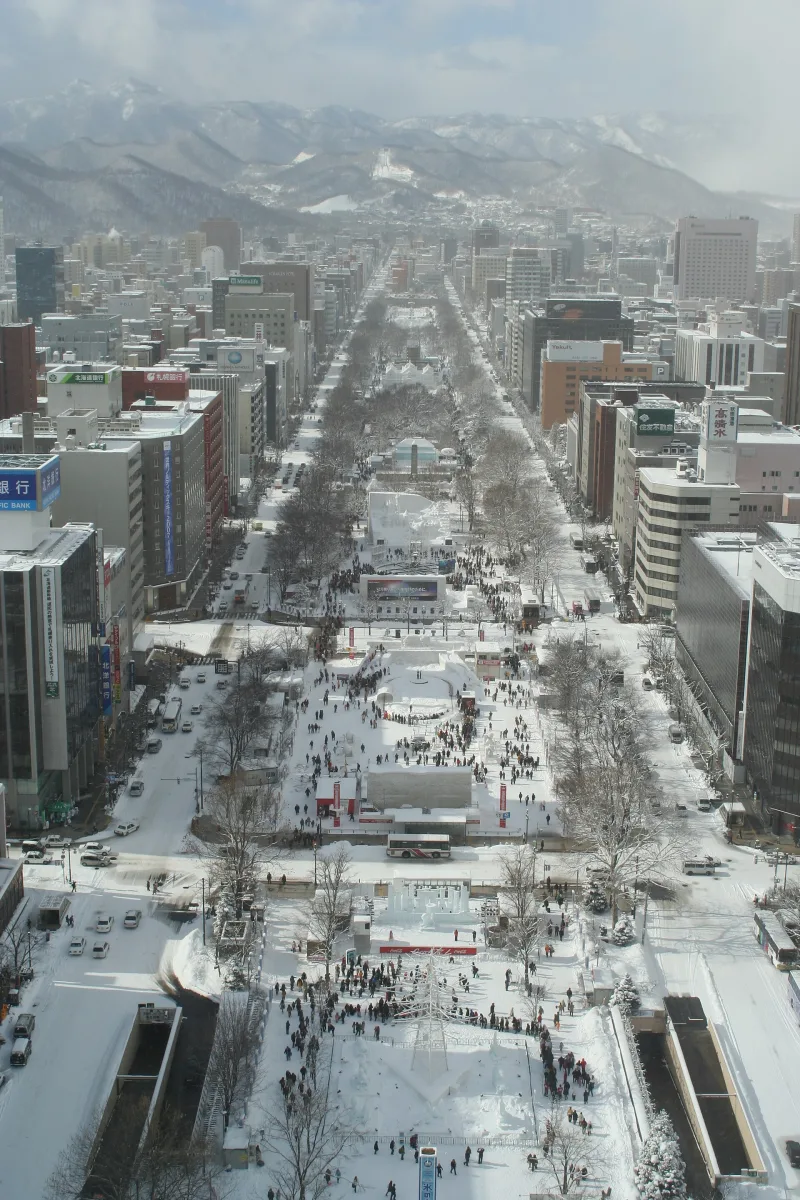
The main venue, the Odori site, runs for about 1.1 kilometres through Odori Park, from block 1 to block 11, along the park that stretches east to west across central Sapporo. This is where you will find the tall large snow sculptures, along with entries from the International Snow Sculpture Contest, in which teams from around the world compete. Because it is a park, you can visit at any time during the festival, and the sculptures are lit up at night. There is also projection mapping, with images projected onto the sculptures, so the scene looks completely different by day and by night.
The Susukino site lines the main street of Susukino, Sapporo's entertainment district, with ice sculptures. About 200 people, including chefs, carve them over three full days just before the festival, working through each night. Because carving starts about three days before opening, if you go just beforehand you may be able to watch them at work.
The Tsudome site, at the Tsudome sports and community facility, is aimed at families, with snow play such as a big snow slide. You can get there from Sakaemachi station on the Toho subway line by shuttle bus or on foot.
A history that began with six statues made by school pupils
The first festival was held in 1950. Pupils from three local high schools and two junior high schools built six snow statues in the open space at Odori block 7, which was then where residents dumped their snow. There were also snowball fights, dancing and more, and it proved more popular than expected, drawing around 50,000 people. The first large snow sculpture, 15 metres tall, appeared in 1953, and from 1955 the Self-Defense Forces began helping to build the large sculptures.
When Sapporo hosted the Winter Olympics in 1972, television coverage made the snow festival known around the world. "Gulliver, Welcome to Sapporo", a 25-metre snow sculpture built that year, is still the largest in the festival's history. In 1974, during the oil crisis, there was not enough fuel for the trucks that carried the snow, so oil drums were reportedly packed inside the sculptures to make up for the shortage of snow. The International Snow Sculpture Contest began the same year; the Susukino site was added in 1983, and in 1987 the festival was extended to seven days.
Since the festival became seven days long in 1987, the record attendance was about 2,737,000, in 2019. The name "Sapporo" is written in hiragana (さっぽろ) rather than kanji, reportedly because the organisers wanted a simple name that residents would feel close to.
How are the snow sculptures made?
Work begins every year on 7 January with the ceremony that starts the snow transport. Snow is brought in from Sapporo and the surrounding area over about two weeks, adding up to roughly 3,000 loads by 10-tonne truck. Snow cleared from roads contains impurities that make it melt and crumble easily, so it is not used; only clean snow is collected.
The large sculptures at the Odori site are made by the Japan Ground Self-Defense Force and citizens' production committees. Preparations start around September of the previous year. At the Odori site, frames go up in late December, snow is packed in and compacted in early January, and in mid-January the frames come off, the sculptures are cut out and then finished with fine carving. At the 2026 festival, about 210 snow and ice sculptures were made across the three sites.
When the festival ends, the sculptures are knocked down by heavy machinery the next morning to prevent accidents from collapses. If you come after the last day, there will be nothing left but piles of snow, so plan your dates carefully.
Preparing for the cold and the crowds
February is Sapporo's coldest month, with an average temperature of minus 2.3°C. You will be walking outdoors for a long time, so layer up with jumpers and the like under a proper winter coat, and bring a hat, earmuffs and gloves. Buildings are well heated, so clothes that are easy to take off and put back on are handy.
The pavements around the sites are often icy, and shoes without grooved soles will slip. Slip-on ice grips for your shoes are sold at the official shop at the Odori site, at nearby convenience stores and at station kiosks. On icy roads, walk where grit has been spread, and take particular care at pedestrian crossings.
More than 2 million people from Japan and abroad come during the festival, and every site is crowded. You cannot enter the Odori and Tsudome sites before the festival opens, so plan your visit for the festival period itself. The Odori site has an information centre, and volunteers offer guidance in foreign languages.
Tips
- See the large snow sculptures both by day and after dark. At night, lighting and projection mapping change the whole atmosphere.
- If you have no winter boots, buy slip-on ice grips for your shoes when you arrive. They are sold at the official shop at the Odori site and at convenience stores.
- The Odori site is right by Odori subway station, and the Susukino site right by Susukino station.
- The sculptures are demolished the morning after the festival ends, so make sure you do not arrive in Sapporo after the last day.
- With children who want to play in the snow, the Tsudome site, with its slides and more, is the one to choose.
Sources
- さっぽろ雪まつり公式サイト (opens in a new tab)
- さっぽろ雪まつり公式サイト「さっぽろ雪まつりの歴史」 (opens in a new tab)
- さっぽろ雪まつり公式サイト「よくあるご質問」 (opens in a new tab)
- さっぽろ雪まつり公式サイト「大通会場」 (opens in a new tab)
- さっぽろ雪まつり公式サイト「凍った路面の歩き方」 (opens in a new tab)
- さっぽろ雪まつり公式サイト「冬の札幌の天気・服装」 (opens in a new tab)
- HOKKAIDO LOVE!(北海道観光振興機構)「さっぽろ雪まつり」 (opens in a new tab)
- JNTO Japan Travel "Sapporo Snow Festival" (opens in a new tab)
- さっぽろ雪まつり公式サイト「2027さっぽろ雪まつり(第77回)の開催概要について」 (opens in a new tab)
- 2026さっぽろ雪まつり(第76回)開催結果(大通会場・つどーむ会場)について (opens in a new tab)
- 2025さっぽろ雪まつり(第75回)開催結果(大通会場・つどーむ会場)について (opens in a new tab)
- 2024さっぽろ雪まつり(第74回)開催結果(大通会場・つどーむ会場)について (opens in a new tab)
- 「札幌市制100周年記念 第73回さっぽろ雪まつり」開催結果(大通会場)について (opens in a new tab)