Nara
Nara pairs the remains of Japan's early capitals with rice-field villages, sacred mountain trails and a food culture shaped by both.
Map outlines: Natural Earth
-
1
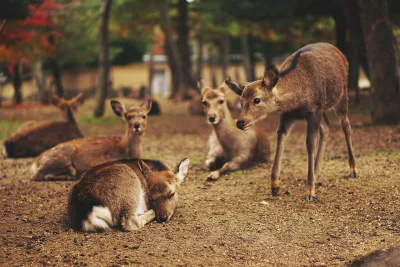 Nara Park
A vast Nara park where over a thousand wild deer roam among ancient temples and shrines, Todaiji and Kasuga Taisha among them: the heart of any Nara visit.
Nara Park
A vast Nara park where over a thousand wild deer roam among ancient temples and shrines, Todaiji and Kasuga Taisha among them: the heart of any Nara visit.
-
2
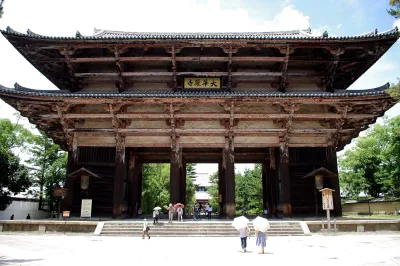 Todaiji Temple
Home of Nara's Great Buddha, with nearly 1,300 years of history. Step into the vast wooden hall and the Buddha, about 15m tall, towers right in front of you.
Todaiji Temple
Home of Nara's Great Buddha, with nearly 1,300 years of history. Step into the vast wooden hall and the Buddha, about 15m tall, towers right in front of you.
-
3
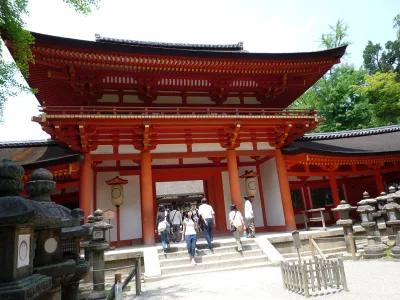 Kasuga Taisha
A shrine founded in 768 amid primeval forest behind Nara Park, with vermilion halls and about 3,000 lanterns. The legend of Nara's sacred deer began here.
Kasuga Taisha
A shrine founded in 768 amid primeval forest behind Nara Park, with vermilion halls and about 3,000 lanterns. The legend of Nara's sacred deer began here.
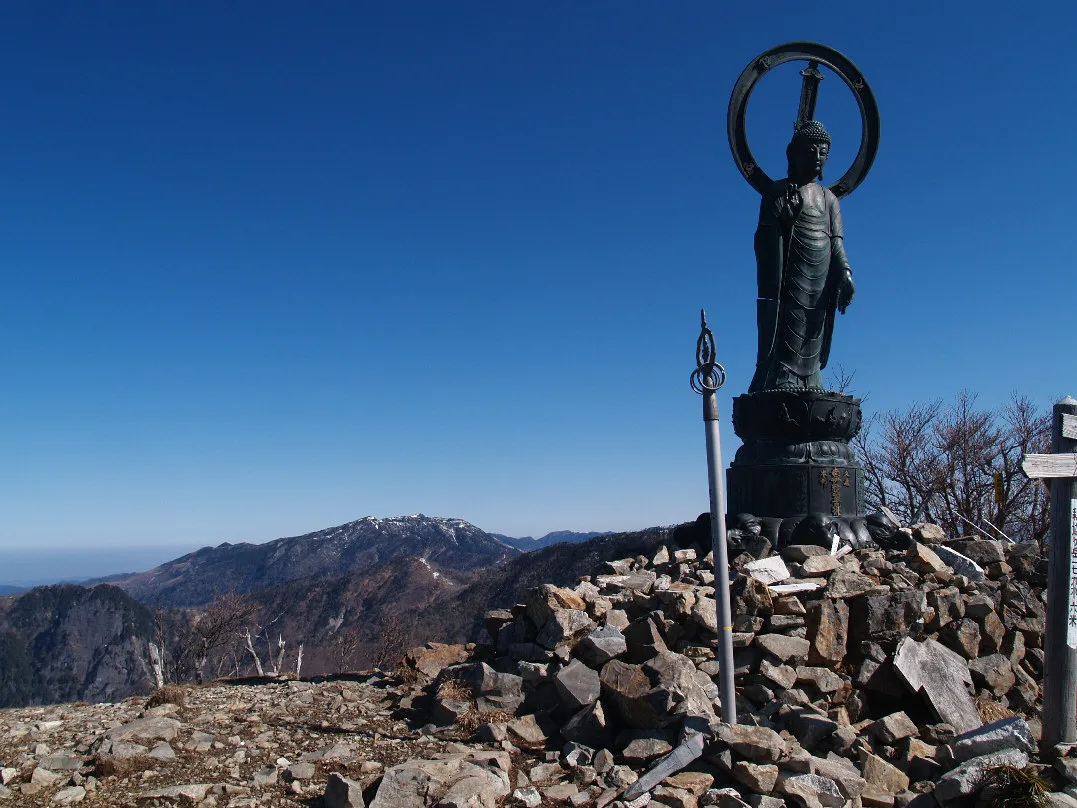



From the Yamato Basin to the mountains
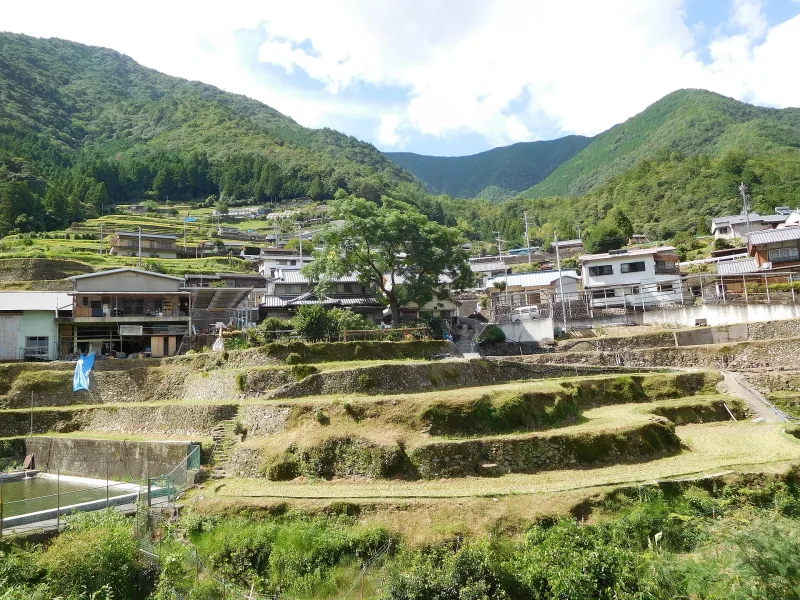
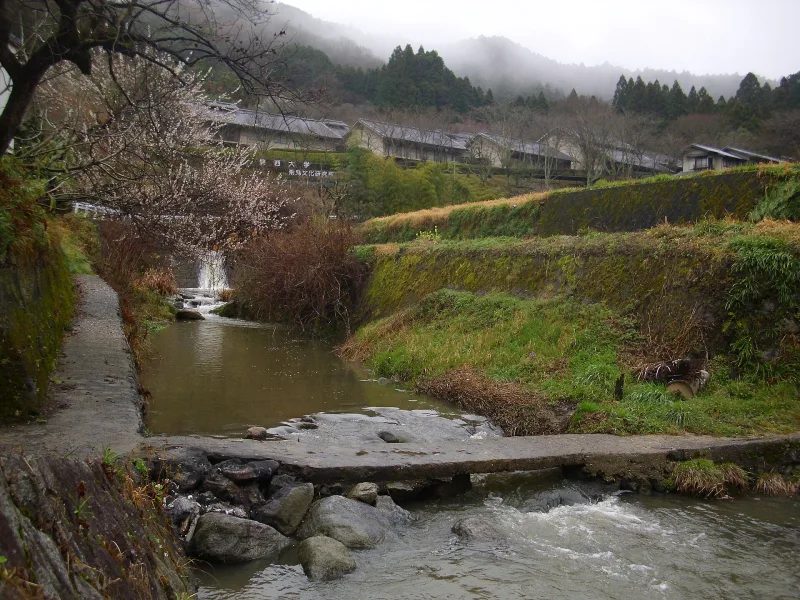
Nara makes more sense once you look beyond Nara City. The Yamato Basin in the north holds towns, farmland, temples and kofun (burial mounds built for powerful figures in ancient times). Around Asuka, terraced rice fields and low hills surround stone monuments and the sites of former temples. Cycle between them and you get a real sense of how close the early centres of power were to ordinary farmland.
Head south and the scale changes. The forested slopes of Yoshino lead on to the steeper mountains around Omine and Totsukawa. The Omine Okugake trail follows the mountain ridges towards sacred sites in neighbouring Wakayama. The route is tied to Shugendo, a tradition of mountain practice in which physical endurance is part of spiritual training. These are not just scenic mountains behind the famous temples: people have travelled here to pray for centuries.
Where Japan's early capitals took shape
The prefecture's history begins long before the streets of modern Nara City. Asuka was an early centre of politics and Buddhist culture, and Asuka-dera was one of the temples of that formative period. At Horyu-ji, another early Buddhist site, you meet buildings and statues that carry that history outside the museum case. The area was once called Yamato, a name you still see on local products and place names.
In 710 the capital was established at Heijo-kyo, near present-day Nara City. Its planned street grid and palace grounds expressed a new vision of government. The Daibutsu (the great bronze Buddha) at Todai-ji dates from the same broad era, when Buddhism was closely bound up with the workings of the state. For a smaller-scale contrast, walk through Naramachi, whose old streets recall a much later period of life in Nara. A visit here is less a trip to one moment in history than a walk through several eras.
Persimmon leaves, fine noodles and careful handiwork
Nara's food tells you something about its geography. Kakinoha-zushi is sushi wrapped in persimmon leaves: rice and a slice of salted fish are wrapped in a leaf, a way of preparing fish that developed around the Yoshino River near Gojo. In autumn you can see persimmons themselves hanging under the eaves to dry in that area. Around Mount Miwa, look for Miwa somen, very fine wheat noodles eaten cold in summer and hot as nyumen in colder months.
There are quieter flavours too. Chagayu is rice porridge cooked with hojicha (roasted green tea). In Yoshino, kuzu (kudzu starch) becomes clear sweets such as kuzumochi. Yoshino cedar is made into chopsticks, and the water of its rivers supports the making of washi (traditional handmade paper). Both the food and the crafts are more enjoyable when you pay a little attention to the materials in your hands.
Customs that mark Nara's year
The deer of Nara Park are wild animals, but they are also part of the local story: they are regarded as sacred messengers of Kasuga Taisha shrine, and their protection continues today. If you feed them, shika senbei are crackers made for the deer. Ordinary snacks and discarded wrappers are not safe for them. The care behind that simple rule is as much a part of Nara as a photo with the deer.
Spring begins with another long-running custom. At Nigatsu-do hall at Todai-ji, the Buddhist ceremony of Shuni-e brings prayers and huge torches before the cherry blossoms open. Afterwards, the blossoms spread across Nara Park and the slopes of Yoshino. In summer the rice fields around Asuka turn green and the mountains are cooler and easier to walk. Autumn colours the slopes and brings the persimmon harvest. In winter, occasional snow and quiet streets can give the temples a different mood.
Beyond the park
The usual route is to take the train into Nara City from Osaka or Kyoto. Both JR Nara Station and Kintetsu Nara Station make good starting points for the park and Naramachi. Kintetsu and JR trains also link other parts of the prefecture, and local buses fill the gaps between stations and sights. The key to planning is deciding whether you want to spend the day in the city or give yourself time to head out into the rest of the prefecture.
Asuka's historic sites are scattered across the countryside, so rental bicycles or local buses are useful once you leave the train. Yoshino Station is the starting point for walking up the mountain, and you can also continue by ropeway or local bus. Totsukawa, further south, is reached by bus or car rather than by train; set aside a full day for the journey. Nara's mountain villages feel further from the cities than the map suggests.
Sources
- History - Official Nara Travel Guide
- Asuka Area Guide - Official Nara Travel Guide
- Yoshino Area Guide - Official Nara Travel Guide
- Totsukawa Area Guide - Official Nara Travel Guide
- Flavors of Nara: Discover the Region's Unique Cuisine - Official Nara Travel Guide
- Nara | Kansai | Destinations | Travel Japan - Japan National Tourism Organization (Official Site)
- A Weekend in Yoshino - Official Nara Travel Guide
- Deer Conservation – Protecting Nara's Sacred Messengers - Official Nara Travel Guide
- Shunie Ceremony - Official Nara Travel Guide
- Seasons - Official Nara Travel Guide
- Getting Around Nara - Official Nara Travel Guide