Japan is Nippon
Fugu (Pufferfish)
A deadly poisonous fish that is also a winter delicacy. How fugu went from banned food to Shimonoseki's speciality, and how Japan keeps eating it safe.
Eaten all over Japan
Best known in Yamaguchi.
- YamaguchiShimonoseki is the heartland, with a specialist market that handles more fugu than anywhere in Japan; "Shimonoseki Fuku" has GI status, and Hagi lands mafugu
What kind of fish is fugu?
Fugu (pufferfish) is a fish that carries a powerful poison called tetrodotoxin. How toxic it is varies greatly by species and by part of the fish, but generally the liver, ovaries and skin are considered the most poisonous. Eating it causes numbness and paralysis within about 20 minutes to 3 hours, and in serious cases the victim can stop breathing and die. Even today Japan sees around ten cases of fugu poisoning a year.
Why do the Japanese keep eating it anyway? Because people love the firm bite of the flesh and its delicate umami (savoury depth). According to Yamaguchi Prefecture's tourism website, traces of fugu-eating have even been found in shell mounds from the Jomon period. It's known as a luxury fish and is often eaten on special occasions such as celebrations.
From ban to lifting the ban: Shimonoseki and fugu
When Toyotomi Hideyoshi, who unified Japan, sent troops to the Korean Peninsula, soldiers are said to have died after eating fugu, and a ban on eating fugu was reportedly issued. Ordinary people are said to have kept eating it anyway, sometimes even putting it in miso soup.
The turning point came in the Meiji era. Ito Hirobumi, who came from Yamaguchi and became Japan's first prime minister, was so impressed by how good fugu tasted during a stay in Shimonoseki that in 1888 eating fugu was legalised, in Yamaguchi Prefecture only. The Shimonoseki ryotei (traditional high-end restaurant) where Ito was staying is said to have become the first officially approved fugu restaurant.
From then on Shimonoseki grew up alongside fugu. Craftsmen skilled at removing the poisonous parts and traders with a sharp eye for quality gathered there, and today Shimonoseki has Japan's only wholesale market specialising in fugu, which handles more fugu than anywhere else in the country. Shimonoseki isn't even in the top three for catches, but fugu landed all over Japan is brought there. In 2016 "Shimonoseki Fuku" became the first seafood product registered under Japan's Geographical Indication (GI) protection system, which protects regional products.
Types of fugu dishes
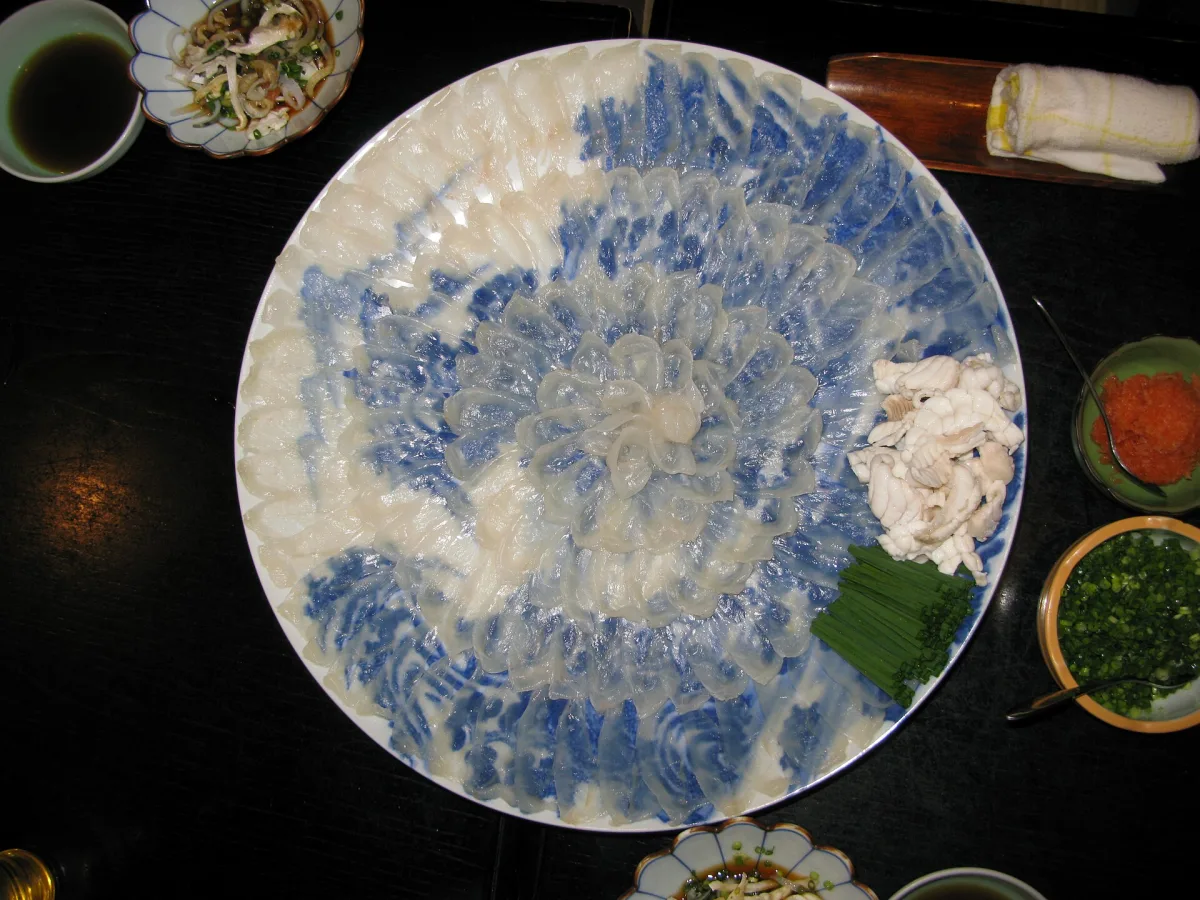
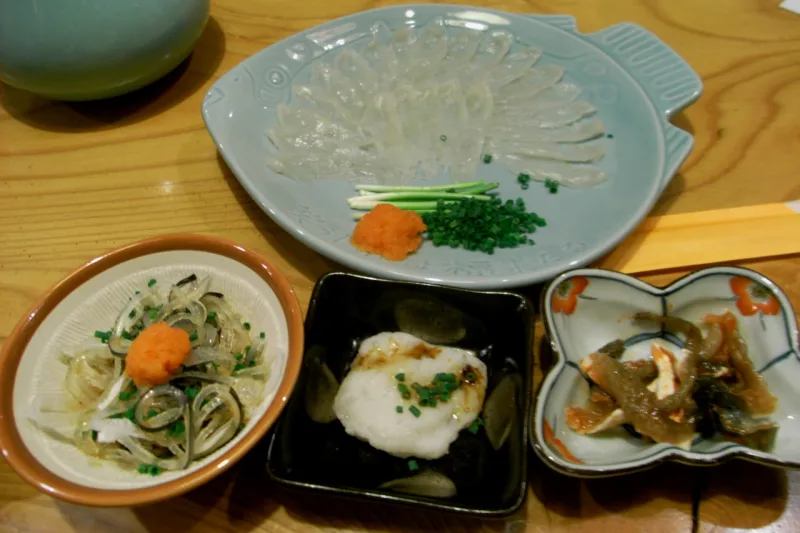
The star is sashimi. Fugu flesh is firm and springy, so it's sliced "usuzukuri" style, so thin you can see the pattern of the plate through it. The presentation is part of the appeal too, from "kikumori", arranged like a chrysanthemum on a large platter, to "tsurumori", shaped like a crane. It's eaten with condiments such as asatsuki (a thin chive-like onion) and momiji-oroshi (grated daikon radish with chilli), dipped in ponzu, a mix of citrus juice and soy sauce.
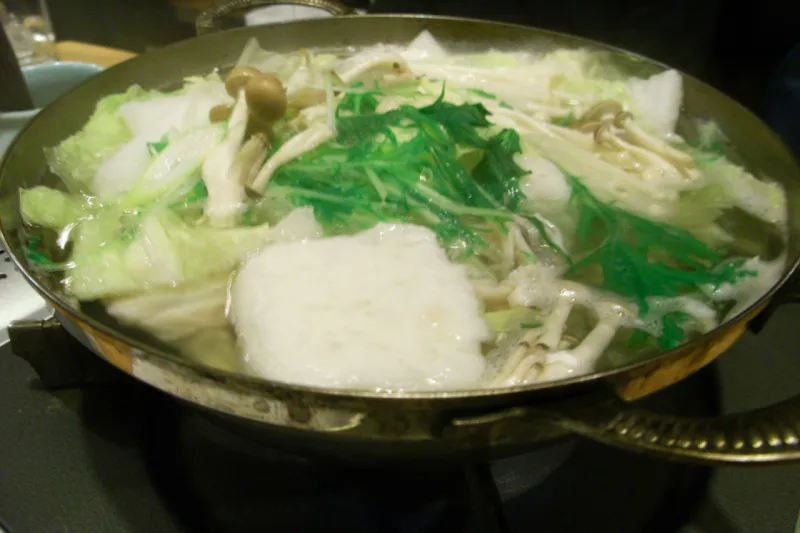
In winter people love "fugu chiri nabe", a hotpot of fugu pieces, ara (the meat around the bones) and vegetables simmered in kombu (kelp) stock and eaten with ponzu. The finale is zosui, rice cooked in the remaining broth, so none of the fugu's flavour goes to waste. Other classics are "fugu karaage", marinated and deep-fried fugu, and "hirezake", grilled fins dropped into atsukan (hot sake).
In the Kansai region, fugu sashimi is sometimes called "tessa" and fugu hotpot "tecchiri". And in Shimonoseki, people call fugu "fuku" for good luck, after the word for good fortune.
How Japan keeps fugu safe
In Japan, the national government sets which species of fugu may be eaten, where they may be caught and which parts may be eaten. Only people holding a prefectural qualification (such as a fugu chef's licence) may prepare fugu, and the name of the qualification and the content of the exam differ from prefecture to prefecture.
Telling fugu species apart is hard for anyone but an expert, and which parts are edible also depends on the species. The Ministry of Health, Labour and Welfare warns that it is dangerous for amateurs to identify or prepare fugu. Don't cook fugu you caught yourself, or fugu someone gave you.
Where and when to eat it
The heartland is Yamaguchi Prefecture, especially Shimonoseki and Hagi. The Shimonoseki area is famous for torafugu (tiger puffer), while Hagi lands plenty of mafugu, a species with a firm bite and a sweet taste. In Yamaguchi, fugu is such an everyday ingredient that fugu sashimi is sold at supermarket fish counters, and many places serve it at fairly reasonable prices, from set lunches to izakaya (Japanese pub) snacks. At Karato Market in Shimonoseki, an event with seafood stalls is held at weekends and on public holidays, where you can try fugu dishes casually.
Wild tiger puffer numbers are falling, so the fishing season is limited to September to March, and fugu is loved as a taste of winter. At specialist restaurants the standard is a set course running from sashimi through hotpot to zosui.
For those with dietary restrictions: fugu dishes are fish dishes; ponzu contains soy sauce and hirezake contains sake. Eat fugu only at a proper restaurant, prepared by a licensed chef with the poisonous parts removed.
Tips
- Only ever eat fugu at a restaurant with a licensed chef. Never eat fugu you caught yourself or one prepared by an amateur.
- Fugu is at its best in winter. The fishing season for wild tiger puffer is September to March.
- If a pricey set course feels like too much, in Yamaguchi Prefecture you can start with something affordable, such as a fried fugu set meal or a lunch.
- In Shimonoseki, fugu is called "fuku". If you see "fuku" on a sign or menu, it's the same fish.
- If you drink, "hirezake", grilled fins dropped into hot sake, is one of the pleasures of a fugu meal.