Japan is Nippon
Goya Champuru (Okinawan Bitter Melon Stir-Fry)
Stir-fry bitter goya with firm Okinawan tofu and egg and you get a home-cooked dish you could eat every day. Meet champuru, a staple of the Okinawan table.
A local dish of Okinawa
You will mostly find it in this area, rarely elsewhere in Japan.
- OkinawaA home-cooked dish eaten all over the prefecture, which also ships more goya than anywhere else in Japan
What is goya champuru?
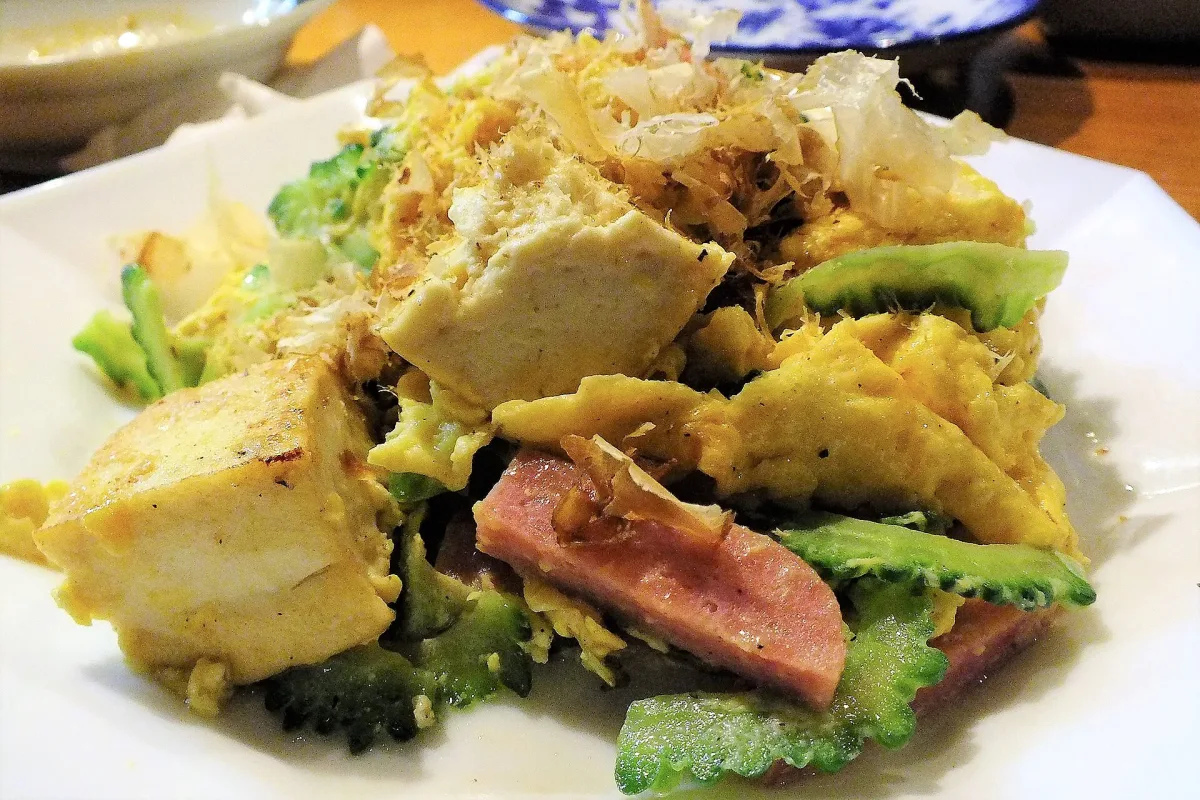
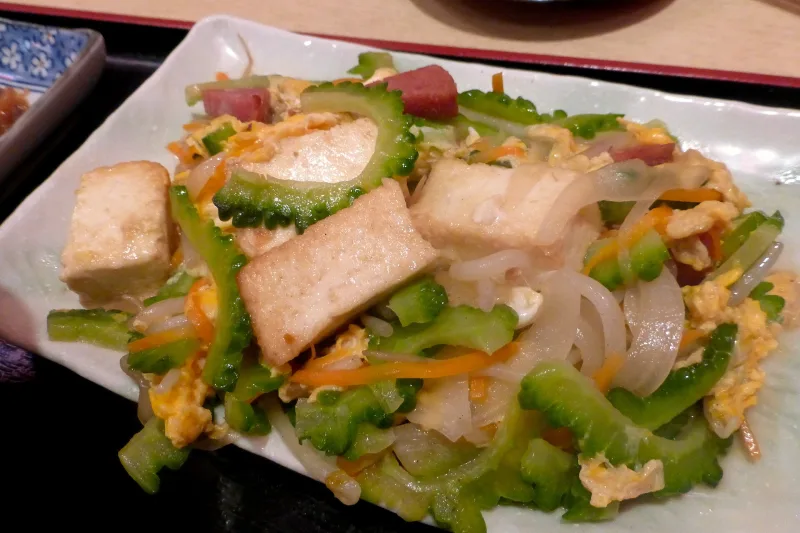
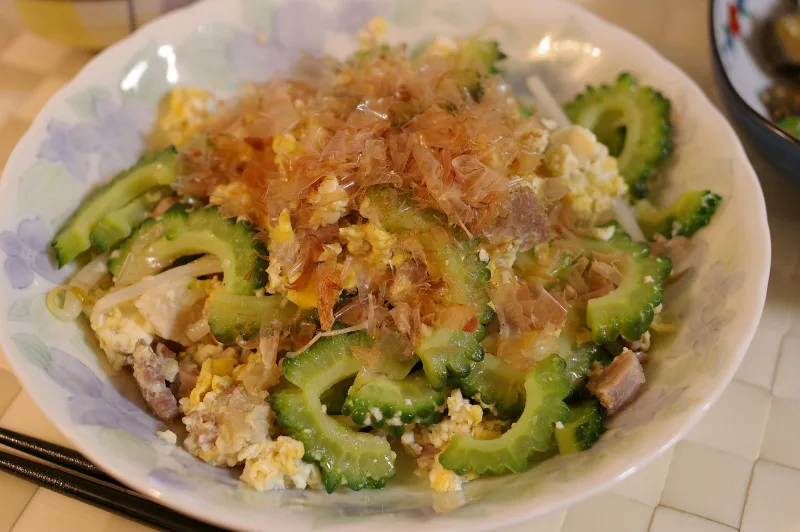
"Champuru" is an Okinawan home-cooked dish of browned shima-dofu (Okinawan tofu) stir-fried with seasonal vegetables. The best known of all is goya champuru, made with goya (also called nigauri, bitter melon: a green, bitter vegetable with a bumpy skin).
To make it, the tofu is first torn by hand into fairly large chunks, stir-fried until browned and set aside. Next the goya is stir-fried, boiled pork belly (sanmainiku) is added and seasoned with salt, and beaten egg is poured in and stirred through. Finally the tofu goes back in and it's finished with soy sauce. Instead of pork, canned pork such as Spam is sometimes used, and it may be topped with kezuribushi (shaved katsuobushi). Stir-frying the goya with egg and tofu makes its bitterness easier to enjoy.
The stars: goya and shima-dofu
Tofu is essential to champuru. Okinawan tofu (shima-dofu) is firm and dense, so it doesn't fall apart even when stir-fried hard. Okinawan tradition is to sell it hot, straight after it's made, and because it isn't soaked in water it is said to keep its flavour. In recent years, though, hygiene standards have required temperature control, and tofu sold hot has reportedly become hard to find. Outside Okinawa, firm (momen) tofu with the water pressed out works as a substitute.
Unsurprisingly, the main goya-growing area is Okinawa Prefecture. According to Ministry of Agriculture, Forestry and Fisheries data, Okinawa shipped 6,247 tonnes of the 2018 crop, more than twice as much as second-placed Miyazaki Prefecture (2,242 tonnes). Goya was originally a summer vegetable, and it's said that many homes once had a goya trellis in the garden, covered in yellow flowers each summer.
Home cooking to get through the summer
Goya's bitterness stimulates the appetite, and it is rich in heat-stable vitamin C, so goya champuru has long been valued as a dish to ward off natsubate (summer fatigue, being worn down by the heat). Thanks to plant breeding, goya is now available all year round, and the dish is eaten at home and in restaurants whatever the season.
As well as in Okinawan homes, it has in recent years become home cooking across Japan. Okinawa has other goya dishes too, such as goya juice and "goya nbushi", stir-fried and simmered with miso.
Champuru and irichi
A champuru's name changes with the ingredients. Tofu and goya make goya champuru; tofu and bean sprouts make "maamina champuru" (maamina is the Okinawan word for bean sprouts). Okinawa has another kind of stir-fry called "irichi", which is described as differing in that it doesn't use tofu.
One theory says the word "champuru" comes from "campur", meaning "to mix" in Malay and Indonesian, and the cooking method is said to show the influence of China and Southeast Asia, which Okinawa traded with. Others point out, however, that in the Okinawan language "champuru" is simply the name of a dish.
Where and how to eat it
Goya champuru is eaten throughout Okinawa Prefecture; it's cooked at home and you can also try it at restaurants across the prefecture. Since plant breeding has made goya available all year round, you can have it even if you visit outside summer.
If the bitterness bothers you, one method is to sprinkle the goya lightly with salt and give it a gentle squeeze to draw out the bitterness before cooking. For those with dietary restrictions: standard goya champuru contains pork (or canned pork), egg and tofu (soya), and may be topped with kezuribushi (fish). If you are vegetarian or want to avoid pork, check with the restaurant.
Tips
- When you visit Okinawa, start with the real thing: champuru made with shima-dofu. The tofu has a different texture from what you'll get outside the prefecture.
- Even if you're not keen on bitter flavours, champuru stir-fried with egg and tofu should be easy to enjoy. Give it one bite first.
- There are other goya dishes too. Try "goya nbushi", goya stir-fried and simmered with miso, or goya juice.
- If you're making it at home outside Okinawa, firm (momen) tofu with the water well pressed out makes a good substitute.
- The dish often contains pork, egg, soya and katsuobushi (dried bonito flakes). If you need to avoid any of these, check before ordering.