Japan is Nippon
Natto
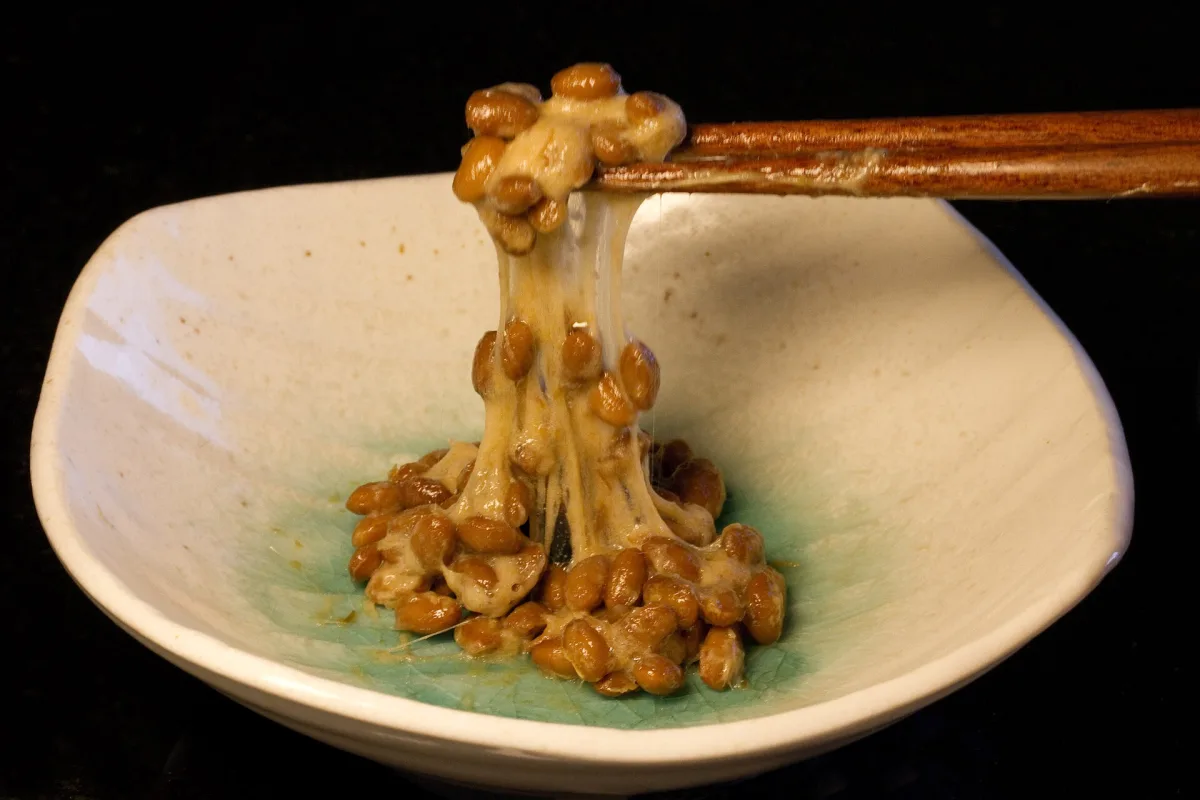
A strong smell and long strings that stretch as you lift your chopsticks. Why is love-it-or-hate-it natto so adored in eastern Japan? Plus tips on eating it.
Eaten all over Japan
Best known in Ibaraki and Akita and Yamagata.
- IbarakiMito is a famous producer, known for small-bean Mito natto; also home to soboro natto, mixed with dried radish strips
- AkitaYokote has an origin legend and a monument; in the southern inland area, natto soup with mashed natto is eaten at New Year
- YamagataNatto soup is a winter dish eaten across the prefecture; the Yonezawa area has gotonatto, matured with koji and salt
What is natto?
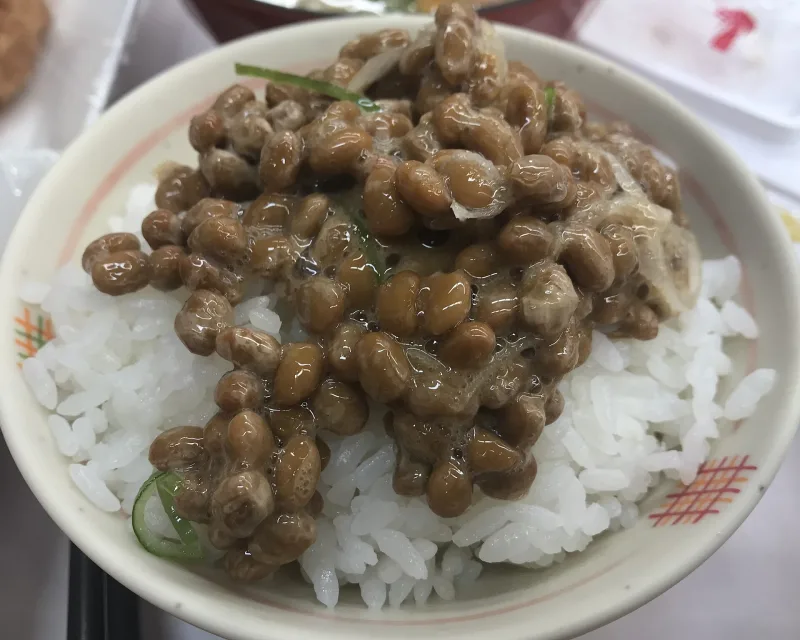
Natto is a traditional Japanese food made by fermenting cooked soybeans with natto bacteria (a type of hay bacillus). In factories, steamed soybeans are inoculated with the bacteria, packed into containers and left to ferment for about 20 hours in a fermentation room at around 40°C. During that time it develops the sticky goo that turns into strings when you stir it, and its distinctive smell.
The goo is made of polyglutamic acid, which the bacteria produce from the soybean protein, and a kind of sugar called fructan. The smell is also produced by the bacteria, and it gradually gets stronger the longer it has been since the natto was made. Because of the strong smell and stickiness, it is known as a food that takes a while to get used to.
When people say natto, they usually mean this stringy kind, "itohiki natto". There is also a dark, non-stringy "tera natto" (temple natto, or salty natto) made with koji (rice, barley or similar grains on which a type of mould has been grown). And "amanatto", which you often see in shops, is a sweet made by simmering beans in sugar, nothing at all like fermented natto.
When and where did it begin? Uncertain origins and legends
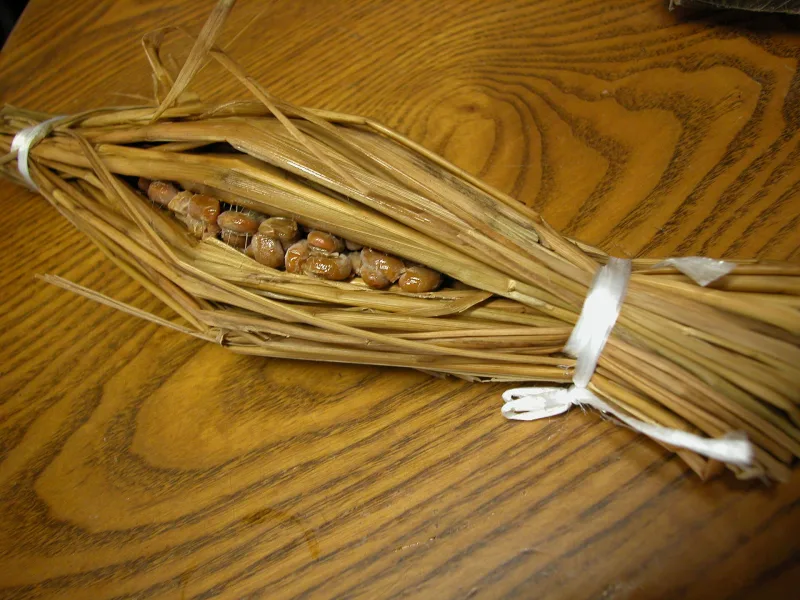
Nobody knows for sure when the Japanese started eating natto. One theory says something like natto existed around the end of the Jomon period. A single stalk of rice straw is said to carry about ten million natto bacteria, and it is thought that people long ago may have wrapped cooked beans in straw to store them and found that they had fermented by chance.
Origin legends survive in various places. In Yokote, Akita Prefecture, the story goes that farmers delivered cooked beans wrapped in straw to the army of Minamoto no Yoshiie, a Heian-period warlord; a few days later the beans had turned stringy, and when they tried them they were delicious. A monument has even been built there. Mito in Ibaraki Prefecture has a similar legend of Minamoto no Yoshiie taking a liking to cooked beans wrapped in straw. Neither story has been confirmed as historical fact.
There are also several theories about where the name "natto" comes from. A well-known one is that these were beans made in the "nassho", a word for a temple kitchen.
Why is it popular in eastern Japan? Mito natto and regional ways of eating it
According to the National Natto Cooperative Society Federation, natto is eaten most in Kanto and areas to the north, such as Tokyo, Ibaraki, Fukushima and Miyagi, while it has traditionally not been eaten much in western Japan. It is thought that in snowy, cold regions it was made as an easy source of protein in place of fish and vegetables, whereas warm western Japan, where fish was easy to get, had no tradition of making natto. A record from the Edo period notes that in Edo (old Tokyo) natto sellers came round practically every morning, but in Kyoto and Osaka people only made it at home and it was rarely seen for sale.
The place most famous for natto is Mito in Ibaraki Prefecture. Mito has long grown small soybeans that stand up well to floods, as a precaution against the rivers overflowing, so Mito natto is known for its small beans. The Mito natto name actually spread surprisingly recently, in the Meiji era: after the railway arrived, it became popular as a souvenir sold at Mito Station. Some people in Ibaraki still make natto by hand at home, and around Mito there is a preserved food called soboro natto (or shoboro natto), natto mixed with wariboshi daikon (radish cut into thin strips and dried).
In the Tohoku region, natto-jiru (natto soup), miso soup with mashed natto dissolved into it, is a winter speciality. In Yamagata Prefecture it is eaten throughout the prefecture as a warming winter soup, and in the southern inland part of Akita Prefecture there is a custom of making a big pot of it at New Year and reheating it to eat over the first three days of the year. Hikiwari natto, made from soybeans that have been crushed and skinned first, has long been made in Aomori, Akita, Iwate and elsewhere, and the Yonezawa area of Yamagata Prefecture has gotonatto, hikiwari natto mixed with koji and salt and left to mature.
How do you eat it?
Natto sold in shops usually comes with a sachet of sauce and some karashi (Japanese mustard). The classic way is to stir it well with chopsticks until it's stringy, add the sauce and mustard, and eat it on rice. It is well known as a breakfast side dish, but in a 2005 survey by the National Natto Cooperative Society Federation, the share of people who ate it at dinner (61.9%) was higher than at breakfast (46.3%).
In the same survey, the most popular additions were, in order, the sauce from the pack, spring onion and mustard. Some people also add a raw egg or grated daikon radish. Natto dishes often made at home include natto-maki (natto rolled in nori seaweed), natto soup and ika natto (natto mixed with chopped squid).
For those with dietary restrictions: natto is made from soybeans, so avoid it if you have a soy allergy. The ingredients of the sauce in the pack vary by product, so check the label if you have concerns.
Where can you eat it?
Natto is an everyday food you can easily buy in shops all over Japan. For the real atmosphere, head to Mito in Ibaraki Prefecture, where the soboro natto sold at Mito's famous natto shops is popular with visitors as a souvenir. If you travel in Tohoku in winter, look out for natto soup in Yamagata and Akita prefectures. In Yamagata it is served at ryokan (traditional inns), restaurants and even in school lunches, and in Omagari, in Daisen, Akita Prefecture, there is a scheme of certified restaurants that serve natto soup.
Tips
- Before eating, the basic move is to stir it well with your chopsticks until it turns stringy.
- If it's your first time, start with the classic: add the sauce and mustard that come in the pack and put it on rice. Many people also add spring onion or a raw egg.
- Amanatto is a sweet, not the fermented food natto, so don't mix them up when shopping.
- Natto is said to taste best one to two days after you buy it. As it ages, white specks (amino acid crystals) can appear, but they are perfectly safe to eat.
- If you visit Yamagata or Akita in winter, try natto-jiru, a local soup with mashed natto dissolved into it.
Sources
- 農林水産省 うちの郷土料理「そぼろ納豆/しょぼろ納豆 茨城県」 (opens in a new tab)
- 農林水産省 うちの郷土料理「納豆汁 秋田県」 (opens in a new tab)
- 農林水産省 うちの郷土料理「納豆汁 山形県」 (opens in a new tab)
- 全国納豆協同組合連合会 納豆PRセンター「納豆百科事典」(納豆Q&A・納豆発展の歴史) (opens in a new tab)
- 全国納豆協同組合連合会 納豆PRセンター「リサーチデータ」(2005年 納豆に関するアンケート) (opens in a new tab)
- タカノフーズ「納豆の豆知識」 (opens in a new tab)
- ミツカン「納豆のまめ知識」 (opens in a new tab)
- Wikipedia "Natto"(補助資料) (opens in a new tab)