Tempura
Once sold on skewers at Edo street stalls, tempura is now savoured at specialist counters. Nagasaki even has a sweet-battered kind that needs no dipping sauce.
Eaten all over Japan
Best known in Tokyo and Nagasaki.
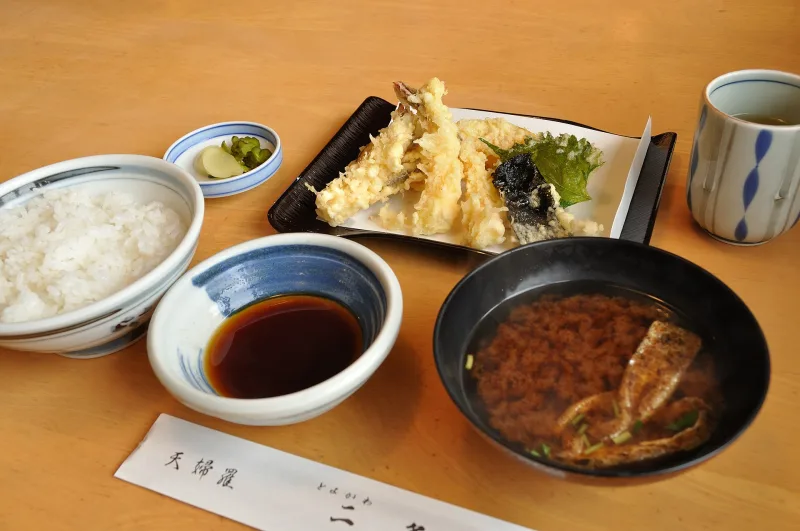
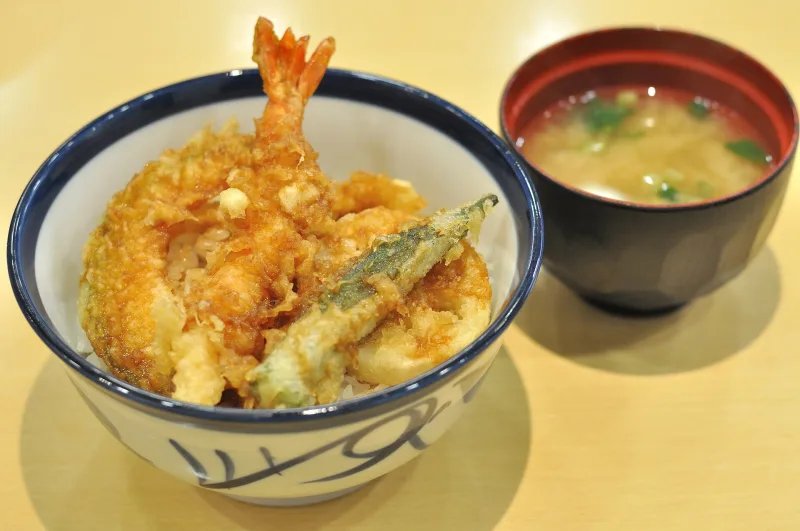
What is tempura?
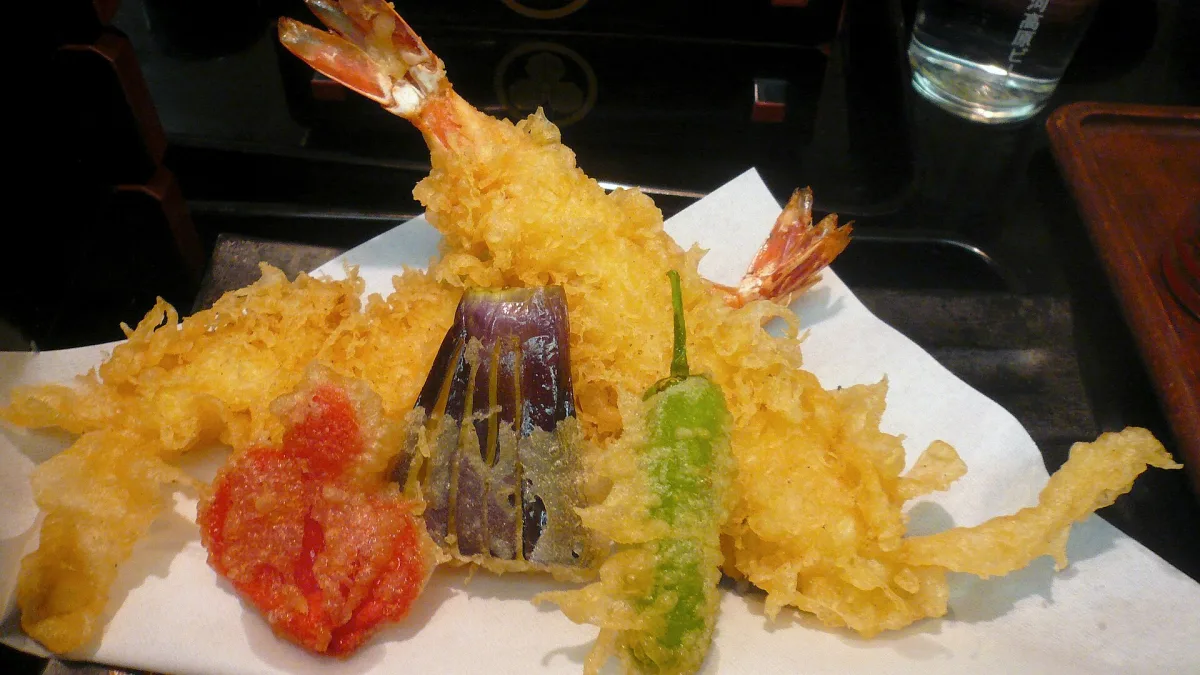
Tempura is seafood and vegetables lightly dusted with wheat flour, dipped in a batter of egg, flour and water, and deep-fried in vegetable oil. Ingredients long favoured in Tokyo include prawns, kisu (Japanese whiting), squid, anago (conger eel), megochi (a small white-fleshed fish), scallops and young ayu (sweetfish).
According to the Ministry of Agriculture, Forestry and Fisheries, Edo-style tempura (Edo being old Tokyo) is characterised by fresh Edomae seafood from Tokyo Bay fried in sesame oil and eaten piece after piece straight from the fryer. In Kamigata (Kyoto and Osaka) in earlier times, on the other hand, "tempura" meant fried fish paste.
From Portuguese-influenced cooking to Edo street stalls and fine dining
Tempura's origins are said to lie in nanban cooking (dishes from the Portuguese and other Europeans), a kind of fritter introduced from Portugal in the mid-16th century. At the time, though, cooking with lots of oil was rare, and it is said to have spread only once rapeseed oil production increased in the Edo period. The origin of the word "tempura" is also unclear; one theory is that it comes from the Portuguese "tempero" (to cook).
In the Edo period, Edo was a big new city where eating out at street stalls, standing up, became popular, and tempura was one such food. Back then it was reportedly fried on skewers and served with grated daikon radish. In the later Edo period, frying techniques and ingredients were refined until it also became a high-class dish, and from the Meiji era onwards ryotei (traditional upmarket restaurants) and specialist tempura restaurants spread.
After the Great Kanto Earthquake of 1923, cooks who had lost their jobs moved to other parts of Japan, spreading Edomae tempura nationwide. Today it's eaten in all sorts of forms, from home cooking and supermarket ready meals to dishes at upmarket specialist restaurants.
Nagasaki tempura and regional tempura
Nagasaki Prefecture has Nagasaki tempura, said to date back about 400 years. It's thought to be based on the seasoned-batter fritters eaten by the Portuguese who came for the nanban trade, and it is still fried in a wheat-flour batter with sugar, sake and other seasonings added. Because the batter is seasoned, you can eat it as it is without tentsuyu, and it's tasty even cold. It's also a regular on school lunch menus in Nagasaki Prefecture.
The food manufacturer Showa Sangyo introduces several regional tempura, including tempura of new tea shoots eaten in spring in Shizuoka Prefecture, tempura of sweet simmered kintoki beans, popular in Kagawa Prefecture as a topping for Sanuki udon, and Okinawan tempura, known for its thick, egg-rich batter.
How to eat it: tentsuyu, salt and tendon
Freshly fried tempura is dipped in tentsuyu, a bonito-dashi sauce with grated daikon or ginger stirred in, or sprinkled with salt. Some people also squeeze over lemon or other citrus juice.
Tempura briefly simmered in a sweet-savoury sauce and served on rice is tendon. Serving it on soba or udon is an old custom too: tempura soba was already on soba shop menus in the late Edo period. At self-service udon shops in Kagawa Prefecture, you can pick whichever tempura you like and put it on your udon yourself.
In Tokyo's 23 wards, places such as Minato, Chuo, Bunkyo and Shibuya have restaurants serving traditional, seafood-focused Edomae tempura. Eating piece after piece fresh from the fryer is the Edomae way to enjoy it, so eat it while it's hot. Since 1989, the spread of automatic fryers and other equipment has allowed tendon and tempura chains to expand across the country.
For those with dietary restrictions
The batter is made with wheat flour and egg. The Japan National Tourism Organization (JNTO) mentions vegetable tempura as a dish vegetarians can try, but note that tentsuyu is made with bonito dashi (fish). If you're concerned, check with the restaurant before you order.
Tips
- Tempura is all about eating it freshly fried, so eat it while it's hot as soon as it's served.
- If you're offered both tentsuyu and salt, try each with different ingredients and compare.
- For an easy introduction, try tendon (tempura on rice) or tempura soba or udon.
- If you visit Nagasaki, try Nagasaki tempura, with a seasoned batter you eat without dipping sauce.
- If you want to avoid dashi, ask whether you can have salt instead of tentsuyu.