Japan is Nippon
Gyutan (Grilled Beef Tongue)
Sendai's famous dish, yet Miyagi doesn't produce beef tongue. The story of thick-cut grilled tongue and its set meal, born in one post-war yakitori bar.
A local dish of Miyagi
You will mostly find it in this area, rarely elsewhere in Japan.
- MiyagiBorn at a yakitori bar in Ichibancho, Sendai; the city is packed with gyutan specialists
What is Sendai gyutan?
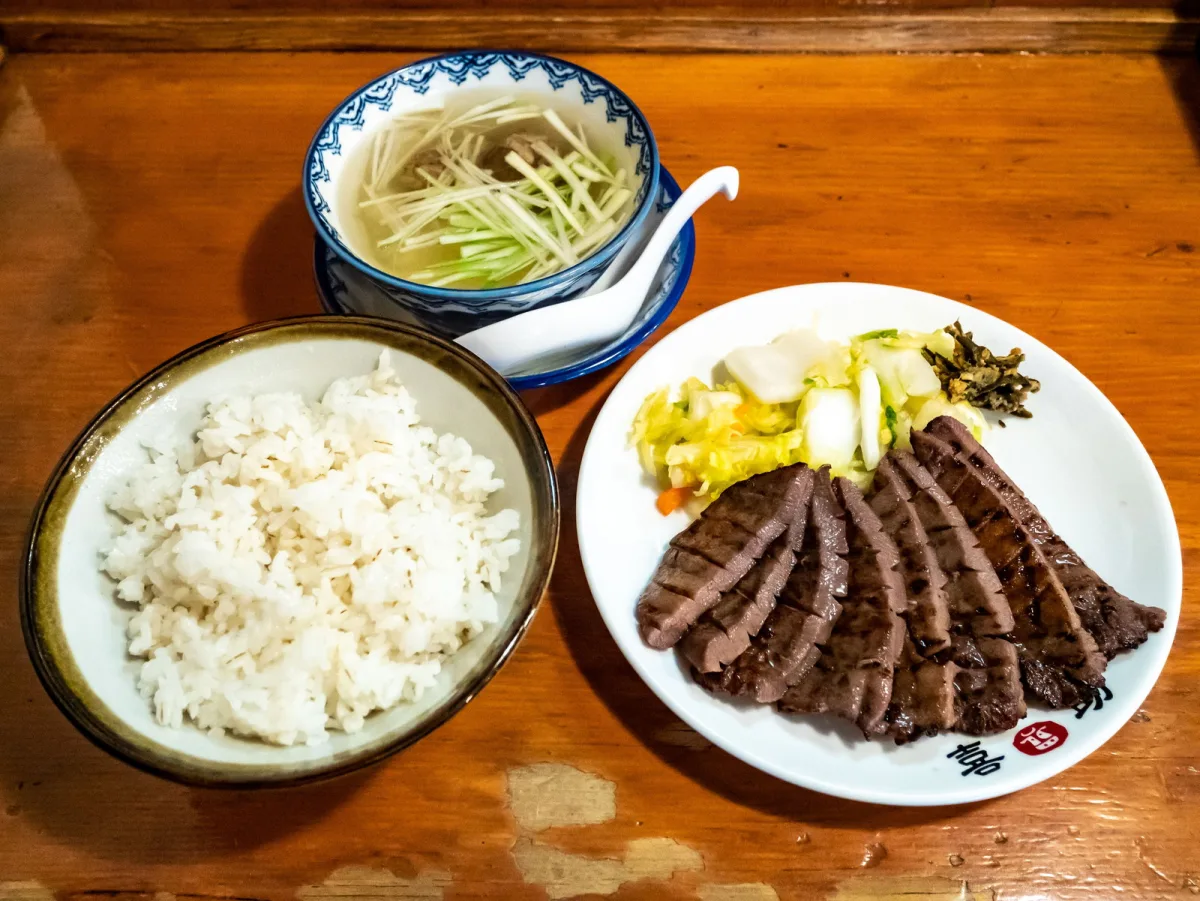
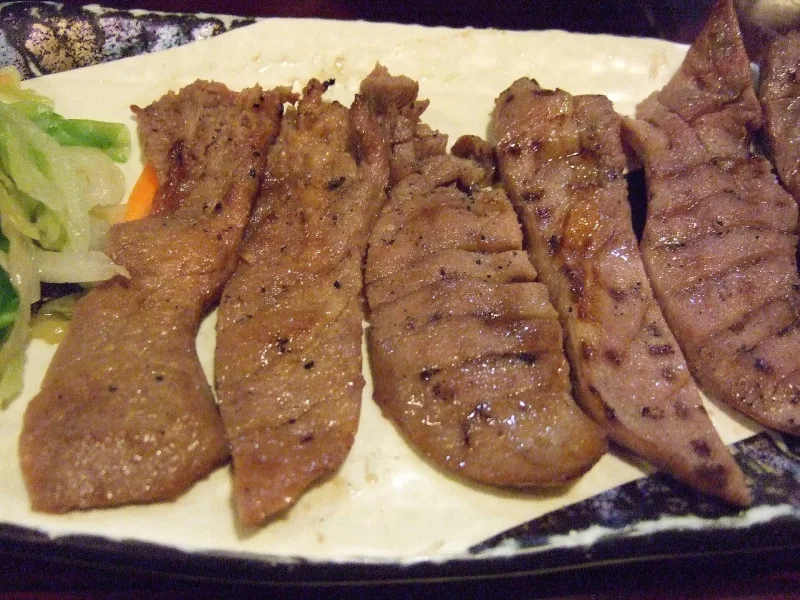
Gyutan-yaki is beef tongue ("tan") cut thick, seasoned with salt or similar, and grilled over charcoal. It's the signature dish of Sendai in Miyagi Prefecture, and Miyagi's official local products website presents it as one of "Sendai's three great specialities", alongside sasa-kamaboko (leaf-shaped fish cake) and zunda mochi (rice cakes coated in sweet edamame paste).
It's made differently from the thin-sliced tongue you get at yakiniku (Korean-style barbecue) restaurants. According to the Sendai Gyutan Promotion Association, at gyutan specialists everything is done by hand, from peeling and cutting the tongue to scoring the slices. They are salted by hand, aged in the fridge for three to four days to bring out the umami (savoury depth), then grilled quickly over charcoal.
It started at one yakitori bar
Sendai gyutan was born not long after the end of the Second World War. Keishiro Sano, a cook from Yamagata Prefecture, opened a yakitori (grilled chicken skewer) bar in Ichibancho in central Sendai and, experimenting again and again to turn beef tongue, little known at the time, into something that suited Japanese tastes, came up with salt-seasoned grilled tongue. According to the Sendai Gyutan Promotion Association, he put it properly on the menu under the restaurant name "Tasuke" around 1948 (Showa 23).
From around the Showa 40s (1965–1974), cooks who had trained at Sano's restaurant went independent and opened their own specialist restaurants, and gyutan restaurants multiplied across Sendai. When the Tohoku Shinkansen opened in 1982, more people came from the Tokyo area on business trips and holidays, and the idea that "Sendai means gyutan" became known nationwide.
The gyutan set meal: barley rice and oxtail soup
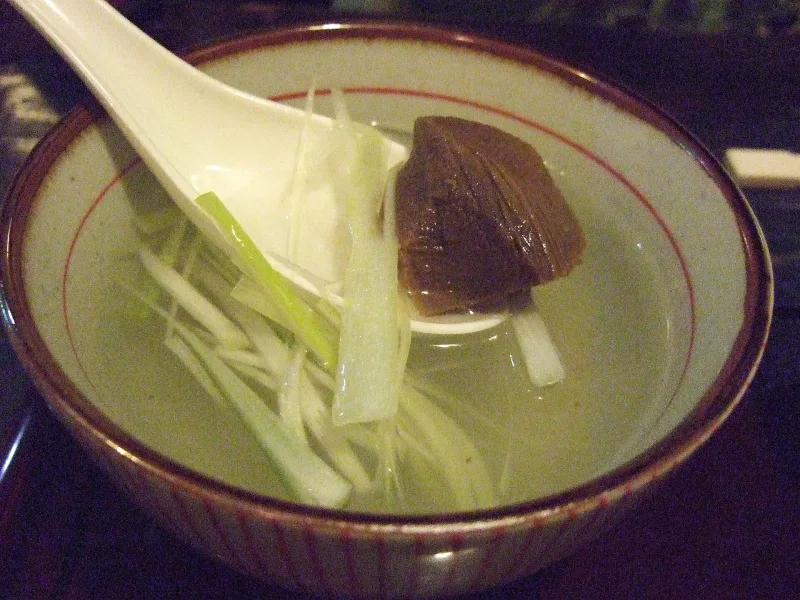
In Sendai, gyutan is usually eaten as a teishoku (set meal). The basic form is thick-cut grilled tongue with mugimeshi (rice cooked with barley), tail soup (a light soup made from oxtail stock) and nanban miso (miso with a spicy kick), and some restaurants add tororo (grated yam) too.
As well as the salt seasoning regarded as the original, some restaurants serve it with miso or sauce flavours. Portions are often shown in "slices" or "pieces", and the size of one portion and the choice of sizes differ between restaurants, so check the menu before ordering.
The tongue isn't from Miyagi?
Surprisingly, Miyagi Prefecture is not a beef tongue producer. A cow yields only about 1 kg of tongue, and Sendai's gyutan restaurants have long relied heavily on imported tongue.
When BSE (bovine spongiform encephalopathy) was found in Japan in 2001, sales plunged, and the following year, 2002, specialist restaurants joined together to form the Sendai Gyutan Promotion Association. When BSE broke out in the United States in 2003, imports of beef tongue from the US, Canada and elsewhere stopped, the price of the raw material shot up several times over, and quite a few restaurants were forced to close or change business. Since then, worldwide demand for beef tongue has grown and it has become a premium cut, and the association explains that gyutan is turning from the "taste of ordinary people" it once was into a treat for tourists and special occasions.
Even so, Sendai gyutan has been certified in the "Future 100-Year Food" category of "100-Year Food", a scheme by the Agency for Cultural Affairs to pass regional food cultures on to the next generation.
Where and how to eat it
The home of gyutan is Sendai, Miyagi Prefecture. The city has many gyutan specialists, including around Sendai Station. You'll also find plenty of seasoned beef tongue to take home as a souvenir, along with gyutan stew, curry and more.
For those with dietary restrictions: gyutan is a beef dish, and the oxtail soup in the set meal is made from beef tail stock. The barley rice contains barley. If you want to avoid beef or have other dietary restrictions, check with the restaurant.
Tips
- For the true Sendai experience, order a "gyutan teishoku" with barley rice, oxtail soup and nanban miso.
- Start with the original salt seasoning. Some restaurants also offer miso or sauce flavours, so comparing them at a second restaurant is fun.
- Many restaurants let you choose your portion by the number of slices or pieces, so check how the menu shows it before you order.
- Nanban miso is spicy, so try putting a little on your tongue slices at a time.
- This dish uses beef and beef broth. If you have dietary restrictions, check before ordering.