Japan is Nippon
Tonkatsu (Japanese Pork Cutlet)
A Western cutlet turned Japanese set meal with rice, miso soup and shredded cabbage. From Nagoya's miso sauce to Kiryu's sauce-dipped katsu, meet tonkatsu.
Eaten all over Japan
Best known in Tokyo and Aichi and Gunma and Okayama.
- TokyoWhere, between the Meiji era and the early Showa era, Western-style restaurants are said to have turned the cutlet into thick-cut tonkatsu
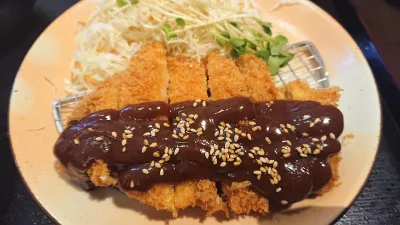
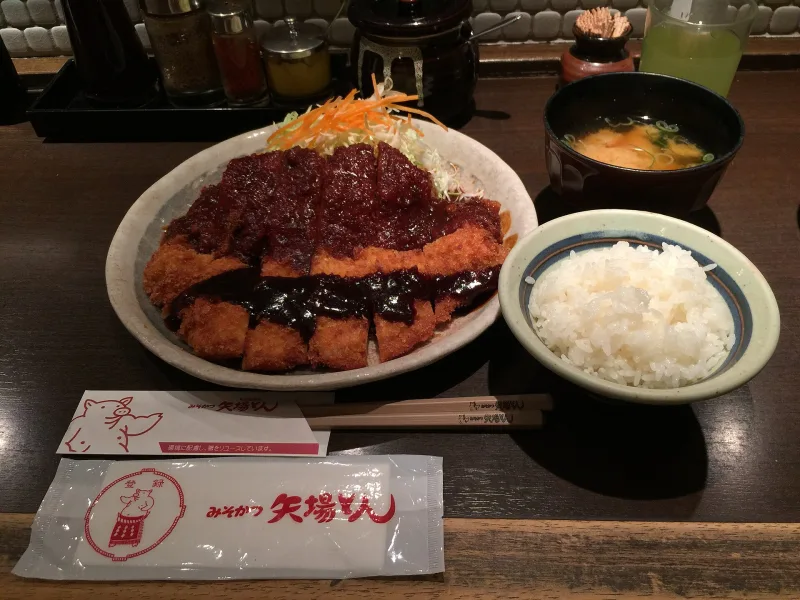
- AichiNagoya's miso katsu, with a bean-miso sauce either poured over or used as a dip, depending on the restaurant
- GunmaSauce katsudon, a freshly fried cutlet dipped in sauce; in Kiryu this is what "katsudon" means
- OkayamaOkayama City's demi-katsudon, tonkatsu topped with demi-glace sauce, served at about 30 restaurants in the prefecture
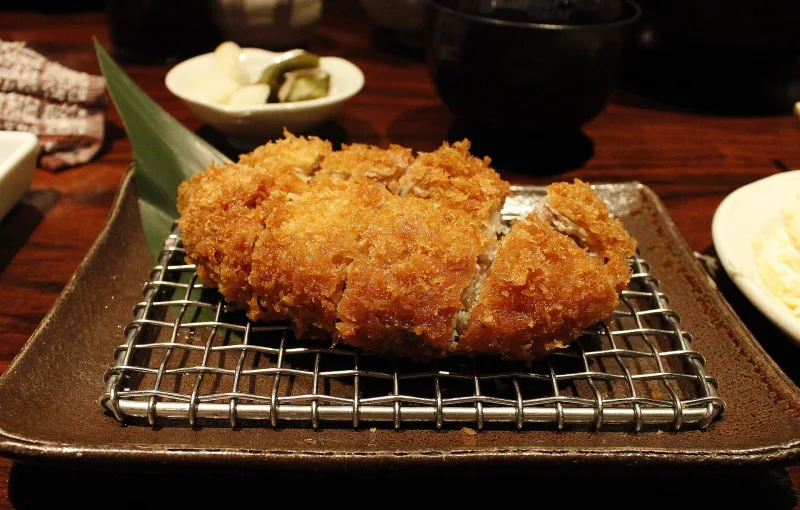
What is tonkatsu?
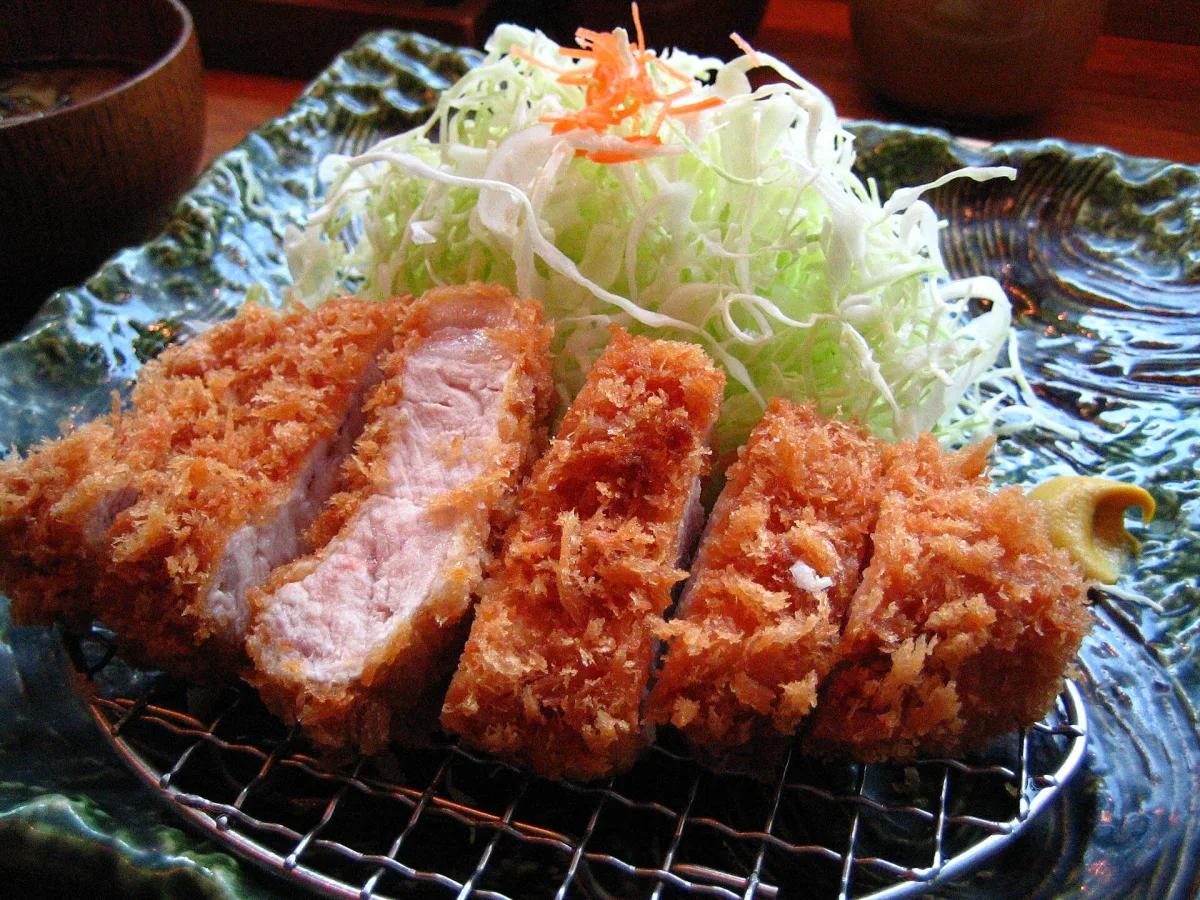
Tonkatsu is a thick slice of pork coated first in flour, then beaten egg, then panko (Japanese breadcrumbs), and deep-fried in plenty of oil. Made with "rosu" (loin, from the back) it is called rosu katsu; made with "hire" (fillet, the long, narrow cut from inside the loin) it is called hire katsu. Many restaurants let you choose either.
The name joins "ton", a reading of the character for pig, with "katsu", short for katsuretsu, the Japanese version of the English word "cutlet". In kanji it would be 豚カツ, but in practice it is usually written in hiragana or katakana as とんかつ or トンカツ. In a survey by the NHK Broadcasting Culture Research Institute, about 80 per cent of people said they used the hiragana spelling and about 80 per cent the katakana one, while only around 30 per cent used the kanji version.
Specialist restaurants usually serve tonkatsu as a teishoku (set meal) with rice, miso soup and pickles, with a pile of finely shredded cabbage on the plate. You eat it with tonkatsu sauce (a thick, sweetish sauce) or karashi (Japanese mustard).
From Western food to Japanese food: a short history
Meat only became widely eaten in Japan in the Meiji era. Western dishes in the early Meiji years included omelettes, beefsteak and cutlets, but according to the All Japan Curry Manufacturers Association, the two most heavily adapted to Japanese tastes were curry and the pork cutlet, which became tonkatsu.
The original Western cutlet was a thin piece of meat fried in a little fat, almost like pan-frying. Over time it became a thick piece of meat deep-fried in plenty of oil, like tempura, cut into strips so it could be eaten with chopsticks, and served with rice and miso soup. Tokyo's Western-style restaurants are said to have refined it from the late Meiji era to the early Showa era, but there are several competing theories about which restaurant was first, and no one can say for sure. An early use of the word "tonkatsu" appears in Takamura Kotaro's 1914 poetry collection Dotei (The Journey).
Miso katsu, sauce katsudon and demi-katsudon: regional tonkatsu
Miso katsu from Nagoya in Aichi Prefecture is tonkatsu with a sauce based on mame miso (a dark miso made from soybeans alone), and it is one of the best-known examples of "Nagoya meshi" (Nagoya's own local dishes). The miso is not used as it is: each restaurant blends it with other seasonings to create its own flavour. Restaurants broadly divide into those that pour the sauce over the cutlet and those that dip the cutlet into a pot of sauce.
Gunma Prefecture loves sauce katsudon: a freshly fried cutlet dipped in sauce and laid on a bowl of rice. In Kiryu, "katsudon" means sauce katsudon rather than the version simmered with egg. Kiryu was once a busy textile town, and the dish was a popular delivery order because it still tastes good when it has gone cold.
Okayama City in Okayama Prefecture has demi-katsudon: rice covered with cabbage, topped with freshly fried tonkatsu and demi-glace sauce (the rich brown sauce of Western-style cooking). Some restaurants add green peas or a raw egg. You can find it at about 30 restaurants in the prefecture, mostly in Okayama City.
Katsudon, katsu curry and katsu sando: dishes born from tonkatsu
Tonkatsu has gone on to become other dishes too. Katsudon is tonkatsu and onion simmered in a sweet and savoury broth, bound with egg and served on a bowl of rice. Katsu curry, curry rice topped with tonkatsu, is said to have been created in 1918 and became a staple of university canteens. The katsu sando, sauce-coated tonkatsu in a sandwich, is popular as well.
Where and how to eat it
You can eat tonkatsu all over Japan: at specialist tonkatsu restaurants, Western-style restaurants, set-meal diners and department-store restaurants, and it often turns up in bento (boxed meals) from bento shops and convenience stores. At a specialist restaurant, the usual approach is to choose loin or fillet first and order it as a set meal.
For those with dietary restrictions: tonkatsu is made with pork, and the coating uses wheat flour and egg. Sauce ingredients vary from restaurant to restaurant, so if you need to avoid pork, wheat or egg, check before you order.
Tips
- At a tonkatsu restaurant, your first choice is "rosu" (pork loin) or "hire" (fillet). Ordering one of each and comparing them is half the fun.
- In Nagoya, compare miso katsu from different restaurants: some pour the sauce over the top, others dip the cutlet in a pot of it, and every place has its own flavour.
- In Kiryu, Gunma Prefecture, ordering "katsudon" may well get you a sauce katsudon rather than the egg-topped version.
- In Okayama, try demi-katsudon, topped with demi-glace sauce. You will see it called "demi-katsu", "domi-katsu" and other names.
- If you need to avoid pork, wheat or egg, check the ingredients before you order.
Sources
- 農林水産省 うちの郷土料理「ソースカツ丼 群馬県」 (opens in a new tab)
- 農林水産省 うちの郷土料理「デミかつ丼 岡山県」 (opens in a new tab)
- 名古屋観光情報 名古屋コンシェルジュ「なごやめしダイジェスト」 (opens in a new tab)
- NHK放送文化研究所「『豚カツ』? 『とんかつ』? 『トンカツ』?」 (opens in a new tab)
- 全日本カレー工業協同組合「カレーのヒミツ」(明治の洋食とポークカツレツ、カツカレーの誕生) (opens in a new tab)
- JBpress「揚げ物ではなかった『とんかつ』誕生秘話」(1ページ目のみ閲覧可) (opens in a new tab)
- コトバンク「豚カツ」(日本国語大辞典、世界の料理がわかる辞典) (opens in a new tab)
- Wikipedia「豚カツ」(調理法の変化、定食スタイル、関連料理の補足として参照) (opens in a new tab)