Japan is Nippon
Hoto (Yamanashi Miso Noodle Stew)
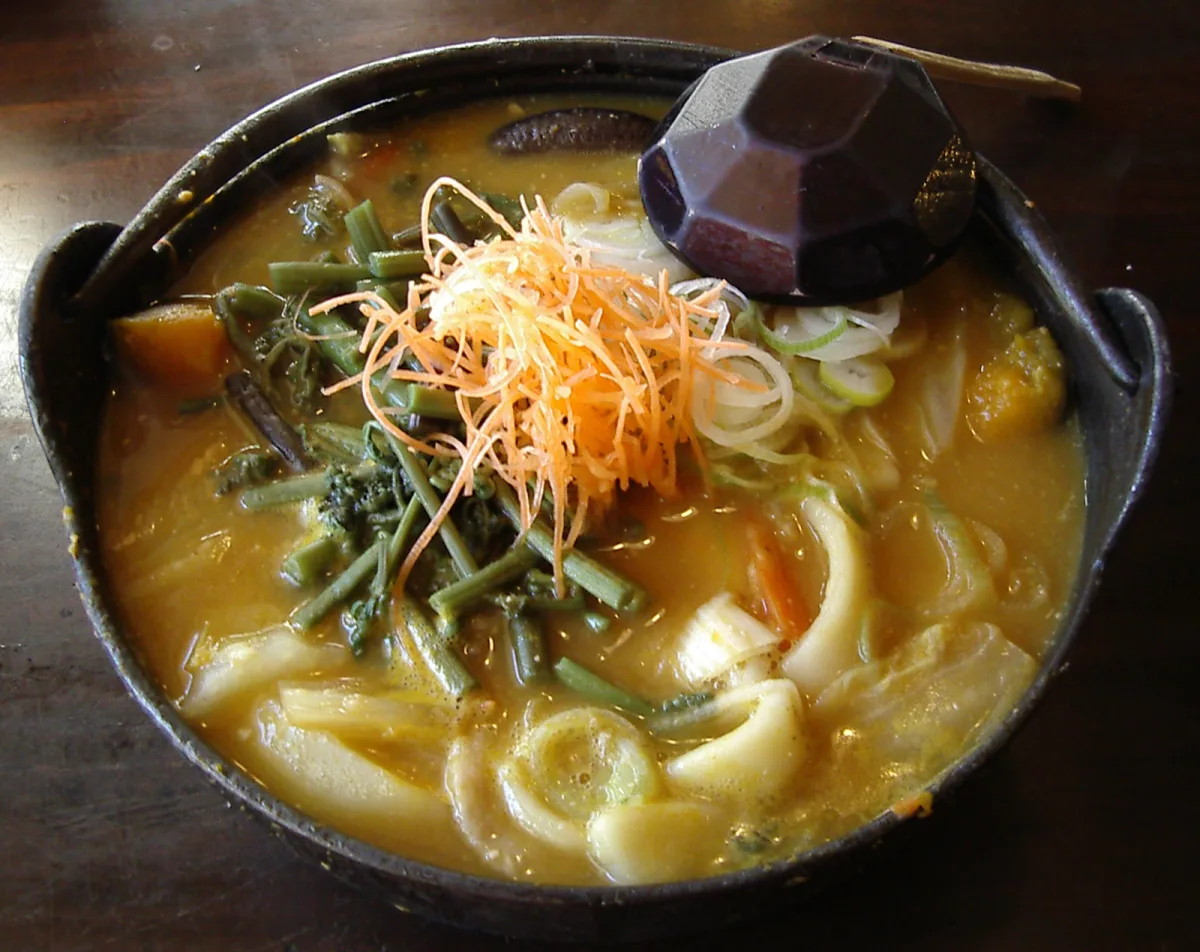
It looks like udon, but to Yamanashi people it is a different dish: broad noodles simmered with pumpkin and vegetables in miso, their everyday home food.
A local dish of Yamanashi
You will mostly find it in this area, rarely elsewhere in Japan.
- YamanashiEveryday local dish across the prefecture; in the southern Kyonan area also called "noshiire"
What is hoto?
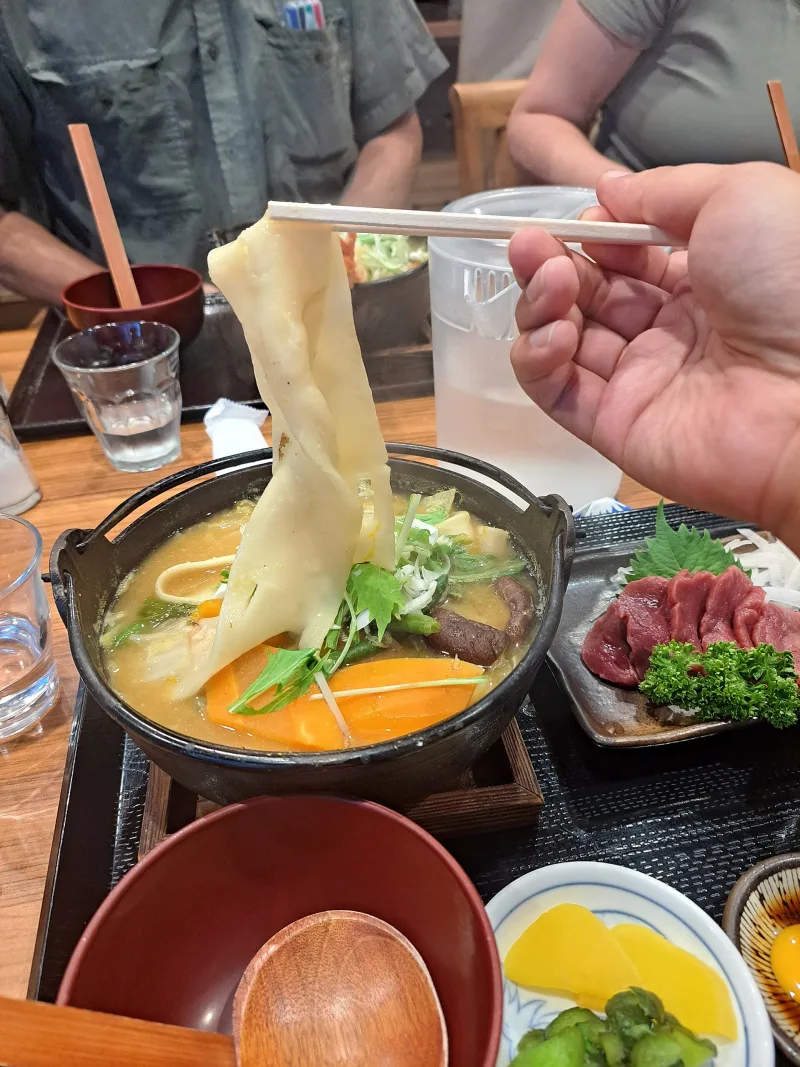
Hoto is the signature local dish of Yamanashi Prefecture. Wheat flour dough is rolled out and cut into flat, broad noodles, which are simmered in a miso-seasoned broth with a generous load of other ingredients: pumpkin, potato, daikon radish, carrot, Chinese cabbage, mushrooms and aburaage (deep-fried tofu), among others. The stock is usually made from niboshi, small dried fish.
Two things set it apart from udon: no salt goes into the noodle dough, and the noodles are not boiled first but go into the broth raw and cook there. Because there is no salt to rinse out, there is no need to pre-boil them, and the uchiko (dusting flour that stops the dough sticking) dissolves straight into the broth, thickening it. The thick broth stays hot for a long time and warms you right through, which is why people eat it more often in winter.
A staple instead of rice
Yamanashi is ringed by mountains, and much of its land was poorly suited to growing rice. According to Japan's Ministry of Agriculture, Forestry and Fisheries, hoto has long been eaten in these mountain areas as a staple in place of rice. Being able to make the noodles was once considered a skill a young woman should master before marriage.
The name is said to come from hakutaku, a word for dishes made from wheat flour, and nobles are known to have eaten it at ceremonies and similar occasions in the Heian period. Yamanashi's tourism website also mentions a story that the warlord Takeda Shingen fed it to his troops on campaign during the Sengoku (Warring States) period, but this is a legend with no firm record behind it.
Home cooking and restaurant hoto
In Yamanashi, families make hoto at home, and every household's version tastes a little different. At home it is usually cooked in one big pot, while restaurants generally serve it in individual iron pots. Each restaurant puts its own spin on the ingredients, freely adding meat, seasonal vegetables or mushrooms.
The name varies by area, too: in the Kyonan area in the south of the prefecture it is also called noshiire or noshikomi. In summer, people enjoy ozara, a dipping-noodle style in which boiled noodles are chilled in cold water and dunked in a separate broth.
Where to eat it
There are lots of hoto restaurants across Yamanashi, and people come from outside the prefecture just to eat it. Yamanashi's tourism website features restaurants in Kofu, Katsunuma, the Fuji Five Lakes (Lake Kawaguchi and others) and along the Fuji River. Part of the appeal is how easily it fits into a trip to Mount Fuji or Lake Kawaguchi.
Hoto is one of the "Special Selection Yamanashi Foods" that the prefecture has chosen to hand down to the next generation, and in 2007 it was also named one of the Ministry of Agriculture, Forestry and Fisheries' "100 Best Local Dishes of Farming, Mountain and Fishing Villages". Some restaurants only start cooking once you order, and at some of the featured places it takes around 20 to 30 minutes to arrive, so give yourself plenty of time.
For readers with dietary restrictions
Hoto noodles are made from wheat flour. The stock is usually made with niboshi (fish), and the seasoning is miso. Aburaage (soya beans) is often included, and some restaurants add meat such as pork or chicken. If you avoid wheat or are vegetarian, check the ingredients at the restaurant.
Tips
- If you visit Yamanashi in the cold months, try hoto to warm up. The broth is thick, so take care not to burn your mouth while it is piping hot.
- In the hot season, some restaurants serve ozara: cold noodles eaten with a dipping broth.
- Restaurants often serve each portion in its own iron pot, and at some places it takes a while from ordering until your hoto is ready.
- Plenty of hoto restaurants are easy to drop into while sightseeing around the Fuji Five Lakes or Kofu.
- The noodles are usually made from wheat flour and the stock from niboshi (dried small fish). If there are ingredients you need to avoid, ask before ordering.