Japan is Nippon
Nagasaki Champon
It looks like ramen, but in Nagasaki the noodles are simmered in the soup. A hearty noodle dish born in a Meiji-era port for students from China.
A local dish of Nagasaki
You will mostly find it in this area, rarely elsewhere in Japan.
- NagasakiBorn in Nagasaki city; Obama in Unzen City has the lighter, chicken-based Obama champon
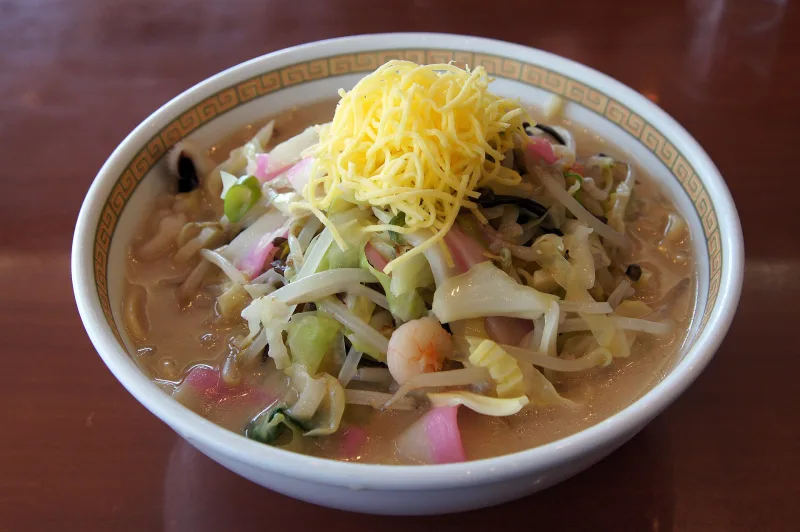
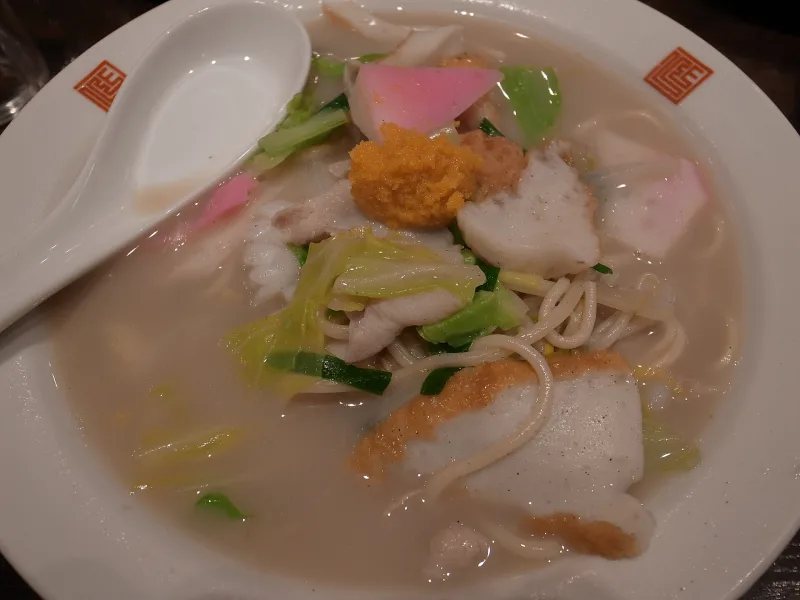
What is Nagasaki champon?
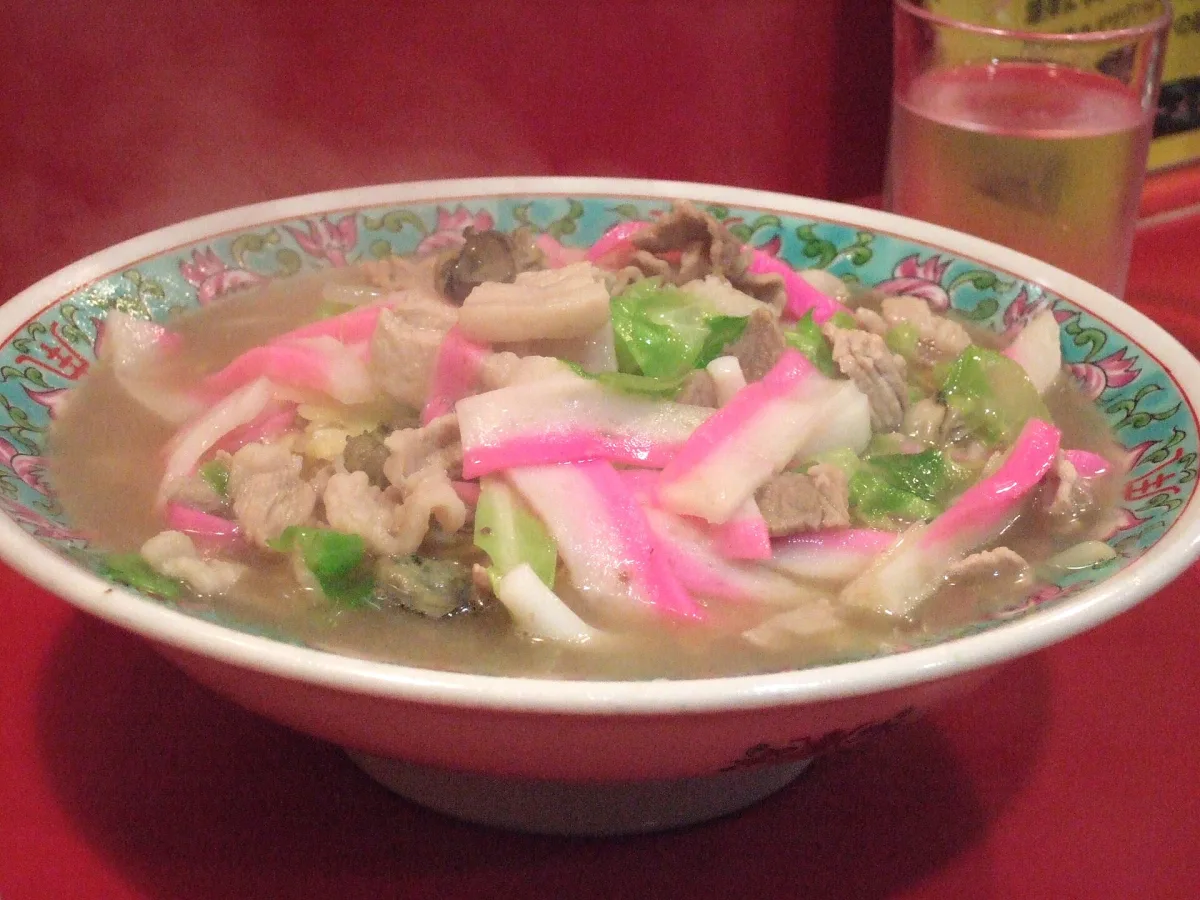
Nagasaki champon is Nagasaki Prefecture's signature noodle dish. Pork, vegetables such as cabbage, bean sprouts and spring onions, and seafood such as squid and prawns are stir-fried in a Chinese wok, then stock is added and brought to the boil, and thick noodles go in to simmer. Unlike ramen, where the noodles and soup are prepared separately, it is all finished in a single wok, and that is its defining feature.
The toppings often include red-and-white kamaboko (steamed fish paste), which in Nagasaki is called "hanpen", and depending on the season, clams in summer and oysters in winter. Some people add a raw egg on top. Some noodles are made with "toaku", a type of kansui (the alkaline water that gives noodles their springiness) unique to Nagasaki and produced within the prefecture, and they are said to have a flavour unlike other noodles.
Created for students from China
Nagasaki champon is traced back to 1899 (Meiji 32). Chen Pingshun (Chin Heijun in Japanese), founder of the Nagasaki Chinese restaurant Shikairo and a native of Fujian Province in China, is said to have devised it as a cheap, filling and nourishing meal for Chinese students in Nagasaki and for people from his home region. He used a chicken-bone and pork-bone stock and plenty of local ingredients from Nagasaki's sea and hills.
According to Japan's Ministry of Agriculture, Forestry and Fisheries, its roots lie in a light Fujianese noodle soup called "tonniishiimen", which was adapted to Japanese tastes with a richer soup, generous toppings and its own chewy noodles. At first it wasn't on the menu and was called "shina udon" (Chinese noodles). There is also a dissenting theory that champon was being sold before Shikairo.
There are several theories about the name "champon", too. Shikairo says it comes from "shapon" or "seppon", a greeting meaning "have you eaten?" in the Fujian dialect used by the overseas Chinese community in Nagasaki at the time. Other theories hold that it is a corruption of a Chinese word for a simple meal, or that it comes from Portuguese.
An everyday taste for Nagasaki people
Because it can be made in a single wok, champon also became a home-cooked dish across Nagasaki Prefecture. According to Nagasaki City's tourism website, it is such an everyday staple that every supermarket in the city stocks champon noodles and soup.
The soup varies from shop to shop: some are rich with lots of pork bone, some are lighter with equal amounts of chicken and pork bones, and some are made from chicken bones alone. Within the prefecture, the richer, pork-based Nagasaki champon and the lighter, chicken-based Obama champon from Obama in Unzen City are said to be the two great champons.
Its sibling, sara udon
The dish you will most often see alongside champon on Nagasaki menus is sara udon. According to Shikairo, its founder devised both champon and sara udon. Despite "udon" in the name it is a different dish from Japanese udon, so if you spot it on a menu, it's fun to ask the staff how it differs.
Nagasaki champon is now known all over Japan and you can eat it at restaurants in other prefectures, but only in Nagasaki can you taste the differences between the original local shops.
Where and how to eat it
Its home is Nagasaki city. Nagasaki City's tourism website introduces shops in places that are easy to drop into as you tour the sights by tram, such as Shinchi Chinatown, near Dejima and next to Meganebashi (Spectacles Bridge). Shikairo, regarded as the birthplace, opened in Hirobaba-machi, on the site of the Tojin Yashiki (the Chinese residential quarter of the Edo period), and moved to its present location in Matsugae-machi in 1973.
For those with dietary restrictions: typical Nagasaki champon contains pork, kamaboko (fish), squid, prawns and shellfish, and the soup is made from pork bones and chicken bones. The noodles are wheat. If you are allergic to crustaceans or shellfish, or want to avoid pork, check before ordering.
Tips
- In Nagasaki city, try hopping on the trams between sights and comparing how the soup differs from shop to shop.
- If you have time, also try the lighter Obama champon from Obama in Unzen City.
- Sara udon, served at the same shops, was born alongside champon. If there are two or more of you, order both and share.
- Supermarkets in Nagasaki sell champon noodles and soup, so you can take some home as a souvenir of your trip.
- It usually contains pork and seafood (prawns, squid and shellfish). If you have allergies, check before ordering.