Japan is Nippon
Soba (Buckwheat Noodles)
Thin buckwheat noodles, beloved of old Edo and eaten on New Year's Eve. Izumo, Morioka and Izushi each serve them in their own bowls and their own way.
Eaten all over Japan
Best known in Nagano and Shimane and Iwate and Tokyo and Hyogo and Niigata.
- NaganoHome of Shinshu soba, with more soba restaurants than any other prefecture and local styles such as Togakushi soba and Takato soba
- ShimaneDark Izumo soba milled with the husk: warigo soba in stacked round bowls and hot kamaage soba
- IwateWanko soba in Morioka and Hanamaki, where small bowls of soba keep coming as hospitality
- TokyoEdo soba, the favourite of old Tokyo, with the famous "big three" lineages Sunaba, Sarashina and Yabu
- HyogoIzushi sara soba in Izushi, Toyooka City: five small plates make one serving
- NiigataHegi soba, bound with funori seaweed, served in a square tray with mustard as the condiment
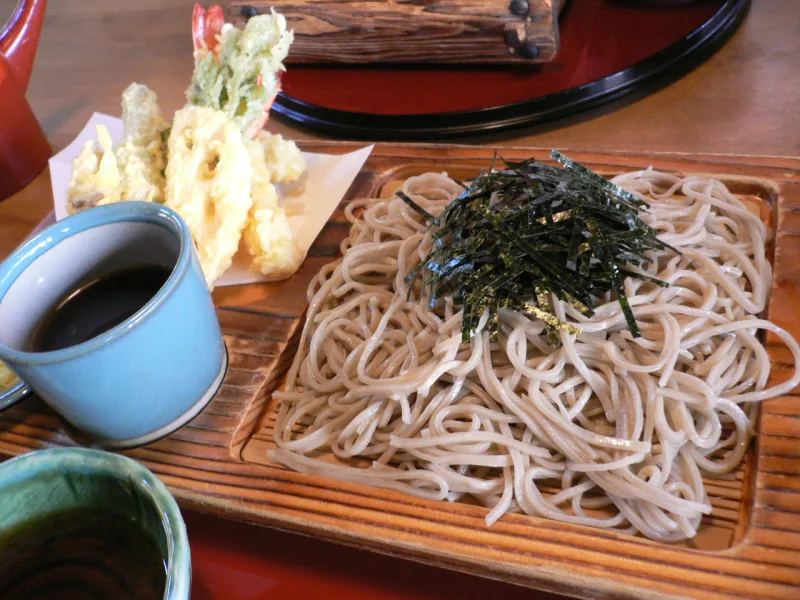
What is soba?
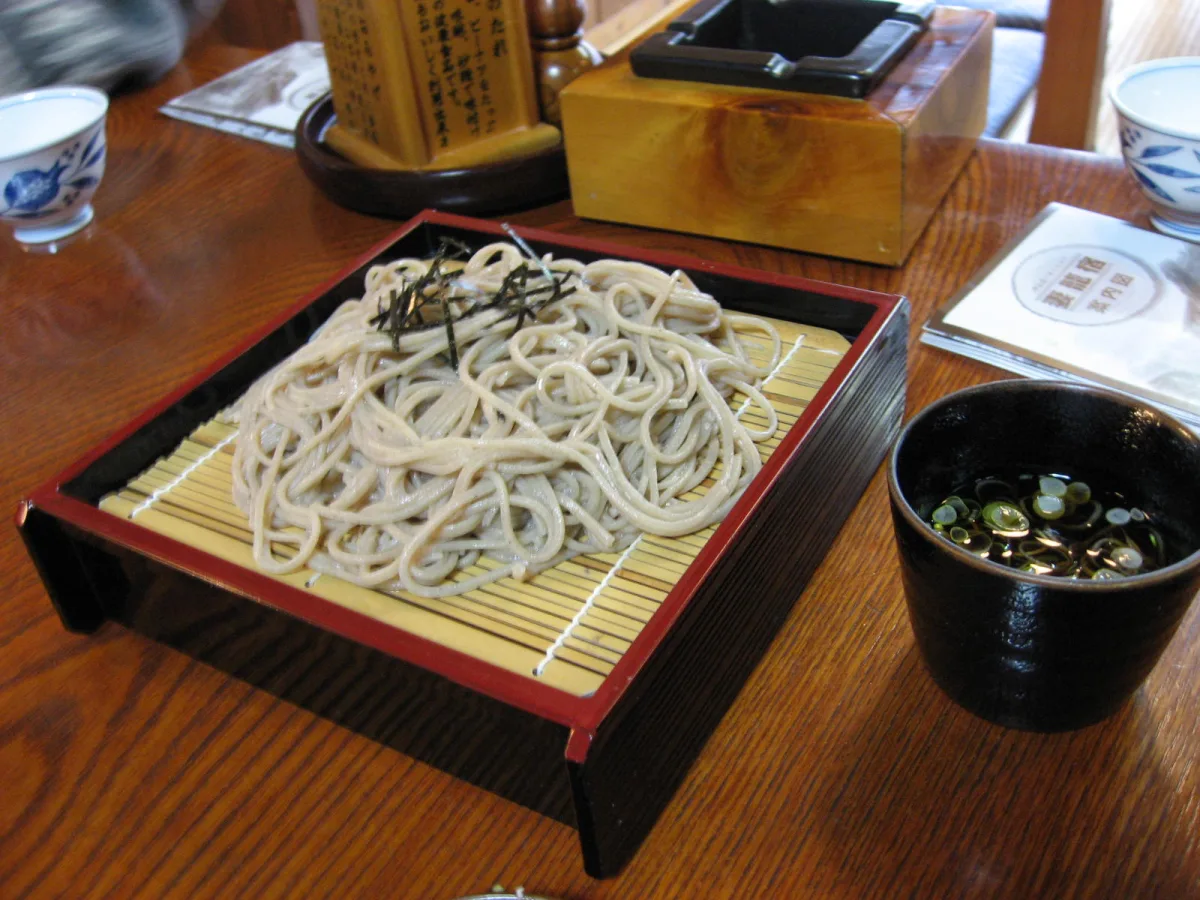
Soba are noodles made from buckwheat flour (soba-ko), ground from the seeds of the buckwheat plant. The flour is kneaded with water and a binder (tsunagi, usually wheat flour) that holds the dough together, then cut into long, thin strands. There are two basic ways to eat them: mori soba, cold noodles dipped into a sauce called tsuyu, and kake soba, noodles in a bowl with plenty of hot broth poured over.
Buckwheat flour comes in different kinds. Pale flour from the centre of the seed makes Sarashina soba, while flour that includes the outer parts makes darker Yabu soba or inaka (country-style) soba. Some, such as Izumo soba from Shimane Prefecture, are ground with the husk, giving a dark noodle with a strong aroma.
The noodle Edo loved
Buckwheat has been eaten in Japan for a long time, but it was usually made into a dough or eaten as whole grains. According to the Ministry of Agriculture, Forestry and Fisheries, soba-kiri (buckwheat made into noodles), served at temples in the early Edo period, began to be sold in the streets of Edo (old Tokyo) and spread from there. Nagano Prefecture is also known as the birthplace of soba-kiri.
Edokko, the people of Edo, preferred soba to udon, and it was sold everywhere from proper restaurants to street stalls. Soba shops in the late Edo period offered tempura soba and kamo nanban (soba with duck) alongside mori soba. Yotaka soba, hot soba sold from stalls at night, also appeared.
In Tokyo, three lineages, Sunaba, Sarashina and Yabu, are known as the "big three" of Edo soba, and their noodles look different too: thin white noodles, almost translucent noodles and greenish noodles.
Shinshu, Izumo and Morioka: soba around Japan
Shinshu soba from Nagano Prefecture has long been grown in the cool highlands, where rice and wheat struggle. Nagano is said to have more soba restaurants than any other prefecture, so you can eat soba in every town. Each area has its own style: Togakushi soba, served in small bundles called "bocchi-mori"; Takato soba in Ina, eaten with a sauce of grated daikon radish juice and grilled miso; and toji soba in Nagawa, where you warm the noodles by dipping them into a pot of broth.
Izumo soba from Shimane Prefecture is known for cold warigo soba, served in stacked round bowls called warigo with the sauce poured straight on, and hot kamaage soba, where the boiled noodles go into the bowl without being rinsed and are topped with soba-yu (the water the soba was cooked in) and sauce. Izumo soba, wanko soba from Iwate Prefecture and Togakushi soba from Nagano are counted as Japan's three great soba.
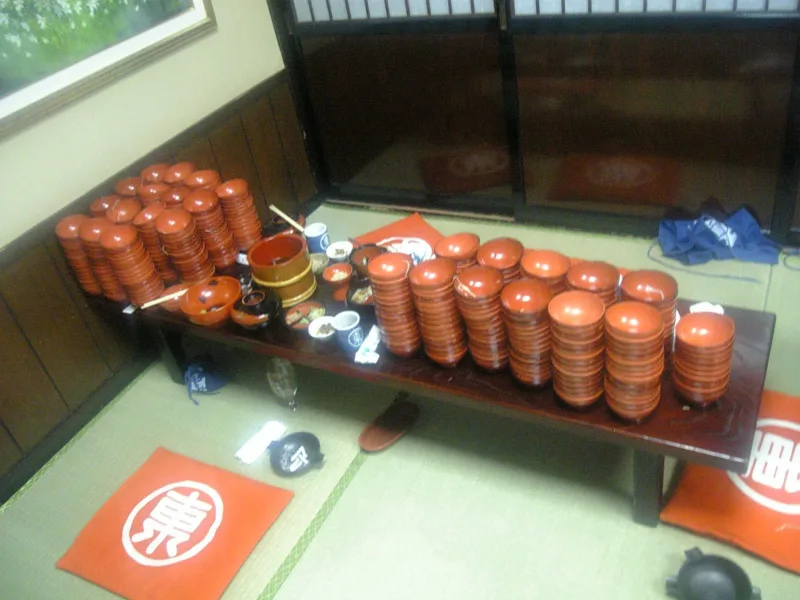
The "wanko" in Iwate's wanko soba is a local dialect word for a wooden bowl. Morioka and Hanamaki have a custom of treating guests to soba, and it is said to have started when hosts served small portions in bowls so they could give freshly boiled noodles to large numbers of people. In Morioka the server keeps tipping soba into your bowl with calls of "Hai, dokkoi! Jan-jan!" and it doesn't stop until you put the lid on. In Hanamaki, which values its history of entertaining the local lord, they reportedly don't use these hurry-up calls.
Izushi sara soba, from Izushi in Toyooka City, Hyogo Prefecture, is served on small white plates of Izushi ware about 13 centimetres across, and five plates make one serving. Niigata Prefecture's hegi soba uses funori seaweed as its binder for a smooth, slippery noodle, which is laid out in mouthful-sized portions on a square tray called a hegi and served with mustard rather than wasabi.
New Year's Eve soba and the new-season harvest
Soba has been considered good for the health since the Edo period, and as a lucky food it was eaten as misoka soba at the end of each month and setsubun soba at the turn of the seasons. Today people still eat toshikoshi soba ("year-crossing soba") on New Year's Eve. There are various explanations: the long, thin noodles stand for a wish for a long life, or because they break easily they cut away the year's hardships. Most of the nation only started eating it on New Year's Eve after the Meiji era began. Hikkoshi soba, handed out when you introduce yourself to the neighbours after moving house, carries the message "we've moved in nearby (soba also means 'near'), and we hope for a long, slender friendship."
Soba made from freshly harvested autumn buckwheat, shin-soba, is said to taste best. In Nagano Prefecture shin-soba appears from around mid-October to early November, and according to the Japan National Tourism Organization (JNTO), many people visit Niigata and Nagano in November to enjoy it.
How to eat it, and dietary restrictions
With mori soba, people usually add yakumi such as spring onion and wasabi to the dipping sauce. With Niigata's hegi soba, you don't stir the mustard into the sauce but put a little on top of the noodles. Many stations have standing soba counters inside or nearby, and at many of them you buy a meal ticket from a vending machine at the entrance first.
For those with dietary restrictions: soba sauce is often made with a stock that includes katsuobushi (dried bonito flakes). JNTO lists zaru soba as a dish vegetarians can try, but advises checking what the stock is made from. If you have a buckwheat allergy, take great care when eating at soba restaurants or at places that serve udon and soba together.
Tips
- If you take on the wanko soba challenge in Morioka, put the lid on your bowl when you can't eat any more. That's the signal that you've finished.
- With Izumo's warigo soba, you pour the dipping sauce straight over the noodles, the opposite of dipping the noodles in the sauce.
- If you're in Nagano or Niigata from autumn to early winter, try shin-soba, the fragrant new-season soba.
- At standing soba counters in stations, you usually buy a meal ticket from a vending machine first.
- If you're concerned about what's in the stock or have a buckwheat allergy, check with the restaurant before you order.
Sources
- 農林水産省 うちの郷土料理「そば 東京都」 (opens in a new tab)
- 農林水産省 うちの郷土料理「手打ちそば 長野県」 (opens in a new tab)
- 農林水産省 うちの郷土料理「出雲そば 島根県」 (opens in a new tab)
- 農林水産省 うちの郷土料理「出石皿そば 兵庫県」 (opens in a new tab)
- 農林水産省 うちの郷土料理「へぎそば 新潟県」 (opens in a new tab)
- 岩手県公式観光サイト いわての旅「わんこそば(盛岡)」 (opens in a new tab)
- 岩手県公式観光サイト いわての旅「わんこそば(花巻)」 (opens in a new tab)
- 日本政府観光局(JNTO)Travel Japan「Local Cuisine of Eastern Japan」 (opens in a new tab)
- 日本政府観光局(JNTO)Travel Japan「Vegetarian Guide」 (opens in a new tab)