Japan is Nippon
Karaage (Japanese Fried Chicken)
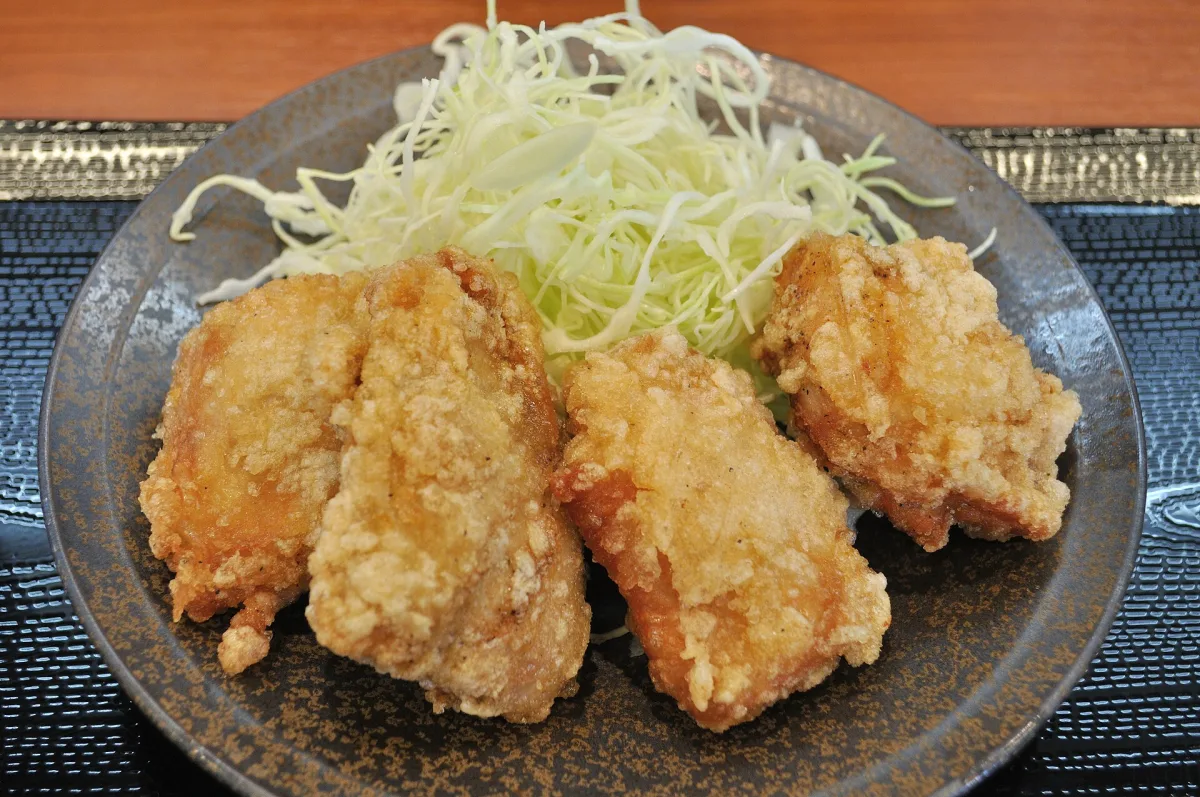
Marinated, dusted and deep-fried chicken: a Japanese home-cooking staple. Plus the styles of Nakatsu and Usa in Oita, Hokkaido's zangi and Ehime's senzanki.
Eaten all over Japan
Best known in Oita and Hokkaido and Ehime.
- OitaUsa is "the birthplace of karaage specialist shops" and neighbouring Nakatsu "the holy land of karaage"; most marinate it well in soy sauce, garlic and ginger
- HokkaidoChicken karaage is called zangi here, with a rich sweet and savoury marinade; Kushiro is said to be its birthplace
- EhimeSenzanki, from around Imabari, is a local dish of chicken fried on the bone
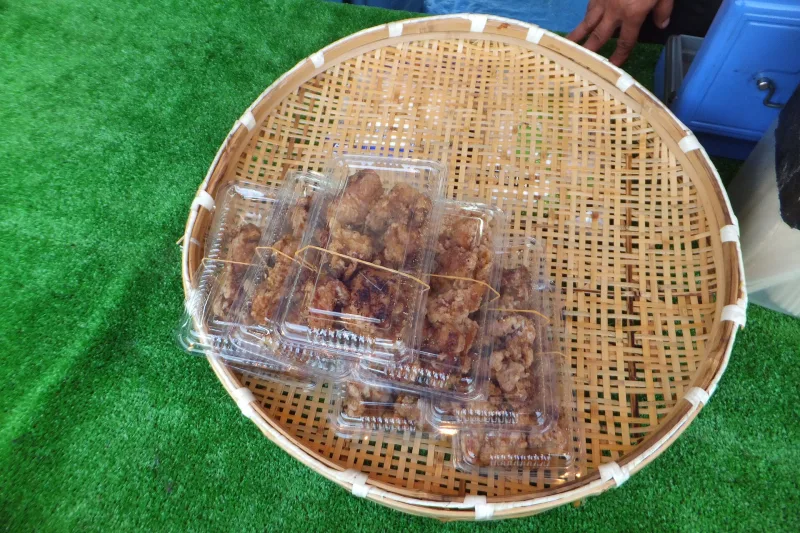
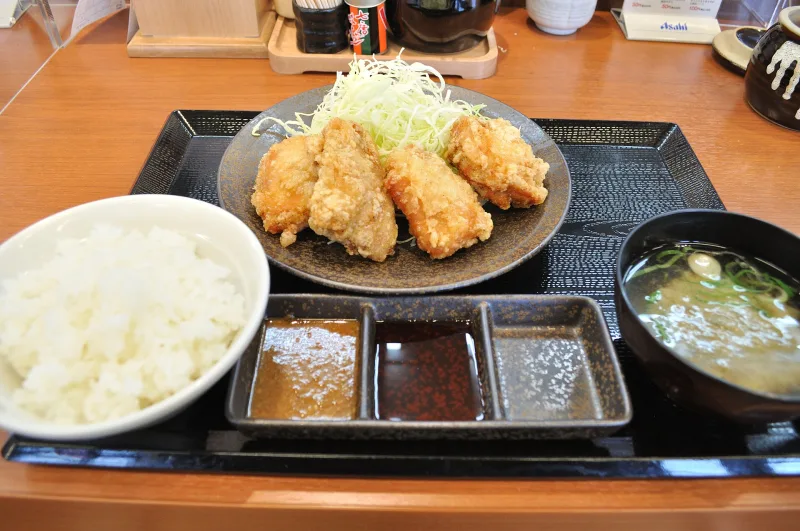
What is karaage?
Karaage (written in a few different ways in Japanese) means dusting food lightly in wheat flour or katakuriko (potato starch) and deep-frying it. According to the Japan Karaage Association, the word originally refers to the cooking method itself, so fried fish, vegetables and other meats can also be called karaage. This page focuses on the best-known kind: chicken karaage.
Chicken karaage is usually marinated before frying. According to Usa City in Oita Prefecture, famous for its karaage, most local karaage is soaked in a marinade based on soy sauce, garlic and ginger so the flavour soaks right in before frying. A similar dish is tatsuta-age, which by definition is marinated in soy sauce with mirin (a sweet rice wine for cooking) or sake; the Japan Karaage Association explains that it's known for its sweetness and dark colour.
From Buddhist temple cooking to fried chicken
According to the Japan Karaage Association, the word karaage appears in the early Edo period in fucha ryori, a style of shojin ryori (Buddhist cooking with no meat or fish) that came from China. But the fucha-style karaage described in a cookery book of 1772 was finely cut tofu, fried and then simmered in soy sauce and sake: a different dish from today's karaage.
The association says chicken karaage as we know it first appeared on a restaurant menu around 1932, as "wakadori no karaage" (fried young chicken) at Shokudo Mikasa in Ginza, Tokyo (forerunner of today's Mikasa Kaikan). After the Second World War, the government encouraged chicken farming to make up for food shortages, and all kinds of chicken dishes spread. The association explains that making karaage at home only became commonplace fairly recently, within the last 30 to 40 years or so.
Nakatsu and Usa in Oita: the home of karaage shops
People in Oita Prefecture are known for eating a lot of chicken; according to the Ministry of Agriculture, Forestry and Fisheries, a survey by the Ministry of Internal Affairs and Communications ranks Oita City among the top in Japan for chicken consumption. In the north of the prefecture, the cities of Usa and Nakatsu are famous as karaage towns.
According to Usa City, shortly after the Second World War the owner of a Chinese restaurant in the city got substandard chickens cheaply from a poultry farm, fried them as karaage and sold them, and they became a hit. A nearby izakaya (pub) that learned his frying method later turned itself into a karaage specialist. This is considered the first karaage specialist shop, and Usa calls itself "the birthplace of the karaage specialist shop". In 2006 a group of volunteer city staff surveyed the specialist shops and made a map, and a monument was put up.
The specialist-shop style also spread to neighbouring Nakatsu. A local group, Seichi Nakatsu Karaage no Kai, names three foundations of today's Nakatsu karaage: many poultry farms were built in Nakatsu under post-war government policy; people returning from the former Manchuria (north-east China) are said to have recreated Chinese cooking methods; and in the mountainous Yabakei area, people preserved chicken in salt or soy sauce and fried it to eat. The Nakatsu Yabakei Tourism Association says there are "more karaage shops than schools or convenience stores", and the Japan Karaage Association has named Nakatsu "the holy land of karaage". In April 2026 the two cities signed a joint declaration to work together on karaage-based tourism.
Hokkaido's "zangi" and Ehime's "senzanki"
In Hokkaido, chicken karaage is called zangi. According to the Ministry of Agriculture, Forestry and Fisheries, it's more strongly seasoned than ordinary karaage, marinated in a sweet and savoury soy-based sauce before frying. It's said to have started around Showa 30 (1955), when a chicken restaurant in Kushiro's nightlife district chopped a whole chicken into pieces and fried it. One theory says the name comes from the Chinese dish zhaji (fried chicken, pronounced "zaagii" in Japanese), with an "n" added for luck. It's sometimes eaten dipped in sauce, and now fried octopus, salmon and other foods are also called "something zangi".
Around Imabari in Ehime Prefecture there's senzanki: chicken fried on the bone. According to the Ministry of Agriculture, Forestry and Fisheries, it's said to have begun in the Edo period with frying pheasants caught on nearby Mount Chikami, but this is a legend and no detailed records have been found. There are several theories about the name too: one says it comes from chopping a whole chicken "into a thousand pieces" (sen ni kiru), another that it's a corruption of a Chinese dish name.
Where and how to eat it
Karaage is cooked at home all over Japan, and, like Hokkaido's zangi and Ehime's senzanki, it's also loved in bento (packed lunches) and as a bar snack at izakaya. For a tour of specialist shops, Nakatsu and Usa in Oita are the place. According to the Oita Prefecture information site edit Oita, Taketa and Saiki in the south of the prefecture also have a karaage called ippon-age ("whole-piece fry"). Hokkaido has many zangi specialists, and in Ehime some izakaya and specialist shops serve senzanki; in both cases you can take it home to eat.
At the specialist shops in Nakatsu and Usa, many fry to order and each has its own secret marinade. Besides boneless thigh and breast, some let you choose cuts such as chopped pieces on the bone, sunazuri (gizzard), cartilage and seseri (neck meat). It's made to taste good even cold, so it's ideal for taking away.
For anyone with dietary restrictions: ordinary chicken karaage is chicken marinated in soy sauce, garlic, ginger and so on, dusted in wheat flour or potato starch and fried. Some, like zangi, use sake or egg in the marinade. If you avoid wheat or alcohol, check with the restaurant before you order.
Tips
- Every shop in Nakatsu and Usa has a different marinade. Buy small amounts from several and compare.
- If the menu lists honetsuki (on the bone) and honenashi (boneless), choose one when you order. Mind the bones if you go for honetsuki.
- In Hokkaido, "zangi" on a menu means chicken karaage. There are also non-chicken zangi, such as octopus or salmon.
- Many specialist shops do takeaway, so you could buy it freshly fried and eat it at your hotel or in a park.
- Marinades may contain soy sauce, sake and so on. If wheat or alcohol is a concern, ask the staff.
Sources
- 日本唐揚協会「唐揚げとは(定義)」 (opens in a new tab)
- 日本唐揚協会「唐揚げとは(歴史)」 (opens in a new tab)
- 宇佐市「宇佐からあげ ~専門店発祥の地」 (opens in a new tab)
- 中津耶馬渓観光協会「中津からあげ」 (opens in a new tab)
- 聖地中津からあげの会「中津からあげとは」 (opens in a new tab)
- 中津耶馬渓観光協会(共同通信PRワイヤー)「からあげの聖地」中津市×「からあげ専門店発祥の地」宇佐市 (opens in a new tab)
- 農林水産省 うちの郷土料理「大分県」 (opens in a new tab)
- edit Oita(大分県)「大分名物から揚げを食べ比べ!」 (opens in a new tab)
- 農林水産省 うちの郷土料理「ザンギ 北海道」 (opens in a new tab)
- 農林水産省 うちの郷土料理「せんざんき 愛媛県」 (opens in a new tab)