Oita
Oita combines hot-spring towns and mountain country with a busy fishing coast and a food culture nurtured by the heat of the earth.
Map outlines: Natural Earth
-
1
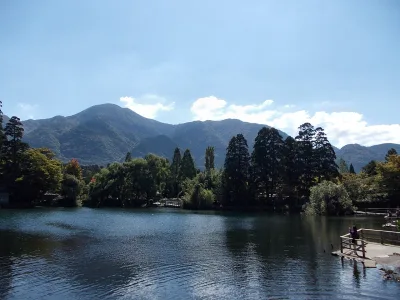 Lake Kinrin (Kinrinko)
A small lake below Mount Yufu at the far end of Yufuin's hot spring town. Hot and cold springs rise from its bed, and mist lifts off it on cold autumn and winter mornings.
Lake Kinrin (Kinrinko)
A small lake below Mount Yufu at the far end of Yufuin's hot spring town. Hot and cold springs rise from its bed, and mist lifts off it on cold autumn and winter mornings.
-
2
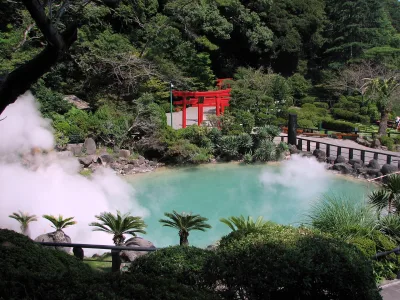 Umi Jigoku (Sea Hell)
One of Beppu's "hells": a sea-like cobalt-blue pond billowing with steam. It looks cool and refreshing, yet the water is about 98°C.
Umi Jigoku (Sea Hell)
One of Beppu's "hells": a sea-like cobalt-blue pond billowing with steam. It looks cool and refreshing, yet the water is about 98°C.
- 3 Yufuin Floral Village A small theme park in the hot spring town of Yufuin, modelled on a village in England's Cotswolds, with an owl café and gift shops set among flower gardens.
.jpg)


Hot-spring steam, mountains and the sea
Oita Prefecture lies in eastern Kyushu, and a short journey takes you from the sea to volcanic highlands. Around Kokonoe, walking trails cross forests and wetlands at the foot of the Kuju mountains. Further south, the coastline near Usuki and Saiki forms a series of inlets along the Bungo Channel. Beppu Bay shows yet another side of the prefecture: steam from the hot springs rising between the buildings of a seaside city.
Oita calls itself the 'Onsen Prefecture'. An onsen is a natural source that meets Japan's hot-spring standards, and it can include steam and gas as well as water. In the statistics for fiscal 2022, Oita ranked first in Japan for both the number of hot-spring sources and the volume of water flowing from them. Beppu has several hot-spring districts, each with its own character, while in Yufuin you can enjoy the hot springs in a mountain setting. In Beppu's Kannawa district, geothermal heat is part of both the townscape and the kitchen. Jigoku-mushi is a way of cooking vegetables, seafood and meat in hot-spring steam. The name jigoku ('hell') refers to the area's fiercely hot vents, not to any seasoning.
Shrines, stone Buddhas and old streets
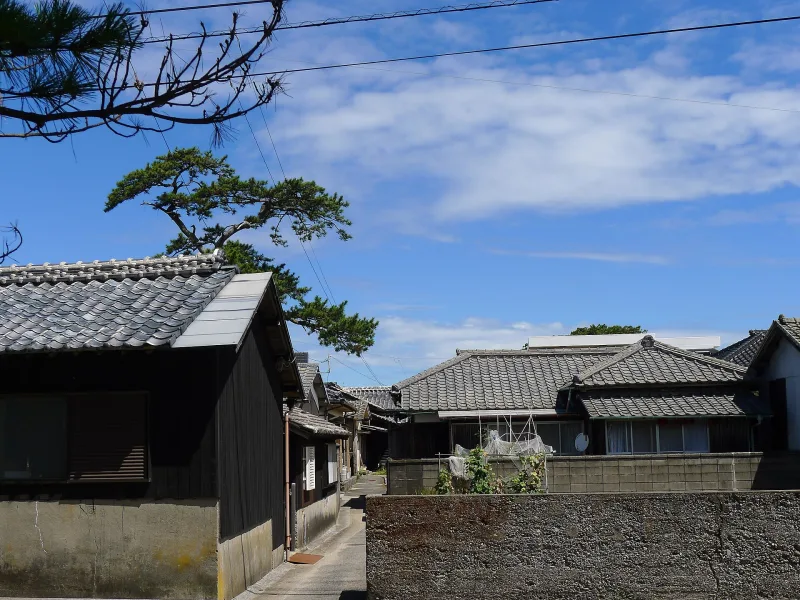
The history of northern Oita is closely tied to Usa Jingu, the head shrine of Hachiman, a god worshipped at shrines all over Japan. On the nearby Kunisaki Peninsula, Rokugo Manzan is presented as a Buddhist culture unique to the area, and temples and stone Buddhas are still scattered through the peninsula's forested interior.
The towns hold another layer of history. In the Edo period, Hita was governed directly by the shogunate as tenryo (shogunate land), and its old streets still keep an Edo-period townscape. In Usuki in the south, there are stone Buddhas carved into rock faces. These places make a good contrast with a hot-spring stay: Oita's story is as much about trade, faith and local communities as it is about bathing.
What's on the table in Oita
Start with toriten: chicken fried in a light tempura batter, often served with mustard, a tangy dipping sauce and a squeeze of kabosu. Kabosu is a local citrus whose juice also lifts dishes such as grilled fish. For something warming, dango-jiru is miso soup with hand-stretched wheat dough, cooked with taro, carrots, shiitake and other vegetables. Despite the name, its dango are less like round dumplings and more like flat, chewy noodles.
Head to the coast and there are other choices. Seki-aji and seki-saba are horse mackerel and mackerel that are highly prized locally. Ryukyu is an Oita dish of thinly sliced raw fish seasoned with soy sauce, sesame and the like, and it can also be eaten on rice. Beyond food, keep an eye out for Oita's bamboo crafts.
Customs people keep alive
In Hita, at the summer Hita Gion Festival, decorated floats called yamaboko move through the streets to festival music. After dark, lanterns transform them completely. The festival has been handed down for around three centuries and carries prayers for protection from epidemics and floods. On Himeshima, an island off northern Oita, the Bon dances include a humorous fox dance alongside inherited dances and newly created ones.
Everyday speech has a local flavour too. Shinken is Oita dialect for 'very', used, for example, to stress how crowded the roads are. You can enjoy your trip without knowing the dialect, but recognising words like this makes conversations and signs written by locals feel much closer. Oita's customs are not confined to festival grounds, either: in Kannawa, cooking with hot-spring steam is a long-standing way of making a meal.
Getting there and getting around
Many travellers come by rail via Fukuoka or from further east. You can take the shinkansen, Japan's high-speed rail, to Kokura and change there to a limited express for Beppu and Oita city. Oita Airport is another gateway. From Oita Station, rail lines run to Beppu, Yufuin, Hita and Saiki.
How you get around Oita depends on what you want to see. Give yourself time to explore one area at a time: seaside towns, mountain walks and temple routes each show a different face of the prefecture.
Sources
- Oita | Kyushu | Destinations | Travel Japan - Japan National Tourism Organization (Official Site)
- 第4章 3 大分県の温泉(おんせん)資源を大切に使う - 大分県ホームページ
- 県政概要2023(英語)
- Kokonoe | Oita | Kyushu | Destinations | Travel Japan - Japan National Tourism Organization (Official Site)
- Kunisaki Peninsula | Oita | Kyushu | Destinations | Travel Japan - Japan National Tourism Organization (Official Site)
- Oita’s Local Flavours | Discover 3 Must-Try Dishes | JNTO
- Walking Tour and Hot Spring Cooking Combo | Experiences in Japan | Travel Japan(Japan National Tourism Organization)
- 大分に来たらぜひ食べて!! ☆おおいたのご当地グルメ☆ | Seasonal information | 日本一の「おんせん県」大分県の観光情報公式サイト
- 日田祇園・日田祇園山鉾集団顔見世 - 日田においでよ。 - 日田市
- 姫島盆踊り | 日本一の「おんせん県」大分県の観光情報公式サイト
- 第2土曜日は、早起きがホントにお得。|オオイタカテテ|大分の魅力的な情報、企業、就活情報発信マガジン