Japan is Nippon
Katsuo no Tataki (Seared Bonito)
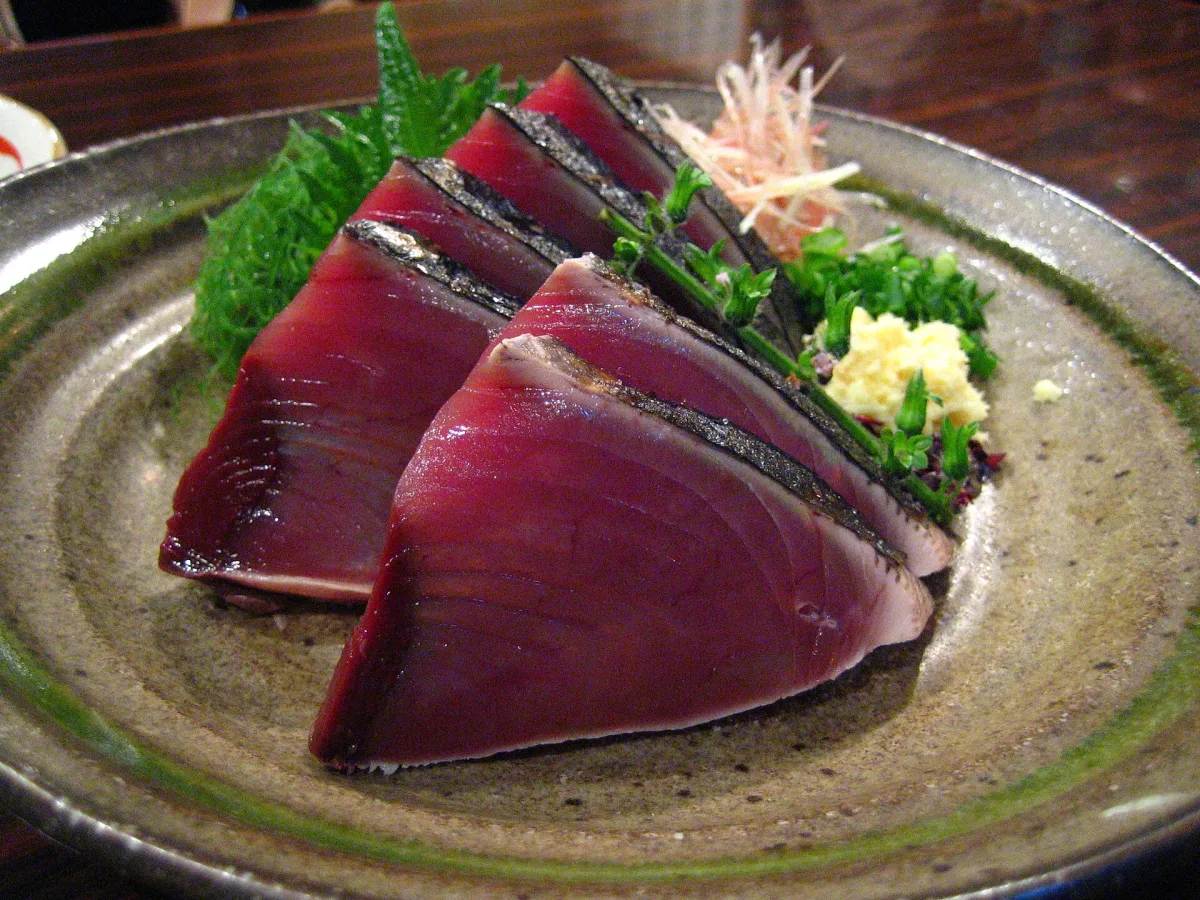
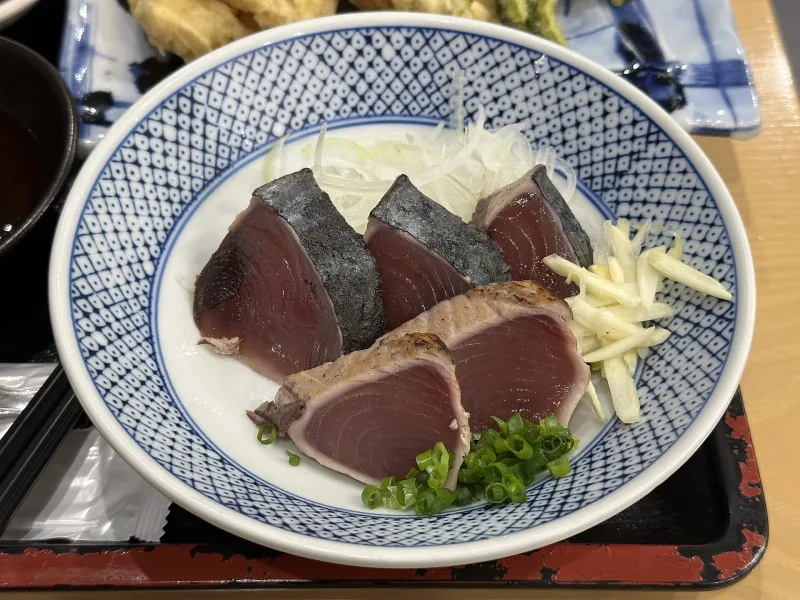
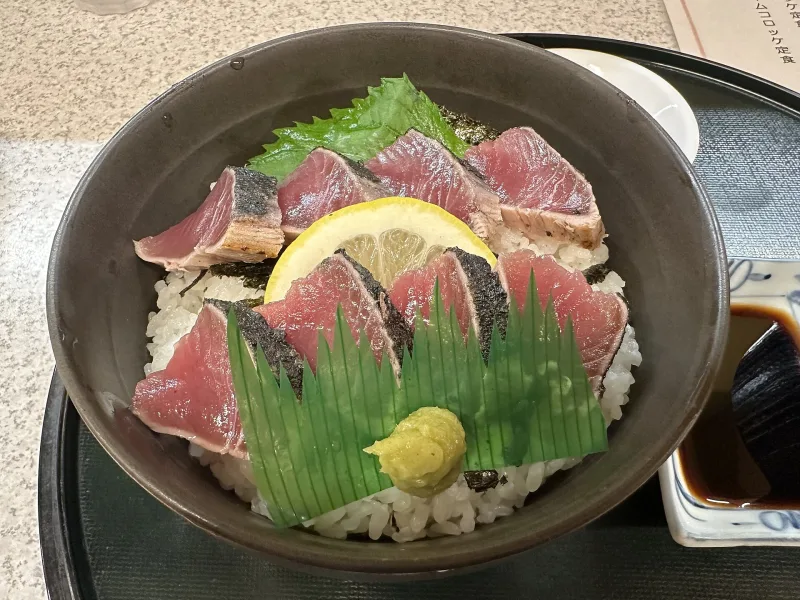
Seared over flames on the outside, still sashimi inside. Kochi's straw-smoked bonito tataki is said to have begun as fishermen's food on board.
A local dish of Kochi
You will mostly find it in this area, rarely elsewhere in Japan.
- KochiLocal dish across the prefecture; bonito is the prefectural fish and consumption is the highest in Japan; straw-seared tataki with salt is a local favourite
What is katsuo no tataki?
Katsuo no tataki is bonito (katsuo, also called skipjack tuna) whose surface is seared over a flame and then cut into thick sashimi slices. The outside is toasty and browned; the inside stays raw. It comes heaped with condiments such as thinly sliced garlic, spring onion and onion, and is eaten with a sauce that mixes citrus juice and soy sauce.
Its true home is Kochi Prefecture. Bonito is Kochi's official prefectural fish and is eaten there as an everyday food. Kochi's tourism website calls bonito the locals' "soul food" and says the prefecture eats more of it than anywhere else in Japan. Tataki now turns up at izakaya (Japanese pubs) and fishmongers all over the country, but even within Kochi, each area and village has its own little preferences and recipes.
The name "tataki" and how the dish came about
Tataki literally means "patting" or "tapping". The name is said to come from the way the seared bonito was sliced, laid out on a chopping board, sprinkled with salt or sauce and patted lightly so the flavour would sink in.
According to Japan's Ministry of Agriculture, Forestry and Fisheries, katsuo no tataki spread from makanai, the meals fishermen ate on board between jobs. It is also said that searing the surface developed as a way to make bonito that had lost some freshness taste good, back in the days before there was any way to preserve it. Searing makes the tough skin easier to eat and softens the fishy smell typical of bonito.
Straw searing and shio tataki
The quintessential Kochi method is warayaki: searing the bonito over flames from burning rice straw. The fierce heat cooks the surface in an instant, keeping the flavour inside intact while adding a smoky, toasty straw aroma. Most households sear it over a gas flame, but some restaurants make straw searing their selling point.
Alongside the traditional way of eating it with sauce, shio tataki, eaten with salt alone, is a local standard. Try a slice of straw-seared tataki with salt first, then another with sauce and condiments, and compare. Kochi's tourism association also promotes hands-on tours where you straw-sear the bonito and make tataki yourself.
Two seasons: spring and autumn
Bonito is available almost all year apart from a stretch in winter, but it has two peak seasons. Hatsugatsuo ("first bonito"), caught from spring to early summer, has a clean, light taste, while autumn's modorigatsuo ("returning bonito") is rich in fat and considered ideal for tataki.
Tataki is also a fixture of sawachi ryori, Kochi's traditional banquet cuisine of dishes arranged on large platters, which is indispensable at weddings, funerals and other ceremonies as well as Shinto rituals. There are other dishes built on tataki too, such as Tosa-maki, a thick sushi roll of tataki with vinegared rice, garlic and shiso (perilla) leaves.
Where to eat it and what to know
In Kochi you can get tataki at restaurants, izakaya and farmers' direct-sale shops, and fishmongers sell it too. Outside Kochi, you can eat it at izakaya and similar places all over Japan.
For readers with dietary restrictions: katsuo no tataki is a fish dish that is raw in the middle. Japan's Ministry of Health, Labour and Welfare warns about food poisoning caused by anisakis, a parasite found in seafood such as bonito; food poisoning can occur with fish that is not cooked enough or raw fish that has not been frozen. Garlic is used generously, and the sauce usually contains soy sauce. If you have concerns, check with the restaurant.
Tips
- In Kochi, go for warayaki (straw-seared) tataki. We suggest trying one slice with salt alone first, then comparing it with the sauce and condiments.
- For richer, fattier tataki, come in autumn for modorigatsuo; for a lighter taste, come in spring to early summer for hatsugatsuo.
- Kochi style is to pile on plenty of thinly sliced garlic. If you are not a fan, say so when you order.
- If you would like to sear it yourself, some tours and restaurants let you try making straw-seared tataki.
- If you avoid raw fish, give this one a miss.