Japan is Nippon
Taiyaki (Fish-Shaped Red Bean Cake)
Shaped like a fish but filled with sweet red bean paste. Why a sea bream, and head or tail first? The story of a treat loved for 100-plus years.
Eaten all over Japan
Best known in Tokyo.
- TokyoBirthplace, according to the well-known story that the founder of Naniwaya Sohonten (founded 1909, now in Azabu-Juban, Minato City) invented it
What is taiyaki?
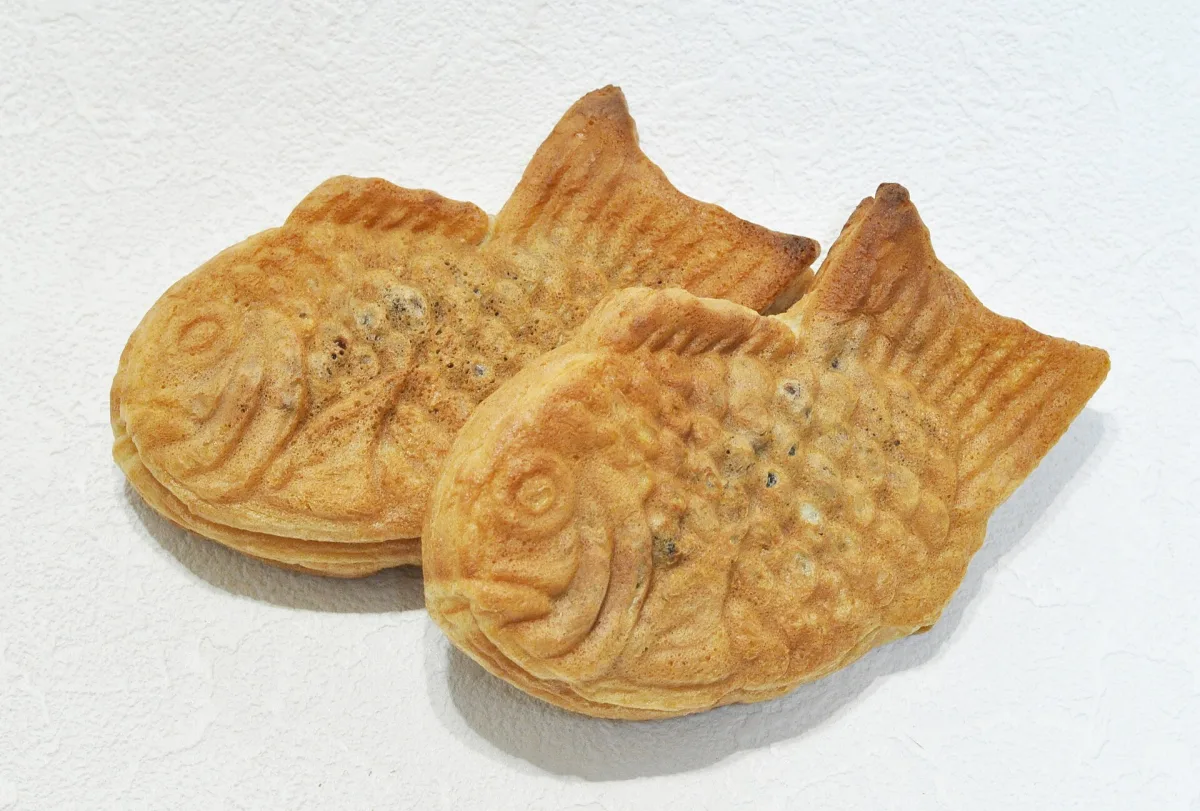
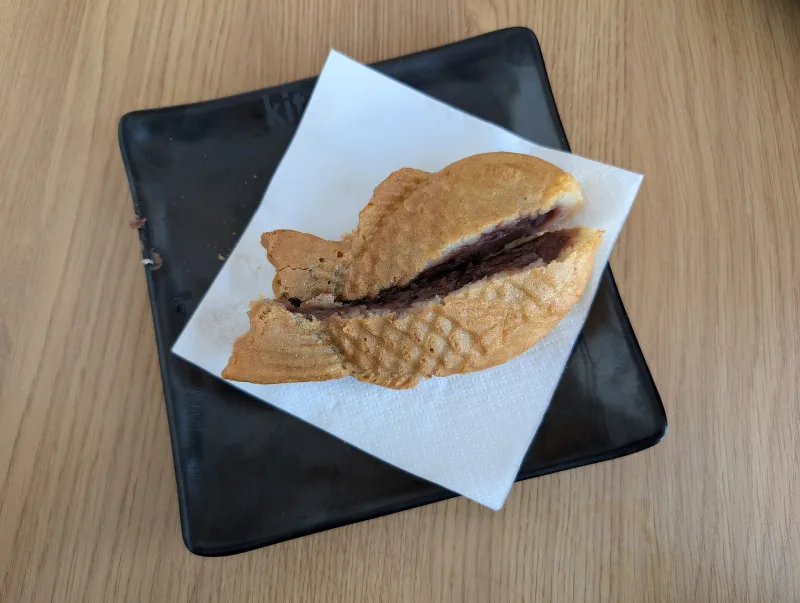
Taiyaki is a wagashi (Japanese sweet) made by baking a wheat-flour batter and anko (red adzuki beans simmered with sugar) in a metal mould shaped like a tai, or sea bream, a red fish served at celebrations in Japan. It's shaped like a fish, but there's no fish in it. A fragrant shell outside, sweet bean paste inside: it's a much-loved, easy snack you eat from your hand.
According to the Tabemono Kigen Jiten (Dictionary of Food Origins), cited in a library reference record, taiyaki is "a kind of imagawa-yaki baked in the shape of a sea bream". Imagawa-yaki is a round baked sweet that ordinary people have eaten since the Edo period, and it goes by many names depending on the region, such as obanyaki, kaitenyaki and taikoyaki. In other words, the main difference between taiyaki and imagawa-yaki is thought to be the shape.
Why a sea bream? A story said to begin in Meiji-era Tokyo
The widely known story is that taiyaki was invented by Kanbe Seijiro, founder of Naniwaya Sohonten, which opened in Tokyo in 1909 (Meiji 42). Having moved to Tokyo from Kansai, Seijiro first sold imagawa-yaki, but it didn't sell well, and making them turtle-shaped didn't work either. But when he made them in the shape of a sea bream, they reportedly started selling well.
Two reasons are given for choosing the sea bream: it's a lucky fish because "tai" echoes "medetai" (joyous, auspicious), and a real sea bream was a luxury that ordinary people could rarely afford, so the sweet imitated its shape. However, a newspaper article from 1911 suggests that shops were selling taiyaki even before Naniwaya was founded, so there are other views on where it began.
Naniwaya Sohonten has been based in Azabu-Juban, Tokyo, since around 1948 and is still in business. In 1975 the children's song "Oyoge! Taiyaki-kun" ("Swim! Little Taiyaki") became a huge hit, and taiyaki's popularity soared.
"Wild" and "farmed": two ways of baking
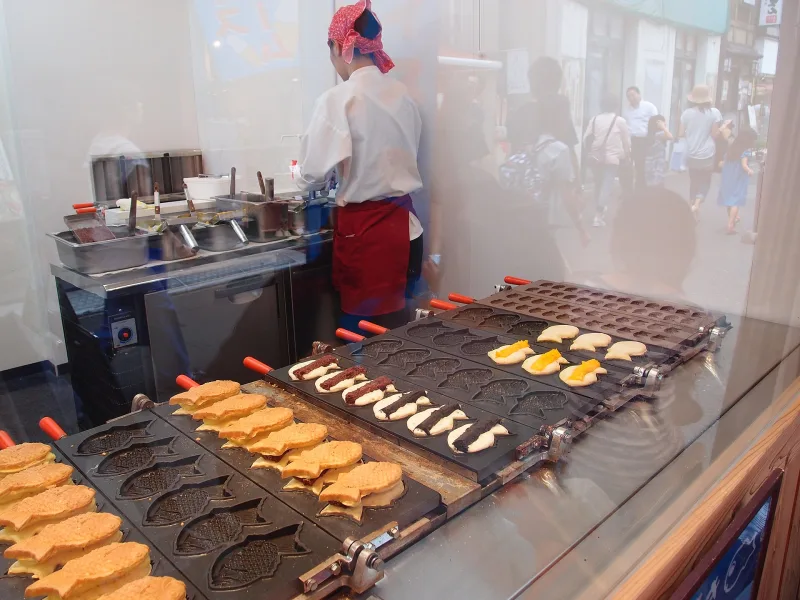
Taiyaki fans sometimes give them different names depending on how they're baked. Those baked one at a time in a mould with a long handle are called itcho-yaki and jokingly known as "wild". Those baked many at once on a machine with rows of moulds on an iron plate are called renshiki and known as "farmed".
An itcho-yaki mould is a casting (a tool made by pouring molten iron into a mould) weighing over 2 kilograms, and each one is turned over the flame individually, which takes time and stamina. As a result, itcho-yaki shops are becoming fewer, but some craftsmen keep up the method because baking at a high temperature gives a crisp, fragrant shell. At Naniwaya Sohonten, each itcho-yaki fish takes about 30 seconds to bake.
From classic red bean to cream and chewy batter
The traditional filling is red bean paste. At Naniwaya Sohonten, adzuki beans from Tokachi in Hokkaido are cooked for 8 hours to make tsubuan, a paste in which the beans keep their shape.
Today you can easily find taiyaki filled with cream, chocolate, custard and more. There are also "white taiyaki" with a chewy, mochi-like batter, and okazu taiyaki (savoury taiyaki) filled with meat or vegetables as a meal. Supermarkets sell frozen taiyaki too, which you can heat up in the microwave.
Where and how to eat it
You can buy taiyaki at specialist shops and Japanese sweet shops all over Japan. Naniwaya Sohonten, said to be where it all began, is on the shopping street in Azabu-Juban, Tokyo, and as well as taiyaki it serves oshiruko (sweet red bean soup) and kakigori (shaved ice) inside the shop.
"Do you eat it from the head or the tail?" is a question people in Japan love to debate. Some start at the head, packed with bean paste; some start at the tail, enjoying the texture of the shell; and some break it in half and start in the middle. The writer Ando Tsuruo once wrote in a newspaper that "it's delicious when the bean paste goes right to the tip of the tail", which sparked a debate about bean paste in the tail.
For those with dietary restrictions: taiyaki batter is made with wheat flour. Whether egg or other ingredients are added to the batter varies from shop to shop, and fillings such as cream use other ingredients, so if you're concerned, check with the shop.
Tips
- If it's your first time, start with the classic red bean filling, then try each shop's variations, such as cream.
- If you love a crisp shell, look for a shop that does itcho-yaki, baking one fish at a time.
- Head first, tail first or from the middle: there are no rules, so start wherever you like.
- If you take some home and they go cold, warm them up in a toaster oven and the shell turns fragrant and crisp again.
- If you need to avoid wheat, egg or other ingredients, check what's in it before you order.