Japan is Nippon
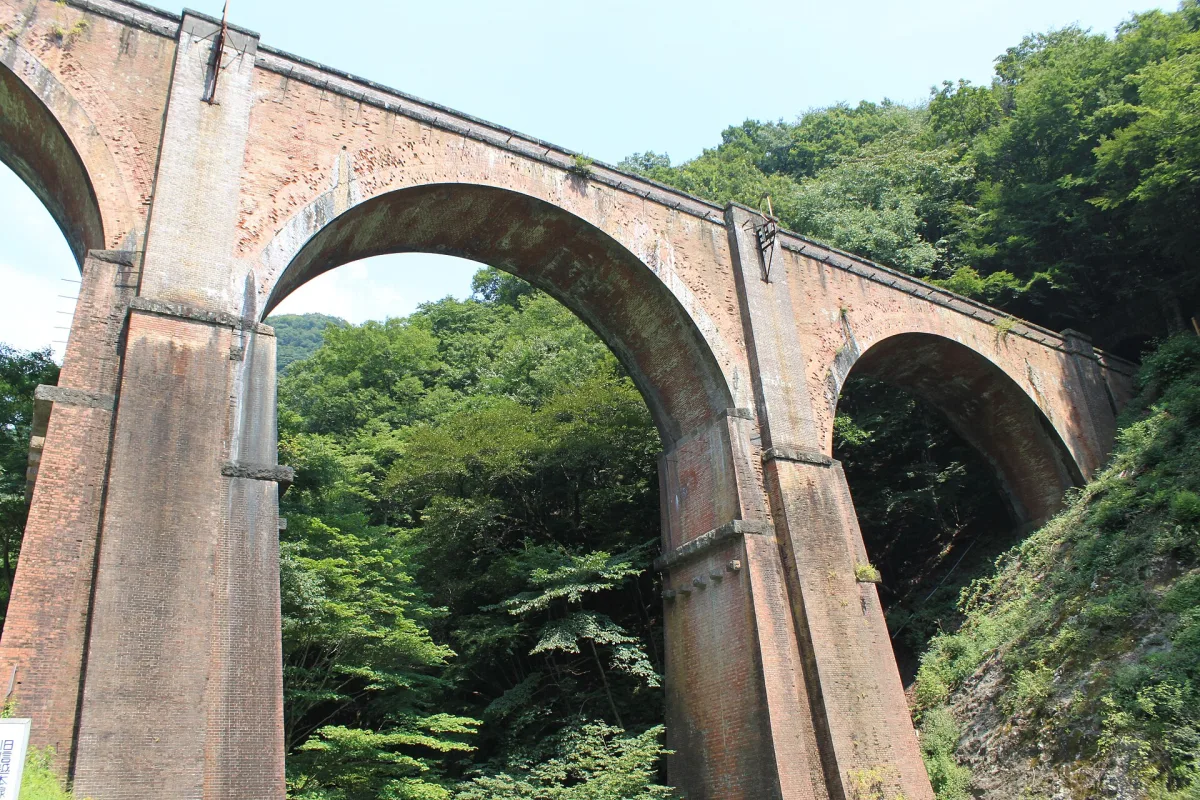
Usui Third Bridge (Megane-bashi)
めがね橋
A Meiji-era brick railway bridge with four arches soaring over a valley on the Usui Pass. Walk the Abt Road trail along the old line and cross the bridge itself.
A railway bridge built to conquer a steep pass
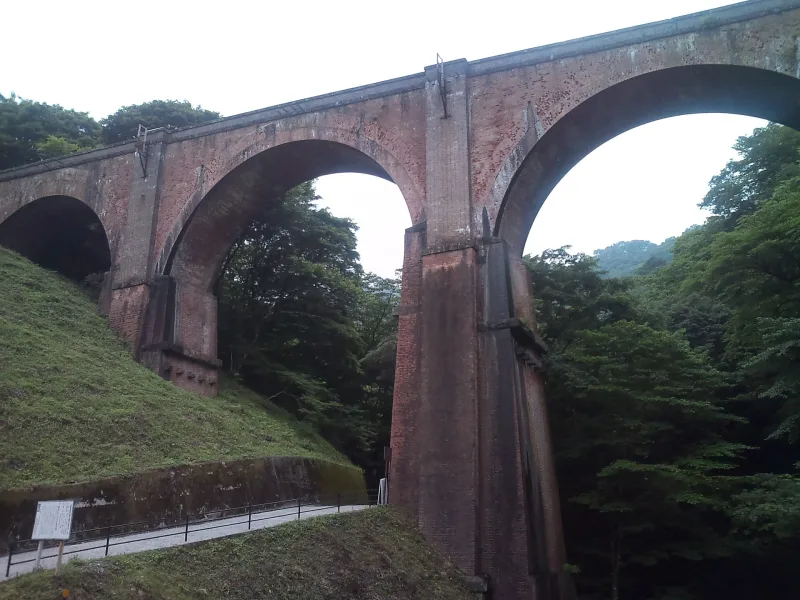
Megane-bashi's official name is the Usui Third Bridge (Usui Daisan Kyoryo). It spans the valley of the Usui River partway up the Usui Pass in Annaka, Gunma Prefecture, on the border between Gunma and Nagano prefectures. Its row of arches looks like a pair of glasses (megane), which gave it its nickname.
The Usui Pass was so steep that an ordinary railway could hardly climb it. So, for the first time in Japan, the Abt system was adopted: a toothed rail laid between the tracks meshes with a cogwheel on the train, letting it climb and descend steep slopes. Megane-bashi was completed in 1893 (Meiji 26) for this line between Yokokawa and Karuizawa stations.
It was designed by Pownall, an engineer invited from Britain, together with the Japanese engineer Furukawa Seiichi.
One of Japan's largest brick bridges, built from about 2 million bricks
The bridge is 91 m long and stands 31 m above the riverbed. About 2 million bricks went into it, making it the largest surviving brick bridge in Japan. In 1993 (Heisei 5) it was designated a national Important Cultural Property, along with the surrounding bridges, tunnels and other structures, as the Usui Pass Railway Facilities.
The Abt line fell out of use in 1963 when a new line was built, and that new line was itself closed in 1997. No trains run here today, but many people come to see the red-brick arches set against the green of the mountains or the autumn leaves. According to Gunma Prefecture's tourism site, the leaves are usually at their best from early to mid-November.
Onto the bridge via the Abt Road
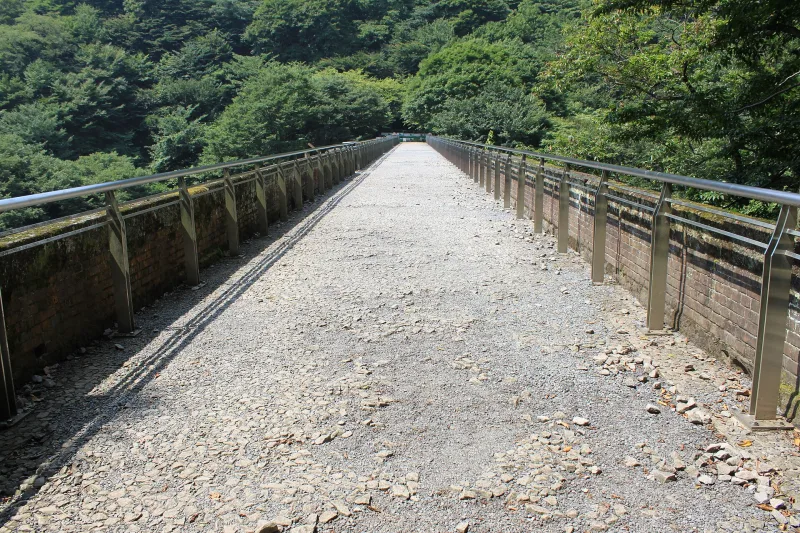
The old railway line has become a walking trail called the Abt Road, which runs from Yokokawa Station on the JR Shinetsu Main Line, over Megane-bashi, to the former Kumanotaira Station. According to Annaka City, the stretch from Yokokawa Station to Kumanotaira is about 6 km, with 10 tunnels and 6 bridges along the way. At Megane-bashi, you can walk across the top of the bridge where trains once ran.
Walking the Abt Road from Yokokawa Station takes about 100 minutes to reach Megane-bashi. By taxi it is about 10 minutes. By car, it is about 15 minutes from the Matsuida-Myogi Interchange on the Joshinetsu Expressway, and there is a car park near the bridge.
Tips
- The Abt Road is open all year, but the tunnels are only lit from morning to early evening. Walking into the tunnels after dark is dangerous, so go while it is still light.
- Try both looking up at the bridge from below and walking across it on the Abt Road. Steps have also been built leading down from the bridge to Route 18.
- Just after leaving Yokokawa Station, the Abt Road passes near the Usui Pass Railway Heritage Park. If you want to learn more about the railways of the Usui Pass, it is worth a stop too.
Sources
- 碓氷峠(めがね橋)|群馬県公式観光情報サイト ググっとぐんま (opens in a new tab)
- 遊歩道アプトの道|安中市 (opens in a new tab)
- 碓氷第三橋梁 - Wikipedia (opens in a new tab)
Updated 30 September 2026. Opening hours and prices change, so check the official site before you go.