Haruna Shrine
榛名神社
Climb a 700m path of giant cedars and strange rocks to halls built against a huge boulder: Haruna Shrine on Mt Haruna, Gunma, over 1,400 years old.
A mountain shrine with more than 1,400 years of history
Haruna Shrine is a Shinto shrine halfway up Mt Haruna in Takasaki city, Gunma Prefecture. A place of worship is said to have been set up here in the reign of Emperor Yomei (586), and 2026 marks the 1,440th year since the deity was enshrined. The shrine is also named in the register of deities in the Engishiki, compiled in 927, a list of the most prestigious shrines.
Since ancient times it has been believed to protect against fire and to bring good fortune, abundant harvests and business success, and people also worshipped here to pray for rain. In the Edo period it flourished together with a Tendai Buddhist temple as a single religious site, and it was the centre of mountain worship.
Walking the approach of giant rocks and cedars
From the shrine entrance to the main buildings, an approach of about 700m runs alongside a clear stream. Old cedars close over the sky and huge, oddly shaped rocks appear one after another, so the climb itself is one of the shrine's great attractions.
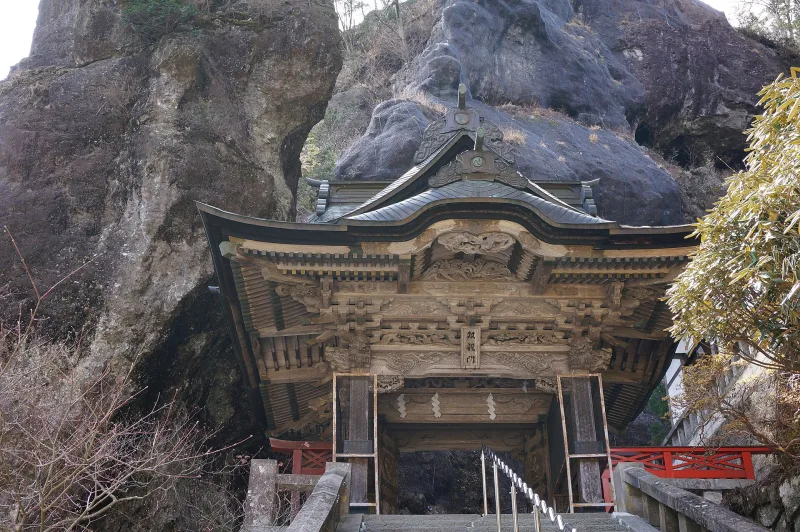
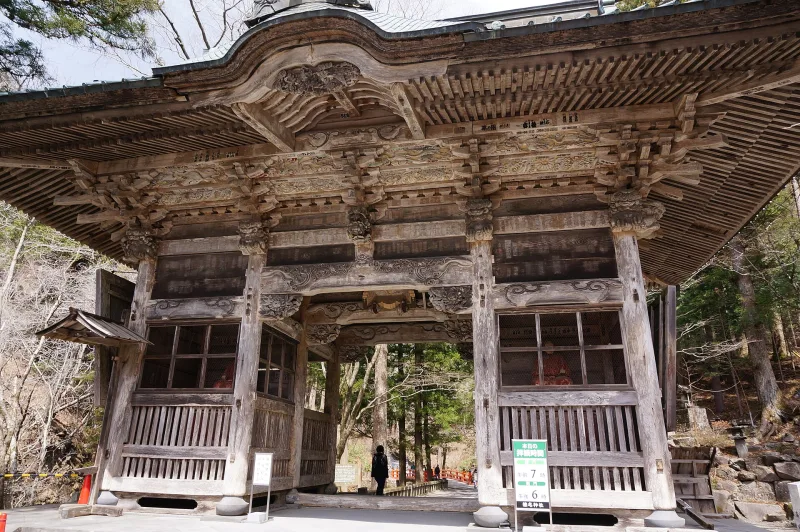
Along the path stands the Yatate-sugi cedar, into which the warlord Takeda Shingen is said to have shot an arrow while praying for victory; it is a national Natural Monument. The Soryumon Gate, built in 1855, is made entirely of zelkova wood, with circular, stylised carvings of dragons on its doors.
Misugata-iwa and the main hall
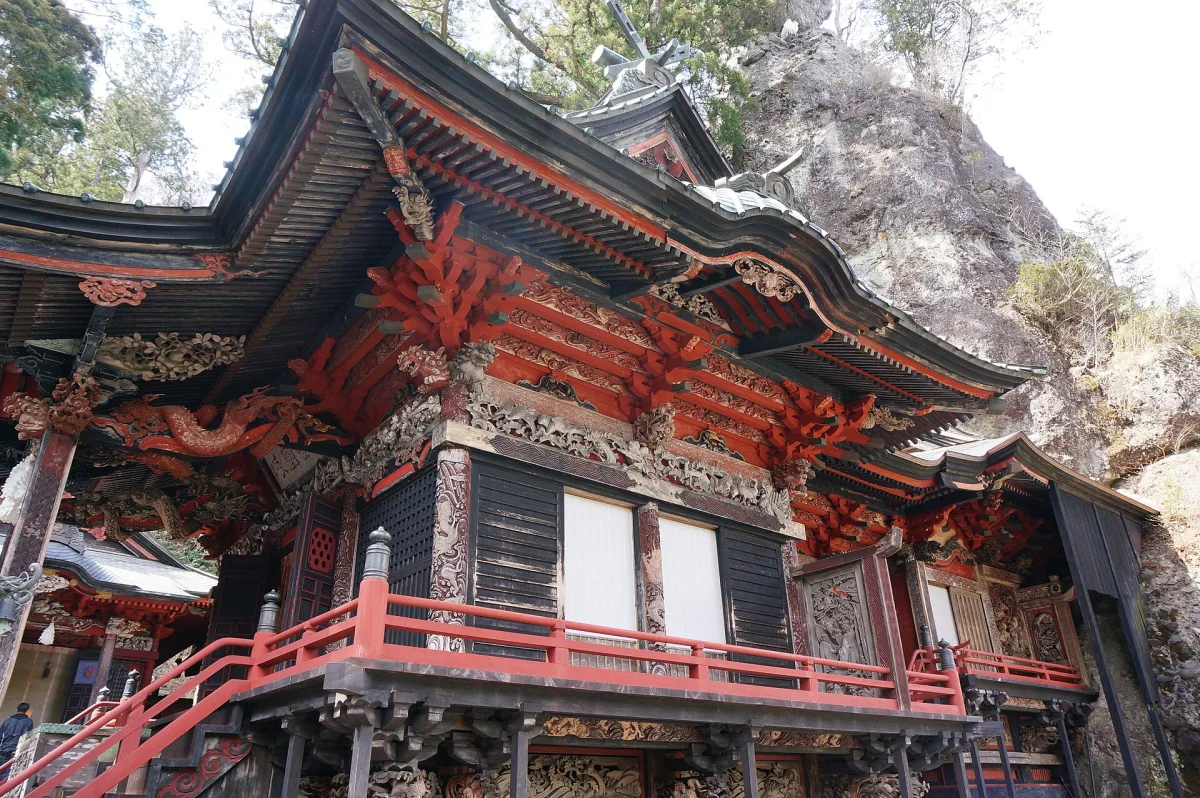
The main hall (the honsha sanctuary, heiden offering hall and haiden worship hall) was rebuilt in 1806 in the gongen-zukuri style, shrine architecture that joins several buildings together, and it is a national Important Cultural Property. The sanctuary is built right against a giant rock called Misugata-iwa, and the shintai (the sacred object in which the deity resides) is enshrined deep inside the rock. You can also see many carvings, including dragons.
The Important Cultural Property buildings in the grounds have been restored one after another since 2017, and by January 2026 work was finished on the Kokusosha shrine and Gakuden (votive picture hall), the Soryumon Gate, and the sanctuary, offering hall and worship hall. The kagura-den (the hall where sacred dances are offered to the gods) is under repair until the end of December 2028 as planned; it is enclosed in a protective shelter and cannot be seen, and kagura dance offerings are suspended.
Getting there and planning your visit
From the west exit of JR Takasaki Station, take a Gunma Bus bound for Lake Haruna and get off at Haruna Jinja-mae; the shrine is about a 15-minute walk from there (the bus ride takes about 70 minutes). By car, head up the prefectural road from central Takasaki.
In front of the shrine, a streetscape lined with shukubo (lodgings for pilgrims) buildings survives. Visiting hours change with the season, so check the official website.
Tips
- The walk to the shrine buildings is about 700m uphill, so wear comfortable shoes. There are no drink vending machines in the grounds, so bring water, especially in summer.
- In heavy rain, the prefectural road leading to the shrine from the Lake Haruna direction may be closed. After a spell of rain, check the notices on the shrine's official website.
- Goshuin (a stamp given as a record of your visit) are written directly into your goshuin book only on weekdays; on weekends and public holidays they are given as pre-written sheets.
- On some days in May, the prefectural road to the shrine is closed in the morning for a cycle race.
Sources
- 榛名神社公式サイト
- お知らせ(保存修理工事・拝観時間)| 榛名神社公式サイト
- 境内 | 榛名神社公式サイト
- 歴史 | 榛名神社公式サイト
- 交通案内 | 榛名神社公式サイト
- 榛名神社 | 心にググっと観光ぐんま
- 榛名神社 | 高崎観光協会
Updated 29 September 2026. Opening hours and prices change, so check the official site before you go.