Japan is Nippon
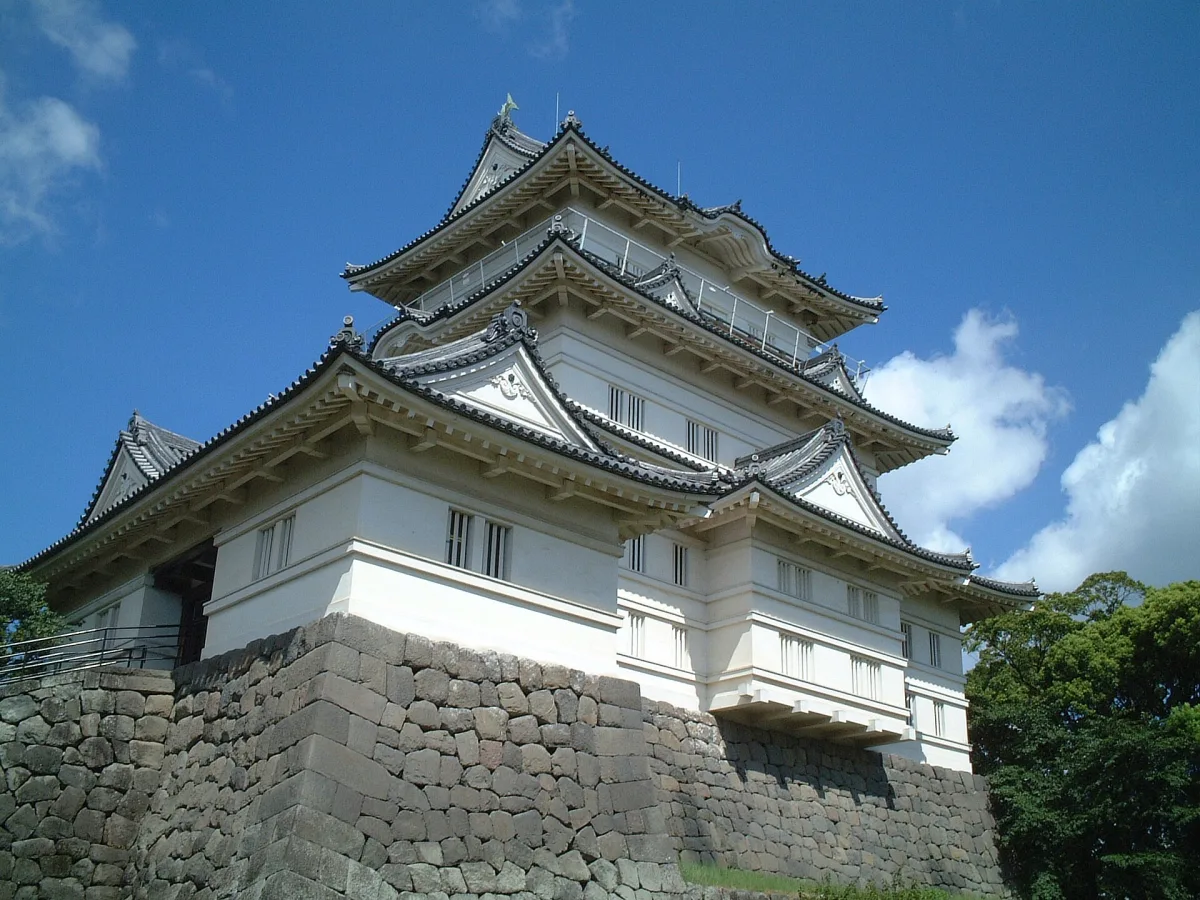
Odawara Castle
小田原城
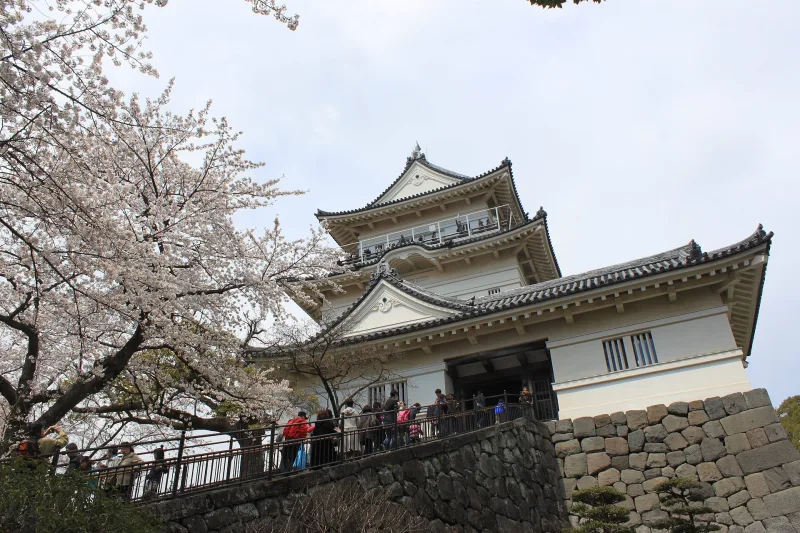
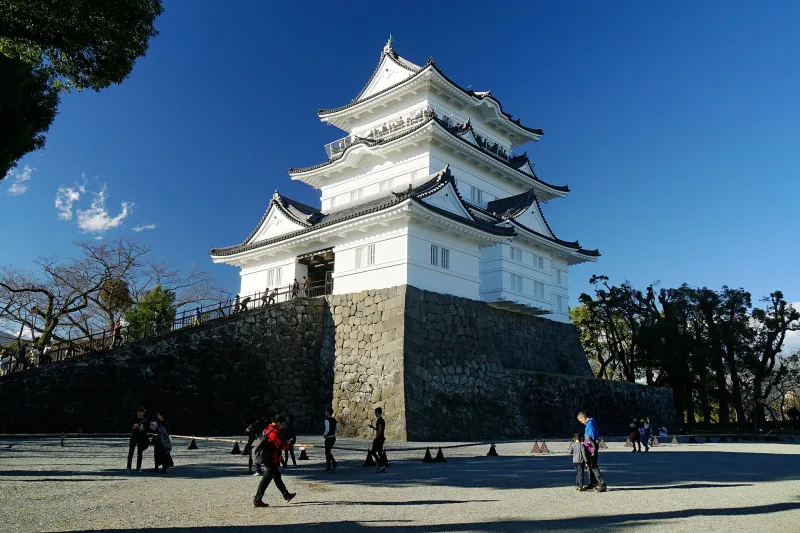
Base of the Hojo clan, who ruled Kanto for about 100 years. Walk from Odawara Station to a white keep with sea views, cherry blossoms, wisteria and irises.
Castle of five Hojo generations, and the "sogamae"
Odawara Castle is thought to have begun as a castle built by the Omori clan in the mid-15th century. Around 1500, the Hojo, a warlord clan of the Sengoku (Warring States) period founded by Ise Sozui, later known as Hojo Soun, moved into Odawara, and over five generations and about 100 years spread their power across the whole Kanto region. Odawara Castle was expanded as their centre.
To prepare for an attack by Toyotomi Hideyoshi, who was pushing to unify the country, the Hojo built a sogamae (an outer defence line), ringing the castle and the whole town around it with moats and earthen walls. It stretched about 9km, and the castle reached its greatest size. But in 1590 Hideyoshi's siege of Odawara destroyed the Hojo, and the Sengoku period came to an end.
From the Edo period to the rebuilt keep
In the Edo period, lords such as the Okubo clan, retainers of Tokugawa Ieyasu, held the castle, and it was remodelled into the shape of a typical Edo-period castle. With the Hakone checkpoint on the Tokaido road just beyond it, it was a key stronghold guarding the Kanto region.
In 1870 (Meiji 3) it ceased to serve as a castle and most of its buildings were demolished. The remaining stone walls largely collapsed in the Great Kanto Earthquake of 1923. The current keep was rebuilt in 1960 at the wish of local residents, and the Tokiwagi Gate, Akagane Gate and Umadashi Gate were later reconstructed too. The castle site is a designated National Historic Site and is laid out as a castle park.
Inside the keep and around the castle park
Inside the keep, exhibits introduce Odawara Castle in the Edo period and in the Hojo era. On the top floor, a statue of Marishiten (a guardian deity of warriors), said to have been enshrined in the Edo-period keep, stands in a recreated space made with Odawara timber. From the keep you can look out over Sagami Bay.
Inside the Tokiwagi Gate, the SAMURAI Museum displays kacchu (samurai armour), swords and other arms, while at the NINJA Museum you can learn hands-on about the Fuma ninja, said to have supported the Hojo from the shadows. You can also try on armour or ninja costumes.
The park has flowers in every season, including cherry blossoms, wisteria, hanashobu (Japanese irises) and plum blossoms, as well as great trees more than 500 years old.
Getting there
It is about 10 minutes' walk from Odawara Station. The park has no public car park and the surrounding roads get very busy on weekends and public holidays, so going by train is best.
The formal route up to the castle starts at the Umadashi Gate, the main entrance on Ohoribata-dori, and passes through the Akagane Gate and Tokiwagi Gate to the central enclosure (honmaru). If you want to reach the honmaru without stairs, the route from the North Entrance near the station is handy. Check opening hours and fees on the official website.
Tips
- The keep, the SAMURAI Museum and the NINJA Museum are separate facilities. If you want to see them all, check the ticket information on the official website.
- The NINJA Museum sometimes closes temporarily (a temporary closure has been announced for 2 October 2026 as well). Check the notices on the official website before you go.
- Enter at the main entrance and pass through the Umadashi, Akagane and Tokiwagi gates in turn up to the honmaru, and you will be following the route people once took into the castle.
Sources
- 【公式】小田原城 難攻不落の城 (opens in a new tab)
- 小田原城の歴史 | 小田原城【公式】 (opens in a new tab)
- 城址公園概要 | 小田原城【公式】 (opens in a new tab)
- 交通アクセス | 小田原城【公式】 (opens in a new tab)
- 小田原城 平成の大改修 | 小田原城【公式】 (opens in a new tab)
- 小田原城 - Wikipedia (opens in a new tab)
Updated 30 September 2026. Opening hours and prices change, so check the official site before you go.