Japan is Nippon
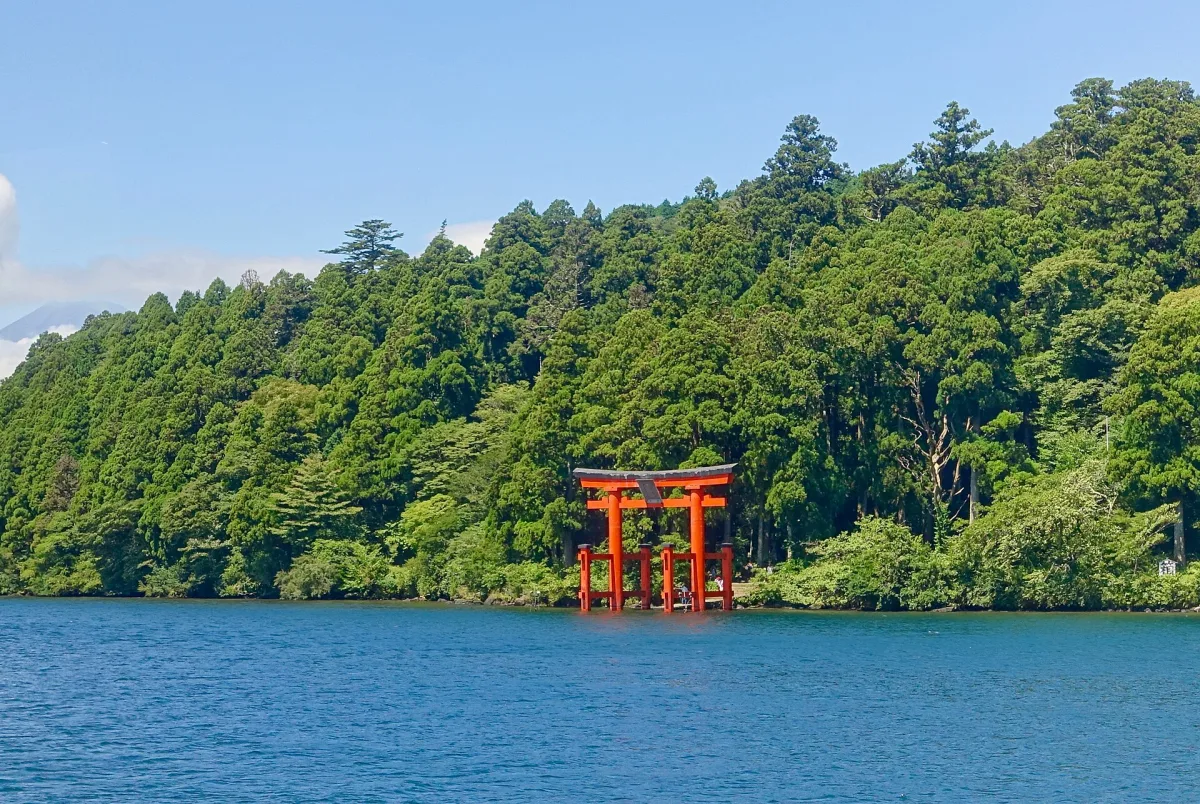
Hakone Shrine
箱根神社
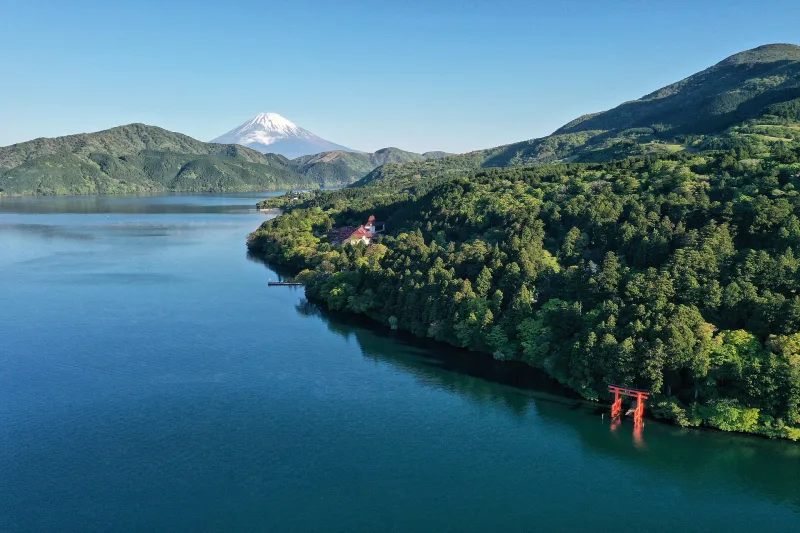
An ancient Hakone shrine among old cedars on Lake Ashi. Its red Heiwa torii standing in the lake is one of Hakone's most famous views.
The "guardian of all Kanto", revered by warriors
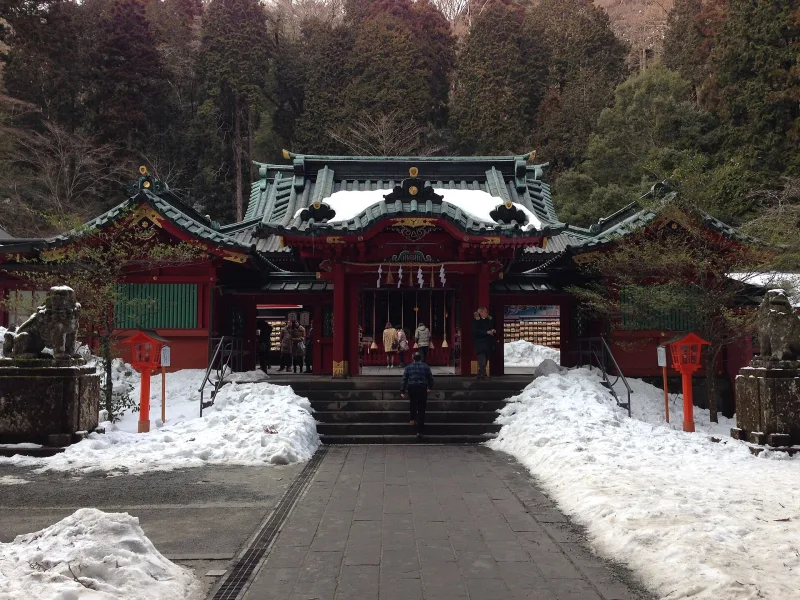
Hakone Shrine enshrines the gods of Mount Hakone as Hakone no Okami. According to the shrine, it began in 757, in the Nara period, when a monk named Mangan Shonin received a divine message and built a shrine hall on the present site. It was long known as Hakone Gongen, a blend of Shinto and Buddhism, and was renamed Hakone Shrine in the early Meiji period under the policy of separating Shinto gods from Buddhism.
Hakone was the mountain crossing on the road linking east and west, so the shrine became widely known among people praying for a safe journey. Minamoto no Yoritomo, founder of the Kamakura shogunate, was a devoted follower, and many later warlords, including the Hojo clan and Tokugawa Ieyasu, held it dear. That is why it is also called Kanto Sochinju (the shrine that protects the whole Kanto region). Today people come to pray for good fortune, traffic safety and finding love.
The Heiwa torii in the lake
Hakone Shrine's best-known sight is its vermilion torii (the gate that marks the entrance to a shrine) standing in the waters of Lake Ashi. It was built in 1952 to mark the investiture of the then Crown Prince (now the Emperor Emeritus) and Japan's independence with the conclusion of the peace treaty. In 1964, to mark 1,200 years since Hakone no Okami was enshrined and the holding of the Tokyo Olympics, a plaque reading "Heiwa" (peace) was put up, and it has been called the Heiwa no Torii (Torii of Peace) ever since. The characters on the plaque were written by former prime minister Yoshida Shigeru, who signed the peace treaty.
The "Heiwa" plaque faces the lake, so you cannot see it from the shore; you can see it from a Lake Ashi sightseeing boat. The torii is hugely popular with photographers, and there is sometimes a queue to take pictures.
The cedar-lined approach and Kuzuryu Shrine
To reach the shrine halls you climb about 90 stone steps along an approach lined with old cedars. The grounds also have goshinboku (sacred trees believed to house a god), known as the Yatate Cedar and the Anzan (safe childbirth) Cedar. If you want to avoid the steps, you can use a step-free forest path or a lift from the Treasure Hall.
Immediately to the right of the main hall is Kuzuryu Shrine (Shingu), which enshrines Kuzuryu no Okami, the nine-headed dragon god. The original Kuzuryu Shrine (Hongu) is in the woods on the shore of Lake Ashi; to get there, walk the lakeside trail (about 30 minutes each way) or go by motorboat.
Getting there
By train, take the Odakyu Line or another line to Hakone-Yumoto Station, then a bus towards Moto-Hakone. Another route is the Hakone Tozan Railway and Hakone Ropeway to Togendai, then a Lake Ashi sightseeing boat across to Moto-Hakone Port, about 10 minutes' walk from the shrine. There are also highway buses from Shinjuku to Moto-Hakone.
Between 10am and 4pm, buses do not stop at the Hakone-jinja-iriguchi stop. At those times, get off at the next stop, Moto-Hakone-ko.
Tips
- The spot in front of the Heiwa torii tends to have a queue of people taking photos, so allow plenty of time.
- If you want to see the "Heiwa" characters, take a Lake Ashi sightseeing boat and look at the torii from the lake side.
- From 10am to 4pm buses do not stop at Hakone-jinja-iriguchi, so get on and off at Moto-Hakone-ko.
- On weekends and public holidays roads such as Route 1 tend to be congested, so if you are driving, set off early.
Sources
- 箱根神社(九頭龍神社)公式ホームページ (opens in a new tab)
- 箱根神社・九頭龍神社・箱根元宮の由緒並に宝物と文化財 | 箱根神社 (opens in a new tab)
- 境内のご案内と箱根全山の神社 | 箱根神社 (opens in a new tab)
- アクセス | 箱根神社 (opens in a new tab)
- 芦ノ湖に映える朱色の鳥居 | 箱根町観光協会公式サイト (opens in a new tab)
Updated 30 September 2026. Opening hours and prices change, so check the official site before you go.