Japan is Nippon
Kamikochi
上高地
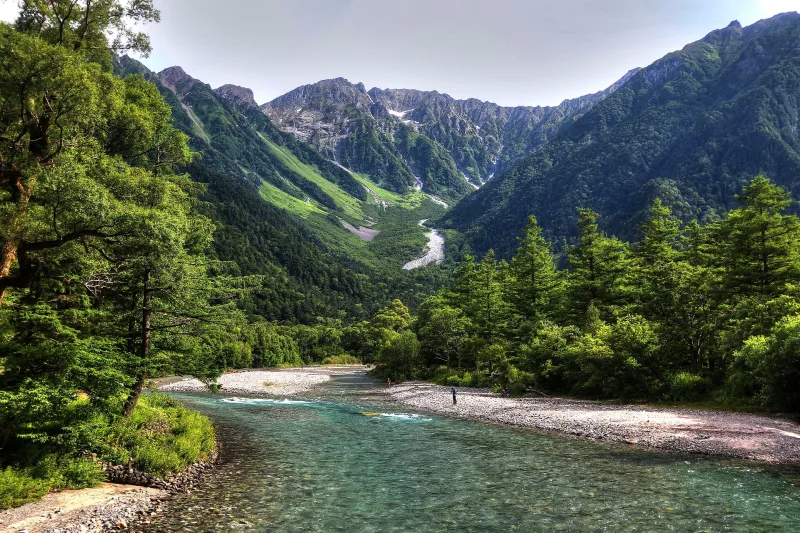
A mountain valley at about 1,500m beneath the Hotaka peaks of the Northern Alps. Closed to private cars, it has flat trails along a clear river to ponds and wetlands.
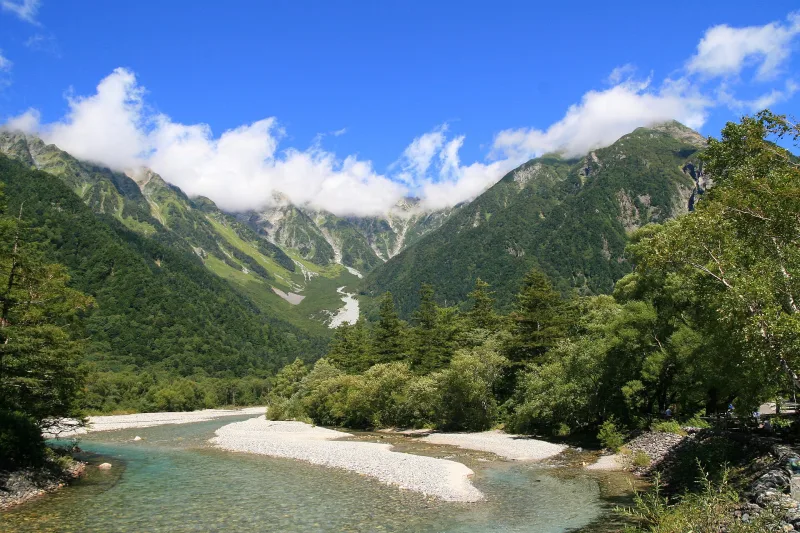
A mountain resort in the heart of the Northern Alps
Kamikochi is a valley about 1,500m above sea level on the upper reaches of the Azusa River in Matsumoto, Nagano Prefecture. Surrounded by the peaks of the Northern Alps (the Hida Mountains), it is part of Chubu-Sangaku National Park and has also been designated a national Special Place of Scenic Beauty and a Special Natural Monument. According to Kamikochi's official website, about 1.2 million people visit each year.
The man who made Kamikochi known to the world was the British missionary Walter Weston. In a book published in 1896 he introduced Kamikochi, the Hotaka range and Mount Yari, and this helped mountain climbing catch on as a leisure activity in Japan too. He is still called the "father of modern mountaineering in Japan", and his story is told together with the name of Kamijo Kamonji, the local hunter who guided him.
Kappa Bridge, Taisho Pond and Myojin Pond
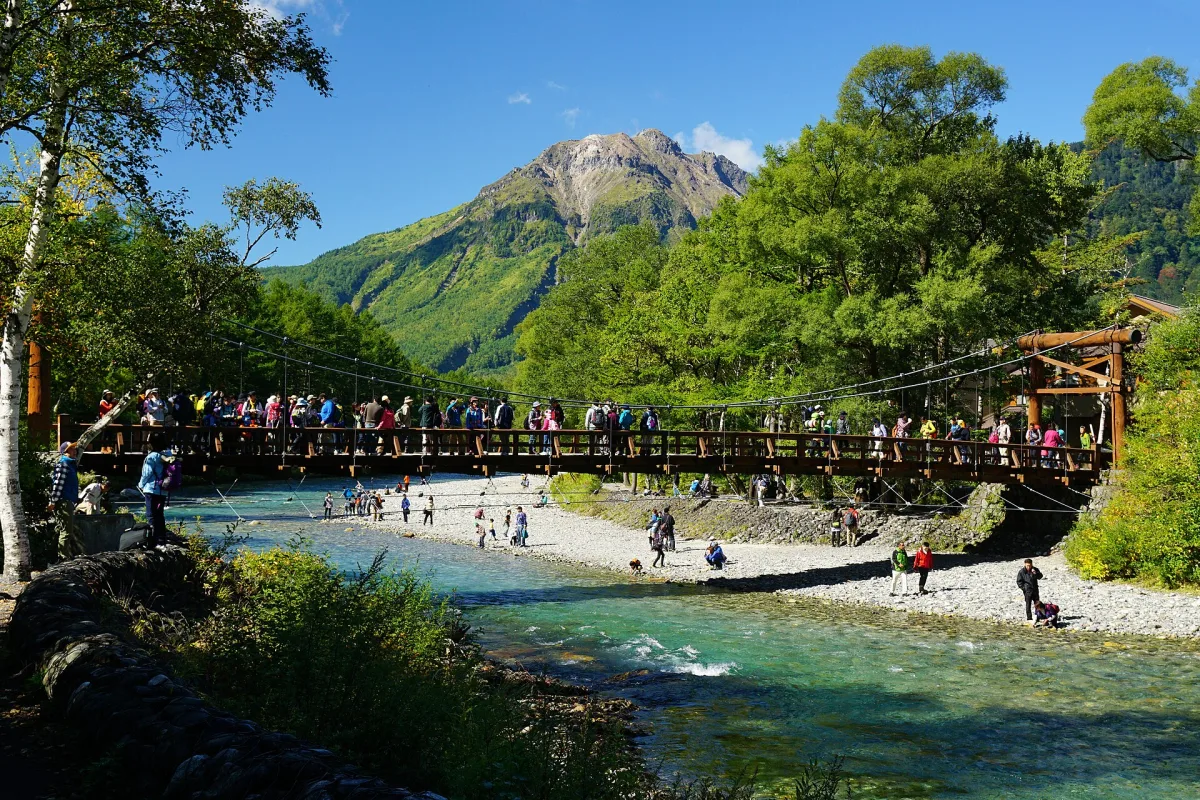
The symbol of Kamikochi is Kappa Bridge, a suspension bridge over the Azusa River. From the bridge you can see the Hotaka range and the crystal-clear river, and if you turn around, the active volcano Mount Yake. The present bridge, rebuilt in 1997, is the fifth, and its name became widely known after it appeared in Kappa, a novel by the writer Ryunosuke Akutagawa.
Taisho Pond formed when lava and mudflows from the 1915 eruption of Mount Yake dammed the Azusa River. Dead trees still stand up out of the water, and on clear days the Hotaka range is reflected on the surface. At Myojin, about an hour's walk upstream from Kappa Bridge, is Hotaka Shrine Okumiya, the inner shrine dedicated to the god Hotakami no Mikoto, with Myojin Pond in its grounds. The pond is fed by spring water and never freezes over completely, even in winter (there is a fee to visit Myojin Pond).
Walking routes and the best seasons
Kamikochi is a place to enjoy on foot along almost entirely flat trails. According to the official website, it takes about 80 minutes one way from Taisho Pond via Tashiro Pond to Kappa Bridge, and about three hours for a round trip between Kappa Bridge and Taisho Pond. From Kappa Bridge to Myojin Pond it is a little over an hour one way.
Kamikochi is normally open from mid-April to mid-November. In winter the road is closed and neither buses nor taxis run. The May holidays, the summer holidays and the autumn leaf season in October are especially crowded, and the area around Kappa Bridge gets so busy that it is nicknamed "Kamikochi Ginza", after Tokyo's famous shopping street.
No private cars: getting there
Private vehicles (including hire cars and motorbikes) cannot enter Kamikochi at any time of year. If you drive, park at Sawando car park coming from the Matsumoto side, or at Akandana car park in Hirayu coming from the Takayama side, and change to a shuttle bus or taxi. The buses also stop at Taisho Pond and in front of the Imperial Hotel, and terminate at Kamikochi Bus Terminal.
Bus fares, timetables and parking fees may change, so check Kamikochi's official website. After heavy rain, the prefectural road to Kamikochi and the walking trails are sometimes closed temporarily. Check the notices on the official website before you set out.
Tips
- Kamikochi is in the mountains, and the average temperature is 5-10 degrees lower than in central Matsumoto. Take an extra layer even in summer.
- Mist tends to rise from Taisho Pond early in the morning, especially after rain, and together with the standing dead trees it makes a magical scene. You have a better chance of seeing it if you come in on an early bus or stay the night in Kamikochi.
- Every year on 8 October, the Ofune Shinji, the annual grand festival of Hotaka Shrine Okumiya, is held at Myojin Pond, when priests in Heian-period costume go round the pond in two boats.
Sources
- 上高地について|上高地公式ウェブサイト (opens in a new tab)
- 河童橋|上高地公式ウェブサイト (opens in a new tab)
- 大正池|上高地公式ウェブサイト (opens in a new tab)
- 明神池|上高地公式ウェブサイト (opens in a new tab)
- 上高地を歩く|上高地公式ウェブサイト (opens in a new tab)
- マイカー・観光バス規制について|上高地公式ウェブサイト (opens in a new tab)
- 上高地 - Wikipedia (opens in a new tab)
Updated 30 September 2026. Opening hours and prices change, so check the official site before you go.