Japan is Nippon
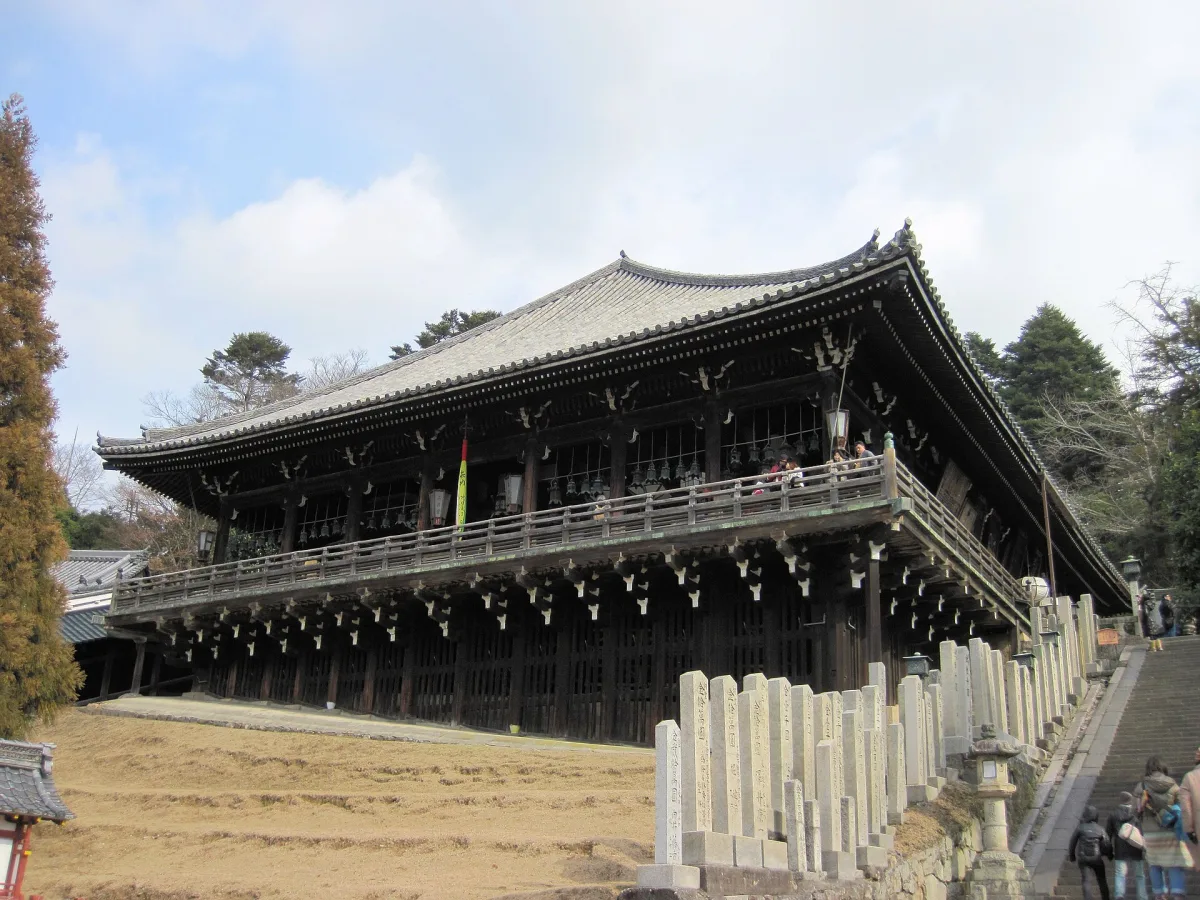
Nigatsu-do Hall (Todai-ji)
東大寺二月堂
A Todai-ji hall jutting out over a slope east of the Great Buddha Hall, with views over Nara; each March, Omizutori torches race along its balcony at night.
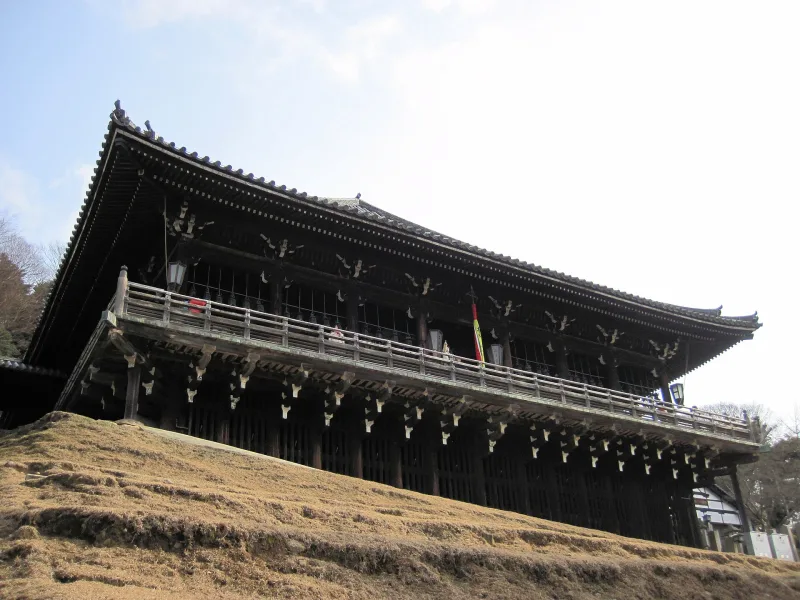
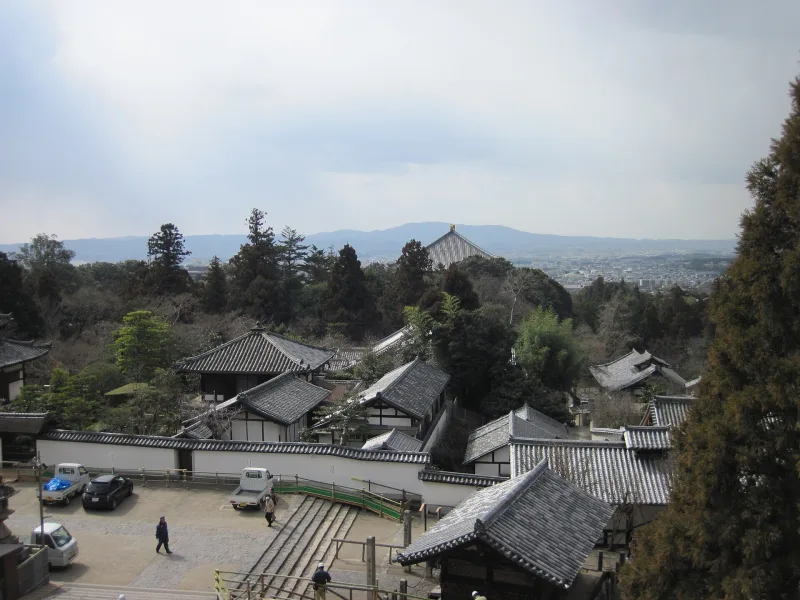
A hall built for Omizutori
Nigatsu-do Hall stands on high ground up the slope east of the Great Buddha Hall at Todai-ji Temple in Nara. According to Todai-ji, it is said to have been founded by Jicchu, a disciple of the high priest Roben.
Its name, meaning "Second Month Hall", comes from the Shuni-e, a Buddhist ceremony traditionally held in the second month of the old lunar calendar. It is widely known as Omizutori ("water drawing"). Today it is held every year from 1 to 14 March.
The present building was rebuilt in 1669 after the hall burned down during the Shuni-e of 1667. It was designated a National Treasure in 2005.
A stage over the slope, with views of Nara
Nigatsu-do is built in the kakezukuri style: the building projects out over the slope and is held up from below by many pillars. The front is an open veranda with a railing, and from here you get a wide view over the townscape of Nara.
The principal images are two statues of Juichimen Kannon (the eleven-headed Kannon), and both are hibutsu (hidden Buddhas that are not shown to the public). The larger one in particular, the Okannon, is said to be something even the monks who perform the Shuni-e cannot see.
Omizutori and the otaimatsu torches
Every night during the Shuni-e, huge torches about 6m long are carried up onto the veranda of Nigatsu-do and move along it, scattering sparks. They are there to light the way for the monks climbing up to the hall.
The name Omizutori comes from a ritual late on the night of 12 March (the small hours of the 13th), when water to be offered to Kannon is drawn from Wakasai, a well below the hall.
Space for watching the torches is limited, and once it is full you will not be able to see them. 12 March is especially crowded, and the Nara City Tourism Association asks people to avoid coming that day. Check the dates and viewing arrangements each year with Todai-ji or the Nara City Tourism Association.
Getting there and what to keep in mind
From JR Nara Station or Kintetsu Nara Station, take the city loop bus, get off at Todaiji Daibutsuden Kasugataisha-mae, and walk. Climb the slope from the east side of the Great Buddha Hall and you reach Nigatsu-do.
According to Todai-ji, the area around the hall is open all day, but visitors are asked to pray quietly at night. Photography, sketching and torches are not allowed inside the hall, and tripods cannot be used around it.
Tips
- After seeing the Great Buddha Hall, walk a little further up the slope to Nigatsu-do and you get a sense of how vast Todai-ji is, plus a view over Nara, all at once.
- During Omizutori (1 to 14 March), huge crowds gather in the evenings. Viewing arrangements and rules can change from year to year, so check the Nara City Tourism Association's information before you go.
- Photography is not allowed inside the hall. Keep your photos to the view from the veranda and the outside of the building.
Sources
- 二月堂 | 華厳宗大本山 東大寺 (opens in a new tab)
- お水取り | 東大寺 (opens in a new tab)
- 修二会/東大寺二月堂 | 奈良市観光協会 (opens in a new tab)
- 東大寺二月堂 - Wikipedia (opens in a new tab)
Updated 30 September 2026. Opening hours and prices change, so check the official site before you go.