Nara Park
奈良公園
A vast Nara park where over a thousand wild deer roam among ancient temples and shrines, Todaiji and Kasuga Taisha among them: the heart of any Nara visit.
A huge park of temples, shrines and forest
Nara Park, in the centre of the city of Nara, was designated a park in 1880 (Meiji 13). It stretches about 4km from east to west and about 2km from north to south, so it is quite different from what most people picture when they hear the word "park".
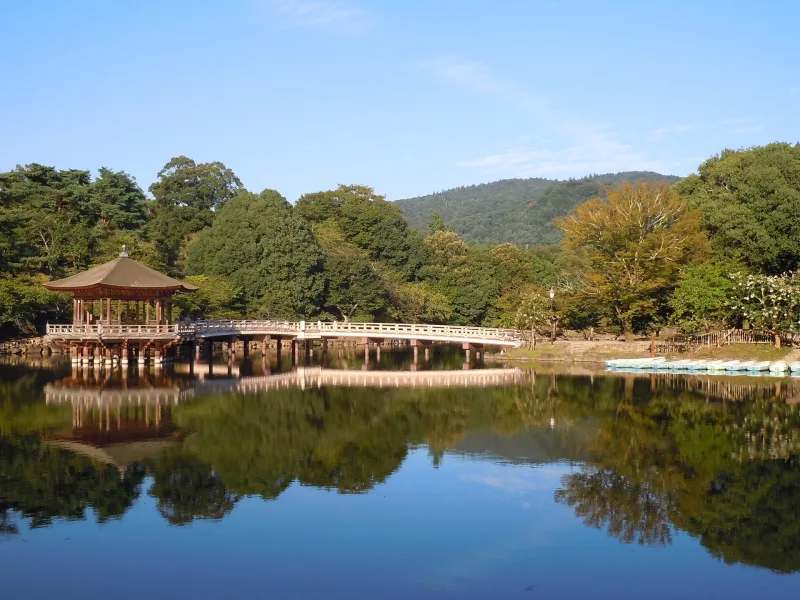
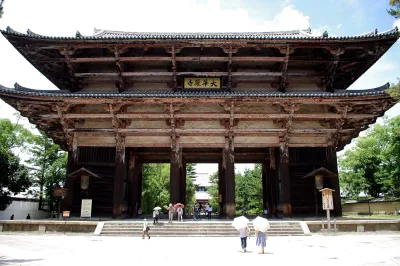
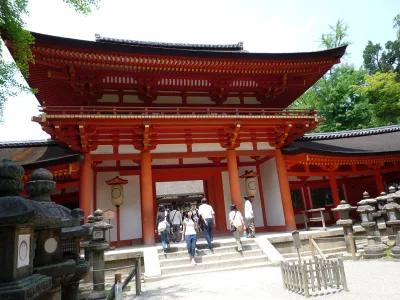
Within it are ancient temples and shrines such as Todaiji and Kasuga Taisha, Ukimido (a pavilion that seems to float on its pond), Sarusawa Pond, Mount Wakakusa and more. What makes it special is the way lawns, forest and historic buildings all run into one another.
Nara's deer, long revered as messengers of the gods
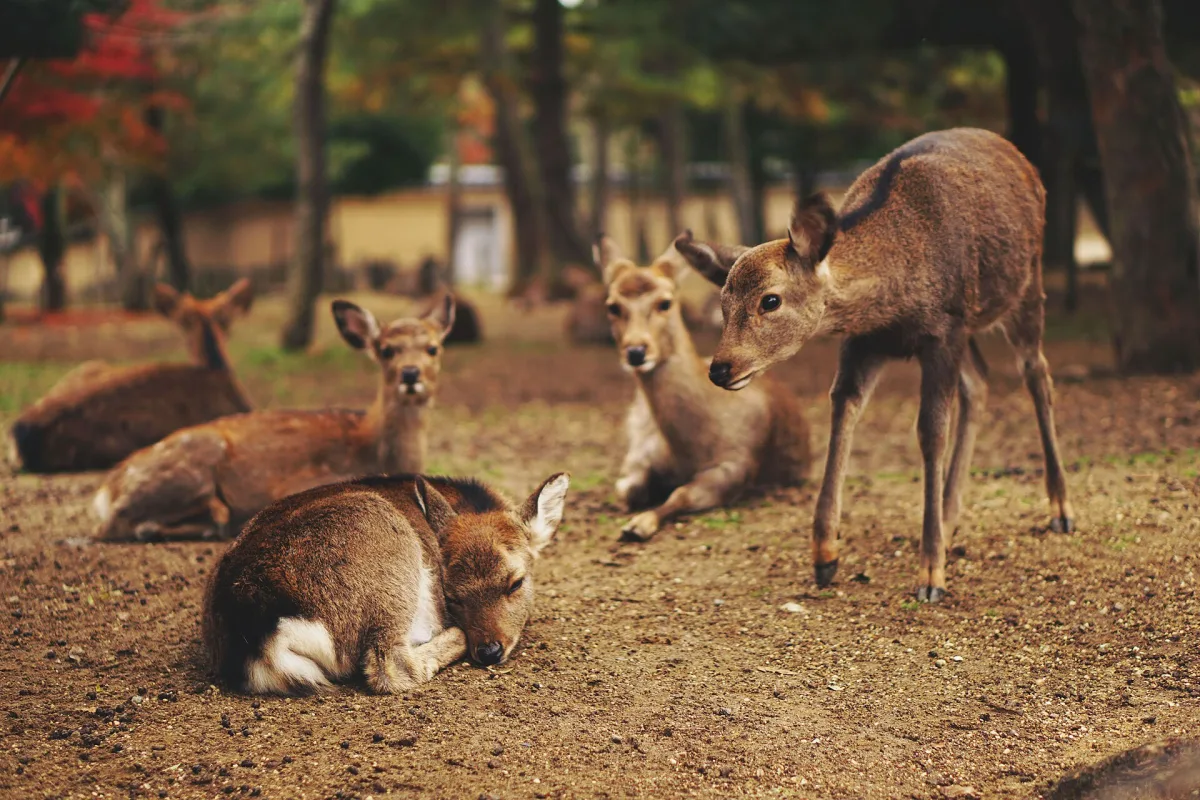
Nara Park is most famous for its deer. According to Kasuga Taisha's legend, a god came here riding a white deer from Kashima, in what is now Ibaraki Prefecture, so the deer have long been cherished as shinroku ("sacred deer"), messengers of the gods.
According to Nara's tourism association, about 1,300 deer live in the park. They are used to people, but they are not kept animals: they are wild animals designated a national Natural Monument.
The only thing you may feed the deer is shika senbei (deer crackers). They are made from wheat flour and rice bran with no sugar, and part of the money from sales goes towards protecting the deer. Feeding them anything else, such as sweets, bread or vegetables, is prohibited because it can make them ill.
Seasonal highlights, and a current caveat
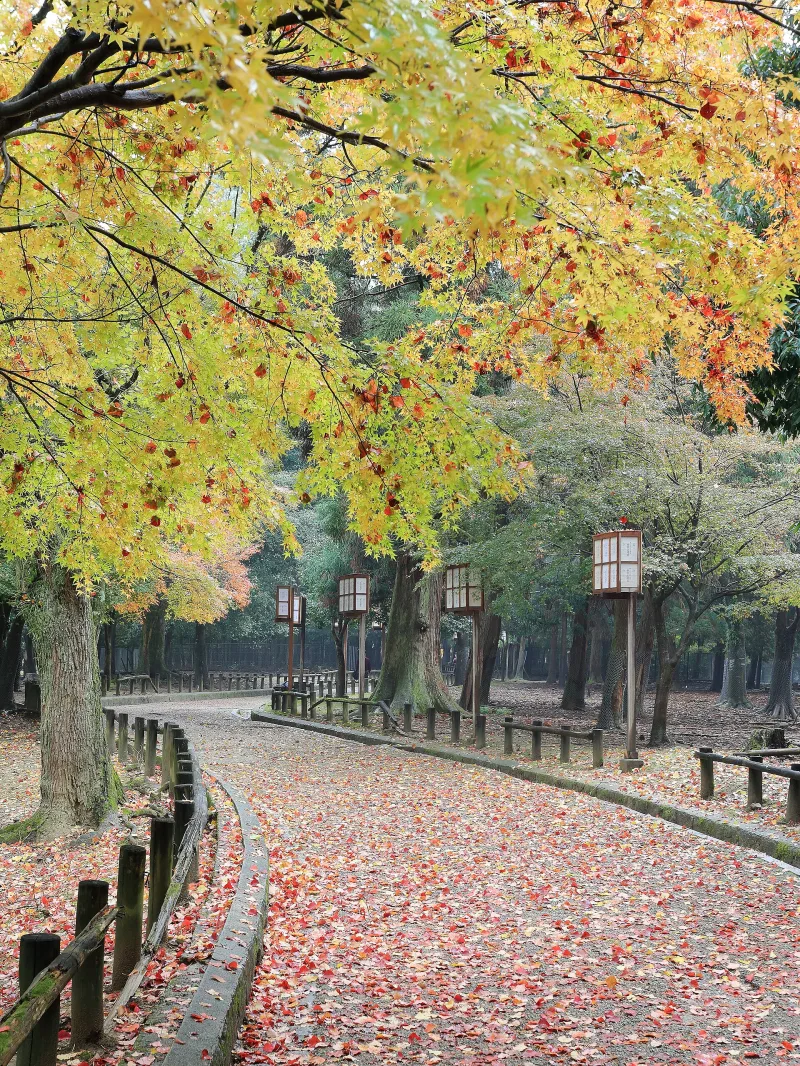
According to Nara Prefecture's tourism website, cherry blossoms are at their best from late March to late April, and autumn leaves from late October to early December. In autumn, a traditional event called Shika no Tsunokiri (deer antler cutting) is held at Kasuga Taisha's Rokuen deer enclosure.
The five-storey pagoda of Kofukuji, which stands right by Sarusawa Pond, reflected in the pond is one of Nara's classic views. However, the pagoda is under major repairs and is enclosed in a protective cover (a suyane) about 60m tall, so it cannot be seen from outside for some time.
Getting there
The park is about a 5-minute walk from Kintetsu Nara Station, and about 20 minutes on foot from JR Nara Station. Kintetsu Nara is about 35 minutes from Osaka-Namba by rapid express, and just over 30 minutes from Kyoto Station on the Kintetsu line.
Tips
- Once you are holding deer crackers, the deer will keep coming at you. Hand them out quickly without hesitating, and when they are gone, show your open hands: that is the signal for "no more".
- Deer can bite, kick and butt with their antlers. In spring mother deer are protecting their fawns, and in autumn the stags are in rut and on edge, so do not get too close.
- Deer will eat paper and plastic bags too. Keep maps and leaflets put away, and always take your rubbish home with you: there are no bins in the park.
- Wash your hands after touching the deer.
Sources
- 奈良公園|奈良県観光[公式サイト] あをによし なら旅ネット
- 奈良公園クイックガイド ≫ 奈良公園のシカとの接し方(奈良県)
- 奈良公園にはなぜ鹿がいる?|奈良市観光協会公式サイト
- Nara Park | Travel Japan - Japan National Tourism Organization
- 国宝 興福寺五重塔 現在の修理状況 / 奈良県
Updated 28 September 2026. Opening hours and prices change, so check the official site before you go.

.jpg)
.jpg)
