Kofuku-ji Temple
興福寺
A great temple of the Fujiwara clan, a short walk from Kintetsu Nara Station. See the vermilion Central Golden Hall, rebuilt in 2018, and the Ashura statue.
A great Nara temple that flourished with the Fujiwara clan
Kofuku-ji is the head temple of the Hosso school, one of the schools of Buddhism that came to Japan from China in the Nara period. It is said to have begun in 669 as Yamashina-dera, built by Kagami-no-Okimi, the wife of Fujiwara no Kamatari, to pray for her husband's recovery from illness. When the capital moved to Heijo-kyo (today's Nara) in 710, Kamatari's son Fujiwara no Fuhito moved the temple here and named it Kofuku-ji.
The Fujiwara were the most powerful noble family in ancient Japan, and Kofuku-ji grew large as their ujidera (a family's own temple). In the Heian period it also took real control of neighbouring Kasuga Taisha shrine, and in the Kamakura and Muromachi periods it even took on the role of governing Yamato Province (today's Nara Prefecture). It went through hard times with the separation of Shinto and Buddhism in the Meiji era (a policy that split the two apart), but it has since been restored and is now part of the World Heritage Site Historic Monuments of Ancient Nara.
The Central Golden Hall, reborn after 300 years
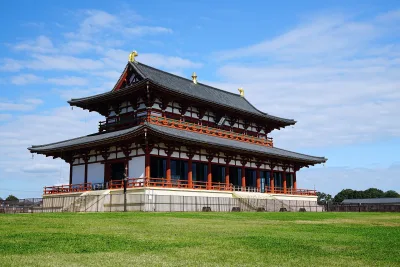
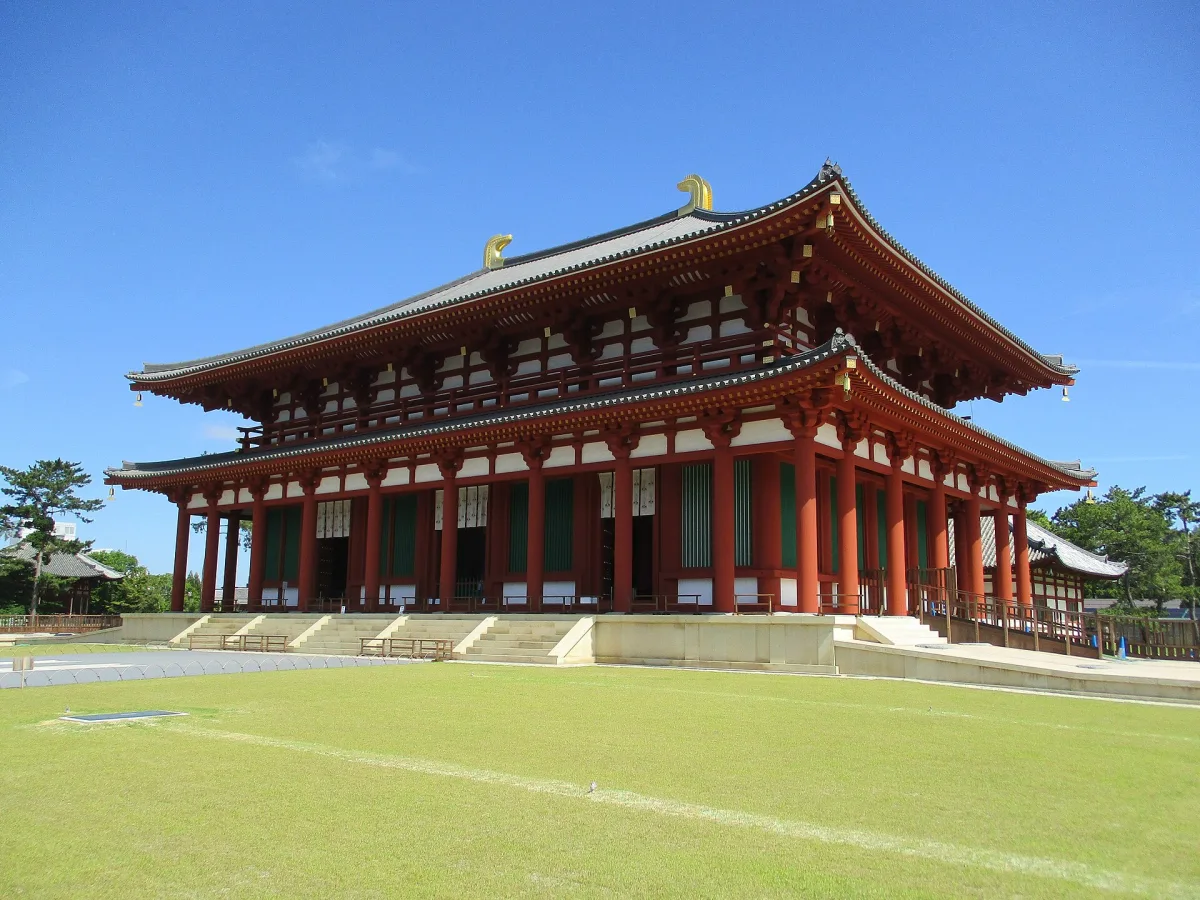
The large vermilion hall at the centre of the grounds is the Chukondo (Central Golden Hall). Kofuku-ji has suffered many fires, and the Chukondo alone burned down and was rebuilt seven times from the Heian period on. After the fire of 1717 there was not enough money for a proper rebuilding, and only a small temporary hall went up, in 1819.
That temporary hall was taken down in 2000. After excavation, a ceremony to raise the pillars was held in 2010 and a ridgepole-raising ceremony in 2014, and in October 2018 the hall was completed, rebuilt at the scale of the original. With its vermilion pillars and white walls, it helps you picture what temples looked like in the Nara period.
The National Treasure Museum and its Ashura, plus halls with their own character
The National Treasure Museum was built in 1959 on the site of the jikido, the hall where the monks ate. Its most popular piece is the Nara-period Ashura statue, a National Treasure. Standing 153.4 cm tall, with three faces and six arms, it is on regular display. Alongside it stands a row of other National Treasures, including a 7th-century bronze Buddha head brought from Yamada-dera temple in Asuka and Kamakura-period statues of the demons Tentoki and Ryutoki.
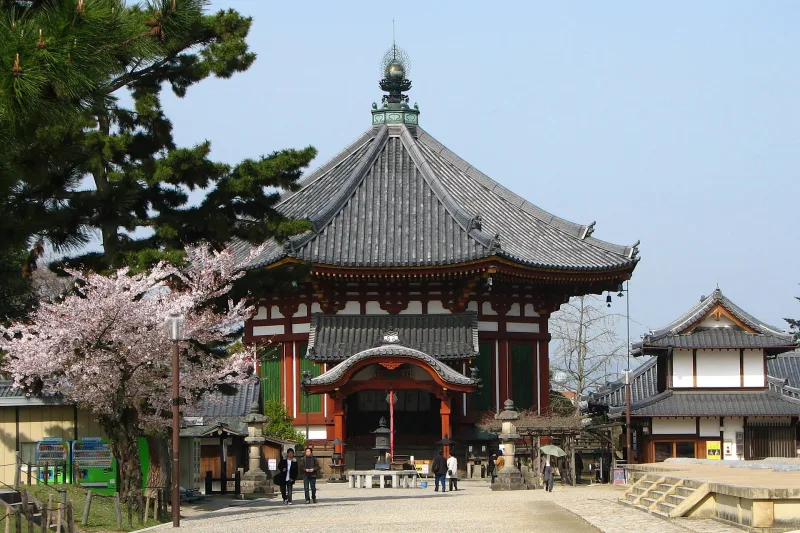
The Tokondo (Eastern Golden Hall) was built in 726 by Emperor Shomu to pray for his aunt's recovery from illness; the present building dates from 1415. The octagonal Nanendo (Southern Octagonal Hall) is the 9th temple on the Saigoku Thirty-three Kannon Pilgrimage, a circuit of sacred sites of Kannon (the bodhisattva of mercy) in western Japan. Its doors are normally closed, and the inside is shown only on the day of its annual event on 17 October. The Hokuendo (Northern Octagonal Hall), also octagonal, can be seen inside during special openings in spring and autumn.
The five-storey pagoda's repairs, and getting there
The five-storey pagoda, about 51 m tall (rebuilt in 1426 and a National Treasure), is in the middle of its first major repair in about 120 years, since the Meiji era. The whole pagoda is hidden under a construction cover (suyane) about 60 m tall, and you cannot see it from outside. According to Nara Prefecture, the repairs are scheduled to last until March 2034. Some paths in the grounds have changed because of the work, but the Chukondo and the National Treasure Museum are open as usual.
It is about a 5-minute walk from Exit 2 at the east ticket gate of Kintetsu Nara Station. From JR Nara Station, take the city loop bus to the Kencho-mae stop, which is right nearby. The Nara City Tourism Association suggests walking routes around the Nara Park and Naramachi area that combine the temple with Todai-ji and Kasuga Taisha. Visiting hours and admission fees can change, so check the official website.
Tips
- If you are short on time and want to see Buddhist statues, make the National Treasure Museum your priority. National Treasure statues, starting with the Ashura, are displayed together there.
- The five-storey pagoda is hidden by its construction cover. If you are looking forward to photographing it you will be disappointed, so go knowing that it is under repair.
- Drinking alcohol, smoking (including e-cigarettes) and flying drones or filming with them are prohibited in the grounds.
- You can check limited-time openings, such as the spring and autumn special openings of the Hokuendo and the opening of the Nanendo's doors on 17 October, in the news section of the official website.
Sources
- 概要 - 法相宗大本山 興福寺
- 中金堂 - 法相宗大本山 興福寺
- 中金堂再建 - 法相宗大本山 興福寺
- 国宝館 - 法相宗大本山 興福寺
- 阿修羅像【八部衆】 - 法相宗大本山 興福寺
- 南円堂 - 法相宗大本山 興福寺
- 北円堂 - 法相宗大本山 興福寺
- 東金堂 - 法相宗大本山 興福寺
- 【重要】当山五重塔修理工事に関するお知らせ - 興福寺
- 国宝 興福寺五重塔 / 奈良県
- 国宝 興福寺五重塔 現在の修理状況 / 奈良県
- 興福寺|奈良市観光協会公式サイト
Updated 29 September 2026. Opening hours and prices change, so check the official site before you go.