Japan is Nippon
Curry Rice (Japanese Curry)
Born in India, it reached Meiji Japan by way of Britain. Thick Japanese curry over rice became a national dish through the navy and school lunches.
Eaten all over Japan
Best known in Kanagawa and Osaka.
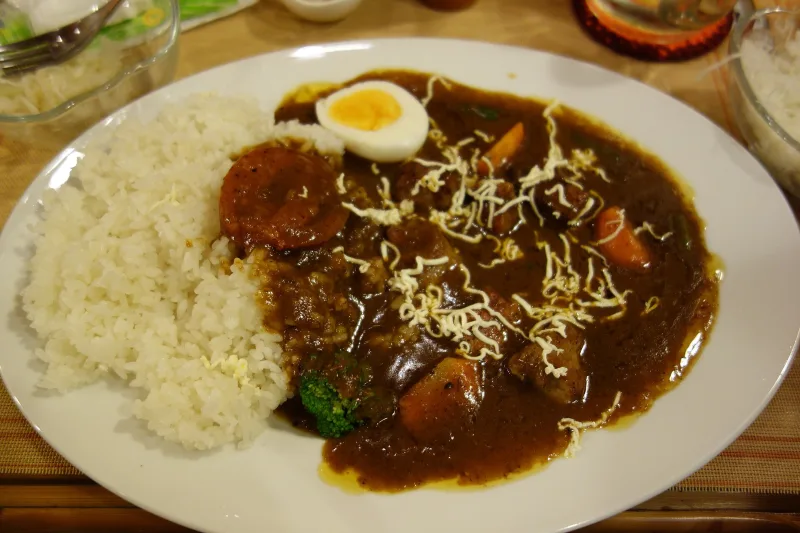
What is Japanese curry rice?
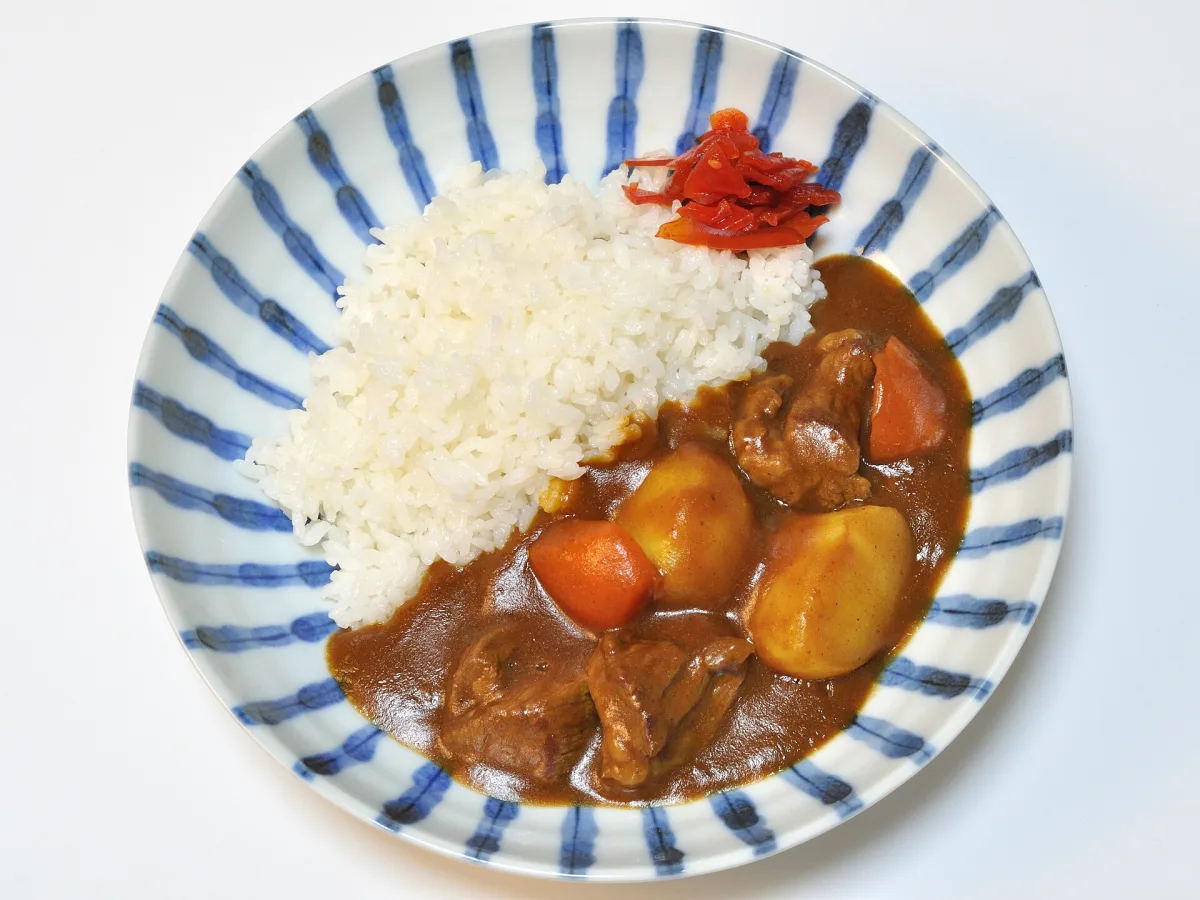
Curry rice is meat and vegetables simmered in a spiced sauce and served over rice. What makes Japanese curry distinctive is its thick sauce, called roux, thickened with flour and fat. The classic vegetables are potato, carrot and onion, which the All Japan Curry Manufacturers Association explains is because they grow well in Japan and are easy to get hold of.
Spiced dishes like this originated in India, but they didn't come to Japan directly. Around the 18th century Britain brought Indian cooking home, "curry powder", a ready-made blend of spices, was born, and that reached Japan in the early Meiji era. Today curry is everywhere: at home, in cheap restaurants and in school lunches. Working from industry association figures, the Japanese eat around 79 curry meals per person a year (based on figures for fiscal 2016).
From fancy Western food to national dish: a history of curry
According to the All Japan Curry Manufacturers Association's timeline, the first record of a Japanese encounter with curry dates from 1863, when a member of a diplomatic mission heading to Europe saw curry on board ship. Around 1870 British curry powder arrived in Japan, and curry, as one of the "Western dishes", became a taste that symbolised bunmei kaika ("civilisation and enlightenment", the Westernisation of the Meiji era). At the time, though, it was an expensive dish served in Western restaurants, and few people could eat it.
Towards the end of the Meiji era, rice curry, curry udon and curry soba appeared on the menus of everyday eateries, and curry became familiar food. One often-cited reason it spread is military catering. It was adopted because it was nutritious and easy to cook in large batches, and young men who finished their military service are said to have taken the recipe back to their home towns.
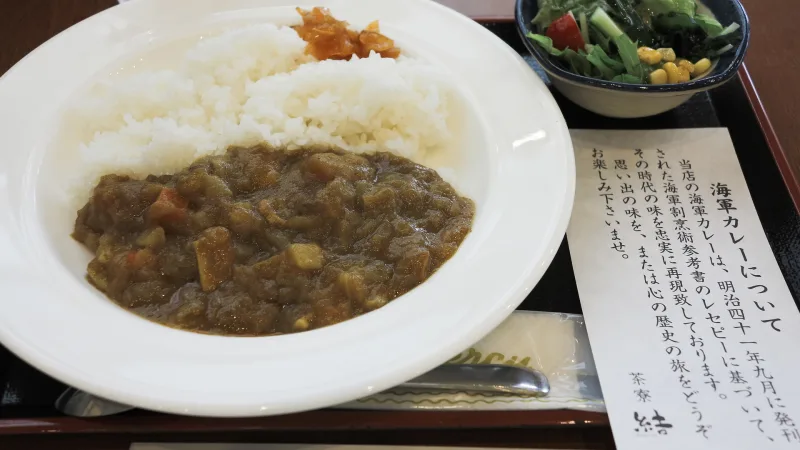
One part of this story is the curry of the Japanese navy. According to the Ministry of Agriculture, Forestry and Fisheries, one theory says the navy, which suffered from kakke (beriberi, caused by vitamin deficiency) on a diet centred on white rice, took the British navy's curry-flavoured stew as a model and adopted a thickened curry that went well with rice. After the war, curry was added to school lunches in 1948, and curry roux that you simply dissolve in hot water, along with retort curry (pouches of curry you only need to heat up), born in 1968, helped it spread into homes.
Yokosuka's navy curry and Osaka's two curries
Yokosuka in Kanagawa Prefecture is a city with deep navy connections. In 1999 it made a "Curry City Declaration", and it has been promoting the town ever since with "Yokosuka Navy Curry", a modern recreation of a navy recipe. It's made the old-fashioned way, frying flour in beef fat and then loosening it with curry powder and stock, and it's served with chutney (a sweet-sour relish made from fruit and other ingredients). Certified restaurants are required to serve it with a salad and milk, following the navy's nutritionally balanced menu.
According to the Osaka Convention and Tourism Bureau, Osaka curry falls into two broad camps. One is the long-established "amakara" (sweet-and-spicy) curry, represented by restaurants such as one founded in 1910: fruity and sweet at first, with the heat building slowly afterwards. The other is the "spice curry" that has become popular in recent years, with a light, flour-free sauce in which the aroma of the spices stands out.
At Sapporo Agricultural College in Hokkaido, in 1876 Dr Clark is said to have recommended "rice curry" for the menu because Japanese meals were not nutritious enough, and the term "rice curry" is said to have started here (according to the All Japan Curry Manufacturers Association, which notes that there are various theories).
Katsu curry, curry udon and curry bread: Japan-born relatives
In Japan, curry spread well beyond rice. The association's timeline says curry udon was born in 1904, curry nanban (curry-flavoured soba or udon) in 1908, katsu curry, topped with tonkatsu (breaded pork cutlet), in 1918, and kare pan (curry bread, curry wrapped in dough and deep-fried) in 1927.
Katsu curry has long been a staple of university canteens. A representative of the industry association notes that Japanese-style katsu curry has now become popular even in Britain, the country that first brought curry to Japan.
Where and how to eat it
You can eat curry rice anywhere in Japan. Besides specialist curry restaurants, it's a familiar menu item at everyday eateries, soba restaurants, school lunches and student canteens. It often comes with fukujinzuke (red or brown pickled vegetables in a sweet soy flavour) or rakkyo-zuke (a vegetable rather like a small onion, pickled in sweet vinegar).
Restaurant menus and retort curry boxes show spice levels such as "amakuchi" (mild), "chukara" (medium hot) and "karakuchi" (hot), but these are decided by each manufacturer or restaurant, and there is no national standard. Bear in mind that one restaurant's "karakuchi" may be hotter or milder than another's.
For those with dietary restrictions: Japanese curry is usually thickened with flour and fat (Yokosuka's navy curry uses beef fat). Even if there seems to be no meat in it, check before ordering if you want to avoid wheat or animal fat.
Tips
- Spice levels are set by each restaurant, so they vary. If you don't like heat, go for "amakuchi" (mild); if you're not sure, start with "chukara" (medium hot).
- If there's fukujinzuke or rakkyo on the table, feel free to help yourself and add some to your plate.
- If you eat navy curry in Yokosuka, it always comes with a salad and a glass of milk. Enjoy this echo of the old navy menu.
- In Osaka, try comparing a long-established sweet-and-spicy curry with one of the newer spice curries.
- If you want to avoid wheat or animal fat, ask the restaurant what goes into the roux.