Japan is Nippon
Onigiri (Rice Balls)
Just rice shaped by hand, yet over a thousand years old, and some regions wrap it in kelp or pickles instead of nori. Step beyond the konbini shelf.
Eaten all over Japan
Best known in Toyama and Hiroshima.
What is onigiri?
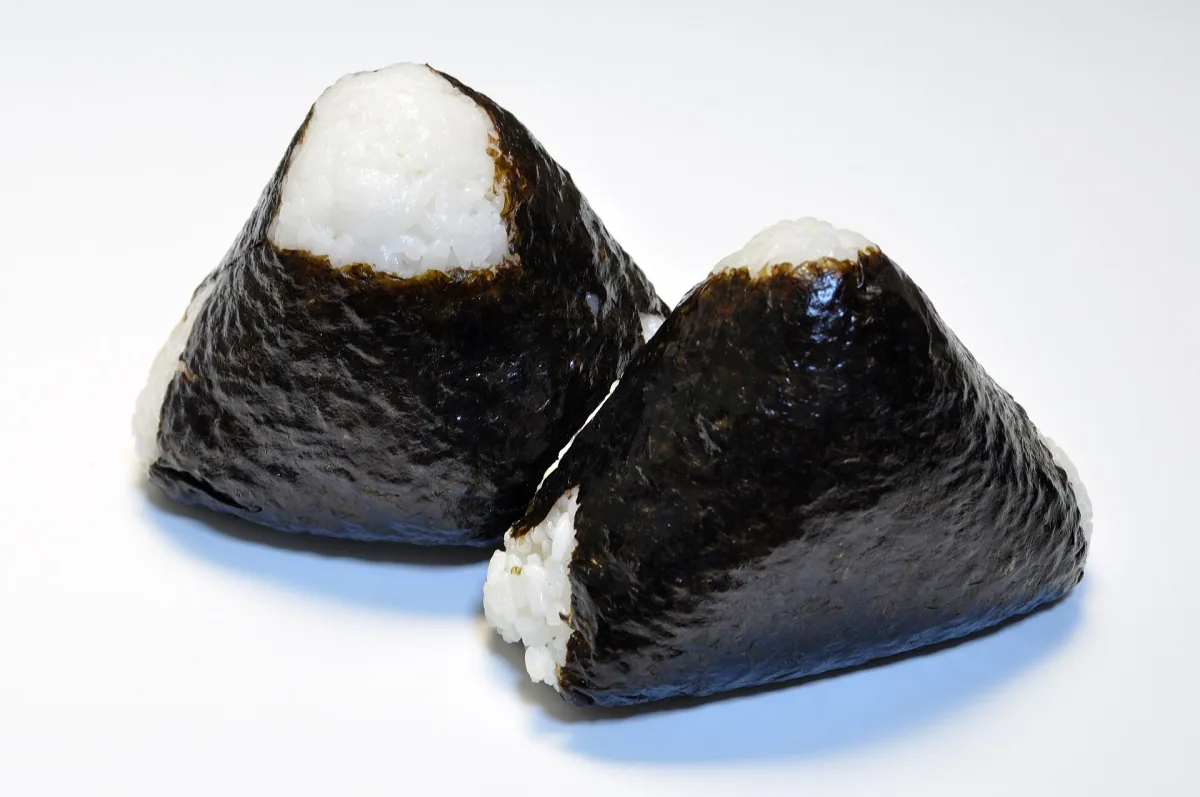
Onigiri is cooked rice pressed by hand into a shape such as a triangle or a tawara (a short cylinder, like a rice bale). It usually has a salty or sour "gu" (filling) inside, such as umeboshi (pickled plum), kombu kelp or salted salmon, and is wrapped in nori (seaweed dried into thin, paper-like sheets). One made with no filling and just salt is called shio musubi.
Because it is easy to carry and eaten by hand, it turns up everywhere: in everyday packed lunches, on school trips and outings, and as a late-night snack. It is also easy to buy at convenience stores and supermarkets, making it a dish deeply rooted in Japanese eating habits. It is also called "omusubi"; both words mean the same thing. Even a campaign by Japan's Ministry of Agriculture, Forestry and Fisheries to promote eating rice uses both names, with "Team Onigiri" and "Team Omusubi".
A portable meal for over a thousand years: the history of onigiri
Onigiri has ancient roots: a lump of rice found at a site dating from around the 1st century BC, thought to have been an offering, is said to possibly be where it all began. The Tale of Genji, written by Murasaki Shikibu in the Heian period, mentions "tonjiki", handed out to people of low rank at aristocrats' banquets. These were pressed lumps of steamed rice and are regarded as the prototype of onigiri.
It became widely eaten in the Kamakura period, when, being portable and eaten by hand, it is said to have spread as a meal for samurai on the battlefield. In the Edo period, the makunouchi bento, eaten during the intervals at the theatre, came into being; the late-Edo book Morisada Manko records its contents as ten rice balls plus simmered dishes, rolled omelette and the like.
As for when people started wrapping rice in nori, a well-known theory says it was after nori farming began in Tokyo Bay in the mid-Edo period, but other theories place it later, and it remains unclear.
Konbini onigiri and "crispy" nori
With onigiri made in advance, the nori soaks up moisture from the rice and goes soft. So in 1978 a major convenience store chain developed packaging that keeps the nori and rice apart with a film. You pull out the film and wrap the nori round just before eating, so you get a crisp texture. The opening method has been improved again and again since, and most triangular onigiri at today's convenience stores come in this packaging.
On the other hand, at home and in specialist shops, there are still plenty of fans of the soft style, where the nori is wrapped on from the start and allowed to settle. Tokyo even has onigiri specialists where, as at a sushi bar, you choose your filling at the counter and they make it in front of you. Some have been going since the 1950s, when white rice was still a luxury.
Kelp or pickles instead of nori: regional onigiri
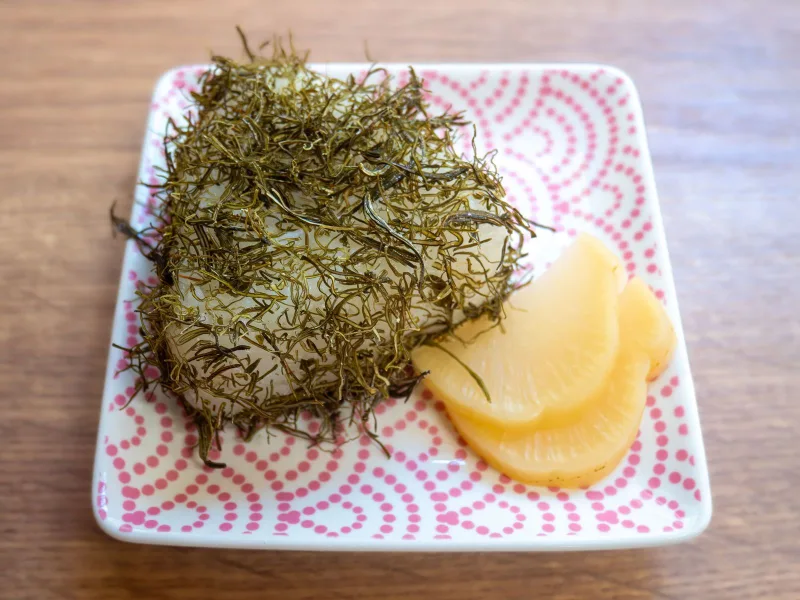
In Toyama Prefecture, onigiri are typically wrapped not in nori but in tororo kombu (sheets of vinegar-cured kelp pressed into a block and shaved finely from the side). Hardly any kelp is harvested in Toyama, but in the Edo period kitamae-bune (merchant ships that sailed along the Sea of Japan coast) brought huge amounts of kelp from Hokkaido, and a culture of eating lots of kelp took root. There are two kinds of tororo kombu, white and black: the black is more sour, while the white is milder with a softer texture. Its appeal is said to be that it stays fluffy and soft even after some time, and it is made when people gather, such as at festivals and school sports days.
In Hiroshima Prefecture, Hiroshimana musubi, onigiri wrapped in Hiroshimana-zuke (pickled Hiroshimana, a leafy vegetable of the cabbage and mustard family), are loved throughout the prefecture. Hiroshimana is known, along with Nagano's nozawana and Kyushu's takana, as one of Japan's three great pickled greens, and it has a gently spicy flavour. Recently it has started to be used in convenience store onigiri too.
How to eat it and choose a filling
You hold onigiri in your hand and simply bite into it. Traditional fillings include umeboshi, kezuribushi (shaved bonito) and kombu tsukudani (kelp simmered sweet and savoury in soy sauce); strongly salty fillings were chosen so it would keep. Umeboshi is very sour and salty, so it may surprise first-timers.
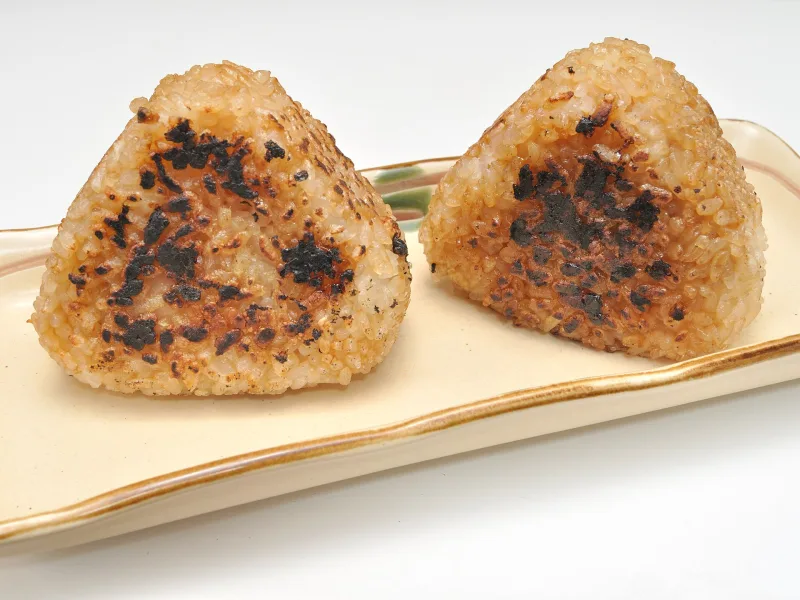
There is also yaki onigiri: a rice ball grilled until browned, then brushed with soy sauce or miso and toasted again.
For those with dietary restrictions: many fillings use fish, such as salmon, tarako (cod roe), tuna and katsuobushi. If you want to avoid meat or fish, check what's inside before you choose.
Tips
- Konbini onigiri wrapped in nori are designed so you pull out the film just before eating and the nori wraps round the rice. That little extra step is what keeps the nori crisp.
- Umeboshi (pickled plum) is very sour and salty. If it's your first time, start with easier fillings such as salmon or kombu.
- If you visit Toyama Prefecture, try onigiri wrapped in tororo kombu, and taste the difference between the white and black kelp.
- At specialist shops you can enjoy the texture of onigiri freshly made in front of you.
- If you want to avoid fish, check what's inside before you choose.
Sources
- 農林水産省 うちの郷土料理「とろろ昆布のおにぎり 富山県」 (opens in a new tab)
- 農林水産省 うちの郷土料理「広島菜漬のおにぎり/広島菜むすび 広島県」 (opens in a new tab)
- 農林水産省「歴史を辿り、秋の行楽弁当を愉しむ」 (opens in a new tab)
- 農林水産省「おにぎりプロジェクトについて」 (opens in a new tab)
- SHUN GATE「手の中で生まれる、日本人の日常食『おにぎり』」 (opens in a new tab)
- Wikipedia「おにぎり」(コンビニ包装の歴史、海苔の時期の諸説、焼きおにぎりの補足として参照) (opens in a new tab)