Hiroshima
Hiroshima reaches from snowy mountains to an island-dotted sea, with a history of trade and craft and a steadfast commitment to peace.
Map outlines: Natural Earth
-
1
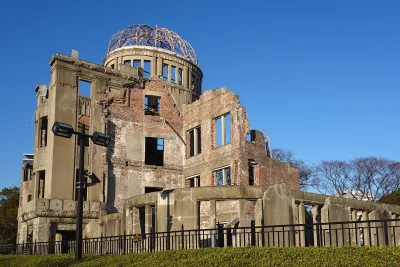 Atomic Bomb Dome (Hiroshima Peace Memorial)
Left standing by the atomic bomb of 6 August 1945 and kept as it was, it shows the world the horror of nuclear weapons and why peace matters.
Atomic Bomb Dome (Hiroshima Peace Memorial)
Left standing by the atomic bomb of 6 August 1945 and kept as it was, it shows the world the horror of nuclear weapons and why peace matters.
-
2
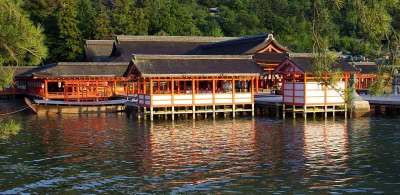 Itsukushima Shrine
A Miyajima shrine famous for vermilion halls and a great torii that seem to float at high tide. A World Heritage Site that changes completely with the tides.
Itsukushima Shrine
A Miyajima shrine famous for vermilion halls and a great torii that seem to float at high tide. A World Heritage Site that changes completely with the tides.
-
3
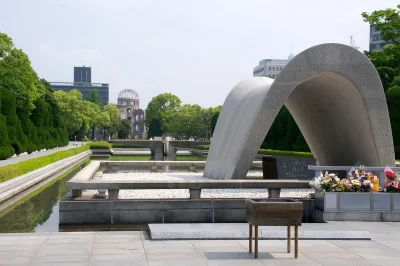 Hiroshima Peace Memorial Park
A park for peace, built on a district destroyed by the atomic bomb on 6 August 1945. Visit the Dome, memorials and museum to see what happened here.
Hiroshima Peace Memorial Park
A park for peace, built on a district destroyed by the atomic bomb on 6 August 1945. Visit the Dome, memorials and museum to see what happened here.

From mountain valleys to the inland sea
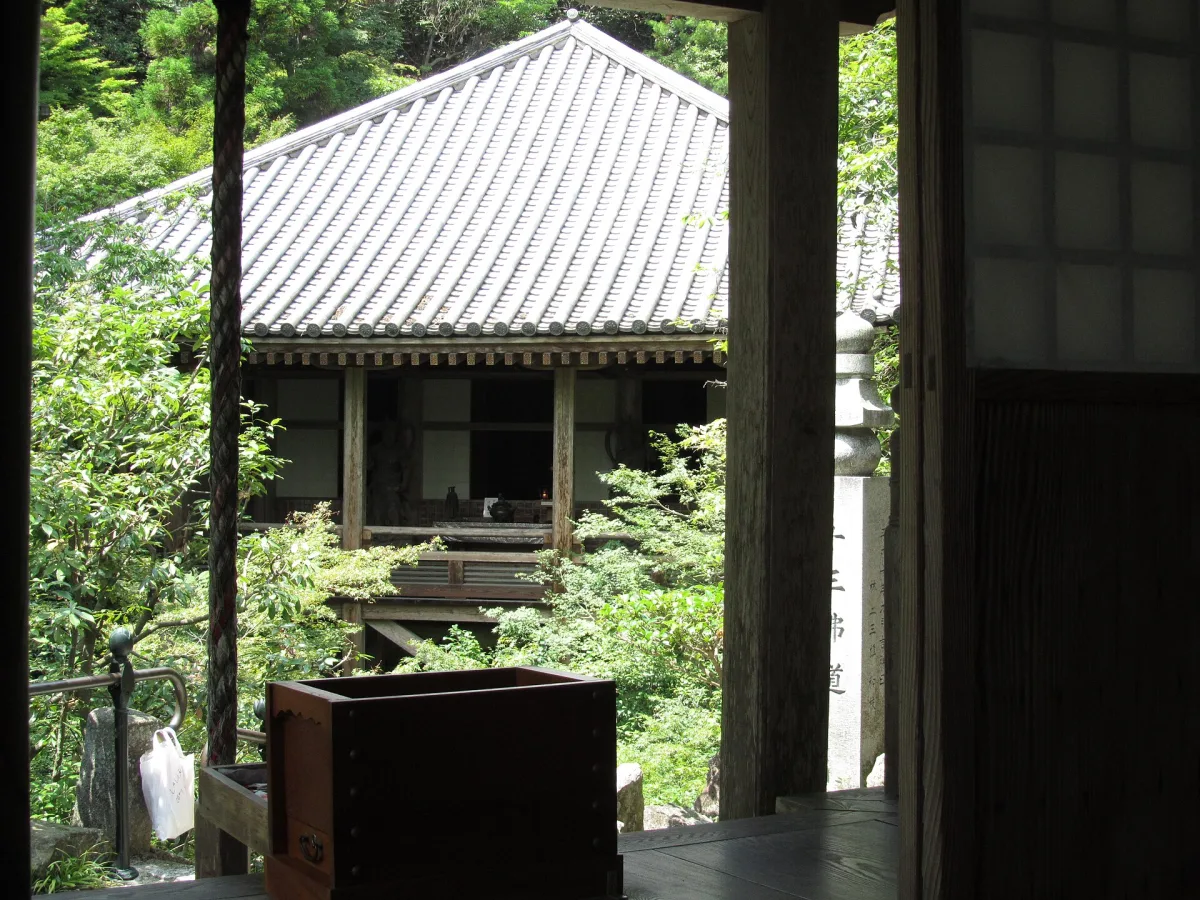
Hiroshima Prefecture changes character as you head north. Its southern edge faces the Seto Inland Sea, where islands break up the horizon and ports link the coastal towns. Inland, the hills rise towards the Chugoku Mountains, the range that runs across western Honshu. The northern valleys are rainy and get snow in winter, while the coast generally enjoys a mild, sunny climate. Hiroshima City belongs to the seaside world, but it is only a small part of this largely mountainous prefecture.
Miyajima shows how closely sea and mountains meet here. At high tide, Itsukushima Shrine seems to stand on the water, and the offshore torii (the gate that marks the approach to a Shinto shrine) looks completely different when the tide goes out. Further east, Onomichi spreads up steep slopes above its old port. From there, the Shimanami Kaido, a road and cycling route that hops between islands, carries travellers across bridges to Shikoku. North of the coast, Sandankyo and Taishakukyo gorges show another Hiroshima of rivers, wooded slopes and walking trails.
A port town's history, and a rebuilt city
Before the atomic bombing made Hiroshima City known around the world, it was a castle town and a busy hub on the shipping routes of the Seto Inland Sea. Produce from the surrounding countryside and Hiroshima Bay, oysters included, passed through the town on its way to the rest of Japan. Onomichi, too, grew up around seaborne trade. These old connections explain why the prefecture feels like a collection of places with distinct personalities rather than "one city with some day trips attached".
On 6 August 1945, an atomic bomb devastated Hiroshima City. The Atomic Bomb Dome is the ruin of a building that once displayed local products, and citizens later worked hard to preserve it. The nearby Peace Memorial Park and museum ask visitors to face what happened to people here, while the rebuilt streets around them show a city that carries on living and working. Itsukushima Shrine on Miyajima is the prefecture's other World Heritage Site. A thoughtful visit leaves room for both histories: the centuries before 1945, and the responsibility Hiroshima has carried since.
What the sea and the fields bring to the table
Hiroshima-style okonomiyaki is a savoury, pancake-like dish built up in layers rather than mixed together. With cabbage, pork, egg and noodles it makes a hearty meal, and watching it come together on the hot griddle is part of the fun. Oysters are another long-standing local taste, served grilled, as kaki furai (breaded, deep-fried oysters) and in many other dishes. Around Miyajima you will also see momiji manju, small maple-leaf-shaped cakes traditionally filled with sweet red bean paste.
On the sunny islands and coast, especially around places such as Kure and Onomichi, lemons are grown. Their cultivation dates back to the late 19th century, and the fruit gives the prefecture a food identity quite unlike that of the snowy north. Saijo, in Higashihiroshima City, is known for its sake (Japanese rice wine) and breweries. Hiroshima's products are not all food: the town of Kumano makes brushes for calligraphy and painting as well as make-up brushes. A single dish or a fine brush is a way into noticing skills rooted in a particular town.
Local words and stories told on stage
Alongside standard Japanese, listen out for Hiroshima-ben, the local dialect. "Jakee" means "so" or "that's why", and this little word gives everyday explanations a distinctly local ring. Even if you do not speak Japanese, you may notice the rhythm and phrasing of conversations changing as you travel around the prefecture.
Hiroshima also has a strong kagura tradition. Kagura is a form of sacred dance and drama connected with Shinto shrines, in which local groups act out stories with costumes, drums and flutes. It began as part of community religious life and is still passed from generation to generation, including through children's kagura troupes. Even if you cannot follow the words of a performance, the music, movement and characters make the feeling behind it easy to sense.
The feel of the four seasons
In spring, the northern valleys turn fresh green and cherry blossoms bloom in the towns and gardens. Summer draws attention to the water and to festivals, and on 6 August Hiroshima City holds its peace memorial events. In autumn, mountain gorges such as Sandankyo and Taishakukyo are especially colourful, and maple leaves add colour around Miyajima.
Winter shows the prefecture's clearest contrast. Coastal Hiroshima stays relatively mild, but the northern mountains are cold enough for winter sports and get snow. Over the New Year period, some people visit Miyajima to pray at Itsukushima Shrine. If you plan to cover both the coast and the mountains, think of them as different seasonal settings rather than relying on a single Hiroshima weather forecast.
Getting there, and beyond the prefectural capital
Many travellers arrive on the shinkansen, Japan's high-speed railway, which links Hiroshima with cities such as Osaka, Tokyo and Fukuoka. Hiroshima Airport is another gateway, with buses into the city. Within Hiroshima City, trams and buses make it easy to reach the area around Peace Memorial Park. Conventional rail lines continue along the coast to towns such as Onomichi.
For Miyajima, go to Miyajimaguchi on the mainland and take the ferry. The crossing itself, with the view back across the water, is part of the experience. Onomichi is a convenient starting point for cycling the Shimanami Kaido. Trips inland need a little more planning: Sandankyo can be reached by bus, but a car is handy for exploring the wider mountain area. Give the coast, the islands and the north separate time in your itinerary, and each region can show you what it has to offer.
Sources
- Basic Information about Hiroshima Prefecture - Citizens Council for the Hiroshima Summit | Hiroshima Prefecture
- Hiroshima | Chugoku | Destinations | Travel Japan - Japan National Tourism Organization (Official Site)
- Miyajima | Hiroshima | Chugoku | Destinations | Travel Japan - Japan National Tourism Organization (Official Site)
- Onomichi & Fukuyama | Hiroshima | Chugoku | Destinations | Travel Japan - Japan National Tourism Organization (Official Site)
- Shimanami Kaido (Hiroshima) | Travel Japan - Japan National Tourism Organization (Official Site)
- Inland Hiroshima | Hiroshima | Chugoku | Destinations | Travel Japan - Japan National Tourism Organization (Official Site)
- The History of Hiroshima City|広島市公式ウェブサイト
- The Story of the Atomic Bomb Dome|広島市公式ウェブサイト
- An appetizing food experience - Delicacies of Hiroshima - - Hiroshima Prefectural Government | Hiroshima Prefectural Office
- 瀬戸内 広島レモンとは - 果樹・野菜・花き | 広島県
- 広島県の方言 | 広島県
- Let's know the charm of kagura | The Official Guide to Hiroshima - Travel and Tour Information
- Q: Tell me the access to the Atomic Bomb Dome | FAQ | The Official Guide to Hiroshima - Travel and Tour Information