Toyama
Toyama runs from the Northern Alps to a seafood-rich bay, with snowbound villages, working craft towns and four seasons you can taste.
Map outlines: Natural Earth
-
1
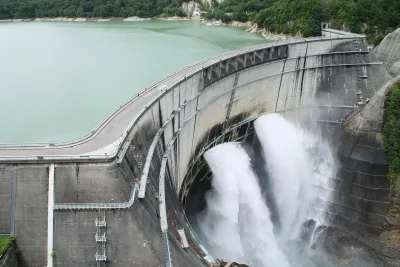 Kurobe Dam
Japan's tallest dam, 186 m high, in the Northern Alps. From summer to autumn, over 10 tonnes of water a second fall into the valley like mist.
Kurobe Dam
Japan's tallest dam, 186 m high, in the Northern Alps. From summer to autumn, over 10 tonnes of water a second fall into the valley like mist.
-
2
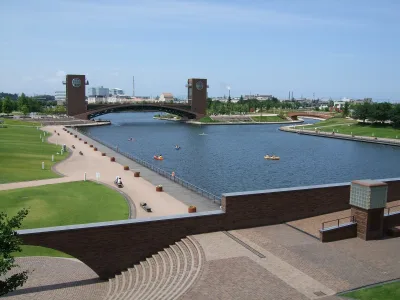 Fugan Canal Kansui Park
A canal-side park about 10 minutes' walk from Toyama Station. See the Tateyama range from Tenmon Bridge on clear days, and seasonal lights at night.
Fugan Canal Kansui Park
A canal-side park about 10 minutes' walk from Toyama Station. See the Tateyama range from Tenmon Bridge on clear days, and seasonal lights at night.
-
3
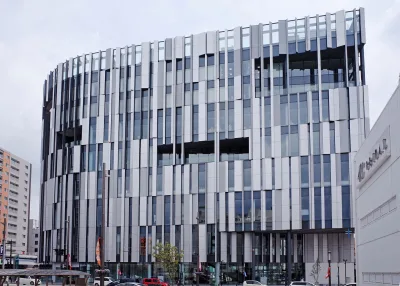 Toyama Glass Art Museum
A contemporary glass art museum inside Kengo Kuma's TOYAMA Kirari, with a wood-louvred atrium and vivid works by Dale Chihuly.
Toyama Glass Art Museum
A contemporary glass art museum inside Kengo Kuma's TOYAMA Kirari, with a wood-louvred atrium and vivid works by Dale Chihuly.

From the mountains to Toyama Bay
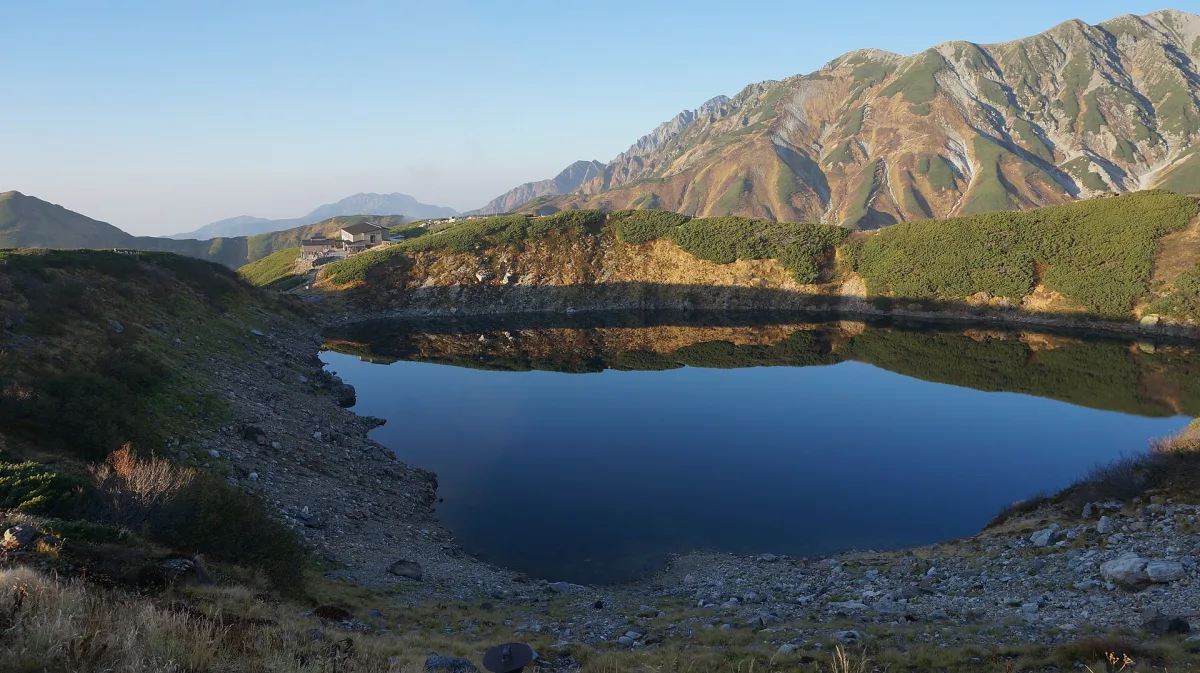
Toyama sits on the Sea of Japan side of central Honshu, with the Tateyama mountain range rising behind a plain of rivers and rice fields. This short journey from high peaks to the bay creates much of the prefecture's character: mountain water feeds the farmland, and the coast brings fish to the table. You can enjoy sea views at the Amaharashi coast, while inland the land folds into layers leading to the steep Kurobe Gorge.
The Tateyama Kurobe Alpine Route crosses the Northern Alps by a chain of trains, buses, cable cars and ropeways. In spring, at Murodo, you can walk alongside walls of snow on a road cut through the deep drifts. This is a mountain-crossing route, not a road you can drive in your own car, and it is a completely different place from the Kurobe Gorge. The similar names are worth sorting out before you plan your day.
Farmhouses, foundries and travelling medicine sellers
In Gokayama, gassho-zukuri farmhouses are preserved in the villages of Ainokura and Suganuma. They get their name because their steep thatched roofs resemble hands pressed together in prayer, a shape designed to help the snow slide off. Because of the mountainous terrain and heavy snow, the area was once cut off for part of each year. Inside the large houses, families carried on work such as raising silkworms and making washi (handmade Japanese paper). These are World Heritage villages, but people also live there, so mind your manners on their lanes as you would in any other residential area.
Takaoka tells another Toyama story. After Maeda Toshinaga founded a castle town there in the early 1600s, he invited metal casters to establish a local industry. Craftspeople still work in and around Kanaya-machi today, making everything from Buddhist altar fittings to household goods. The folk craft village in Toyama city recalls another trade: the baiyaku-san, travelling medicine sellers who carried Toyama's medicines to households all over Japan. The city's Glass Art Museum adds a modern chapter to this long tradition of making things.
What's on Toyama's table
The bay changes the menu with the seasons. Shiro-ebi, Japanese glass shrimp, is served as tempura, sashimi and more. Firefly squid, the symbol of spring, heralds the season, and kanburi (winter yellowtail) is especially associated with Himi. Seafood here is not one fixed Toyama dish: what looks tempting on the menu may change with the catch and the time of year.
There is plenty to eat beyond fish dishes. Masu no sushi is a pressed sushi made with trout, usually wrapped in bamboo leaves. Each maker's rice, seasoning and thickness of trout are different, so comparing a few shops is part of the fun. Rice and good water also support the local sake (Japanese rice wine). And in Tonami, tulips are not just a spring highlight but a local product: farmers have grown bulbs there for more than 100 years.
Yatsuo's dance and local customs
Owara Kaze no Bon, a folk song event in Yatsuo, shows a different kind of local pride. In the historic streets, dancers move beneath the light of bonbori (paper lanterns) to singing and the shamisen (a Japanese stringed instrument). This tradition has continued for centuries. Toyama's customs are not all alike: the quiet life of the Gokayama houses, Takaoka's workshops and Yatsuo's music each belong to a different community.
The turning year
In spring, flowers and the snow lingering on the mountains can fit into the same view. Cherry blossoms bloom along the Matsukawa River in Toyama city, and Tonami's tulip fields reflect a local farming tradition rather than simply a taste for decoration. Higher up, the snow walls of the Alpine Route remind you that the mountains run on a different calendar from the plains.
Summer in the lowlands is hot and humid, and the mountains become the setting for walks and climbs. The autumn colours start on the highlands before the lower areas, so a trip across the prefecture can feel like moving between seasons. Winter brings heavy snow to the mountains and turns the roofs of Gokayama white, and yellowtail arrives on the table. The Alpine Route is usually closed in winter, so the cold months suit villages, the city's museums, seafood and onsen (hot springs) better than a mountain crossing.
Arriving in Toyama and getting between areas
Most people coming by rail can use Toyama Station as a base. The Hokuriku Shinkansen, one of Japan's high-speed train lines, connects it with Tokyo. From Kyoto or Osaka, change from a limited express train to the shinkansen at Tsuruga. You can also arrive via Toyama Airport, which is linked to the city by bus.
From the city, a local railway runs towards Tateyama Station and the start of the Alpine Route. For Takaoka, take a conventional line heading west; for Ainokura in Gokayama, use the World Heritage Bus from Shin-Takaoka. Rather than treating all of Toyama's sights as stops on a single line, allow time for travelling between areas. Choosing a sea day, a craft-town day and a mountain day makes the prefecture much easier to get to know.
Sources
- Discover Toyama—A First-Timer’s Guide for Visiting Toyama Prefecture
- Tateyama Kurobe Alpine Route: A Spectacle-Studded Journey Across the North Japan Alps
- Uncovering Toyama’s Cultural Heritage
- Toyama Municipal Folk Craft Village
- Toyama City | Toyama | Hokuriku Shinetsu | Destinations | Travel Japan - Japan National Tourism Organization (Official Site)
- 11 Must-Try Local Delicacies of Toyama
- “Tulips," the Main Feature of Spring in Toyama, Where Beautiful Flowers Bloom
- すしのまち とやま
- Experiencing Toyama Through the Seasons
- Getting to Toyama
- きときと | コトバンク(デジタル大辞泉)