Japan is Nippon
Yakitori
Grilled chicken skewers... except in Muroran and Higashimatsuyama, where ordering "yakitori" gets you pork. The surprising depth of a street-stall classic.
Eaten all over Japan
Best known in Hokkaido and Saitama and Ehime.
- HokkaidoMuroran yakitori (pork and onion, eaten with Western-style mustard) and Bibai yakitori (chicken offal and skin with onion)
- SaitamaHigashimatsuyama, a "yakitori" town of pork head meat with spicy miso sauce, served at about 50 places in the city
- EhimeImabari, one of Japan's "seven great yakitori towns", where yakitori grilled on an iron griddle without skewers is widely eaten
What is yakitori?
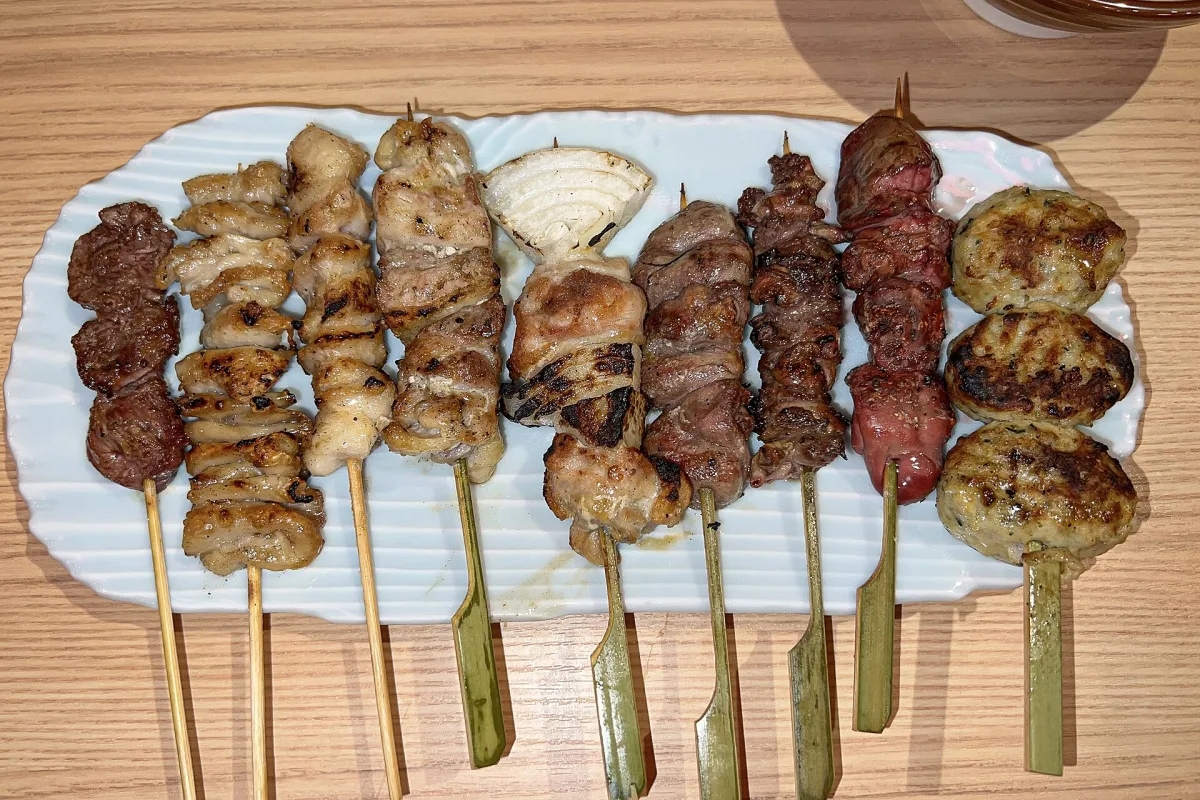
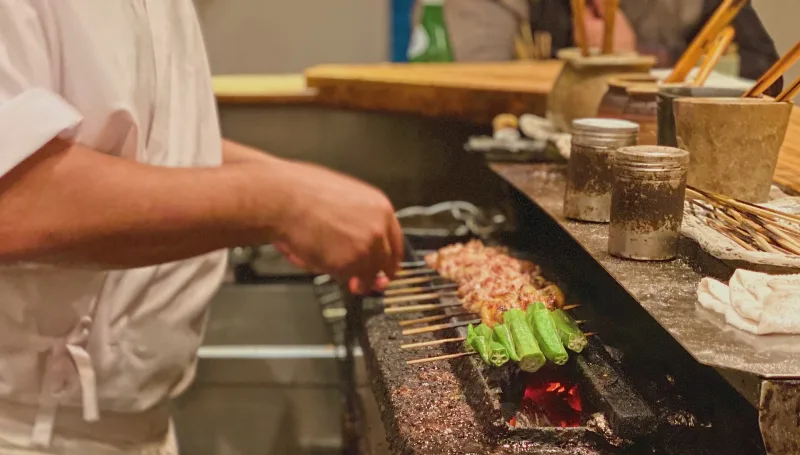
Yakitori is bite-sized pieces of chicken threaded on bamboo skewers and grilled over a flame. There are two main seasonings, and many restaurants let you choose: "shio", sprinkled with salt before grilling, or "tare", grilled with a sweet and savoury sauce made from soy sauce, mirin (sweet rice wine), sake, sugar and so on. When eating, you can add shichimi togarashi (a chilli blend of seven spices) or ground sansho pepper to taste.
Many different cuts are used. Besides negima, chicken thigh alternating with pieces of leek, there are skewers of skin, liver, hatsu (heart) and sunagimo (gizzard), among others. Yakitori restaurants often serve grilled skewers of pork and vegetables too, and grilled pork offal is called "yakiton". Many places insist on grilling over charcoal, especially the expensive binchotan (a hard white charcoal).
From shrine approaches to red-lantern bars by the station: a history
Grilling birds on skewers goes back a long way. A cookbook from the early Edo period describes making yakitori by salting the meat, grilling it and finishing it with a sauce of soy sauce and sake. According to the National Yakitori Liaison Council, during the Edo period yakitori made from birds such as sparrows, which damaged the fields, was sold as a local speciality along the approaches to shrines.
By the middle of the Meiji era, yakitori stalls lined the streets of Tokyo's night-time districts. A piece of reportage published in 1893 describes skewers of offal from chicken restaurants, grilled like kabayaki (eel glazed with sweet soy sauce), being sold cheaply as nourishment for rickshaw pullers. After the Great Kanto Earthquake of 1923 the number of stalls grew, and "yakiton", made with pork offal, also became popular.
After the Second World War, yakitori stalls appeared in the black markets too, and over time they moved from stalls into proper shops. In the Showa 30s (1955-64), broiler chickens (bred to grow quickly for meat) became common and chicken grew cheap, so yakitori became something anyone could enjoy casually. Yakitori places where office workers stop off on the way home became a familiar sight near stations.
"Yakitori" made of pork? Regional yakitori
According to the Ministry of Agriculture, Forestry and Fisheries, Bibai and Muroran in Hokkaido, Fukushima City in Fukushima Prefecture, Higashimatsuyama in Saitama Prefecture, Imabari in Ehime Prefecture, Nagato in Yamaguchi Prefecture and Kurume in Fukuoka Prefecture are known as Japan's "seven great yakitori towns". The word is the same, but what you get varies enormously from town to town.
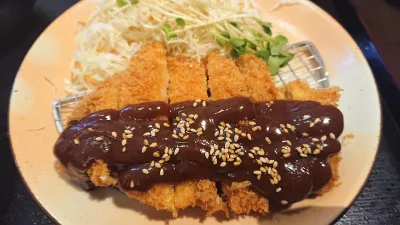
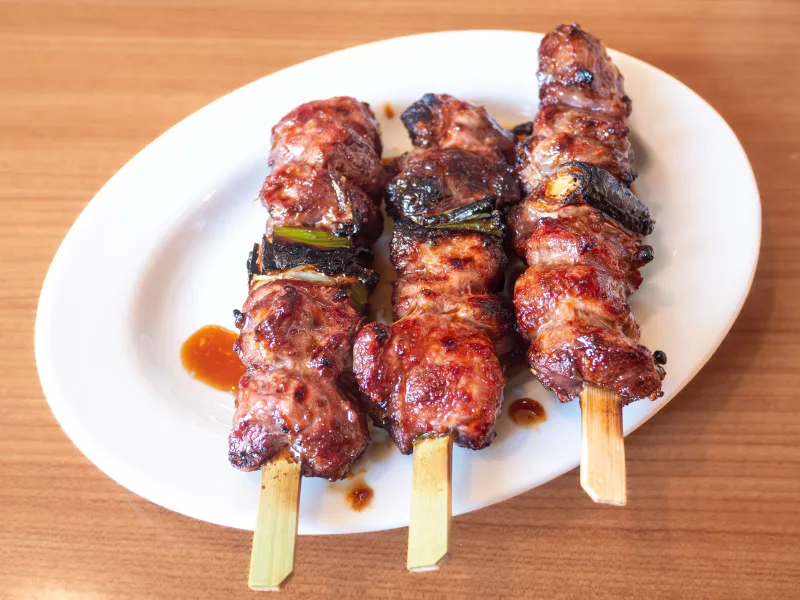
In Higashimatsuyama, Saitama Prefecture, "yakitori" is kashira, pork head meat from the temple to the cheek, threaded alternately with leek, grilled over charcoal and finished with salt. What makes it special is that you eat it with a spicy miso sauce of white miso mixed with chilli, garlic, grated fruit and other ingredients, and every restaurant's sauce tastes different. You can try it at about 50 places in the city, mainly around Higashimatsuyama Station.
In Muroran, Hokkaido, "yakitori" also means skewers of pork (mainly shoulder loin) alternating with onion. They are grilled with a sweetish sauce and eaten with Western-style mustard. In southern Hokkaido, including Muroran, "yakitori" on a menu normally means pork, and many places write "butasei" for pork and "torisei" for chicken to tell the two apart. Elsewhere in Hokkaido, Bibai yakitori from Bibai City puts various kinds of chicken offal and skin on a single skewer with onion and grills it with salt and pepper; it was a favourite of the coal miners. Locally, the Bibai way is said to be to put your yakitori into the kake soba (noodles in hot broth) you order to finish the meal.
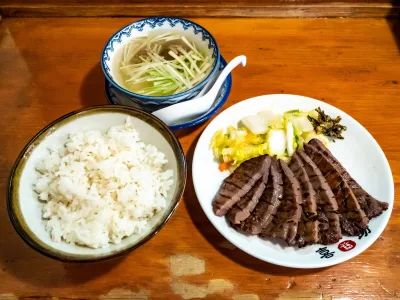
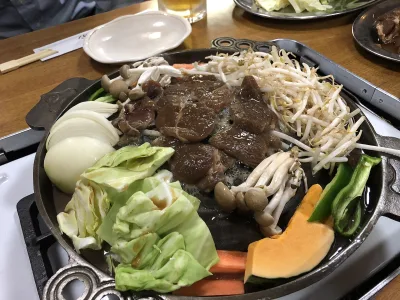
In Imabari, Ehime Prefecture, "yakitori" grilled on an iron griddle rather than on skewers is widely eaten.
How to order and eat it
You can order yakitori at specialist yakitori restaurants and at izakaya (Japanese pubs). Many places let you choose salt or sauce for each cut (though some cuts, or some restaurants, offer only one), so if you are unsure, ask the staff what they recommend. It is also sold at festival stalls, in supermarket ready-meal sections and at convenience stores, so you can buy it to take away.
Opinion is divided on whether to slide the meat off the skewer or eat it straight from it. Some etiquette books say you should take each bite off the skewer, while others point out that restaurants grill the skewer to be eaten from the top down, so taking the meat off lets the heat and juices escape. Take it off when sharing with friends; if you are eating alone, eating it straight from the skewer is perfectly fine.
For those with dietary restrictions: many yakitori skewers are offal, and in some regions "yakitori" means pork. The sauce contains soy sauce, mirin and sake. If you avoid pork, check what meat it is before ordering, especially in southern Hokkaido and Higashimatsuyama.
Tips
- Start with negima, ordered both shio (salt) and tare (sauce), and compare the two.
- In Muroran, try the pork-and-onion "yakitori" with Western-style mustard. In Higashimatsuyama, taste the spicy miso sauce, which differs from place to place.
- In Bibai, the local way is to drop your yakitori into the bowl of kake soba you order to finish the meal.
- Whether you slide the meat off the skewer is up to you. When sharing, pushing it off with chopsticks makes it easier to divide.
- If you avoid pork, check before ordering: in some regions "yakitori" can mean pork.