Japan is Nippon
Ikaho Onsen Stone Steps
伊香保温泉石段街
Ikaho Onsen's main street: 365 stone steps lined with inns and shops, climbing through a 400-year-old spa town with hot water flowing underfoot.
Stone steps born of Japan's first "hot spring town plan"
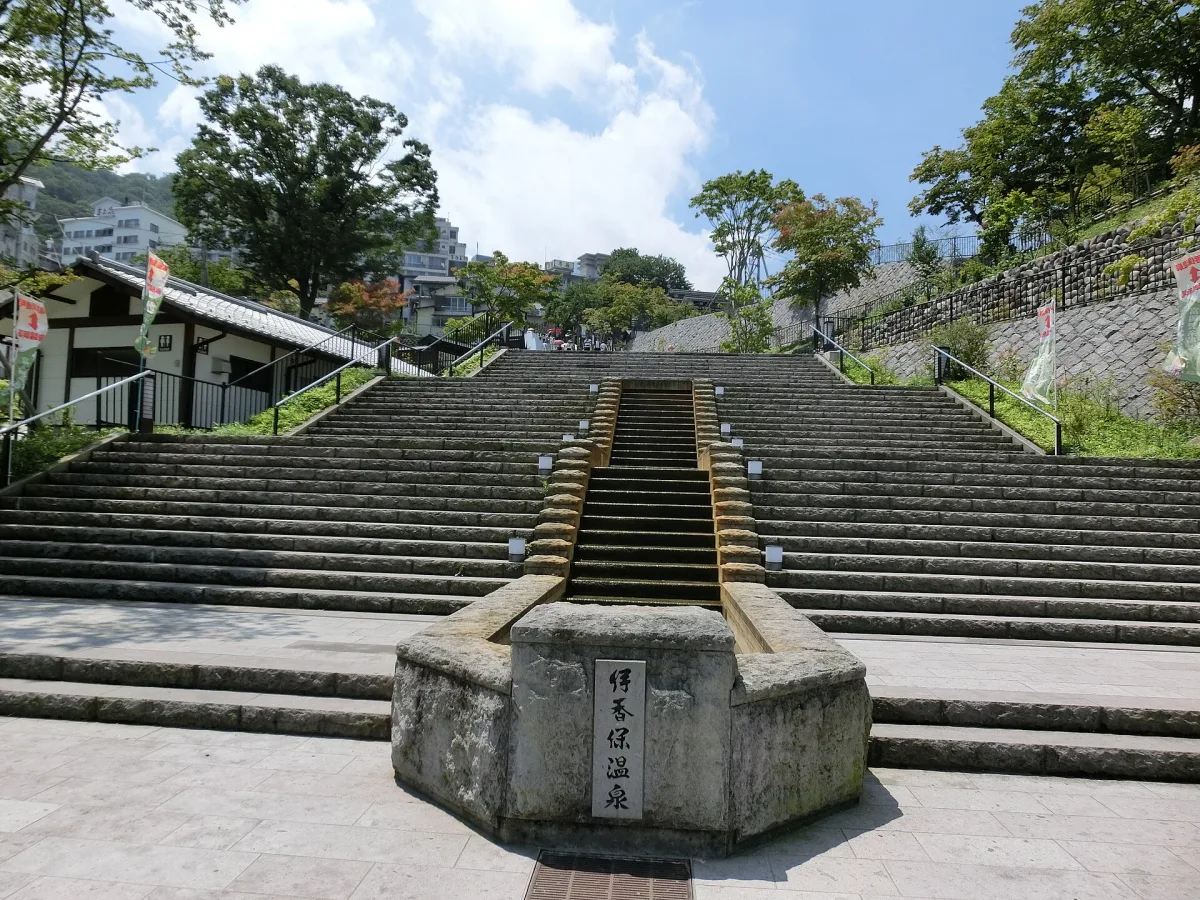
Ikaho Onsen is a hot spring resort in Shibukawa, Gunma Prefecture. At its heart is the Stone Steps street, a flight of 365 steps about 300 m long connecting Ikaho Shrine up on the hillside with the Ikaho Checkpoint at the bottom (a sekisho, a post where travellers were inspected in the Edo period).
According to Shibukawa City, the Stone Steps street was laid out in 1576 (Tensho 4). Hot water piped from the source ran through a channel beneath the steps and was shared out to the inns lining both sides, a system described as "Japan's first hot spring town plan".
The current granite steps date from the later Showa era, and in 2010 (Heisei 22) extra steps were added to bring the total to 365, carrying the wish that the town will be lively on every one of the 365 days of the year.
The "golden water" flowing beneath the steps
What flows beneath the steps is Ikaho's own source, Kogane no Yu ("golden water"). Underground it is clear and colourless, but when it meets the air the iron it contains oxidises and turns it brown, which is how it got its name.
The water is shared out to each inn through intake points called komaguchi along the steps. In a small square partway up, there is also a yutaki, a cascade where the hot spring water spills down.
Enjoying a walk up the steps
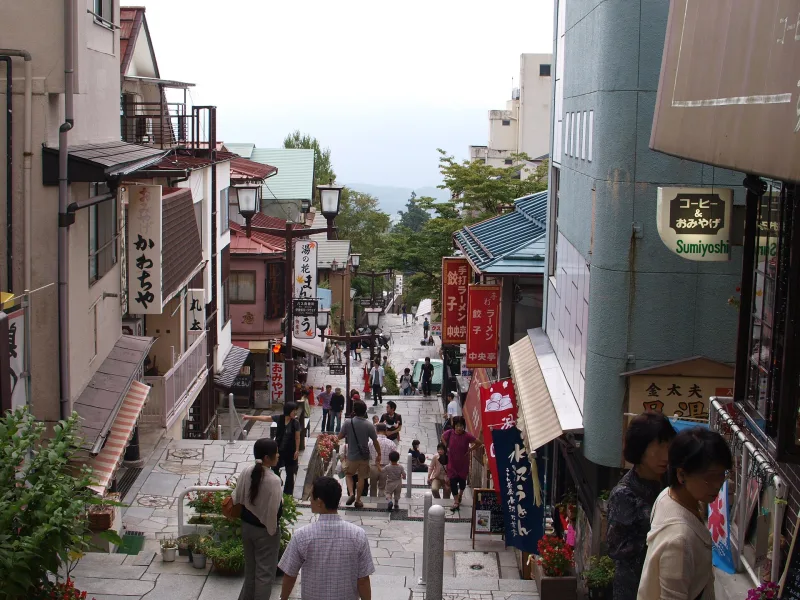
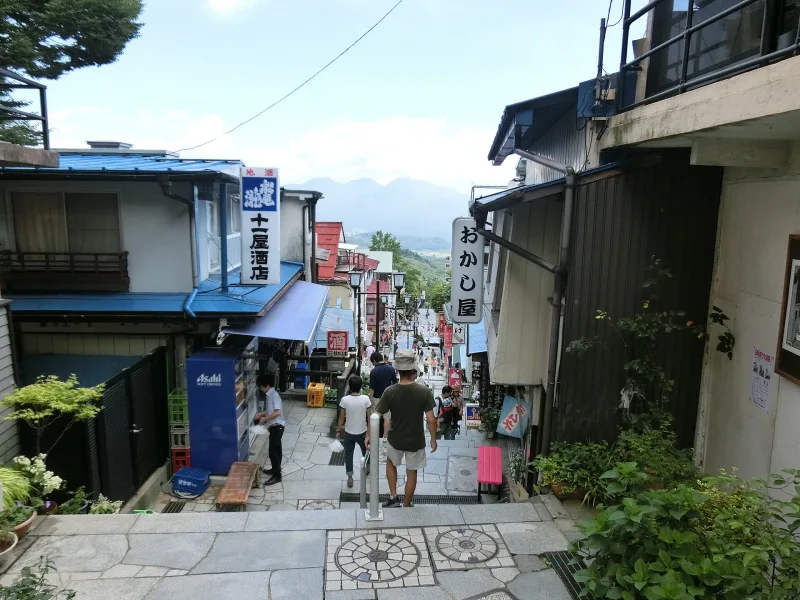
Both sides of the steps are lined with hot spring inns, souvenir shops and old-fashioned shateki stalls (a game where you knock down prizes with a toy gun). Ikaho is also known as the birthplace of onsen manju (steamed buns sold at hot spring towns), which are a local speciality on the Stone Steps street too.
The poet Yosano Akiko's poem "Ikaho no Machi" (The Town of Ikaho) is carved into the steps. Ikaho was also a setting for Tokutomi Roka's novel Hototogisu, and many writers have visited this hot spring town. At the very top of the steps stands Ikaho Shrine, dedicated to the gods of hot springs and medicine.
Getting there
By train, head to the hot spring town by bus or taxi from JR Shibukawa Station. From Tokyo, take the Joetsu Shinkansen to Takasaki Station (about 50 minutes), then change to the Joetsu and Agatsuma lines to Shibukawa Station (about 25 minutes). You can also take a limited express directly from Ueno Station to Shibukawa Station.
Highway buses also run directly to Ikaho from Tokyo Station, Ueno, Shinjuku and elsewhere, taking about 2 hours. By car, use the Shibukawa-Ikaho Interchange on the Kan-etsu Expressway or a nearby interchange.
Tips
- At the komaguchi intake points and the yutaki cascade along the steps, you can see the hot spring water actually flowing. There is also a footbath where you can easily dip your feet.
- Along the steps are signs of the twelve zodiac animals marking where inns stood more than 200 years ago. Hunting for them on the way up is part of the fun.
- The source of the golden water is near the vermilion Kajika Bridge. In the season of fresh greenery or autumn leaves, it is well worth walking on as far as the bridge.
Sources
- 石段街|渋川市観光情報 (opens in a new tab)
- 伊香保の石段|伊香保温泉観光協会 (opens in a new tab)
- 伊香保|伊香保温泉観光協会 (opens in a new tab)
- アクセス|伊香保温泉観光協会 (opens in a new tab)
Updated 30 September 2026. Opening hours and prices change, so check the official site before you go.