Ibaraki
Ibaraki runs from Pacific fishing towns to lake country and wooded hills, with Mito's plum gardens, working farmland and Tsukuba's science museums.
Map outlines: Natural Earth
-
1
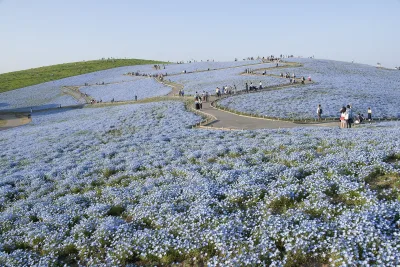 Hitachi Seaside Park
A national seaside park in Hitachinaka, Ibaraki, where about 5.3 million nemophila turn a hill blue in spring and kochia bushes glow red in autumn.
Hitachi Seaside Park
A national seaside park in Hitachinaka, Ibaraki, where about 5.3 million nemophila turn a hill blue in spring and kochia bushes glow red in autumn.
-
2
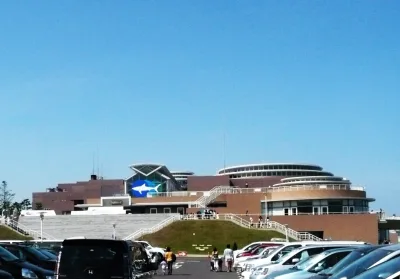 Aqua World Ibaraki Prefectural Oarai Aquarium
A seaside aquarium in Oarai, Ibaraki, famous for about 50 kinds of shark and a tank just for sunfish: one of the Kanto region's largest ocean museums.
Aqua World Ibaraki Prefectural Oarai Aquarium
A seaside aquarium in Oarai, Ibaraki, famous for about 50 kinds of shark and a tank just for sunfish: one of the Kanto region's largest ocean museums.
-
3
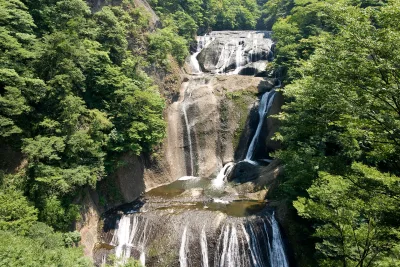 Fukuroda Falls
A famous waterfall in Daigo, Ibaraki, tumbling in four tiers down a rock face 120 m high and 73 m wide, with fresh greenery, autumn colour and, in winter, ice.
Fukuroda Falls
A famous waterfall in Daigo, Ibaraki, tumbling in four tiers down a rock face 120 m high and 73 m wide, with fresh greenery, autumn colour and, in winter, ice.
_%E7%AD%91%E6%B3%A2%E5%B1%B1%E3%81%AE%E3%81%B5%E3%82%82%E3%81%A8%E3%81%8B%E3%82%89%E3%80%81%E9%9C%9E%E3%83%B6%E6%B5%A6%E6%96%B9%E9%9D%A2%E3%82%92%E7%9C%BA%E3%82%81%E3%82%8B%E3%80%82%E3%81%93%E3%81%AE%E3%81%82%E3%81%9F%E3%82%8A%E3%81%AF%E3%81%9A%E3%81%A3%E3%81%A8%E5%B9%B3%E5%9C%B0%E3%81%8C%E7%B6%9A%E3%81%8D%E3%80%81%E5%B1%B1%E3%81%8C%E3%81%AA%E3%81%84%E3%81%AE%E3%81%A7%E3%80%81%E3%81%95%E3%81%BB%E3%81%A9%E9%AB%98%E3%81%8F%E3%81%AA%E3%81%84%E7%AD%91_-_panoramio.jpg)

From the Pacific to the northern hills
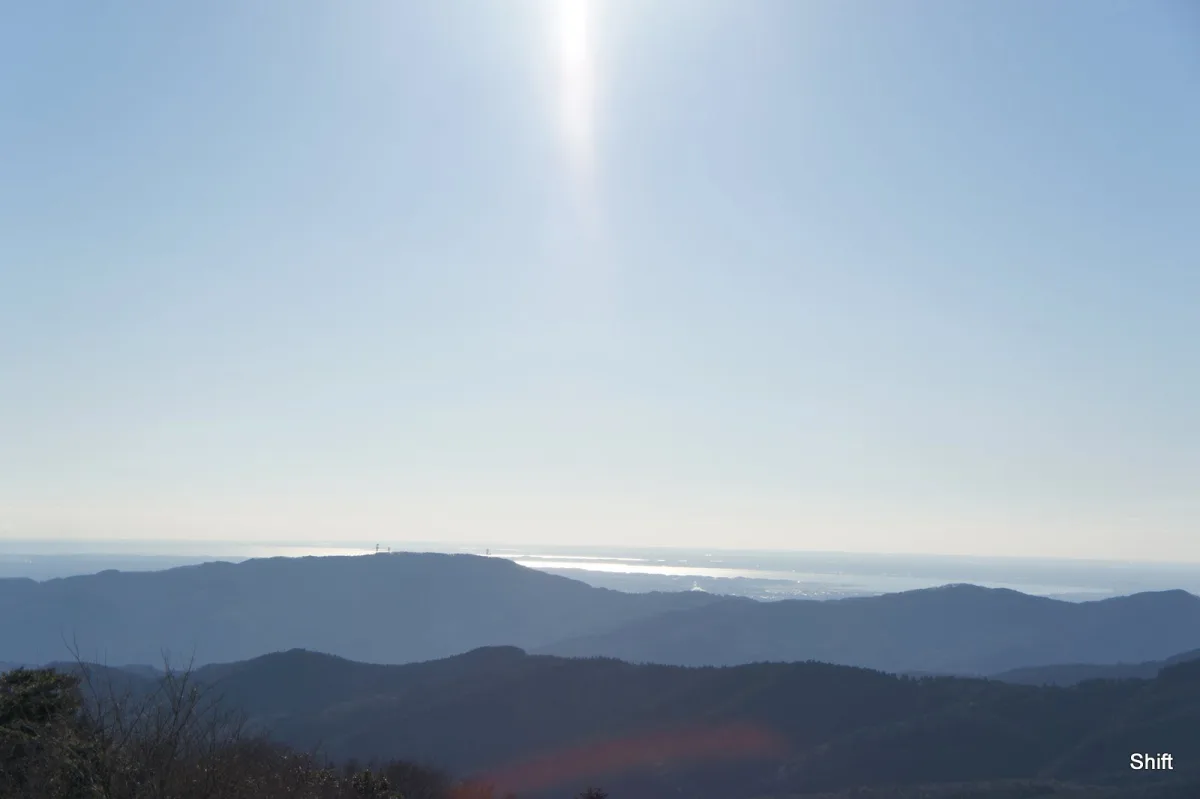
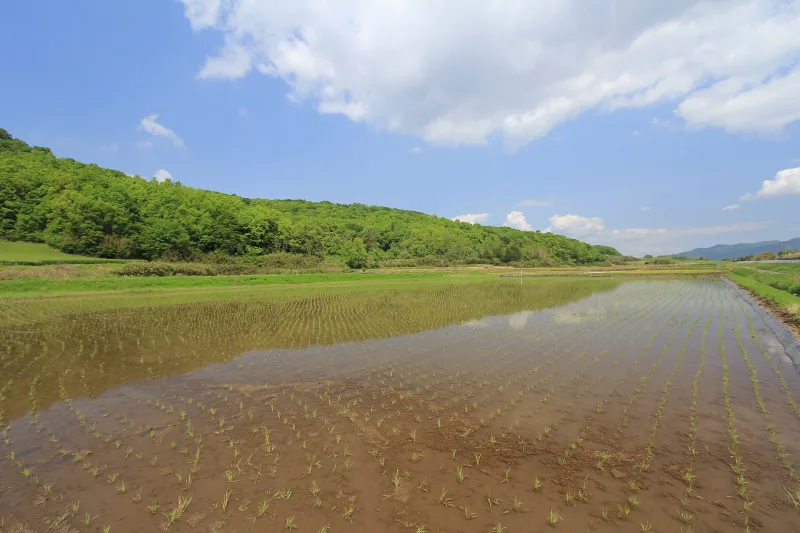
Ibaraki lies north-east of Tokyo, but it is not one single landscape. Its eastern edge faces the Pacific, while the north rises into wooded hills cut by river valleys. Further south, a broad plain meets Lake Kasumigaura, the second-largest lake in Japan, and Mount Tsukuba rises above the southern countryside. These contrasts explain why a trip here might include fishing towns, lakeside cycling and a mountain walk.
Water shapes daily life as much as the scenery. Fishing ports line the coast, and the wet land around Lake Kasumigaura is well suited to growing lotus. Around Tsuchiura, cyclists can use the Tsukuba-Kasumigaura Rinrin Road to ride along the gentle lakeshore or head towards the slopes of Mount Tsukuba. You do not have to treat the whole route as a challenge; you can pick a short section instead.
Mito's garden and school, and newer kinds of learning
Mito, the prefectural capital, still carries traces of the Mito domain, a territory ruled by the Tokugawa family in the Edo period. In 1841 the domain's lord, Tokugawa Nariaki, founded Kodokan, a domain school where young samurai studied scholarship and martial arts. The following year he created Kairakuen as its counterpart: a place to rest and enjoy the plum trees. Its name reflects his wish that people could enjoy it together.
That pairing is a rewarding way to look at Mito. The garden is more than a backdrop for blossoms; it reflects a local idea that learning and relaxation belong together. Ibaraki's interest in learning also shows up in modern form in Tsukuba, where science museums and Japan's space agency show visitors a completely different side of the prefecture.
What the fields, lake and sea bring to the table
Mito is closely associated with natto, fermented soybeans with a distinctive smell and a sticky texture. If you are curious, do give it a try, but do not assume natto is all there is to Ibaraki's food. Around Lake Kasumigaura, farmers grow renkon (lotus root), which has a pleasant crunch when cooked. The prefecture also grows melons, especially around Hokota, and makes hoshi-imo, a chewy snack of steamed and dried sweet potato.
The coast has a different winter dish. Anko nabe is a warming hotpot made with anglerfish (also called monkfish) and vegetables. Inland, Hitachi beef is another local product. Food here follows the lie of the land: lakeside vegetable fields, broad farmland and Pacific fishing villages each contribute something of their own. Farm stands and markets can tell you as much about a particular part of Ibaraki as any restaurant menu.
Pottery, local words and everyday pride
In Kasama, craftspeople make Kasama ware, a long tradition that now includes both practical tableware and contemporary pieces. Yuki-tsumugi, a hand-made silk fabric associated with Yuki, represents another side of the prefecture's craft history. Both are reminders that Ibaraki's traditions reach far beyond the gardens of Mito.
If you say 'Ibaragi', locals may correct you: the prefecture's name is pronounced 'Ibaraki'. The prefectural government presents 'iya, domo' as a distinctive local expression whose meaning changes with tone and situation, from a pleasant surprise to mild embarrassment. Its humorous introduction to local habits also mentions the strikingly wide choice of natto in supermarkets. Local identity here shows up not only at festivals but in everyday conversation and shopping.
Reading the year through flowers and food
Ibaraki's flower calendar starts early. At the end of winter, plum blossoms draw people to Kairakuen, followed in spring by cherry blossoms across the prefecture. At Hitachi Seaside Park in Hitachinaka, blue nemophila cover the hills in spring. The exact flowering times vary from year to year, so treat the seasons as a guide rather than a promise.
In summer, irises bloom in the waterside gardens of Itako, and Mount Tsukuba and the northern hills offer greener walks. In autumn, the kochia at the Seaside Park turn red and the wooded north takes on autumn colours. Winter gardens are quieter, but winter has its own food season: anko nabe belongs to the cold months. Coming back in a different season can feel like finding another way into Ibaraki.
Getting there from Tokyo and choosing a route
For Mito and other destinations on the eastern side of the prefecture, you can take the JR Joban Line from Tokyo. The Tsukuba Express links Akihabara with Tsukuba, making the science city an easy, self-contained starting point. Ibaraki Airport is another arrival point. Because these routes serve different parts of a large prefecture, it helps to choose an area before planning your itinerary.
For trips to scattered rural sights, a car is handy, and the prefectural government itself points out how central driving is to local life. Focused visits by public transport are still possible, though. Buses run from Katsuta Station to Hitachi Seaside Park, for example, and cyclists can start from Tsuchiura Station, which has a bike rental base connected to the Rinrin Road. Rather than trying to cross Ibaraki in one go, give each area enough time to show its own character.
Sources
- 地理と気候/茨城県
- Ibaraki | Kanto | Destinations | Travel Japan - Japan National Tourism Organization (Official Site)
- Kairakuen: One of the Three Major Japanese Gardens, and a Historic Spot to View Japanese Plums | HIGHLIGHTS | IBARAKI GUIDE
- 5 Foods to Try in Ibaraki: Melon, Hitachi Beef, Dried Sweet Potatoes, and More! | HIGHLIGHTS | IBARAKI GUIDE
- Yoshida Lotus Root Farm | Visit | IBARAKI GUIDE
- 茨城県民あるある大事典2025/茨城県
- いばらきの伝統文化-いばらきの伝統文化とは
- Hitachi Seaside Park | Visit | IBARAKI GUIDE
- Tsukuba-Kasumigaura Ring-Ring Road | Visit | IBARAKI GUIDE
- Access | IBARAKI GUIDE