Yamagata
Sacred mountains, Zao's 'snow monsters' and Japan's biggest cherry harvest: Yamagata rewards visitors who come for the seasons.
Map outlines: Natural Earth
-
1
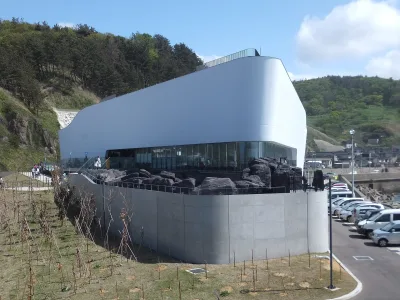 Kamo Aquarium (Tohoku Epson Aquarium Kamosui)
A jellyfish aquarium on the Sea of Japan with about 100 species. Its giant tank of about 10,000 moon jellyfish is something you could watch for ever.
Kamo Aquarium (Tohoku Epson Aquarium Kamosui)
A jellyfish aquarium on the Sea of Japan with about 100 species. Its giant tank of about 10,000 moon jellyfish is something you could watch for ever.
-
2
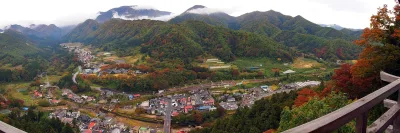 Yamadera (Risshakuji Temple)
A mountain temple said to date from 860, its halls dotted over a rocky peak. After 1,015 stone steps, the Godaido hall looks down on the valley town.
Yamadera (Risshakuji Temple)
A mountain temple said to date from 860, its halls dotted over a rocky peak. After 1,015 stone steps, the Godaido hall looks down on the valley town.
-
3
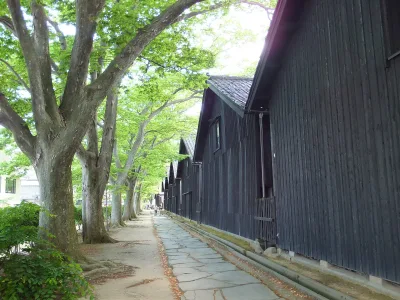 Sankyo Soko Rice Warehouses
Meiji-era rice warehouses that guarded Shonai's rice for nearly 130 years. Behind the white and black walls runs an avenue of zelkovas over 150 years old.
Sankyo Soko Rice Warehouses
Meiji-era rice warehouses that guarded Shonai's rice for nearly 130 years. Behind the white and black walls runs an avenue of zelkovas over 150 years old.

Mountains on one side, the Sea of Japan on the other
Yamagata is in the Tohoku region. To the west it faces the Sea of Japan, and mountain ranges form its borders with neighbouring prefectures. It is Japan's ninth-largest prefecture by area, and about 17% of its land is protected as natural parks. On the coast, Sakata and Tsuruoka are port towns.
The Mogami River ties the prefecture together. It flows only within Yamagata, heading north before turning west at Shinjo and entering the sea at Sakata, and it is counted as one of Japan's three fastest-flowing rivers. The haiku poet Matsuo Basho travelled here in 1689 and wrote about how the early-summer rains (samidare) sped up the river's flow. The prefectural song is named after the river.
Three sacred mountains and a clifftop temple
Yamagata is one of Japan's oldest centres of mountain worship. Dewa Sanzan (Dewa is the old name for this region, so the name means 'the three mountains of Dewa') are three peaks, Mount Haguro, Mount Gassan and Mount Yudono, representing birth, death and rebirth. Yamabushi, practitioners of Shugendo (an ascetic path that blends Shinto and Buddhist mountain training), still train on all three.
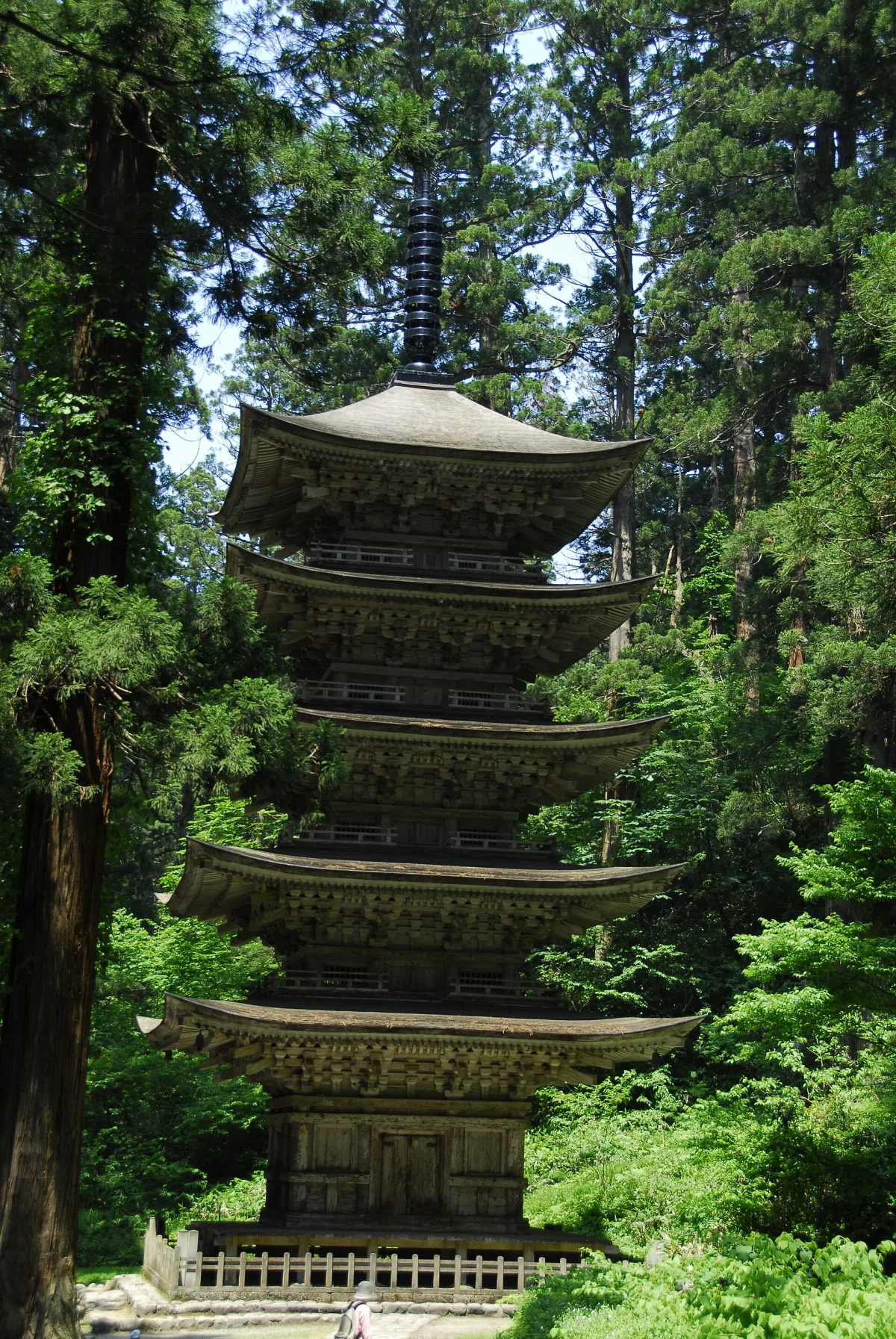
Mount Haguro is the easiest to visit and can be visited all year round. A path of 2,446 stone steps climbs through an avenue of ancient cedars, past a five-storey pagoda that is a National Treasure, to a shrine hall with a thatched roof about 2 metres thick, built to withstand the winter snow. Mount Yudono has one rule you should know before you go: photography is forbidden.
Yamadera, one of Japan's best-known temples, is famous as the place Basho visited and where he wrote one of the most famous haiku in the Japanese language.
Cherries, beef and a riverside stew
Yamagata is Japan's biggest producer of cherries, and it also grows European pears, grapes, apples, peaches, melons and persimmons. Visit in summer and fruit is everywhere; in autumn, fruit picking takes centre stage.
Yonezawa beef is one of Japan's three great wagyu brands, and imoni, a stew of beef and vegetables, is an everyday local dish. On Mount Haguro, shojin ryori (Buddhist vegetarian cooking) built around seasonal mountain vegetables, mushrooms and sesame tofu has been handed down for generations. Centuries ago, the region was also famous for beni, a red dye made from safflowers.
Snow monsters, festivals and four very different seasons
Winter is when Yamagata looks like nowhere else. On the summit of Mount Zao, cold winds from Siberia and heavy snow coat the fir trees in ice, turning them into the so-called snow monsters, or juhyo (frost-covered trees). They are usually at their best around mid-February, and they are lit up after dark. Ginzan Onsen, a hot-spring town on the site of an old silver mine, is lined with traditional wooden buildings.
The other seasons have their own charms: cherry blossoms in spring; mountains, waterfalls and fireflies in summer; and autumn leaves and fruit picking in autumn. In August, the Hanagasa Festival, one of the four great summer festivals of Tohoku, fills Yamagata city with thousands of dancers. Snow affects travel plans too: Mount Gassan and Mount Yudono are closed for most of the year, and the stone steps of Mount Haguro are not cleared of snow in winter.
Getting there and getting around
The JR Yamagata Shinkansen runs from Tokyo into the prefecture, stopping at Kaminoyama-Onsen, Yamagata, Tendo and other stations, and terminates at Shinjo in the north. Yamagata Airport and Shonai Airport have domestic flights, including to Tokyo, and highway buses run from Tokyo. Sendai Airport in neighbouring Miyagi Prefecture is the nearest major airport. Check the latest routes and timetables before you set off.
Sources
- Yamagata | Travel Japan (JNTO)
- Zao Snow Monsters | Travel Japan (JNTO)
- Dewa Sanzan | Travel Japan (JNTO)
- STAY YAMAGATA (official tourism site)
- Visiting the Three Mountains of Dewa | STAY YAMAGATA
- Events | STAY YAMAGATA
- Transport | STAY YAMAGATA
- Yamagata Prefecture - Wikipedia
- Mogami River - Wikipedia
- North Japan prefecture creates guide to local language quirks | SoraNews24