Japan is Nippon
Oden
Daikon, eggs and fishcakes simmered slowly in dashi: a winter classic sold even at konbini tills, yet broth and fillings vary amazingly by region.
Eaten all over Japan
Best known in Tokyo and Shizuoka and Aichi and Hyogo and Aomori.
- TokyoDark broth of dark soy sauce and bonito; known for chikuwabu, a wheat-flour tube
- ShizuokaShizuoka city's Shizuoka oden: items such as kuro hanpen skewered and simmered in black broth, topped with aonori and dashi powder
- AichiMiso oden, dipped in a sauce of soybean miso such as Hatcho miso
- HyogoHimeji oden, eaten with ginger soy sauce
- AomoriAround Aomori city, simmered oden is eaten with a ginger miso sauce
What is oden?
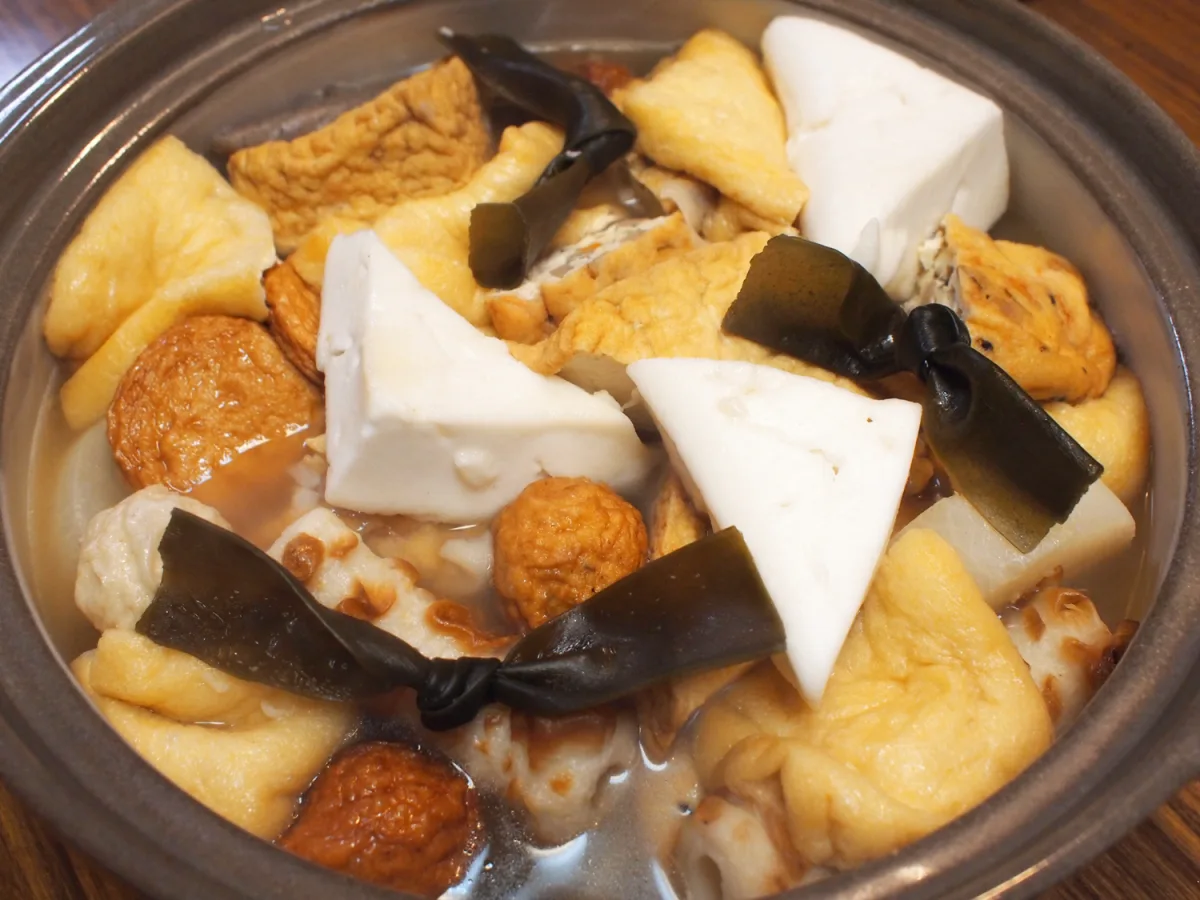
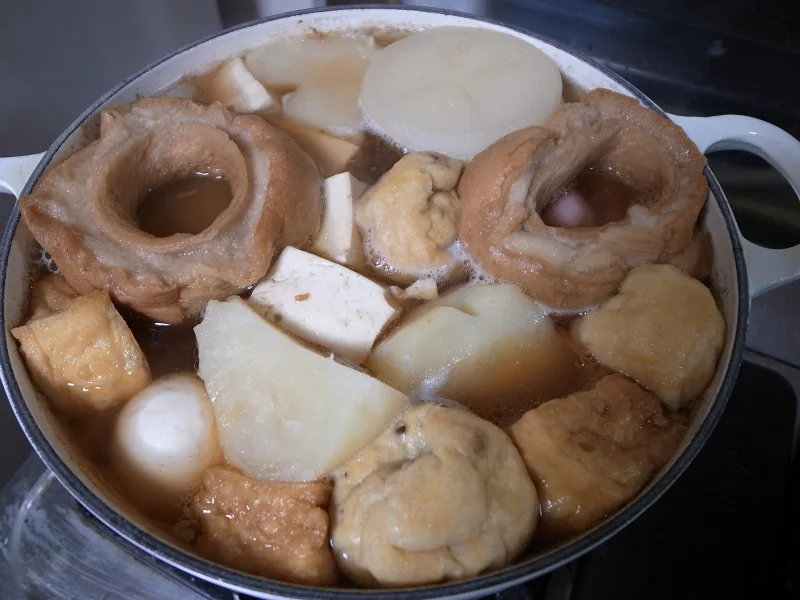
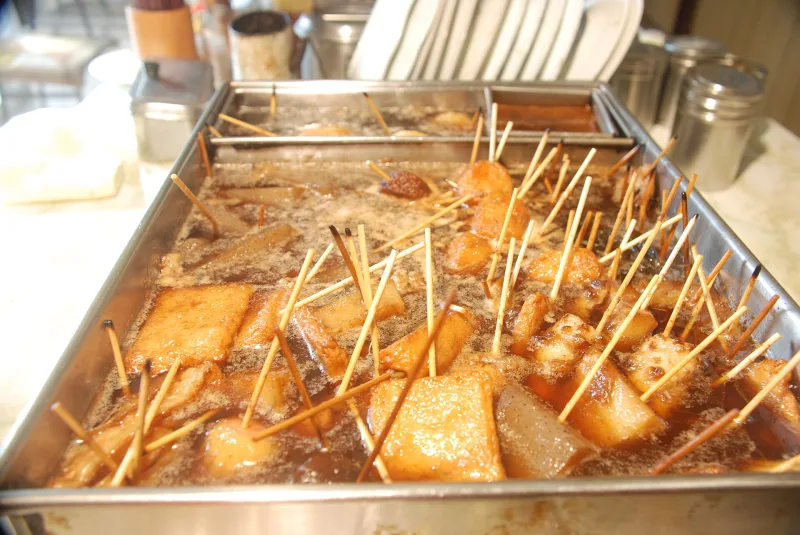
Oden is a dish of many different ingredients simmered over a low heat in dashi (a savoury stock) made from katsuobushi (dried bonito) and kombu kelp and seasoned with soy sauce and the like. The ingredients are called "tane", and the classics are daikon radish, boiled eggs, konnyaku (a wobbly jelly made from a kind of yam) and nerimono (processed fish paste) such as satsuma-age and hanpen.
As a simmered dish it is mostly eaten from autumn through winter. When the weather turns cold, supermarkets stock sets of oden ingredients and each household makes it to its own taste. Convenience stores put a pot of oden next to the till, so you can pick some up easily. People add karashi (hot Japanese mustard) to taste.
In Japan, 22 February is "Oden Day". The date was chosen for the sound "fu-fu-fu" (2 is "fu" in Japanese) you make blowing on hot oden to cool it down.
From grilled tofu to a simmered dish: the name and history
Oden is said to have its roots in tofu dengaku: rectangles of tofu skewered on bamboo and grilled. The name is said to come from nyobo kotoba, the refined language of women serving at the imperial court, who added the polite prefix "o" to "dengaku" and dropped the "gaku" to make "oden", though this is presented as a traditional story.
In the Edo period, dengaku, tofu or konnyaku on skewers spread with miso and grilled, became a common dish for ordinary people. In the Meiji era the range of ingredients grew and oden as a brothy simmered dish became fashionable. In the Taisho era it spread to the Kansai region, and oden with local character, using each area's specialities, began to appear.
In Kansai, simmered oden is sometimes called "kantodaki" (Kanto-style simmer) to distinguish it from the original dengaku.
Tokyo, Shizuoka and Nagoya: oden by region
Tokyo (Kanto) oden is known for its dark broth, strong with dark soy sauce and katsuobushi. Alongside hanpen, beef tendon and tsumire (fish-paste dumplings), a typically Tokyo ingredient is chikuwabu, made by kneading wheat flour with salt and water and shaping it into a stick.
Shizuoka city's Shizuoka oden has all its tane, such as beef tendon, kuro hanpen (a dark-coloured hanpen made from fish caught in Suruga Bay), daikon and eggs, on skewers, simmered in a blackish broth. It is distinctive for being sprinkled with aonori (dried seaweed powder) and "dashi-ko", a powder made from fish, when you eat it. It is said to have started in the Taisho era and became more popular after the war, when beef tendon and pork motsu (offal) began to be used. Because it is also sold by the skewer at dagashiya (cheap sweet shops), many people have eaten it as a snack since childhood, and in the city centre there is a street lined with oden shops.
Aichi Prefecture's miso oden is traditionally served with a pot of miso sauce placed in the middle of an earthenware pot; you dip daikon, konnyaku, grilled tofu and other items simmered around it into the sauce. The sauce is mame miso (a dark miso made from soybeans alone), typified by Aichi's famous Hatcho miso, with sugar and mirin added. Recently more restaurants have started simmering the ingredients in a broth made with mame miso.
And there's more: local oden around Japan
In Osaka, pale "Kansai-style" oden coexists with old-fashioned kantodaki simmered with katsuobushi and soy sauce. Himeji oden in Hyogo Prefecture is simmered oden eaten with ginger soy sauce. Around Aomori city, simmered oden is dipped in a ginger miso sauce.
There are many other distinctive oden around the country, such as Takamatsu oden in Kagawa Prefecture, eaten with two kinds of dipping sauce; Kyushu oden made with chicken stock and Kyushu's sweet soy sauce; Kagoshima oden, known for its pork and barley miso broth; and Okinawan oden, which includes pigs' trotters and leafy greens. In Hokkaido, it sometimes includes mountain vegetables and shellfish such as whelks and scallops. Try the local oden on your travels and you'll notice differences so big it's hard to believe it's the same dish.
Where and how to eat it
Oden is eaten all over Japan. In winter pots appear next to convenience store tills, and it is also a standard dish at oden specialists and izakaya (Japanese-style pubs). Tokyo has long-established oden restaurants that serve it all year round. Local oden is best tasted where it comes from: Shizuoka city for Shizuoka oden, Aichi Prefecture for miso oden.
There are no tricky rules for eating it. Choose the tane you like and add mustard to taste. Follow the local way where you are: aonori and dashi powder on Shizuoka oden, miso sauce with Aichi's miso oden.
For those with dietary restrictions: typical oden broth is made with katsuobushi (fish) stock, and the fishcakes are made from fish. In some regions beef tendon or pork is added, and some broths use pork. If you are vegetarian or avoid particular meats, check with the restaurant.
Tips
- If it's your first time, pick a little of lots of different tane (fillings), such as daikon, egg, konnyaku and fishcakes.
- The karashi mustard is very hot, so try just a little at first.
- In Shizuoka city, try your skewered oden sprinkled with aonori and dashi powder.
- In Nagoya and elsewhere in Aichi Prefecture, you can enjoy miso oden, eaten with a rich, sweetish miso sauce.
- The broth is made with fish stock. If you avoid meat or fish, check before ordering.