Japan is Nippon
Sukiyaki
Beef simmered in a sweet-savoury sauce and dipped in beaten egg. Sukiyaki grew out of Meiji-era gyunabe, and Tokyo and Osaka still make it quite differently.
Eaten all over Japan
Best known in Kanagawa and Tokyo and Gunma and Mie.
- KanagawaThe first gyunabe restaurant is said to have opened in Yokohama in 1862, and restaurants founded in the Meiji era still serve gyunabe
- TokyoCentre of the Meiji-era gyunabe boom; sukiyaki restaurants founded in the Meiji era are still running in Asakusa and elsewhere
- GunmaDeclared itself a "Sukiyaki Supporter Prefecture" in 2014; every ingredient, including Joshu beef and Shimonita leeks, can be sourced locally
- MieMatsusaka, home of Matsusaka beef, is known as a sukiyaki town
What is sukiyaki?
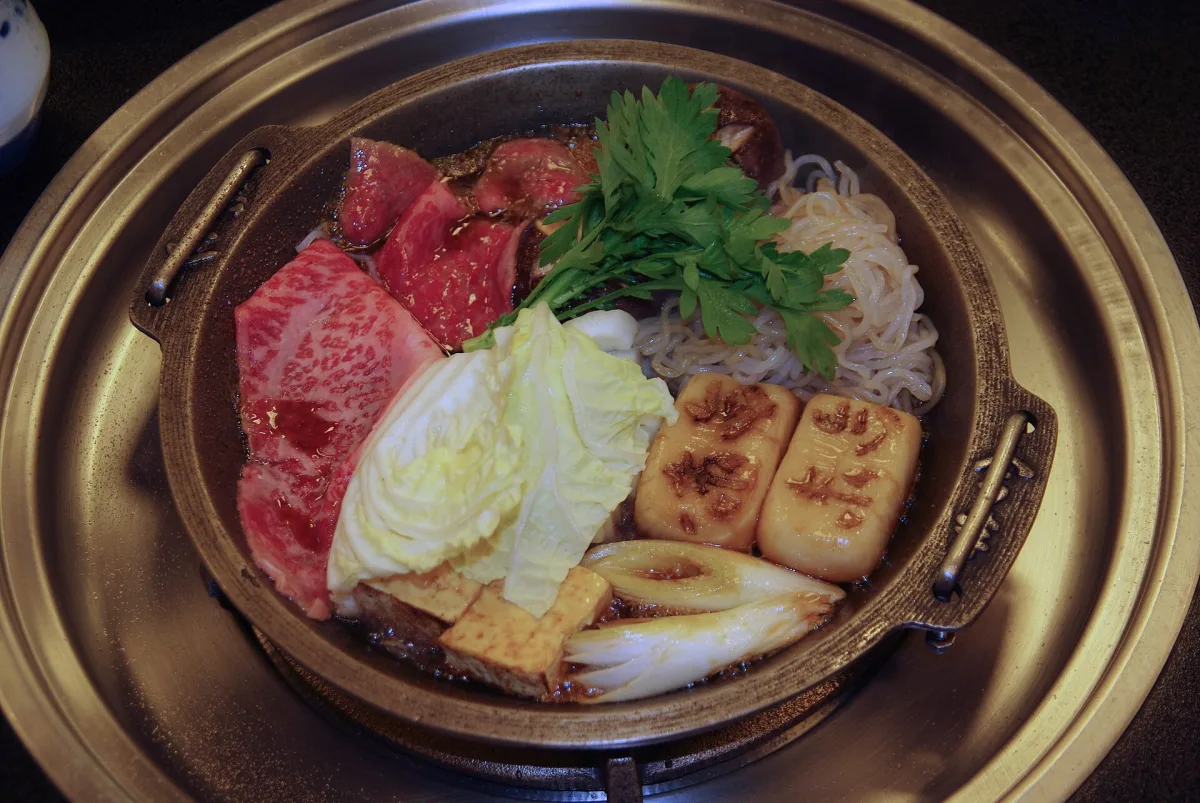
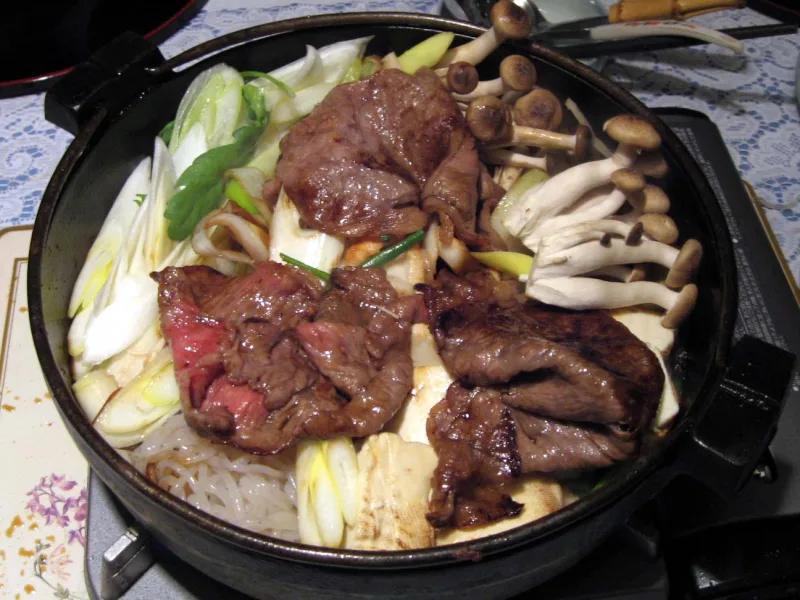
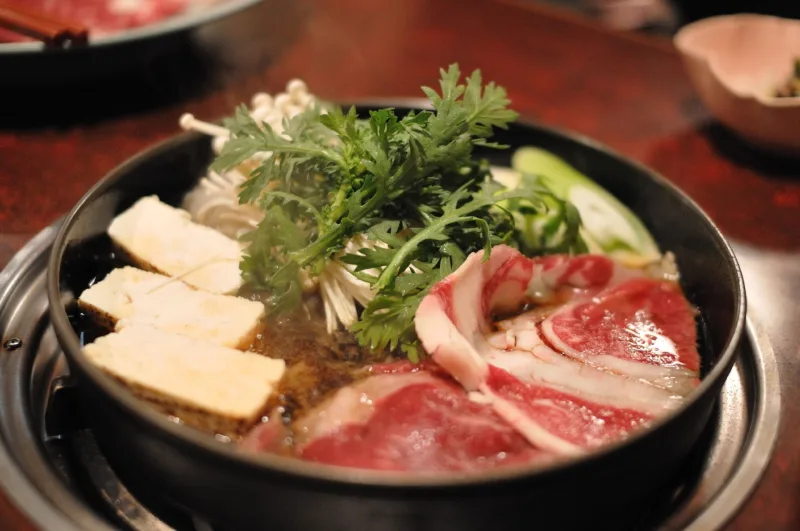
Sukiyaki is a hotpot dish cooked in a shallow iron pan: thinly sliced beef simmered with Japanese leeks, shungiku (edible chrysanthemum leaves), grilled tofu, shirataki (konnyaku jelly cut into thread-like noodles), Chinese cabbage and so on, in a sweet-savoury mix of soy sauce, sugar and sake. The classic way to eat the cooked ingredients is to dip them in raw egg, beaten in a small bowl.
It used to be something people mostly ate at restaurants, but now it's often made at home too. Supermarkets and butchers sell thinly sliced beef labelled "for sukiyaki".
A plough blade and Yokohama's gyunabe
The name "sukiyaki" is said to come from the suki, a farming spade or plough blade used for turning soil. The usual explanation is that in mid-Edo-period Kansai there was a dish of fish and shellfish grilled on a suki used in place of an iron griddle, and beef grilled on the same tool came to be called sukiyaki ("suki-grilled").
In Japan, from an order issued by Emperor Tenmu in 675 onwards, cattle and horses were not officially eaten for a long time, partly because they were valued as working animals. Things changed between the end of the shogunate and the Meiji era. After the port of Yokohama opened in 1859, influenced by the beef dishes eaten by foreigners, the owner of a Yokohama izakaya (Japanese pub) is said to have opened the first gyunabe (beef hotpot) restaurant in 1862. Plenty of people disliked beef, so reportedly half the premises stayed an izakaya and half became a gyunabe restaurant, but his seasoning suited Japanese tastes, word spread, and one gyunabe restaurant after another opened nearby.
Gyunabe restaurants became hugely popular in Tokyo too, and gyunabe came to symbolise bunmei kaika, the Westernisation of the Meiji era. At first miso was the usual seasoning, to mask the smell of the meat, but as the quality of the beef improved, tofu and shirataki were added and the dish came to be simmered in a sauce of soy sauce, sugar and sake.
Kanto simmers, Kansai sears
Sukiyaki is made very differently in eastern and western Japan. In Kansai homes, the beef is seared in a hot pan and then seasoned with sugar and soy sauce. In Kanto homes, the usual way is to bring warishita (a ready-mixed sauce of soy sauce, sugar, sake and so on) to a simmer and cook the meat and vegetables in it together.
Kanto's gyunabe is said to have come to be called sukiyaki after the Great Kanto Earthquake of 1923. Many of Tokyo's gyunabe restaurants closed after the earthquake, and in the meantime the Kansai name "sukiyaki" and its restaurants spread, until the name became standard. Today even long-established Tokyo restaurants mostly cook it the Kansai way: melting beef fat in a hot pan, searing the meat, then adding the other ingredients and seasonings. Conversely, restaurants in Osaka reportedly tend to use the Kanto style with warishita, because it makes it easier to create a house flavour.
Yokohama, Gunma and Matsusaka: sukiyaki around Japan
In Yokohama, Kanagawa Prefecture, restaurants founded in the Meiji era still serve gyunabe. The difference is that sukiyaki is seared and then simmered, whereas gyunabe is simmered in the sauce from the start, and whether the beef is thinly sliced or cubed, and whether the sauce is soy- or miso-based, varies from restaurant to restaurant. Every January, the city's primary schools serve "sukiyaki-style stew", a take on gyunabe, for school lunch.
Gunma Prefecture declared itself a "Sukiyaki Supporter Prefecture" in 2014. Its proud boast is that every sukiyaki ingredient can be sourced locally: Joshu beef, Shimonita leeks, and shirataki made from konnyaku potatoes, of which Gunma is Japan's largest producer. On 29 November, "Gunma Sukiyaki Day", many schools across the prefecture serve sukiyaki for lunch.
Matsusaka in Mie Prefecture, home of the premium Matsusaka beef, is known as a sukiyaki town.
Where and how to eat it
Sukiyaki is eaten all over Japan, at specialist restaurants, Japanese restaurants and at home. Long-established sukiyaki restaurants dating back to the Meiji era still survive in Tokyo's Asakusa and elsewhere. To eat it, take the cooked meat and vegetables from the pan, dip them in the beaten egg in your small bowl and pop them in your mouth. Why egg? There are several theories, such as cooling the food down or mellowing the strong flavours, but nobody really knows.
For those with dietary restrictions: sukiyaki uses beef, and the sauce contains soy sauce, sugar and sake (or mirin). It is also usually eaten with raw egg. If raw egg isn't for you or you want to avoid beef, talk to the restaurant before you order.
Tips
- If you're visiting both Kanto and Kansai, compare the Kanto style, simmered in warishita, with the Kansai style, where the meat is seared first and then seasoned.
- In Yokohama, try gyunabe, said to be one of sukiyaki's roots. Each restaurant has its own character, from miso-based sauce to cubed beef.
- If raw egg isn't for you, don't force it; have a word with the staff.
- In Gunma you can enjoy sukiyaki made entirely from local ingredients, from the beef to the vegetables.
- If you want to avoid beef, check before you order.
Sources
- 農林水産省 うちの郷土料理「すき焼き 東京都」 (opens in a new tab)
- 農林水産省 うちの郷土料理「牛鍋 神奈川県」 (opens in a new tab)
- 農林水産省 うちの郷土料理「すき焼き 群馬県」 (opens in a new tab)
- 関西・大阪21世紀協会「大阪鍋物語:すき焼きのルーツは横浜にあり?!」 (opens in a new tab)
- 観光三重「美味し国三重の味 伊勢亀山名物『元祖肉の水炊き処”むかい”』」 (opens in a new tab)
- Wikipedia「すき焼き」(溶き卵の由来の諸説の補足として参照) (opens in a new tab)