Japan is Nippon
Why Is Autumn Leaf Viewing Such a Big Deal in Japan?
Every autumn Japan heads out to see the leaves turn. From a court pastime over 1,000 years old to the weather agency's yearly records, here is why.
The short answer
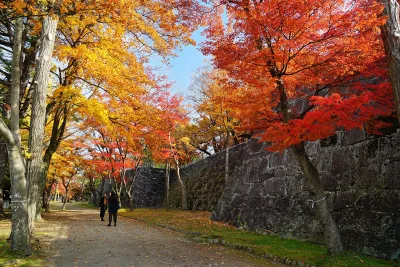
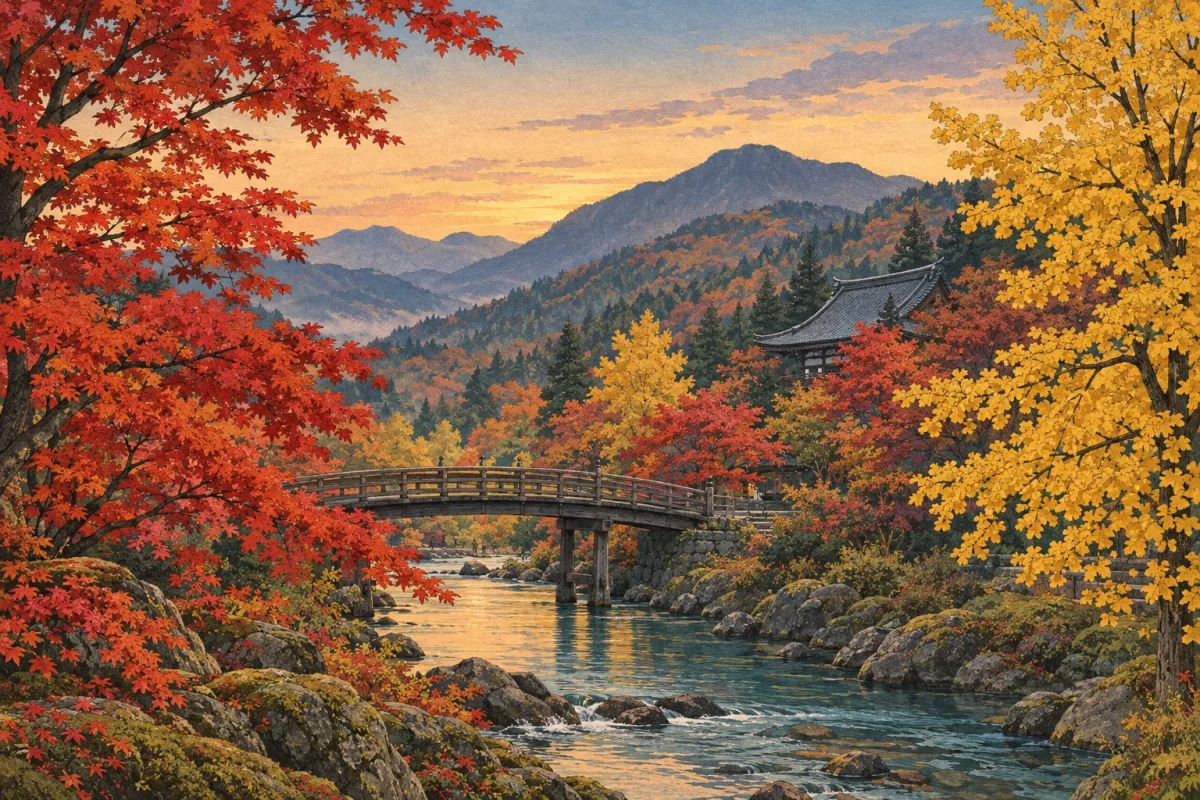
Momijigari (literally "autumn leaf hunting") means going out in autumn to look at trees that have turned red and yellow. Despite the word "hunting", nothing gets caught: you simply gaze and enjoy. Together with hanami (cherry blossom viewing) in spring, it is one of Japan's two great outings for going to see the season.
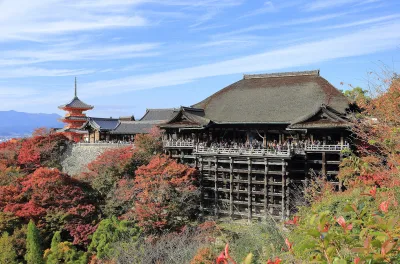
There are three main reasons people are so keen on it. It has a long history, having appeared in waka poems (classical Japanese verse) and tales for more than a thousand years. Because the Japanese archipelago stretches a long way from north to south, the colour moves from north to south over nearly two months, giving plenty of people a chance to go and see it. And the combination of autumn leaves with temples, shrines and gardens creates scenery you cannot find anywhere else.
Even the Japan Meteorological Agency, a national government body, records the colouring of the kaede (Japanese maples, also called momiji) every year, which shows how deeply autumn leaves are rooted in the way Japanese people feel the seasons.
From the Man'yoshu to the Heian court
The word momiji is said to come from momitsu, an old verb meaning for leaves to turn red or yellow. The Man'yoshu, Japan's oldest collection of waka poems, compiled in the 8th century, contains many poems about coloured leaves, and it is known that most of them write the word not with the characters for "red leaves" but with those for "yellow leaves".
The custom of admiring autumn leaves is thought to have spread from the aristocracy of the Heian period (794 to around 1185). Holding banquets beneath the coloured leaves and composing waka poems there was an elegant pastime. It is also said that people would actually break off a coloured branch and hold it in the palm of their hand to admire it.
As for why it is called "hunting", one theory goes like this. Aristocrats of the time thought walking was undignified and travelled by gissha (ox-drawn carriages). But you could not get to the autumn leaves in the mountains by ox carriage. So going out into the hills and fields on foot was likened to a hunt. The Kamakura-period essay Hojoki also uses expressions such as "hunting" cherry blossoms and "seeking" autumn leaves.
A pleasure for ordinary people in the Edo period
In the Edo period (1603 to 1868), momijigari stopped being something only for aristocrats and spread as an outing for townspeople. Around Edo (today's Tokyo), places such as Mamasan Guhoji temple (in today's Ichikawa, Chiba Prefecture), Takinogawa (in today's Kita Ward, Tokyo) and Kaianji temple in Shinagawa are said to have become popular spots for autumn leaves.
Like hanami, momijigari settled in as an event where, when the season comes, everyone heads outdoors together to enjoy the scenery. When Japanese people today go to famous leaf spots on autumn weekends, they are carrying on this long tradition.
Well-known spots today include the Oirase Gorge in Aomori Prefecture, Nikko in Tochigi Prefecture and the temples and shrines of Kyoto, all of which are packed with visitors when the leaves are at their best.
The weather agency's "leaf colouring date" and the autumn leaf front
The Japan Meteorological Agency carries out phenological observations at weather stations across the country, watching designated sample trees. The number of items it observes was cut sharply in 2021, but the reddening of maples and the yellowing of ginkgo trees are still observed.
Under the agency's definition, the maple "leaf colouring date" is the first day on which, looking at the sample tree as a whole, most of its leaves have turned red. The sample trees are mainly irohakaede (also called irohamomiji, the most familiar maple in Japan).
Based on the 1991 to 2020 averages, maples start to turn in mid-October in Hokkaido, reach the Tohoku region around 20 November, arrive around 30 November in places such as Kanto, Tokai, Chugoku, Shikoku and northern Kyushu, and from early to mid-December move on to the Pacific coast of Kanto and Tokai, Kinki and southern Kyushu. Where the cherry blossoms open from south to north, the autumn colours travel the other way, from north to south. This progression drawn on a map is called the koyo zensen (autumn leaf front).
Why are Japan's autumn leaves so vivid?
When the days grow shorter in autumn, the green pigment in leaves (chlorophyll) breaks down, and red leaves produce a new pigment called anthocyanin. Yellow leaves get their colour as the yellow pigments that were in the leaf all along start to show through.
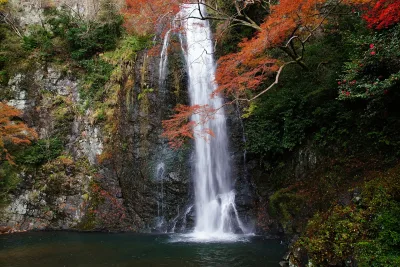
The colour needs cold mornings and evenings to get going, and a big difference between day and night temperatures, clean air and the right amount of moisture are said to be the conditions for beautiful autumn leaves. That is why so many famous spots are in mountain valleys and highlands, and around lakes and waterfalls.
Japan has many kinds of trees that change colour, such as maples that turn red and ginkgo trees that turn yellow, so whole mountainsides become a patchwork of red, orange and yellow. Even in cities, avenues of ginkgo turning bright yellow are a classic sight of autumn.
How people enjoy momijigari today
These days more and more temples, shrines and gardens light up their autumn leaves at night. At Ishiyamadera temple in Shiga Prefecture, for example, the roughly 2,000 maples in the grounds are at their best from mid-November to early December, and there are night-time illuminations for a limited period. It is a magical scene, completely different from the daytime.
For Japanese people, momijigari is a relaxed outing that needs no special knowledge. You go for a walk, take photos, and enjoy a warm drink or some seasonal food. That alone is enough to feel satisfied that you have felt autumn once again this year, so it works almost like a marker of the turning seasons.
For travellers, too, the autumn leaf season is a perfect chance to experience the beauty of autumn in Japan. Popular spots get very crowded on weekends when the leaves are at their best, though, so plan early.
Tips
- The best time varies a lot by place. According to the Japan Meteorological Agency's averages, Hokkaido starts to colour from around mid-October, Tohoku around 20 November, and the lowlands of Kanto and Kinki from the end of November into December. Check the latest autumn leaf reports from the agency or local tourism sites just before you go.
- The autumn leaf front takes about two months to move from north to south, so if you choose your destination to match your travel dates, you can find leaves at their best anywhere from October to December.
- Popular temples and shrines in places like Kyoto get extremely crowded on weekends at peak season and during the evening illuminations. Aim for early mornings or weekdays.
- In temple grounds and gardens, do not break off branches or go into off-limits areas. Heian aristocrats are said to have snapped off branches, but today it is bad manners.
- Mountain leaf spots get quite cold in the mornings and evenings. Even if it is warm during the day, take an extra layer.
Sources
- 生物季節観測の情報 | 気象庁 (opens in a new tab)
- かえでの紅葉日(観測方法と等期日線図、1991〜2020年平年値) | 気象庁 (opens in a new tab)
- かえでの紅葉日 (2025年-2026年) | 気象庁 (opens in a new tab)
- 秋の花・紅葉 | 石山寺 (opens in a new tab)
- 紅葉を観賞することを「紅葉狩り」というのはなぜ? | ウェザーニュース (opens in a new tab)
- 「紅葉狩り」の由来とは?歴史や起源 | 和樂web (opens in a new tab)
- 紅葉 - Wikipedia (opens in a new tab)