Saga
Saga sits between two very different seas, where tidal flats, fishing ports and pottery towns tell a long story of exchange.
Map outlines: Natural Earth
-
1
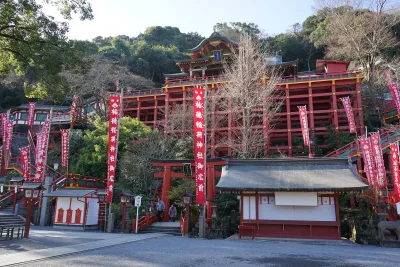 Yutoku Inari Shrine
A Kashima shrine whose vermilion main hall stands on a tall hillside stage. One of Japan's three great Inari shrines, called the "Nikko of Kyushu".
Yutoku Inari Shrine
A Kashima shrine whose vermilion main hall stands on a tall hillside stage. One of Japan's three great Inari shrines, called the "Nikko of Kyushu".
-
2
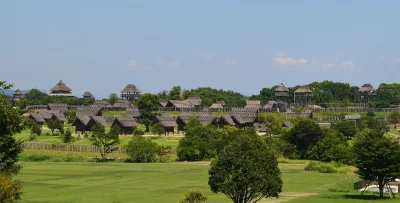 Yoshinogari Historical Park
A park rebuilding a 2,000-year-old Yayoi village and state on Japan's largest moated settlement site. Climb a watchtower for the full view.
Yoshinogari Historical Park
A park rebuilding a 2,000-year-old Yayoi village and state on Japan's largest moated settlement site. Climb a watchtower for the full view.
-
3
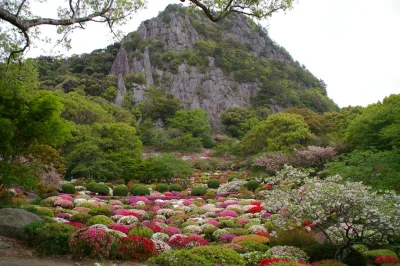 Mifuneyama Rakuen
A 500,000 m² garden at the foot of craggy Mount Mifune near Takeo Onsen: some 200,000 azaleas in spring and 170-year-old maples in autumn against bare rock.
Mifuneyama Rakuen
A 500,000 m² garden at the foot of craggy Mount Mifune near Takeo Onsen: some 200,000 azaleas in spring and 170-year-old maples in autumn against bare rock.



Two coasts and one wide plain
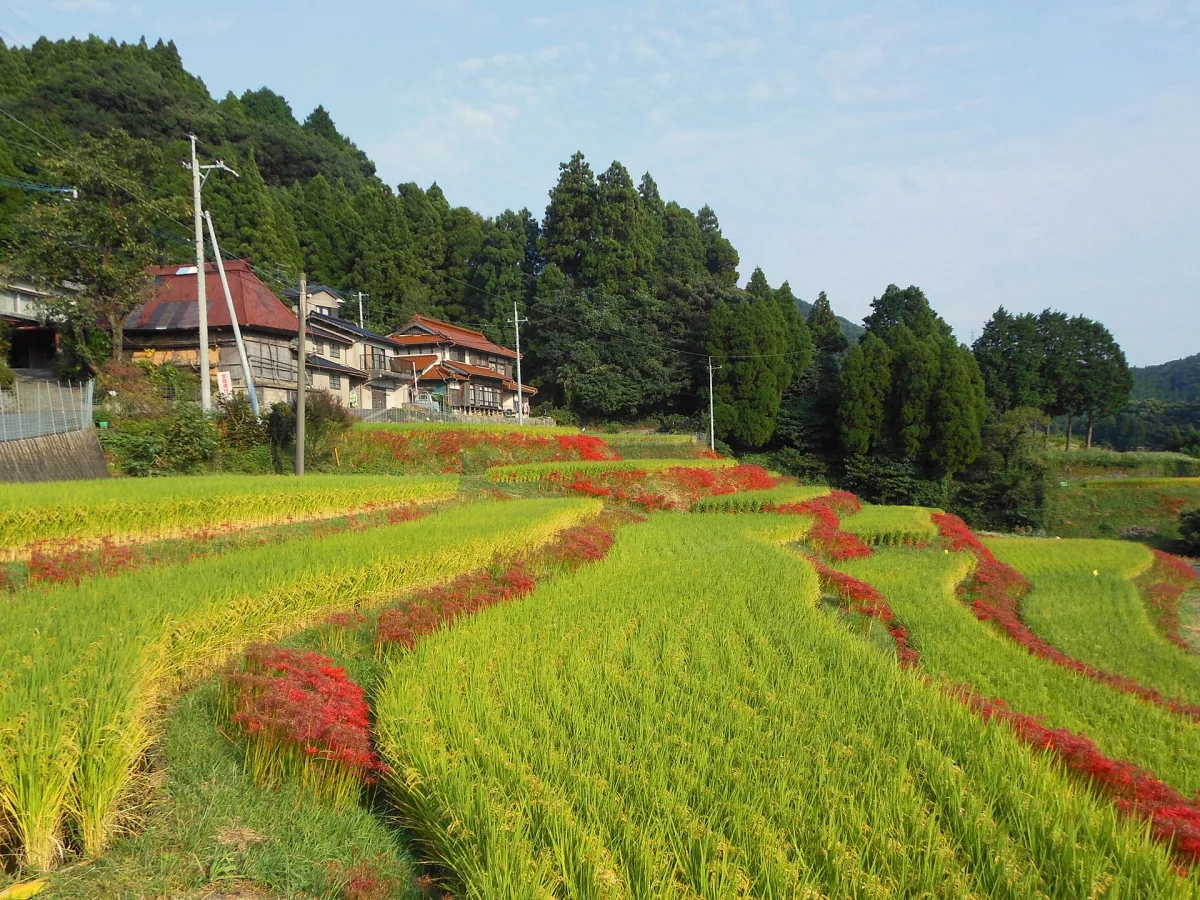
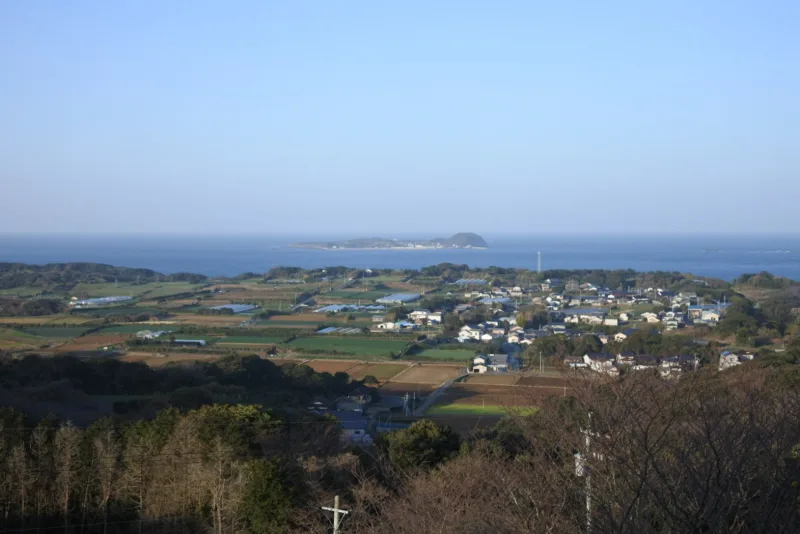
Saga Prefecture occupies the north-western corner of Kyushu, between Fukuoka and Nagasaki prefectures. To the north lies the Genkai Sea; to the south, the Ariake Sea. That simple map explains a lot about the prefecture. The northern coast around Karatsu has sandy beaches, rocky coves and a long belt of black pines called Niji no Matsubara (the 'Rainbow Pine Grove'). Further south, the land opens out into the Saga Plain before meeting the shallow Ariake Sea and its vast tidal flats.
The southern coast changes dramatically with the tides. In Kashima, low tide reveals mudflats that are home to mudskippers. This is scenery to look at and enjoy rather than a typical swimming beach. The same sea also grows nori, the edible seaweed often wrapped around onigiri (rice balls), and in late autumn the nori-farming nets become part of the view. Between the two coasts, the mountains affect the weather too: according to the prefecture, the mountain areas get more rain than the northern coast or the southern plain. So even though the distances on the map are modest, a journey across Saga can feel like a tour of several landscapes.
From an ancient settlement to porcelain kilns
Saga's history goes back far beyond its castle towns. At Yoshinogari Historical Park, the remains of a large moated settlement from the Yayoi period (the era of Japan's early farming societies) survive alongside reconstructed dwellings and watchtowers. Walking among them, you get a sense of a settled community with defences, workshops and a social life, rather than just a collection of archaeological finds.
Later, closeness to the Asian mainland shaped Saga's crafts. In the early 17th century, a Korean potter found clay suitable for porcelain at Izumiyama in Arita, and Arita became the centre of Japanese porcelain. Pottery names can be confusing. Arita ware is made in and around Arita, but the name 'Imari' also comes from the port the porcelain was shipped from. Karatsu ware has a different character again: its sturdy shapes and hand-painted decoration suit everyday dishes and tea bowls. At Okawachiyama near Imari, the Nabeshima family's former domain kilns made porcelain for powerful clients under tightly controlled conditions. Seen together, these places start to feel less like a single souvenir category and more like a collection of distinct local histories.
What the land and sea bring to the table
The contrast between Saga's two coasts shows up in its food. Around Yobuko, a fishing town in the north, squid sashimi (thinly sliced raw seafood) is the speciality. On the Ariake side, look for Saga nori, a farmed seaweed prized for its aroma and soft texture. Takezaki crab is another signature taste of this southern coast. Inland, richly marbled Saga beef shows a completely different side of the prefecture's flavours.
Ureshino adds tea and hot-spring cooking. Ureshino green tea is known for its mellow, fragrant taste, and the tea fields draw distinctive patterns across the hills. The town's speciality, onsen yudofu, is tofu simmered in hot-spring water. As it cooks, the tofu turns remarkably soft and the broth goes cloudy white. It is a dish especially suited to an onsen (hot-spring) town, where the water is used both for bathing and for local cooking. Here, food is a way to read the landscape: seafood from the north, nori from the south and produce from inland each have their place on the table.
Mud, festival floats and the changing seasons
Saga's festivals show how naturally the local landscape becomes a place for people to come together. At Karatsu's autumn festival, Kunchi, teams haul 14 decorated hikiyama (large festival floats) through the town. Their designs include creatures and samurai helmets, and the festival grew out of a harvest festival connected with Karatsu Shrine. Kashima's Gatalympics, meanwhile, takes a more light-hearted approach to the tidal flats of the Ariake Sea, turning the mud into the stage for playful contests. Even if you do not take part, both traditions show how strongly people here are attached to their own corner of Saga.
Spring brings cherry blossoms and the Arita pottery fair. The early summer rainy season is ideal for the hydrangeas around Mikaeri Falls, and on the northern coast people head outdoors. Autumn is especially lively: hikiyama roll through Karatsu, hot-air balloons gather on the banks of the Kase River near Saga city, and the trees turn colour in inland gardens. In winter the mood shifts to the hot springs of Takeo and Ureshino. None of the seasons replaces everyday scenes like the tide flooding over the mud or a potter at the workbench, but each changes the way a traveller meets them.
Getting around Saga
Most travellers enter Saga via Fukuoka. Hakata is a convenient starting point for trains to Saga city and other parts of the prefecture, and the JR Chikuhi Line links the Fukuoka area with Karatsu on the northern coast. Saga also has its own airport. If pottery is your focus, Arita and Imari naturally go together. If ancient history is what draws you, plan Yoshinogari as a separate stop rather than assuming it is in central Saga city.
The main towns are connected by rail, but it helps to think of Saga as a string of separate areas rather than one compact sightseeing route. Okawachiyama, for example, is away from central Imari, and you will need local transport to go on from there. With a car you can link coastal viewpoints, tidal-flat stops and small kiln villages more freely. On a first visit, choose one or two bases: Saga city for the plain and the southern coast, say, or Karatsu or Arita for a trip focused on the north or on pottery. Leave some breathing room between stops, and the difference between Saga's two seas becomes part of the journey itself.
Sources
- 佐賀県の紹介 / 佐賀県
- Saga | Kyushu | Destinations | Travel Japan - Japan National Tourism Organization (Official Site)
- WELCOME TO SAGA
- Yoshinogari Historical Park | Japan‘s Local Treasures | Travel Japan
- Treasure Hunting at Kouraku Kiln
- Okawachiyama Village | Travel Japan - Japan National Tourism Organization (Official Site)
- Karatsu | Saga Attractions | Travel Japan | JNTO
- Regards, Saga.
- 嬉野の温泉水でつくる「温泉湯どうふ」 | 記事 | 【公式】佐賀県観光サイト あそぼーさが
- Karatsu Kunchi Festival | Travel Japan - Japan National Tourism Organization (Official Site)
- Olympic Games only for the Kyushu region! Muddy sports meet filled with smiles