Kagoshima
Kagoshima runs from active volcanoes at Kyushu's southern tip to forested and subtropical islands, with a culture shaped by the sea.
Map outlines: Natural Earth
-
1
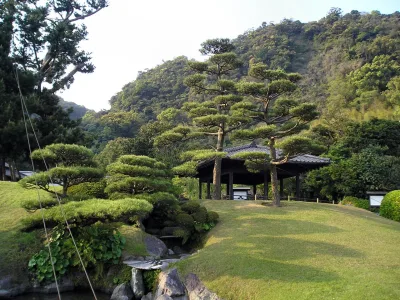 Sengan-en
The Shimazu lords' villa garden, which borrows Sakurajima as its hill and Kinko Bay as its pond. Japan's modernisation began here; part of a World Heritage site.
Sengan-en
The Shimazu lords' villa garden, which borrows Sakurajima as its hill and Kinko Bay as its pond. Japan's modernisation began here; part of a World Heritage site.
-
2
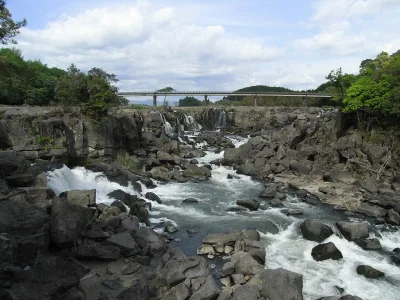 Sogi Falls
The "Niagara of the Orient", where a whole river pours over rock along a 210 m front. In autumn the white spray is set off by red maples and golden ginkgos.
Sogi Falls
The "Niagara of the Orient", where a whole river pours over rock along a 210 m front. In autumn the white spray is set off by red maples and golden ginkgos.
-
3
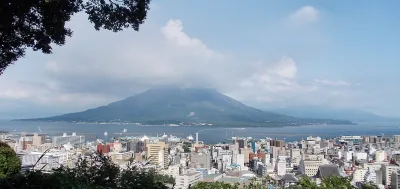 Shiroyama Observatory
A lookout on 107 m Shiroyama in central Kagoshima over Sakurajima, Kinko Bay and the city, where the Satsuma Rebellion fought its last battle.
Shiroyama Observatory
A lookout on 107 m Shiroyama in central Kagoshima over Sakurajima, Kinko Bay and the city, where the Satsuma Rebellion fought its last battle.
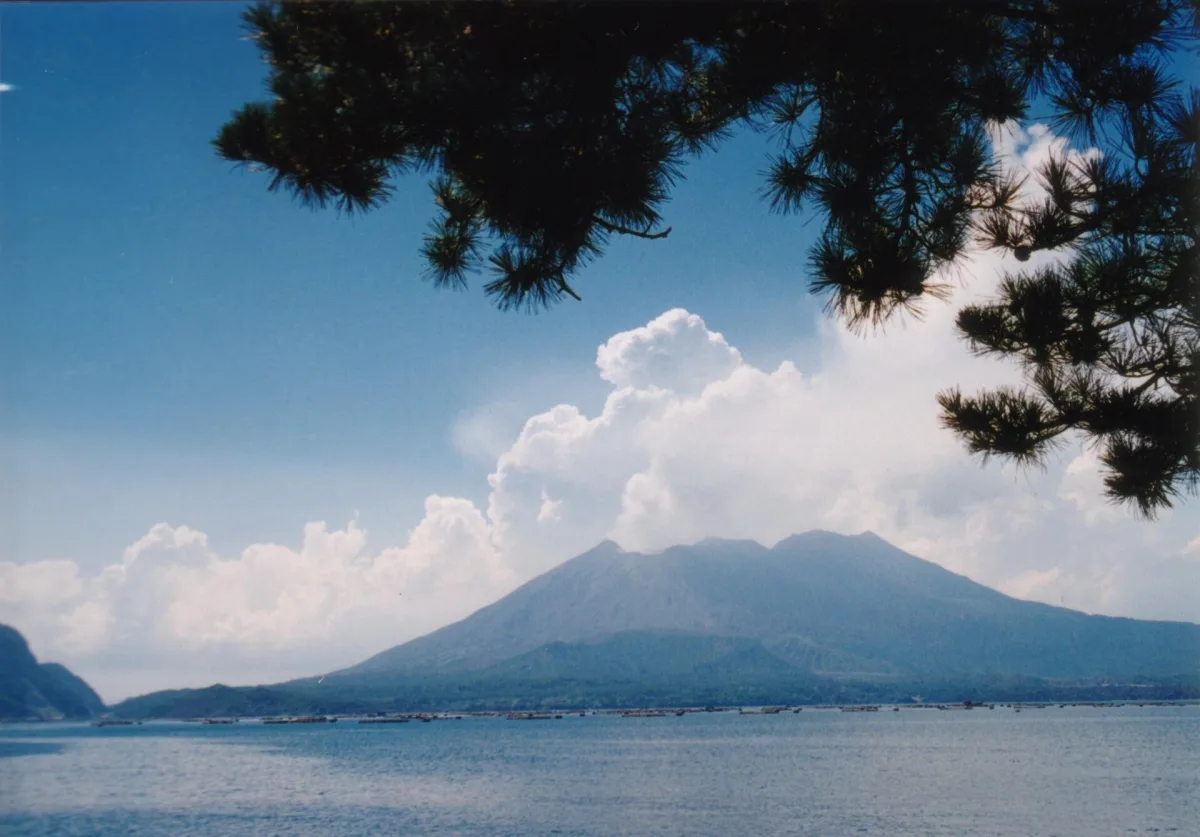

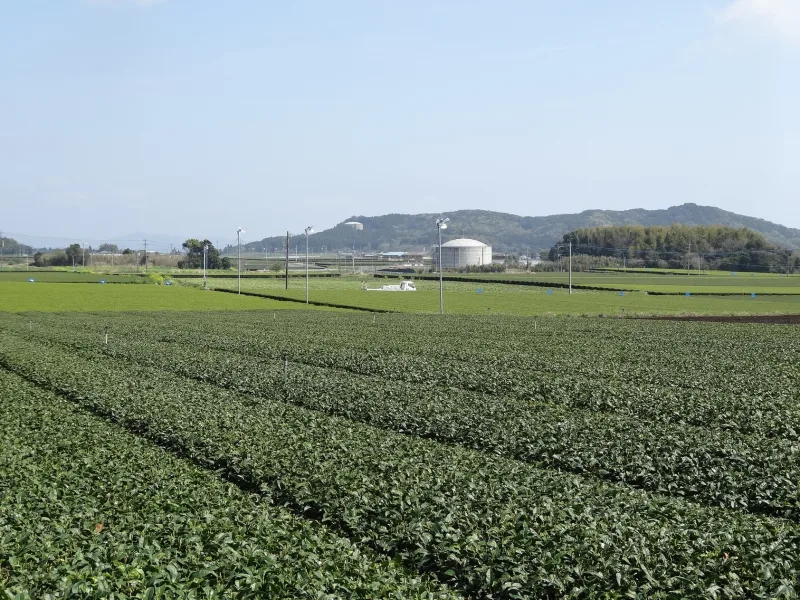

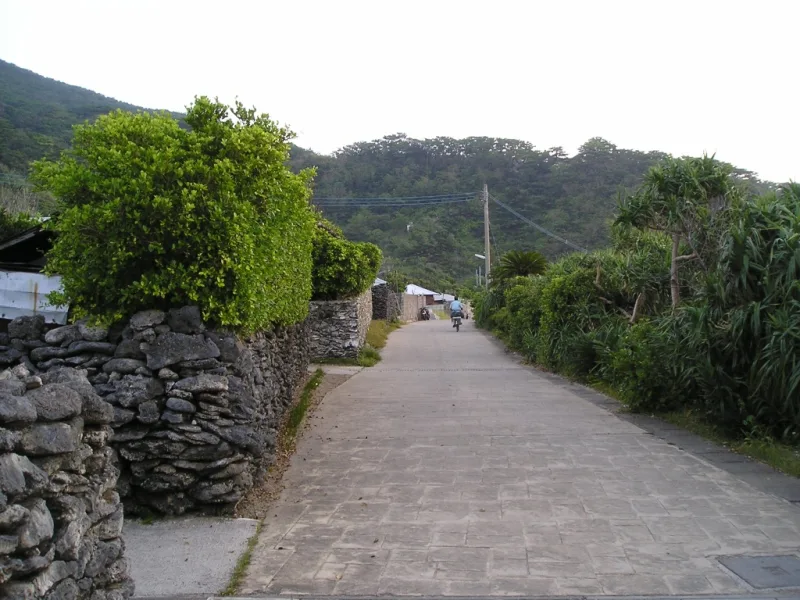

Volcanoes, two peninsulas and a long chain of islands
Kagoshima Prefecture stretches much further than a quick glance at a map of Kyushu suggests. The mainland part is made up of the Satsuma and Osumi peninsulas, and its islands run for around 600 kilometres from north to south. From Kagoshima city, Sakurajima rises across Kinko Bay. This active volcano is more than a distant silhouette: you can cross by ferry to its lava fields, and volcanic activity is part of the landscape residents live with.
Travel south and the prefecture changes character again and again. Yakushima has steep, extremely rainy mountains and ancient cedar forests. Further south, the Amami Islands have subtropical forest, mangroves and coral reefs. Kirishima adds another volcanic mountain landscape on the mainland. Onsen (hot springs) are one way to experience all this geology, and in Ibusuki you can even be buried in beach sand warmed by natural heat. Kagoshima is easier to understand as a collection of very different places than as one city with a few side trips.
Satsuma history on the shores of the bay
Kagoshima's history is not only about samurai. Shimazu Nariakira launched the Shuseikan project, an industrial enterprise that developed technology and manufacturing in Satsuma. Satsuma kiriko, a style of coloured cut glass, is one of the crafts connected with that effort. It gives the city's history a hand-made texture, not just one recorded in museums.
Sweet potato on the plate and in the glass
Sweet potato is central to Kagoshima cooking. Known in Japanese as satsumaimo, it appears roasted, in sweets, and as imo-jochu, a spirit distilled from sweet potato. Try gane, a kakiage (mixed fritter) of sweet potato and other vegetables cut into strips and fried. The name comes from the local word for crab, which the fried strips are said to resemble. Ingredients and batter vary from area to area.
There is plenty beyond sweet potato. Kurobuta ('black pork') is served in dishes such as shabu-shabu, where thin slices of meat are quickly cooked at the table. Satsuma-age is fried fish paste, and karukan is a soft steamed sweet made from rice flour and Japanese yam. Amami's keihan is rice topped with chicken and other ingredients, finished with chicken broth poured over. The islands also make kokuto-shochu, a spirit distilled from brown sugar. These foods show that the food traditions of mainland Kagoshima and its islands are related but not the same.
Local words and island traditions
This large prefecture does not have a single way of speaking. As part of its efforts to pass on regional dialects, Kagoshima Prefecture has published examples of greetings from each area. Even the name gane carries a little of that language into everyday food. For English-speaking travellers it may be easier to notice words like this on a menu than to follow a conversation, but it is still one way to meet local culture on its own terms.
Amami has traditions that deserve attention in their own right, rather than being treated as an extension of the mainland. Those connections help explain why a trip from Kagoshima city to Amami can feel like moving between different cultural landscapes within the same prefecture.
What changes with the seasons
Yakushima is a joy to walk, but rain remains part of the island's character. Across the prefecture, a large share of the year's rain falls from the rainy season through summer. In summer, people are drawn to the sea around Amami, and shirokuma ('polar bear'), Kagoshima city's shaved-ice dessert, makes a tempting break. Typhoons in late summer and autumn are also part of the region's weather, so it is wise to build some flexibility into plans for island trips.
In winter, the hot springs of Kirishima and the sand baths of Ibusuki give you another reason to explore the mainland. Given Amami's subtropical setting and Yakushima's rainy mountains, the weather forecast for Kagoshima city cannot stand in for conditions across the whole prefecture.
Getting there and getting around
Kagoshima city is the usual starting point. The Kyushu Shinkansen, part of Japan's high-speed rail network, links Kagoshima with Hakata in Fukuoka. Flying is also a popular way in, especially from Tokyo and Osaka. In the city, trams and buses connect central districts with sights such as Sengan-en. The Sakurajima Ferry crosses the bay, and local buses are available once you land. These short hops make it possible to explore the city and the volcano without a car.
Wider travel needs more planning. Yakushima can be reached from Kagoshima by plane or boat, and local buses run around the island. Amami Oshima has air and ferry connections. The distances between peninsulas, mountains and islands are part of the experience itself, so rather than trying to cover the whole prefecture at once, you will get more from a trip that picks one or two areas and gets to know them well.
Sources
- 鹿児島県/鹿児島県農業の概要
- Kagoshima | Kyushu | Destinations | Travel Japan - Japan National Tourism Organization (Official Site)
- Sakurajima | Travel Japan - Japan National Tourism Organization (Official Site)
- Yakushima Island | Travel Tips | DISCOVER KAGOSHIMA|Official Travel Guide
- Explore Amamigunto National Park | National Parks of Japan
- Kagoshima City | Destinations | DISCOVER KAGOSHIMA|Official Travel Guide
- ここには日本近代化の原点がある。かごしま産業遺産の道 | 特集 | 【公式】鹿児島県観光サイト かごしまの旅
- Eating and Drinking Your Way Around Kagoshima | Travel Tips | DISCOVER KAGOSHIMA|Official Travel Guide
- がね 鹿児島県 | うちの郷土料理:農林水産省
- 鹿児島県/「かごしまの方言ミニ講座・かごしまの教えミニ辞典」リーフレットができました
- Enjoy the 'Autumn' of Kagoshima | Travel Tips | DISCOVER KAGOSHIMA|Official Travel Guide
- Access to Yakushima Island | Travel Tips | DISCOVER KAGOSHIMA|Official Travel Guide
- Discover Kagoshima with the CUTE Pass | Travel Tips | DISCOVER KAGOSHIMA|Official Travel Guide