Sogi Falls
曽木の滝
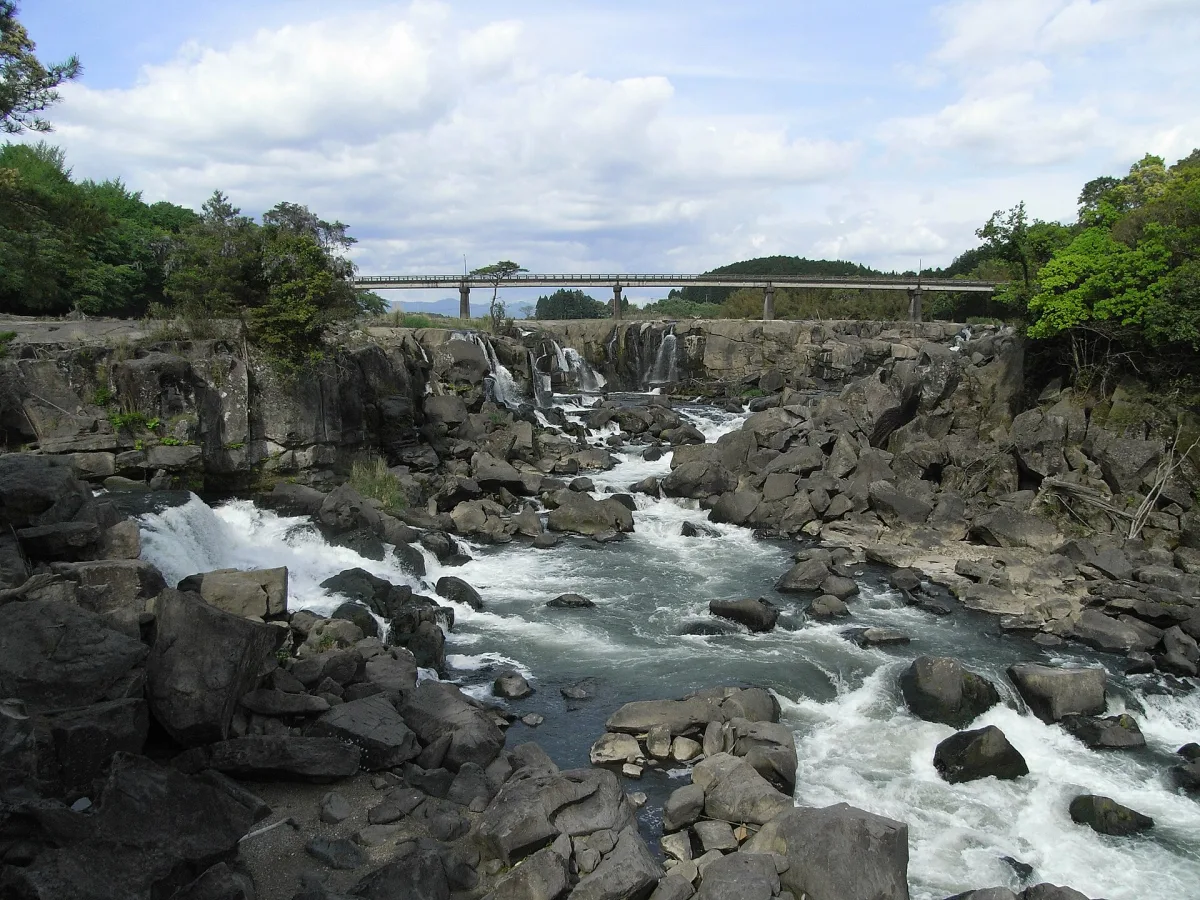
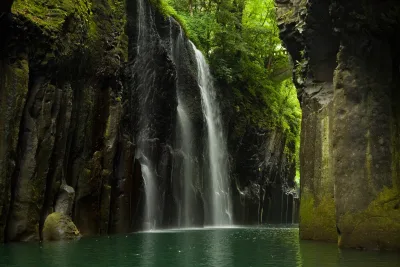
The "Niagara of the Orient", where a whole river pours over rock along a 210 m front. In autumn the white spray is set off by red maples and golden ginkgos.
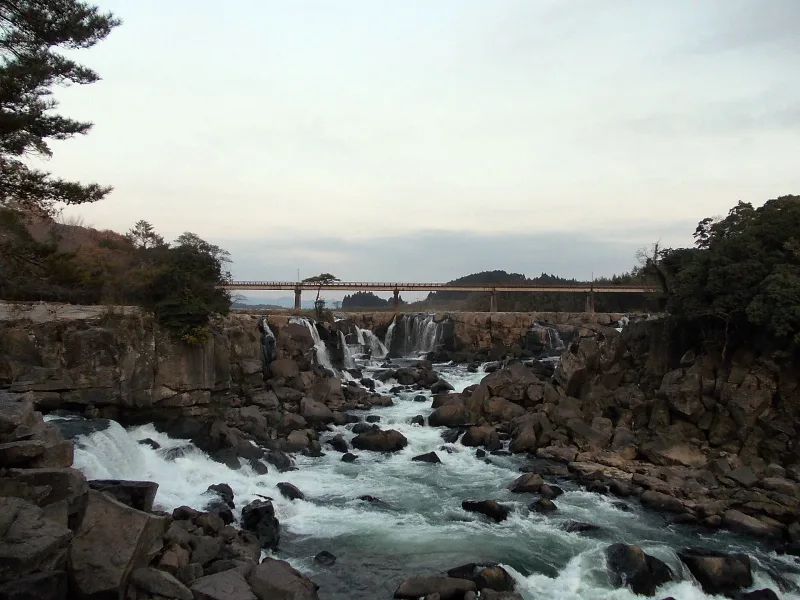
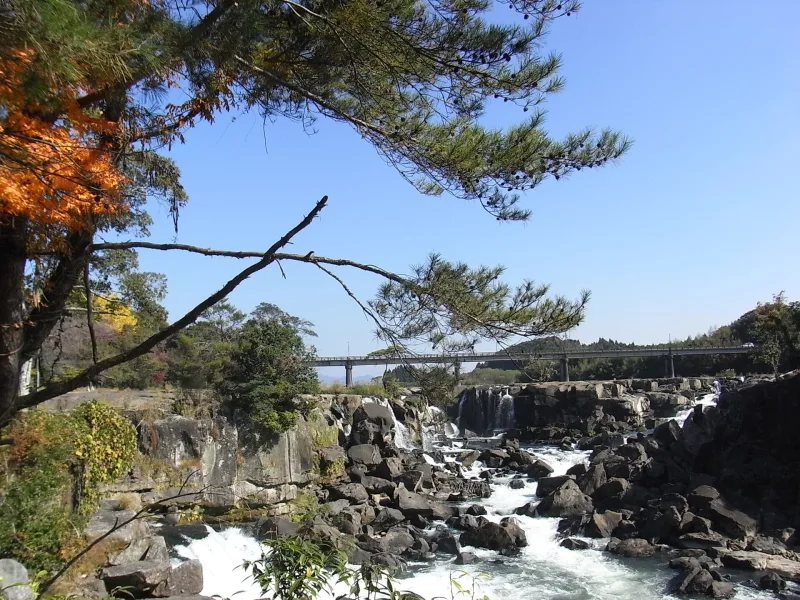
The "Niagara of the Orient"
Sogi Falls is on the Sendai River, which flows through the city of Isa in northern Kagoshima Prefecture. At 12 m high it is not tall, but it is 210 m wide, and because the water drops across the full width of the river it is known as the "Niagara of the Orient".
The water rushes roaring over a bed of rock called Senjo-iwa ("thousand-mat rock"). This rock formed from the deposits of a pyroclastic flow (a fast-moving avalanche of scorching volcanic ash and rock). It came 24th in the "Heisei Hyakkei", a list of 100 scenic places chosen during the Heisei era.
Highlights through the seasons
The area around the falls has been laid out as Sogi Falls Park. The park has about 480 maple trees and about 50 ginkgo trees, and it is especially busy in the autumn colour season. The colours are usually at their best from around late November to early December, and a Momiji (maple) Festival is held in late November.
In spring the cherry trees bloom from around late March to early April. During the rainy season the volume of water increases and the falls are even more powerful.
Flood defences and the ruins of a power station
Beside the falls is the Sogi Falls Diversion Channel, built to carry water away in times of flood. It was built after heavy rain in July 2006, and in 2012 it won a Good Design Award for protecting against floods while preserving the scenery.
About 1.5 km downstream of the falls are the remains of the Sogi Power Station, once one of the largest in Japan. Most of the time they lie at the bottom of a dam lake, and the brick building only appears from around May to September, when the water level drops.
Getting there
The park's official website gives directions by car: about 30 minutes from the Kurino IC (motorway interchange) on the Kyushu Expressway, about 55 minutes from the Kirishima Onsen area, and about 60 minutes from Izumi Station on the Kyushu Shinkansen.
Entry to the park is free, and there is free parking for about 200 cars. There are places to eat and souvenir shops, and wheelchairs can be borrowed.
Tips
- For autumn colours, the usual guide is from around late November to early December. How far the leaves have turned varies from year to year, so check the latest information before you go.
- The park has restaurants and souvenir shops, so you can take your time over lunch.
- If you want to see the power station ruins, visit from around May to September, when the water level drops.
Sources
Updated 28 September 2026. Opening hours and prices change, so check the official site before you go.


.jpg)