Japan is Nippon
Udon
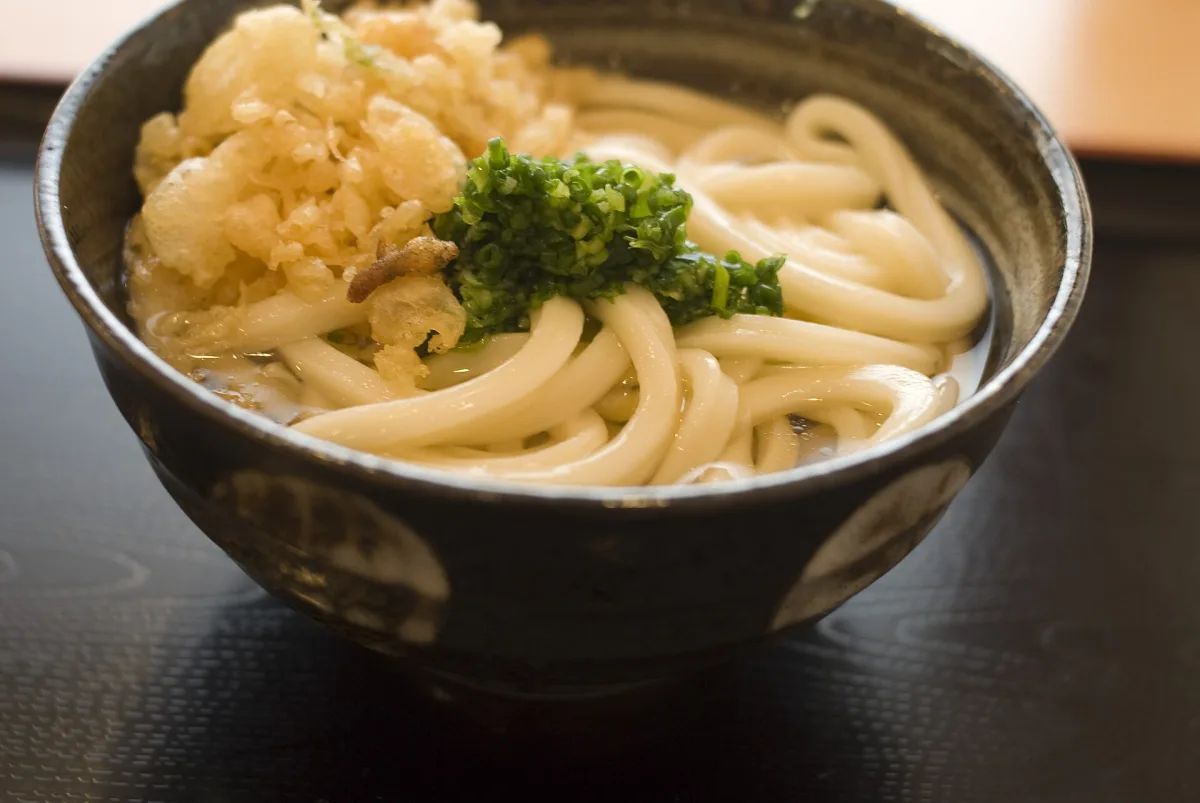
Firm Sanuki udon in Kagawa, broth-led kitsune udon in Osaka, miso-simmered udon in Nagoya: every region has its own take on these thick wheat noodles.
Eaten all over Japan
Best known in Kagawa and Osaka and Aichi and Mie and Gunma and Yamanashi.
- Kagawa"Udon Prefecture", home of Sanuki udon: firm noodles, plus self-service and noodle-factory shops
- OsakaSoft noodles in kombu and bonito broth; said to be the birthplace of kitsune udon
- AichiMiso nikomi udon, simmered in Hatcho miso broth in a clay pot, and flat kishimen noodles
- MieIse udon from Ise City: soft, thick noodles coated in a tamari soy sauce dressing
- GunmaDistinctive udon such as Mizusawa udon from Shibukawa and wide himokawa from Kiryu
- YamanashiYoshida no udon from Fujiyoshida: hard, chewy, thick noodles in miso or soy sauce broth
What is udon?
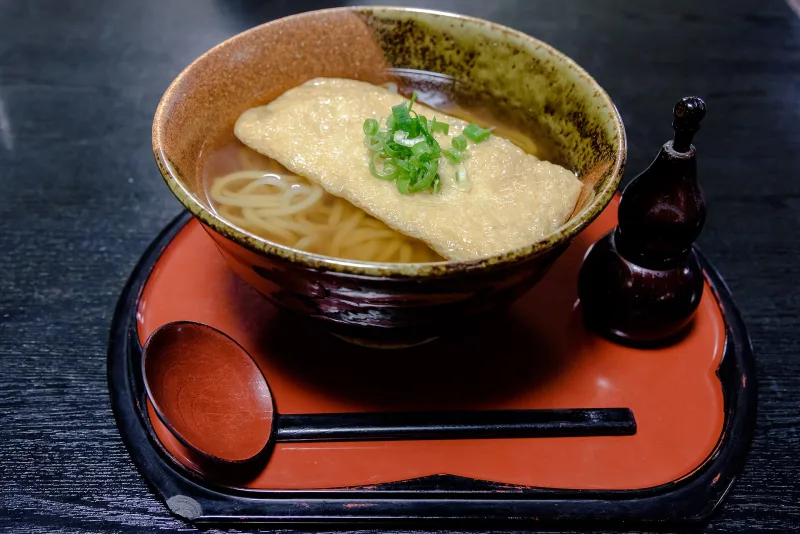
Udon are thick, white noodles made from kneaded wheat flour. They are eaten in hot dashi (a stock made from katsuobushi, or dried bonito flakes, kombu kelp, niboshi dried sardines and the like), or served cold with a dipping sauce. According to the Ministry of Agriculture, Forestry and Fisheries, noodles such as udon and soba were originally special foods eaten at temples and shrines, and over time they became everyday food for ordinary people all over Japan.
There is a saying, "udon in the west, soba in the east", and udon has long been especially popular in western Japan. Even so, eastern Japan has its own distinctive udon too, in places such as Gunma and Yamanashi Prefectures, born from a culture of eating wheat flour.
Sanuki udon from Kagawa, "Udon Prefecture"
Kagawa Prefecture is nicknamed "Udon Prefecture" because its people eat so much of it. Several reasons are given for why udon-making flourished here: the mild, dry climate suited growing good wheat; the Seto Inland Sea yielded plenty of Japanese anchovies, which are made into niboshi (also called iriko), the dried sardines used for stock; and salt-making and soy sauce brewing on Shodoshima island thrived. Udon shops already appear in pictures from the Edo period. There is also a story that the monk Kukai (Kobo Daishi) brought udon from China, but that is only a legend.
Sanuki udon is known for its strong koshi (firm, springy bite) and smooth texture. The menu is broad: plain "kake" in broth; "bukkake", with a stronger sauce poured straight on; "kijoyu", eaten with just soy sauce; "kamaage", served straight from the pot without being rinsed in cold water; and "kamatama", freshly boiled noodles tossed with raw egg and soy sauce.
In Kagawa, 2 July is Udon Day. It comes from the custom of farmers eating udon to reward themselves on Hangesho, the day that marked the end of the busy season of harvesting wheat and planting rice. At New Year, "toshiake udon", white udon with a red topping eaten by 15 January, is also catching on.
Osaka, Nagoya and Ise: different broths, different ways to eat
In Osaka, people sometimes call udon "o-udon". The noodles are not too thick and are soft to the bite, and the point is to savour the broth of kombu, bonito flakes and so on. Kitsune udon, topped with aburaage (fried tofu) simmered until sweet and savoury, was born in Osaka: the story goes that in 1893 (Meiji 26), at an udon shop in the Senba district, a customer put the fried tofu served on the side onto his udon. Udon-suki, udon cooked in a hotpot with vegetables and seafood and eaten as it simmers, is another Osaka local dish.
Aichi Prefecture's miso nikomi udon is firm udon simmered in a broth of Hatcho miso (a dark miso made from soybeans) and served in the clay pot it was cooked in. The noodles are made without salt, which is said to stop them going soft as they simmer. Kishimen, flat udon about 1 millimetre thick and 7-8 millimetres wide, is another Aichi speciality.
Ise udon from Ise City in Mie Prefecture is soft, thick noodles with no bite at all, coated in a dressing made with tamari soy sauce. This way of eating it is old: it is said to have started so that pilgrims visiting Ise Jingu (Ise Grand Shrine) could be served immediately, with noodles that were kept boiling and simply topped with the sauce. The name "Ise udon" was settled on in 1972.
More regional udon
Gunma Prefecture is known for Mizusawa udon from Mizusawa in Ikaho, Shibukawa City, and the wide "himokawa" noodles of Kiryu City. At some shops, himokawa can be more than 10 centimetres wide. Mizusawa udon is said to be one of Japan's three great udon, along with Inaniwa udon from Akita Prefecture and Sanuki udon from Kagawa.
Yoshida no udon from Fujiyoshida City in Yamanashi Prefecture is thick noodles of astonishing hardness and chewiness, eaten in a miso or soy sauce broth. It grew out of a wheat-eating culture in an area unsuited to rice farming. Hakata udon from Fukuoka is known for its soft noodles. At Jotenji temple in Hakata stands a stone monument declaring it the birthplace of udon and soba.
How to order, and dietary restrictions
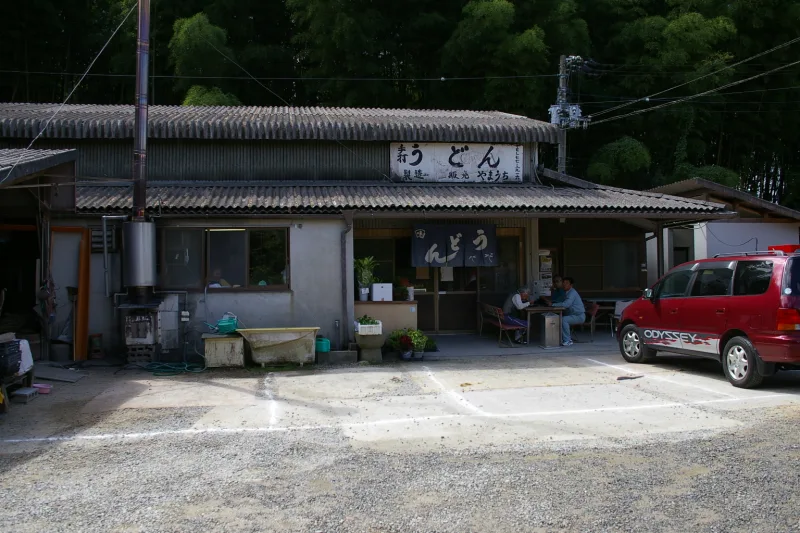
According to the Kagawa Prefecture Tourism Association, Sanuki udon shops fall into three broad types: ordinary restaurants where you order at your table; "self" shops, where you order at the counter and carry your food yourself; and noodle-factory shops, where you eat in a corner of the factory. At a self shop, you say how many portions of noodles you want and take your bowl, choose your own extras such as tempura or onigiri (rice balls), pay, and then add condiments such as spring onion and ginger. When you have finished, return your dishes to the return counter. Noodle-factory shops often close once the day's noodles have sold out, so it is best to go early.
In and around stations you will also find stand-up udon and soba counters, where you usually buy a meal ticket from a machine at the entrance first.
For those with dietary restrictions: udon broth is often made with fish, such as niboshi dried sardines, bonito flakes or dried mackerel flakes. The fried tofu in kitsune udon is also simmered in stock for flavour. Vegetarians should check what the broth is made from before ordering.
Tips
- At a self-service udon shop in Kagawa, watch the customers around you to work out the ordering routine. The steps vary a little from shop to shop.
- In Sanuki udon, "hiya-atsu" means cold noodles in hot broth and "atsu-hiya" means hot noodles in cold broth. Remember: noodles first, broth second.
- Noodle-factory shops close when the day's noodles sell out, so it is safest to go early.
- In Osaka, try kitsune udon and take your time savouring the broth.
- If you need to avoid fish-based stock, check the ingredients with the shop before you order.
Sources
- 農林水産省 うちの郷土料理「しっぽくうどん 香川県」 (opens in a new tab)
- 農林水産省 うちの郷土料理「年明けうどん 香川県」 (opens in a new tab)
- うどん県旅ネット(香川県観光協会)「お店のタイプを知ろう」 (opens in a new tab)
- うどん県旅ネット(香川県観光協会)「おさえておきたい主なメニュー」 (opens in a new tab)
- うどん県旅ネット(香川県観光協会)「おっとびっくり!うどん文化」 (opens in a new tab)
- 農林水産省 うちの郷土料理「きつねうどん 大阪府」 (opens in a new tab)
- OSAKA-INFO(大阪観光局)「うどん(うどんすき)」 (opens in a new tab)
- 農林水産省 うちの郷土料理「味噌煮込みうどん 愛知県」 (opens in a new tab)
- 農林水産省 うちの郷土料理「きしめん 愛知県」 (opens in a new tab)
- 農林水産省 うちの郷土料理「伊勢うどん 三重県」 (opens in a new tab)
- 農林水産省 うちの郷土料理「群馬のうどん 群馬県」 (opens in a new tab)
- 農林水産省 うちの郷土料理「吉田のうどん 山梨県」 (opens in a new tab)
- 福岡市観光情報サイト よかなび「福岡グルメ」 (opens in a new tab)
- 日本政府観光局(JNTO)Travel Japan「Local Cuisine of Western Japan」 (opens in a new tab)